
Facility managers and procurement officers often assume that any surface preparation method delivers roughly the same result. That assumption is costly. Coating performance and asset protection depend directly on the nuances of abrasive blasting, from the media you choose to the pressure you apply and the standard you target. For Central Florida municipalities and commercial operators managing bridges, water tanks, pipelines, and city infrastructure, getting these decisions right is the difference between a coating that lasts 20 years and one that fails in five. This article walks you through the core mechanics, method comparisons, media selection, compliance standards, and real-world applications so you can make informed decisions on your next large-scale project.
Table of Contents
- How abrasive blasting works: Core principles and process
- Types of abrasive blasting: Comparing dry, wet, pneumatic, and mechanical methods
- Abrasive media explained: Choosing the right materials for your project
- Industry standards and quality control: SSPC/NACE profiles and compliance
- Expert nuances: Blasting mistakes, hybrid techniques, and adapting to Central Florida projects
- Case studies: Abrasive blasting on large-scale Florida infrastructure
- Get expert abrasive blasting and surface preparation for your next project
- Frequently asked questions
Key Takeaways
| Point | Details |
|---|---|
| Abrasive blasting defined | Propelling specific abrasives at high speeds cleans and prepares surfaces for long-term coatings. |
| Method matters | Choosing the right blasting method and media ensures quality, safety, and cost-effectiveness. |
| Follow industry standards | Meeting SSPC/NACE standards safeguards project longevity and compliance for infrastructure. |
| Common pitfalls to avoid | Over- or under-blasting and wrong profiles can cause costly coating failures. |
| Local expertise is crucial | Central Florida’s climate and regulations demand tailored abrasive blasting approaches. |
How abrasive blasting works: Core principles and process
Abrasive blasting is a surface preparation process that fires abrasive particles at a target surface to remove rust, old coatings, mill scale, and contaminants while simultaneously creating a surface profile that helps new coatings bond. The physics are straightforward: abrasives propelled at 20 to 150 m/s using compressed air or mechanical force strike the surface with enough energy to strip it clean and roughen it at a microscopic level.
The key elements that determine blasting performance include:
- Abrasive type and hardness: Harder media cuts faster and creates deeper profiles.
- Velocity and pressure: Higher velocity means more aggressive cleaning and profiling.
- Delivery method: Air-driven nozzles offer precision; centrifugal wheel systems handle volume.
- Surface impact angle: Angle affects profile shape and cleaning efficiency.
- Dust and containment: Proper containment protects workers and surrounding environments.
The goal of every blast is threefold: achieve the target cleanliness level, create the correct surface profile depth (measured in mils), and do it without damaging the substrate. Understanding asset protection coatings starts with understanding why this foundation matters so much. A sandblasting technical breakdown shows that even small deviations in pressure or angle can shift the profile by a full mil, which directly affects coating adhesion.
Types of abrasive blasting: Comparing dry, wet, pneumatic, and mechanical methods
With a clear grasp of the fundamentals, it is essential to understand how different abrasive blasting methodologies perform in real-world settings. Key methodologies include dry, wet, pneumatic, and mechanical, each with distinct trade-offs in speed, dust generation, aggressiveness, and application fit.
| Method | Pressure range | Dust level | Aggressiveness | Best application |
|---|---|---|---|---|
| Dry blasting | High | High | Very aggressive | Steel structures, bridges, tanks |
| Wet blasting | Medium | Low | Moderate | Urban sites, delicate substrates |
| Pneumatic (air) | Variable | Medium | Precision | Spot repairs, complex geometry |
| Mechanical (centrifugal) | Fixed | Low | High volume | Large flat surfaces, shipyards |
Dry blasting is the workhorse for heavy industrial work. It removes rust and old coatings fast, but generates significant dust, which creates challenges in urban Central Florida environments near residential zones or active facilities. Wet blasting, as detailed in wet vs dry blasting comparisons, reduces airborne dust dramatically and is gentler on surrounding surfaces, though it introduces flash rust risk if the substrate is not primed immediately after blasting.
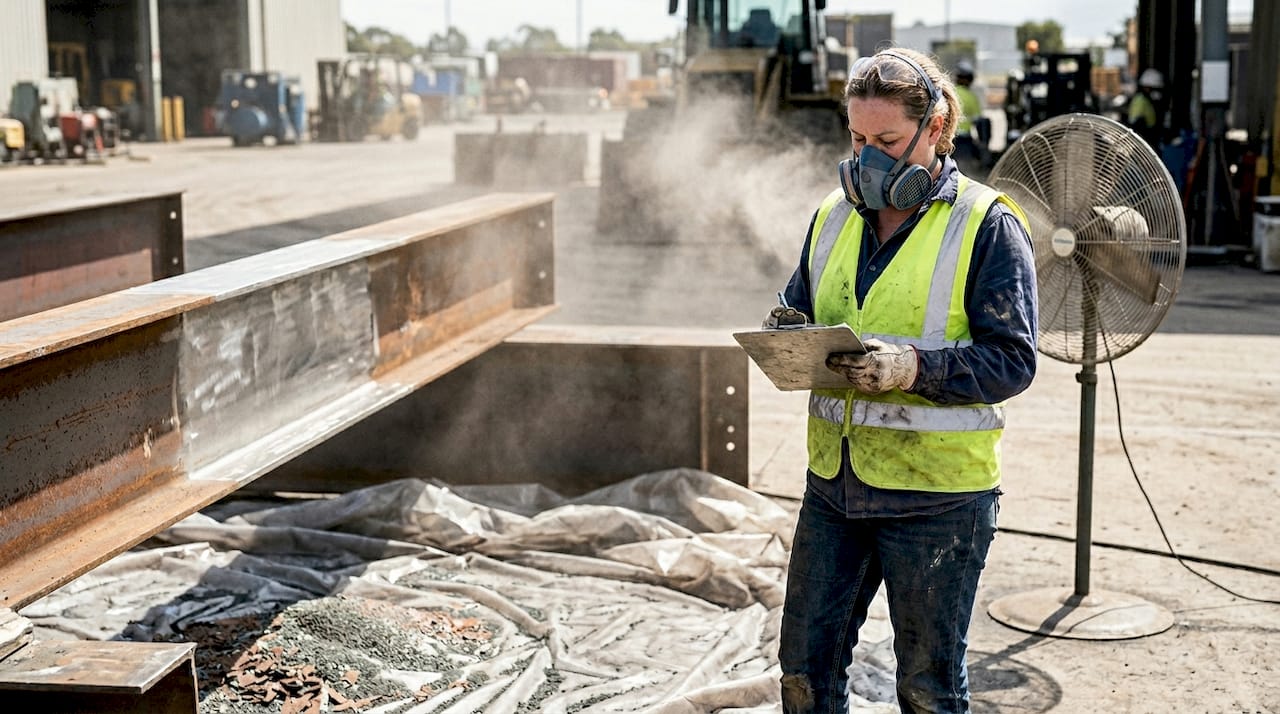
Pneumatic systems give operators fine control over localized areas, making them ideal for spot repairs on bridges or intricate structural components. Mechanical centrifugal systems excel at processing large, flat surfaces quickly and with lower dust output, which is why they are common in controlled shop environments.
For your surface preparation workflow on mixed-use or urban projects, method selection is not just a performance decision. It is a regulatory and community relations decision.
Pro Tip: Choose wet blasting for sensitive urban or mixed-use project sites in Central Florida to minimize airborne contaminants and reduce the risk of regulatory complaints from neighboring properties.
Abrasive media explained: Choosing the right materials for your project
After covering blasting methods, the next decision point is selecting the most suitable abrasive material for the job. Media choice affects cleaning speed, surface profile, dust generation, worker safety, waste volume, and total project cost.
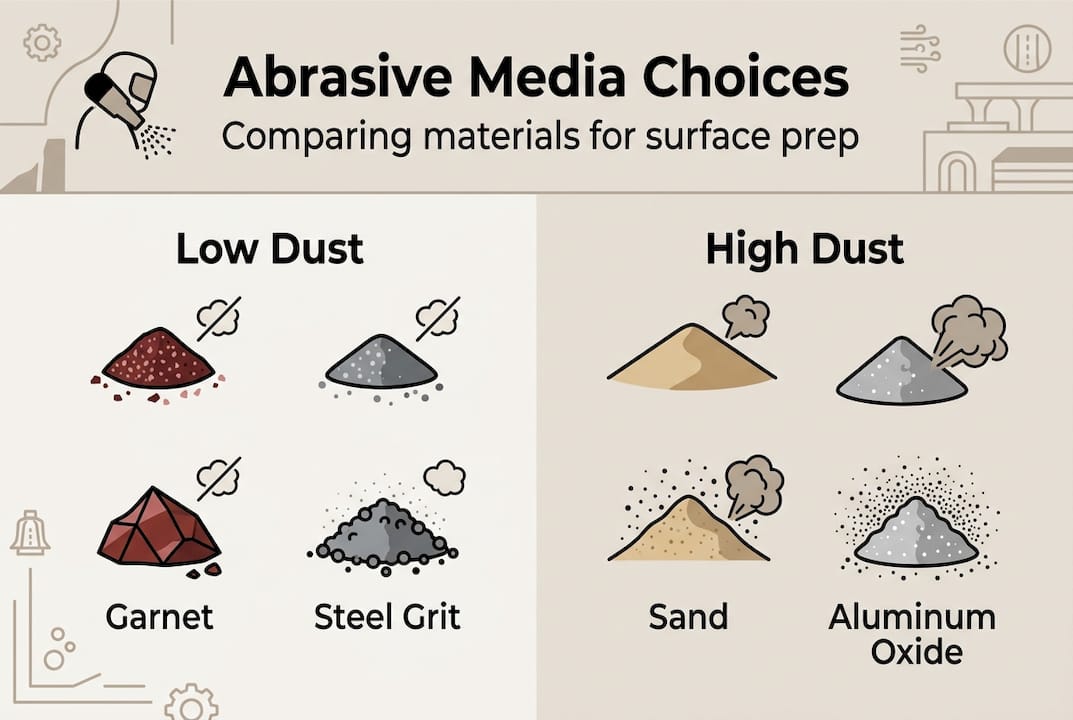
| Media type | Dust level | Reusability | Safety concern | Typical application |
|---|---|---|---|---|
| Garnet | Low | Moderate | Minimal | Steel, concrete, general use |
| Steel grit/shot | Low | High | Minimal | Bridges, tanks, heavy steel |
| Glass beads | Low | Moderate | Minimal | Finishing, light cleaning |
| Aluminum oxide | Medium | Moderate | Low | Hard surfaces, precision work |
| Silica sand | Very high | None | Severe (silicosis) | Avoid in most applications |
Garnet and steel grit reduce abrasive consumption by up to 75% compared to silica sand, while also generating far less dust. Silica sand is still used in some markets, but its link to silicosis (a serious and irreversible lung disease) has led to strict OSHA regulations and outright bans in many jurisdictions. For Central Florida municipal projects, specifying silica-free media is both a safety and a liability decision.
Advantages of recyclable, low-dust media for your projects:
- Lower total cost: Fewer media purchases over the project lifecycle.
- Reduced waste disposal: Less spent abrasive to haul and dispose of.
- Faster cleanup: Less dust means less surface contamination between passes.
- Regulatory compliance: Easier to meet OSHA and local air quality standards.
- Worker health protection: Lower silica exposure risk across the crew.
Understanding why you should blast before coating also means understanding that the media you choose shapes the profile the coating will bond to. The wrong media can leave a profile that is too smooth or too rough for the specified coating system, causing premature failure regardless of coating quality.
Industry standards and quality control: SSPC/NACE profiles and compliance
Correct media alone will not ensure results unless every project also meets industry quality standards. SP10/NACE2 (Near-White), SP6/NACE3 (Commercial), and SP5/NACE1 (White Metal) are the key classifications that define required surface cleanliness and profile depth for industrial coating projects.
Here is how to ensure compliance on your project:
- Select the correct standard based on the coating system specified and the asset’s service environment.
- Inspect surface cleanliness using visual comparators immediately after blasting.
- Measure the surface profile with a replica tape or digital profilometer to confirm depth in mils.
- Verify coating adhesion with pull-off tests after the first coat cures.
- Document everything with inspection reports that satisfy municipal or government contract requirements.
A minimum surface profile of 2.5 to 3.5 mils is typically required for high-performance industrial coatings on steel infrastructure. Falling outside this range, either too shallow or too deep, compromises coating adhesion and long-term performance.
Over-blasting creates an excessively rough profile that traps air pockets under the coating. Under-blasting leaves mill scale or contaminants that prevent proper bonding. Both failures are expensive to remediate. Trained inspectors who understand surface prep best practices for coatings catch these issues before the coating goes on, not after it peels off. Reviewing surface preparation tips for 2025 infrastructure and understanding coating inspector roles are both worth your time before finalizing project specs.
Expert nuances: Blasting mistakes, hybrid techniques, and adapting to Central Florida projects
Even with the right methods and standards, practical experience separates high-performance projects from the rest. Over-blasting creates excessive profiles, under-blasting leaves contaminants, and hybrid approaches like wet/dry combinations or shot peening are often the best solution for complex structural needs.
The most common blasting mistakes on large infrastructure projects:
- Wrong profile for the coating spec: Always confirm the required mil depth before blasting begins.
- Skipping immediate prime coat: In Florida’s humidity, bare steel can flash rust within hours of blasting.
- Ignoring wind and weather: Blasting in high humidity or rain compromises cleanliness and profile quality.
- Using the wrong media for the substrate: Aggressive media on thin steel can warp or damage the base material.
- No phased approach on large assets: Blasting an entire bridge span at once in summer heat invites flash rust before coating crews can keep up.
Shot peening is a specialized hybrid technique worth knowing. Unlike standard blasting, it uses controlled impact to compress the surface layer of metal, improving fatigue resistance. It is used on structural components that face repeated stress cycles, such as bridge gusset plates or crane booms.
Central Florida’s climate adds specific challenges. High humidity from June through September means that bare steel can begin oxidizing within 30 to 60 minutes of blasting. Phasing your project so that blasting and priming happen in tight sequence is not optional. It is essential for infrastructure coating durability.
Pro Tip: Always blast a small test section first on any new substrate or coating system. Confirm the profile, check for flash rust timing, and adjust your workflow before committing the full crew to a large surface area.
Case studies: Abrasive blasting on large-scale Florida infrastructure
To see these concepts in action, consider how the right abrasive blasting approaches shape major Central Florida infrastructure projects. Real project data shows what is possible when method, media, and standards align correctly.
Key results from documented large-scale blasting projects:
- Crane rust removal with garnet: Consumption savings of 60 to 75% compared to silica sand, with SSPC-SP6 cleanliness achieved on structural steel components.
- Municipal wastewater structures: Garnet blasting delivered consistent profiles on both steel and concrete surfaces, meeting SSPC-SP6 requirements with minimal dust in occupied facility environments.
- Bridge repainting with steel grit: Recyclable steel grit reduced total abrasive purchases significantly across multi-span projects, with phased blasting managing humidity exposure windows.
- Phased approach on active infrastructure: Intricate project phasing on bridge projects demonstrates how wind, weather, and operational constraints require careful scheduling to maintain profile quality and coating adhesion.
The lesson across all these projects is consistent: media selection and phasing strategy drive both cost and performance outcomes. Choosing recyclable, low-dust media like garnet or steel grit is not just an environmental preference. It is a budget decision. Understanding the full role of protective coatings in infrastructure helps procurement officers see why surface preparation is where long-term value is built or lost.
Get expert abrasive blasting and surface preparation for your next project
Knowing the right blasting method, media, and compliance standard is only half the equation. Executing it correctly on a live infrastructure project in Central Florida’s climate requires experience, the right equipment, and a team that understands both the technical specs and the local conditions.
Southern Sandblasting & Painting LLC brings 20+ years of specialized experience to municipal, commercial, and government projects across Central Florida. From water tanks and bridges to pipelines and city infrastructure, our team delivers sandblasting and painting services built around compliance, safety, and long-term asset protection. Explore our industrial coatings for Florida infrastructure or review our surface prep best practices to see how we approach every project. Contact us to discuss your next project and get a tailored assessment from a team that knows Central Florida infrastructure inside and out.
Frequently asked questions
Why is abrasive blasting preferred for infrastructure in Central Florida?
Abrasive blasting creates the surface profile and cleanliness level that coatings need to bond and last, which is especially critical given Florida’s high humidity and accelerated corrosion environment. Dry garnet and steel grit blasting are prioritized for profile adhesion in humid climates like Central Florida’s.
What is the most environmentally friendly blasting media?
Garnet and steel grit are both low-dust, highly recyclable options that significantly reduce abrasive consumption and waste on large projects. Garnet can cut abrasive consumption by up to 75% compared to silica sand.
How do industry standards like SSPC/NACE impact project quality?
SSPC/NACE standards define the exact cleanliness level and surface profile depth required before any coating is applied, ensuring the coating system performs as specified. SP10/NACE2 and SP6/NACE3 establish the required profiles and cleanliness levels for most industrial infrastructure projects.
What are the biggest mistakes in abrasive blasting?
The most common mistakes are over-blasting, under-blasting, and failing to match the surface profile to the coating system’s specifications, all of which risk premature coating failure. Over-blasting creates excessive profiles while under-blasting leaves contaminants that prevent proper adhesion.
How can project teams optimize abrasive consumption and control dust?
Selecting recyclable media like garnet or steel grit and using wet blasting where site conditions allow can cut abrasive consumption and dust by 60 to 75%. Dust is reduced significantly in wet blasting while garnet use delivers major consumable savings across the project lifecycle.


