
For facility managers in Central Florida, achieving lasting protection for municipal water infrastructure starts with proper surface preparation. The region’s humidity and saltwater exposure can quickly undermine coatings that lack a strong foundation. Abrasive blasting removes contaminants and creates a textured profile, which is vital for durable coating adhesion and regulatory compliance. Understanding the right blasting method not only extends asset lifespan but also supports your team’s safety and environmental responsibilities.
Table of Contents
- What Is Blasting Before Coating?
- Types of Blasting Methods and Media
- Surface Profile and Adhesion Explained
- Regulatory and Safety Compliance for Municipal Assets
- Risks of Skipping Proper Surface Preparation
Key Takeaways
| Point | Details |
|---|---|
| Importance of Blasting | Proper abrasive blasting is crucial for optimal coating adhesion and longevity in water treatment infrastructure. It eliminates contaminants and provides a textured surface profile essential for mechanical bonding. |
| Method Selection | Choosing the right blasting method (dry, wet, shot, or waterjet) impacts safety, efficiency, and environmental compliance. Ensure the method aligns with specific facility needs and contamination levels. |
| Timing of Coating Application | To maximize adhesion, coatings should be applied within 24 hours after blasting to prevent oxidation and rust formation on the cleaned surface. |
| Compliance and Safety | Adherence to OSHA and environmental regulations is mandatory during blasting operations. Implement safety controls and ensure proper handling of hazardous materials to protect workers and infrastructure. |
What Is Blasting Before Coating?
Abrasive blasting is the controlled process of propelling abrasive material at high velocity against a surface to clean and prepare it for coating application. For your water treatment infrastructure, this step determines whether protective coatings will last decades or fail within years.
Think of blasting as creating the perfect foundation for a building. Without proper surface preparation, even the best coating cannot adhere reliably. Blasting removes the old paint, rust, mill scale, and contaminants that prevent new coatings from bonding effectively to the substrate.
Why Blasting Matters for Your Facilities
Abrasive blasting removes contaminants and creates a textured surface profile that enhances coating adhesion significantly. Your municipal assets face constant exposure to Florida’s humidity, saltwater spray, and temperature fluctuations—conditions that accelerate coating failure without proper surface preparation.
The process addresses three critical needs:
- Contaminant removal: Eliminates rust, old paint, oils, and mineral deposits that interfere with coating bonding
- Surface profile creation: Develops microscopic peaks and valleys that mechanical lock new coatings in place
- Substrate exposure: Reveals the base metal or concrete ready to receive protective layers
The Blasting Process in Action
During blasting, trained operators use specialized equipment to direct abrasive particles—typically steel shot, steel grit, or mineral media—at the target surface. Pressure, media type, and velocity are controlled precisely to achieve the desired surface profile without damaging the underlying substrate.
For water tank exteriors, pump station structures, or pipe supports in Central Florida, the blasting process typically reaches an ISO 8501 surface cleanliness standard of Sa 2.5 (very thorough blasting). This means approximately 95% of surface contaminants are removed, leaving a surface ready for industrial coating application steps.
Proper blasting directly correlates to coating lifespan—inadequate surface preparation is the leading cause of premature coating failure in municipal water infrastructure.
What Makes Blasting Complex
While blasting has been used for over 100 years, controlling the variables requires expertise. Blast pressure, media condition, equipment maintenance, and environmental factors all influence the final surface quality. Your facility manager role means understanding that not all blasting is equal—inconsistent application creates weak spots where coatings degrade first.
For municipal projects in Florida’s humid environment, these variables become even more critical. The time between blasting and coating application matters too; exposed metal begins oxidizing immediately, so the coating must follow within hours.
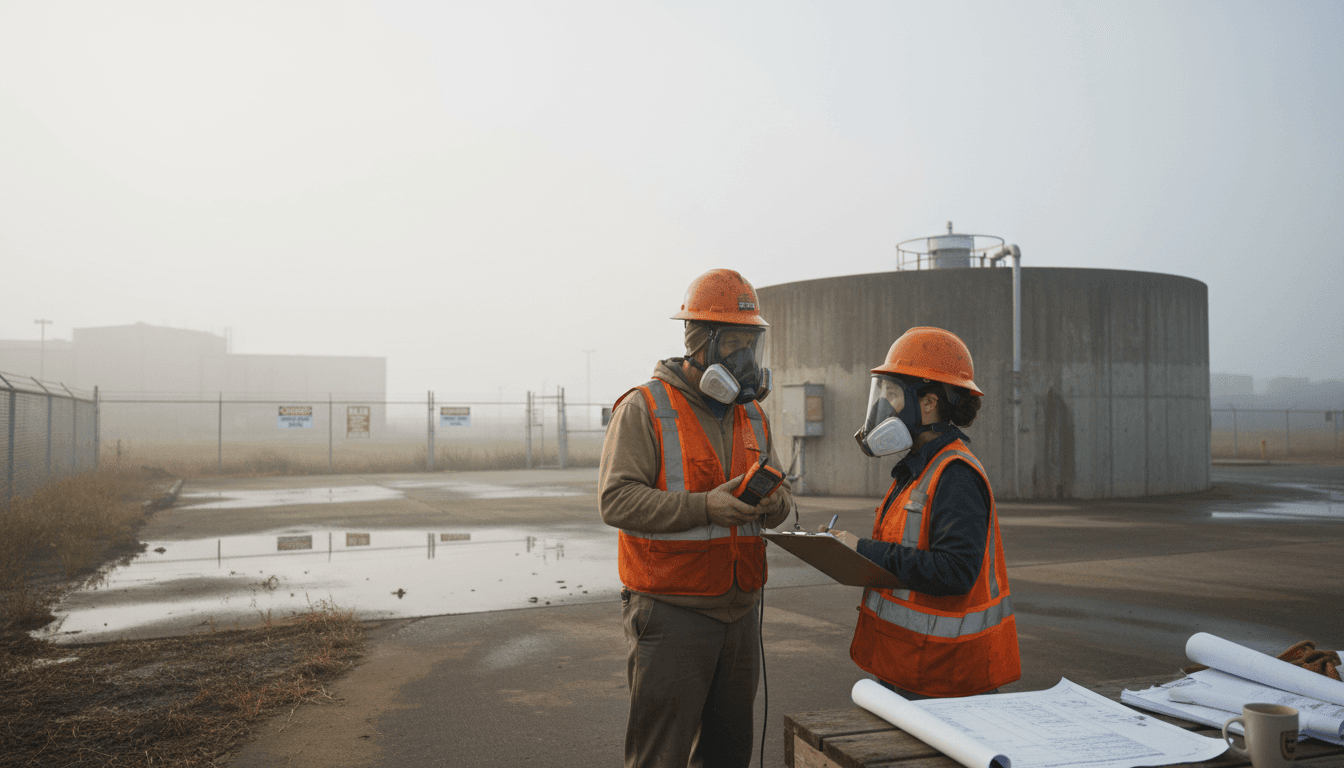
Pro tip: Schedule your blasting and coating application on the same day or within 24 hours maximum. Delayed coating application over freshly blasted surfaces allows rust formation that undermines adhesion and coating durability.
Types of Blasting Methods and Media
Not all blasting approaches work equally for your water treatment infrastructure. The method you choose directly impacts surface preparation quality, equipment costs, timeline, and environmental compliance. Understanding your options helps you select the right tool for each facility challenge.
Dry Abrasive Blasting
Dry blasting propels abrasive particles using compressed air alone, with no water involved. This traditional method delivers aggressive cleaning and is excellent for removing heavy rust, mill scale, and old coatings from concrete or steel surfaces.
Dry blasting works well when:
- Surface requires aggressive material removal
- Weather permits dust containment
- Budget constraints limit equipment options
- Project timeline is tight
The trade-off is dust generation. Your facility must implement proper containment and respiratory protection for workers. In Florida’s humid climate, dry blasting also requires careful scheduling to avoid moisture recontamination after blasting.
Wet Abrasive Blasting
Wet abrasive blasting combines water with abrasive media and compressed air to reduce dust and improve worker safety. The water encapsulates abrasive particles, preventing airborne silica dust that poses serious respiratory hazards.
For municipal water treatment plants, wet blasting offers significant advantages:
- Dramatically reduces airborne dust and silica exposure
- Creates safer working conditions for your crew
- Minimizes environmental impact from dust discharge
- Prevents moisture recontamination (water is already present)
- Ideal for Central Florida’s humidity and nearby residential areas
Wet blasting takes slightly longer than dry methods but provides superior safety and environmental compliance.
Shot Blasting and Media Selection
Media blasting techniques vary based on surface type and desired results. Steel shot is aggressive and ideal for thick rust removal on water tank exteriors. Steel grit provides faster cutting with a finer surface finish. Aluminum oxide works well on concrete pump stations. Glass beads produce smoother finishes for surfaces requiring refined appearance.
Your choice depends on:
- Substrate material (steel, concrete, aluminum)
- Contamination severity (light oxidation vs. heavy rust)
- Desired surface profile (coarse vs. fine)
- Budget and equipment availability
Selecting the wrong media can damage substrates, waste time and money, or fail to achieve required surface cleanliness standards—choose based on your specific facility conditions.
Waterjet Cleaning
High-pressure waterjet cleaning uses only water, no abrasives. This method works for lighter contamination and situations where abrasive media residue must be eliminated entirely. Waterjets excel at cleaning delicate structures or areas near electrical equipment.
For municipal applications, waterjet cleaning typically handles:
- Light surface cleaning and degreasing
- Removal of algae or biological growth on water tank exteriors
- Prep work before detailed inspections
- Environmental-sensitive areas near water sources
Why Selection Matters for Your Facility
Choosing the right method requires understanding your specific infrastructure needs. A corroded steel pipe support demands different treatment than a concrete pump station foundation. Your facility’s location near water treatment systems, worker safety requirements, and budget constraints all influence the decision.
Here is a comparison of key abrasive blasting methods and their best use scenarios:
| Method | Best For | Main Drawback |
|---|---|---|
| Dry Blasting | Heavy rust and rapid cleaning | High dust generation |
| Wet Blasting | Dust control and safety needs | Slightly slower process |
| Shot Blasting | Aggressive steel cleaning | Risk of substrate damage |
| Waterjet Cleaning | Delicate or sensitive surfaces | Limited to light deposits |
Pro tip: Request a site assessment before committing to any blasting method—experienced contractors evaluate your specific substrate, contamination level, and environmental conditions to recommend the most cost-effective approach that meets compliance standards.
Surface Profile and Adhesion Explained
Blasting doesn’t just clean your infrastructure—it fundamentally transforms the surface at a microscopic level. This transformation, called surface profile, is what separates coatings that last decades from those that fail in years.
Understanding Surface Profile
Imagine looking at a freshly blasted steel surface under magnification. Instead of smooth, shiny metal, you’d see thousands of tiny peaks and valleys. This roughness is intentional and critical for coating success.
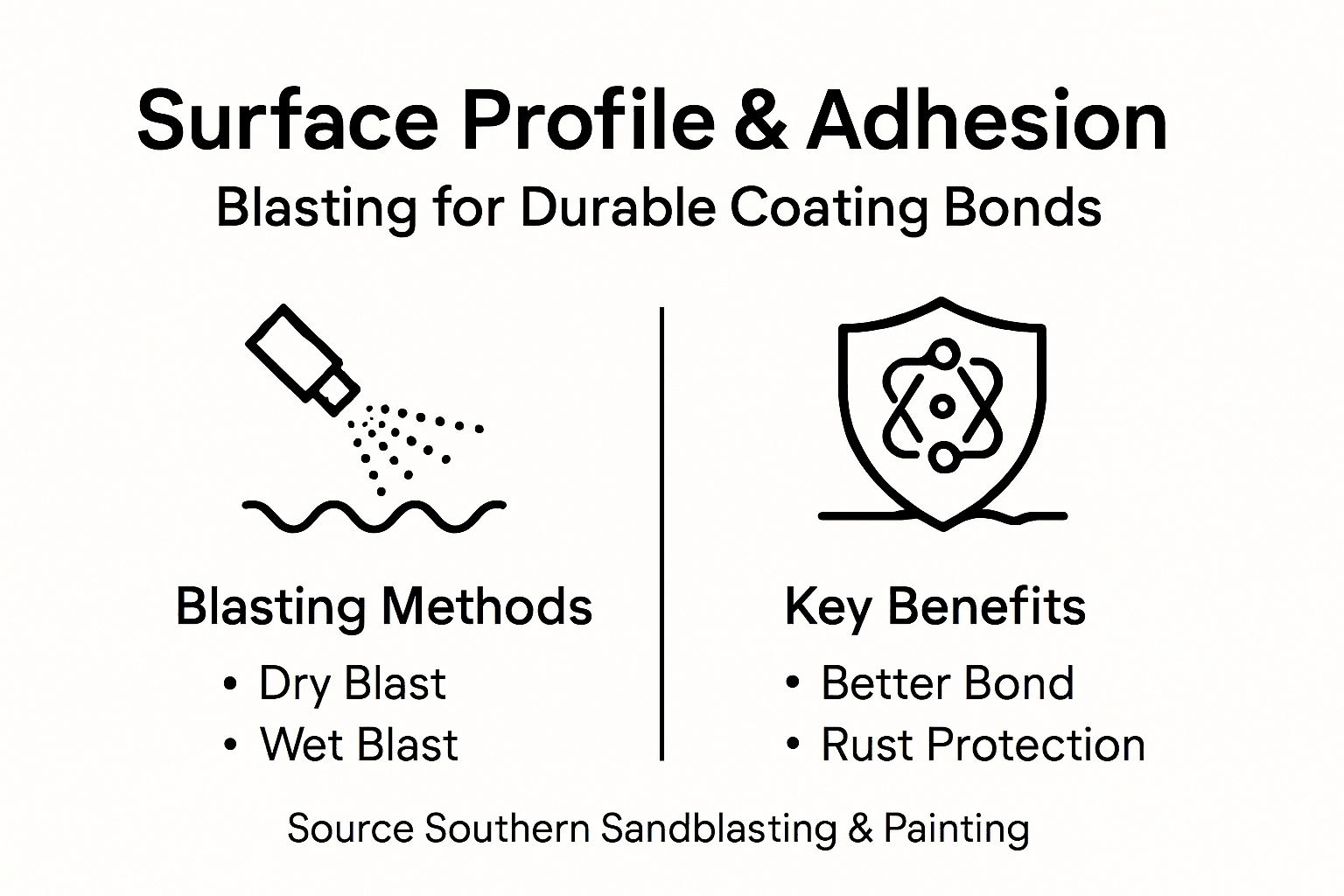
Surface profile is the measure of this microscopic texture. It’s expressed in mils (thousandths of an inch) and controlled by selecting appropriate blasting media and pressure. For water treatment infrastructure in Central Florida, profiles typically range from 1.5 to 4 mils, depending on the coating system you’ll apply.
The profile serves one essential purpose: mechanical bonding. When wet coating is applied to a rough surface, it flows into those valleys and hardens around the peaks, locking itself physically to the substrate. Smooth surfaces offer nothing for coatings to grip.
How Blasting Creates Adhesion
Surface profile created by blasting enhances mechanical bonding between coatings and substrates. Without adequate roughness, even premium coatings peel and fail within months. With proper profile, the same coating system lasts 15 to 20 years in Florida’s challenging environment.
Three factors work together:
- Cleanliness: Blasting removes rust, paint, oils, and contaminants that prevent adhesion
- Profile: Roughness creates mechanical locks that anchor coatings in place
- Time sensitivity: Coating must be applied before exposed metal oxidizes and loses adhesion potential
Why Profile Matters for Your Facility
Shot blasting improves coating adhesion and corrosion resistance by creating the mechanical profile that protects against coating failure. Your pump station structures, water tank exteriors, and pipe supports all depend on this foundation.
Inconsistent profile creates weak spots. If one section gets light blasting (shallow profile) and another gets aggressive blasting (deep profile), the lightly blasted area becomes the failure point. Coatings separate first where adhesion is weakest.
For concrete surfaces in your facility, profile works differently. Concrete’s porous nature means adhesion depends on coating penetrating the surface pores. Blasting opens these pores and removes any sealant or contamination blocking penetration.
Profile Standards and Compliance
Industry standards specify required profiles based on coating type. SSPC-PA2 and ISO 8501 define acceptable profile depths for different applications. Your coating manufacturer specifies the profile their system requires to perform correctly.
For municipal water treatment infrastructure, most industrial coating systems require:
- Minimum profile: 1.5 mils
- Maximum profile: 4 mils
- Target: 2.5 to 3.5 mils for optimal adhesion
Too little profile and coatings don’t bond. Too much profile can trap air pockets that lead to premature failure.
Below is a reference for surface profile requirements and their impact on coating longevity:
| Surface Profile (mils) | Expected Coating Lifespan | Risk of Failure |
|---|---|---|
| Less than 1.5 | Short (1–5 years) | Poor adhesion, peeling |
| 1.5–2.5 | Moderate (5–15 years) | Moderate protection |
| 2.5–3.5 | Optimal (15–20 years) | Low; optimal adhesion |
| Over 4.0 | Reduced (5–10 years) | Air entrapment risk |
Proper surface profile is the foundation of coating durability—measure it with a surface profile gauge and verify compliance before applying any coating.
The Timing Factor
Profile quality degrades quickly. Once blasting completes, exposed steel begins oxidizing immediately in Florida’s humid climate. Within 24 hours, rust starts forming and destroys the clean surface you just created.
This is why blasting and coating should happen the same day or within hours. You’re maintaining the window when the surface profile is clean and ready to accept coating adhesion.
Pro tip: Schedule your blasting early morning so coatings can be applied the same afternoon—this maximizes adhesion by minimizing the time between surface preparation and coating application.
Regulatory and Safety Compliance for Municipal Assets
Blasting operations at your water treatment facility aren’t just about technical excellence—they’re governed by strict safety and environmental regulations. Your responsibility as a facility manager includes understanding these requirements and ensuring your contractors meet them fully.
The OSHA Framework
Occupational Safety and Health Administration (OSHA) standards govern worker protection during blasting operations. The primary hazard is silica dust exposure, which causes serious respiratory diseases including silicosis and lung cancer. OSHA sets permissible exposure limits and requires comprehensive safety programs to protect your crew.
OSHA compliance for blasting operations requires:
- Engineering controls to minimize dust generation
- Personal protective equipment (respirators, protective clothing, eye protection)
- Medical surveillance programs for workers with repeated exposure
- Hazard communication and worker training documentation
- Regular air quality monitoring during blasting activities
Non-compliance puts your workers at risk and exposes your municipality to significant fines. Many facilities have faced penalties exceeding $100,000 for inadequate safety controls during surface preparation.
Environmental Regulatory Requirements
Abrasive blasting operations require implementing engineering controls and safety programs to manage health risks and environmental impacts. Beyond worker safety, environmental regulations control where blasting waste goes and how it’s handled.
Your municipality must comply with:
- EPA regulations on hazardous waste disposal (especially if blasting removes lead-based paint)
- Clean Air Act standards limiting particulate emissions
- Stormwater management preventing blasting debris from entering municipal water systems
- Local ordinances restricting blasting hours and dust discharge in residential areas
For water treatment facilities in Central Florida, stormwater compliance is critical. Blasting debris cannot contaminate the water systems you treat.
Surface Preparation and Contaminant Management
Proper abrasive blasting includes verifying compliance with environmental and occupational standards to manage hazards from contaminants. Old paint, mill scale, and rust can contain lead, asbestos, or other dangerous materials that require special handling during removal.
Before blasting begins, contractors should:
- Test surfaces for hazardous materials
- Implement containment systems for controlled debris
- Dispose of waste according to EPA guidelines
- Document all materials removed and disposal methods
Industry Standards and Certifications
Industry bodies like SSPC (Society for Protective Coatings) and NACE International publish standards your project must follow. These standards define surface cleanliness levels, profile requirements, and safety practices.
Common standards include:
- SSPC-PA2: Inspection and verification of surface cleanliness
- NACE SP0287: Wet abrasive blasting methods and safety
- ANSI/AIHA Z535.4: Safety labeling and hazard communication
Compliance isn’t optional—municipal assets require certification that all work meets SSPC, NACE, and OSHA standards before coating application.
Your Role in Ensuring Compliance
As facility manager, verify that contractors maintain proper documentation, insurance, and certifications. Request evidence of:
- Active business licenses and liability insurance
- OSHA 30-hour safety certifications for supervisory personnel
- Air quality monitoring reports during blasting
- Hazardous materials testing and disposal documentation
- Compliance with local permitting and zoning requirements
Scheduling blasting work requires coordinating with OSHA, environmental agencies, and your municipality’s compliance office. Proper planning prevents costly delays and violations.
Pro tip: Require contractors to provide a pre-project compliance checklist addressing OSHA, EPA, local ordinances, and industry standards—this documentation protects your municipality and demonstrates due diligence in case of future liability questions.
Risks of Skipping Proper Surface Preparation
Cutting corners on surface preparation seems like a quick cost-saving move. Your water treatment facility might save a few thousand dollars upfront. But within months or years, you’ll face catastrophic coating failure that costs exponentially more to repair.
The Economics of Failure
Skipping blasting and jumping straight to coating is tempting when budgets are tight. A full blasting and coating project might cost $150,000 to $300,000 depending on infrastructure size. Seems expensive until you calculate the cost of premature failure.
When coatings fail early, you pay for:
- Emergency surface re-preparation and recoating
- Accelerated corrosion damage to underlying structures
- Potential infrastructure downtime affecting municipal services
- Emergency maintenance calls and labor costs
- Possible liability if failures create safety hazards
A water tank that fails at year five instead of year twenty means replacing the entire coating system three additional times over its lifecycle. The economics are brutal.
Adhesion Failures and Coating Delamination
Inadequate surface preparation results in blistering and delamination due to poor adhesion and moisture intrusion. When coating doesn’t bond properly to the substrate, it separates and peels, leaving bare metal exposed to Florida’s aggressive environment.
Without proper blasting, contaminants create a barrier between coating and surface. The coating sits on top like paint on glass—it eventually flakes off. Your pump station, water tank, or pipe support then rusts rapidly as moisture and oxygen attack unprotected metal.
This delamination typically appears within 6 to 18 months. One section starts peeling, then spreads across the entire structure.
Accelerated Corrosion and Structural Risk
Failure to perform proper surface preparation leads to increased corrosion and mechanical degradation of steel reinforcement. Without adequate cleaning and profile, coatings don’t adhere correctly, accelerating rust formation and compromising structural performance.
For critical infrastructure like water tanks or treatment plant supports, corrosion isn’t just cosmetic. It weakens structural integrity. Rust reduces metal thickness and creates stress concentrations that threaten safety.
Your facility could face:
- Structural capacity loss requiring emergency repairs
- Safety risks to personnel working near corroded structures
- Regulatory violations if systems fail inspection
- Complete structural replacement instead of coating restoration
Moisture Intrusion and Subsurface Damage
Moisture penetrates coatings with poor adhesion, getting trapped between coating and substrate. This moisture activates corrosion at the interface, creating a hidden problem that spreads invisibly until catastrophic failure occurs.
You might not notice until the coating fails suddenly. By then, rust has spread significantly under the surface, and damage is far more extensive than if coatings had been applied properly initially.
In Central Florida’s humid climate near water treatment facilities, moisture intrusion accelerates dramatically. Your facility’s location makes proper surface preparation non-negotiable.
The Hidden Cost of Downtime
When coatings fail on critical infrastructure, you face emergency repairs that disrupt operations. Water treatment systems can’t wait for scheduled maintenance windows. Emergency blasting and recoating force operational shutdowns, affecting service to your community.
Those emergency service calls cost 50 to 100 percent more than scheduled work. Add the operational impact, and the true cost of skipped surface preparation becomes staggering.
Proper surface preparation costs less than 15 percent of total project cost but prevents 85 percent of potential coating failures—skipping this step is false economy.
Pro tip: Document your baseline condition with photographs and condition assessments before any work begins—this creates proof of your facility’s diligent maintenance practices and protects against liability claims if premature failures occur despite proper preparation.
Protect Your Infrastructure with Expert Blasting and Coating Services
The article highlights the critical challenge of achieving the right surface profile and cleanliness through blasting before coating to ensure decades of durable protection. Skipping or improperly performing abrasive blasting can lead to premature coating failure, costly repairs, and structural risks—especially in Florida’s humid environment. You need trusted expertise to remove rust, contaminants, and create the proper profile that guarantees strong adhesion and long-lasting corrosion resistance.
Southern Sandblasting & Painting LLC brings over 20 years of experience in sandblasting and industrial painting to help your municipal or commercial facility meet stringent industry standards. Our skilled team understands the technical precision and regulatory compliance necessary to protect your assets from environmental stress and premature coating failure.
Don’t let inadequate surface preparation shorten the lifespan of your critical infrastructure. Contact us today at Southern Sandblasting & Painting LLC to schedule a site assessment and discover how our comprehensive sandblasting & painting solutions can deliver exceptional durability and peace of mind for your project.
Frequently Asked Questions
What is abrasive blasting and why is it important before coating?
Abrasive blasting is the process of propelling abrasive material at high velocity against a surface to clean and prepare it for coating. Proper blasting removes old paint, rust, and contaminants, creating a suitable surface for adhesion, which is crucial for ensuring the durability of coatings.
How does surface profile affect coating adhesion?
The surface profile created by blasting introduces microscopic peaks and valleys that allow coatings to mechanically lock in place. A rough surface profile significantly enhances the bonding between the coating and substrate, while a smooth surface may lead to poor adhesion and premature failure.
What are the different methods of blasting and their benefits?
The primary methods include dry abrasive blasting, wet abrasive blasting, shot blasting, and waterjet cleaning. Dry blasting is effective for aggressive cleaning, while wet blasting reduces dust and improves safety. Shot blasting is aggressive for steel, and waterjet cleaning is suited for delicate surfaces without leaving abrasives behind.
What are the risks of skipping proper surface preparation before coating?
Skipping surface preparation can lead to inadequate adhesion, resulting in blistering, peeling, and premature coating failure. This not only compromises protective measures for infrastructure but can also lead to increased corrosion and maintenance costs over time.
Recommended
- 7 Key Protective Coating Advantages for Facility Managers
- Role of Coatings in Longevity – Extending Asset Lifespans
- Protective Coating Trends 2025: Innovations for Infrastructure
- How to Apply Protective Coatings for Lasting Asset Durability
- Sandblasting Contractor Baldwin Park FL
- Sandblasting Services Oviedo FL


