by Mike Folta | Oct 26, 2026 | Sandblasting & Painting
TL;DR: A commercial painting scope of work should list every surface in scope. For each one, it should name the surface preparation and the coating system. It should also set weather and inspection rules and say who is responsible for what. In Central Florida, the...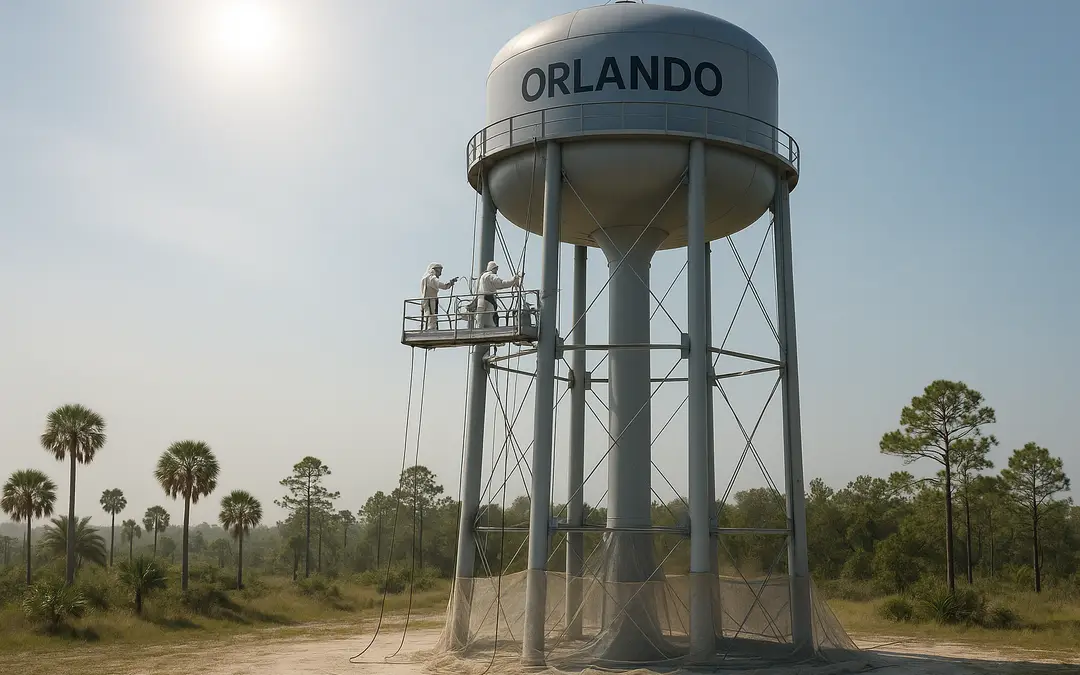
by Mike Folta | Oct 23, 2026 | Sandblasting & Painting
TL;DR: Coating lifecycle cost budgeting means planning for every coating cost over an asset’s life, not just the first job. List your coated assets, survey their condition, give each system a realistic service life, map out the touch-up, repaint, and full recoat...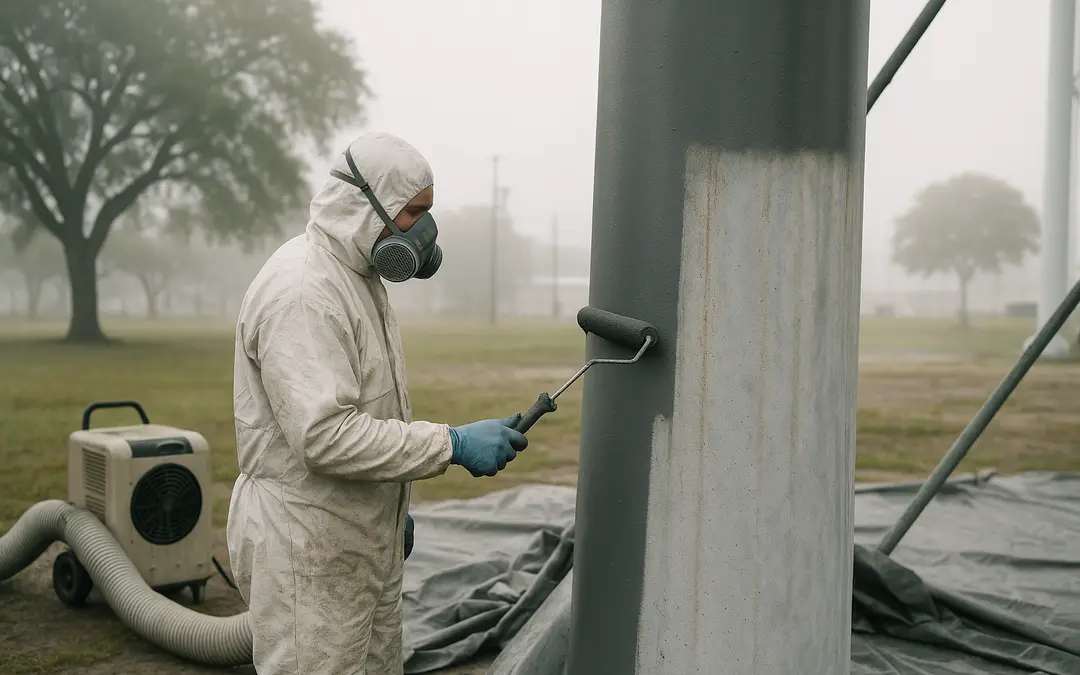
by Mike Folta | Oct 22, 2026 | Sandblasting & Painting
TL;DR: Moisture cured urethane (MCU) primer cures by reacting with water vapor in the air. Some data sheets allow it to go on at up to 99% relative humidity, so it fits Central Florida’s wet seasons and tight shutdown windows. It still needs clean steel, a film...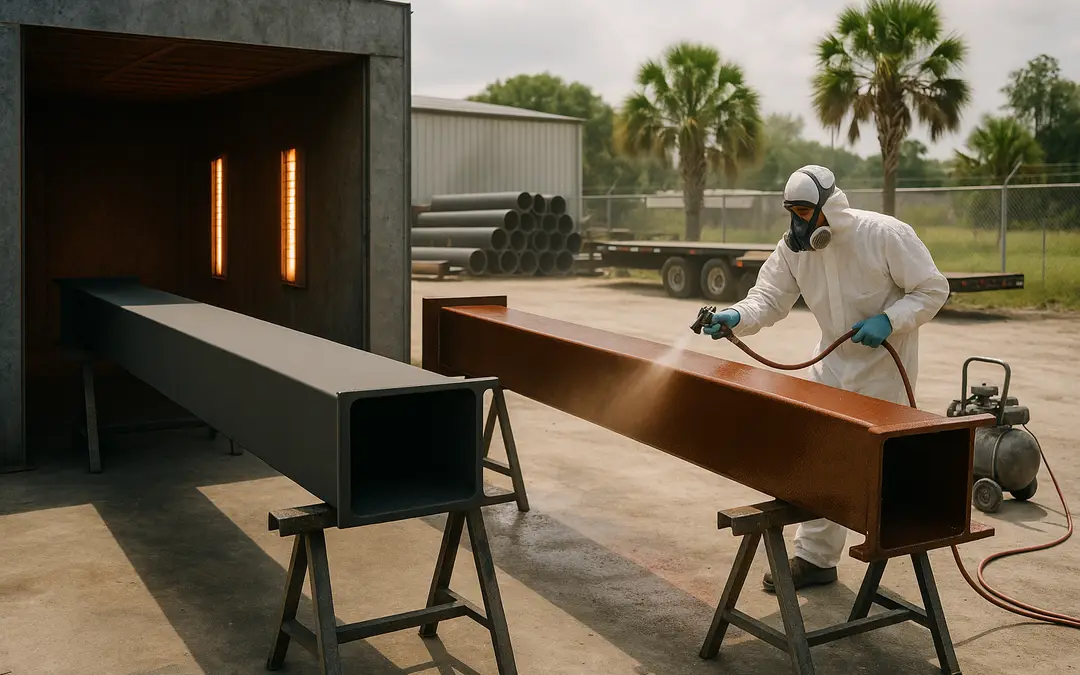
by Mike Folta | Oct 20, 2026 | Sandblasting & Painting
TL;DR: Powder coating is a dry, zero-VOC finish that has to be baked in an oven, so it works best on smaller parts finished in a shop. Heavy steel that is already standing, too big for an oven, or exposed to Central Florida humidity and salt usually needs a multi-coat...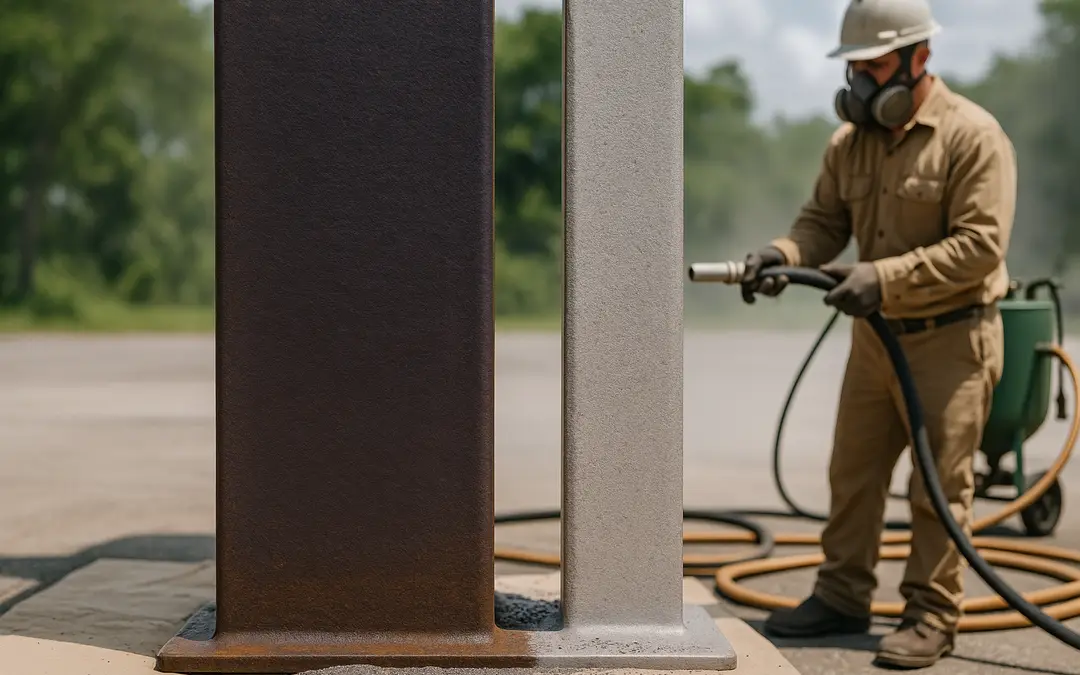
by Mike Folta | Oct 19, 2026 | Sandblasting & Painting
TL;DR: A rust converter chemically stabilizes light, tight rust and leaves it on the steel, while full abrasive blast removal strips everything down to a clean substrate with a fresh anchor profile. Converters work for small, non-critical touch-ups. Blast removal is...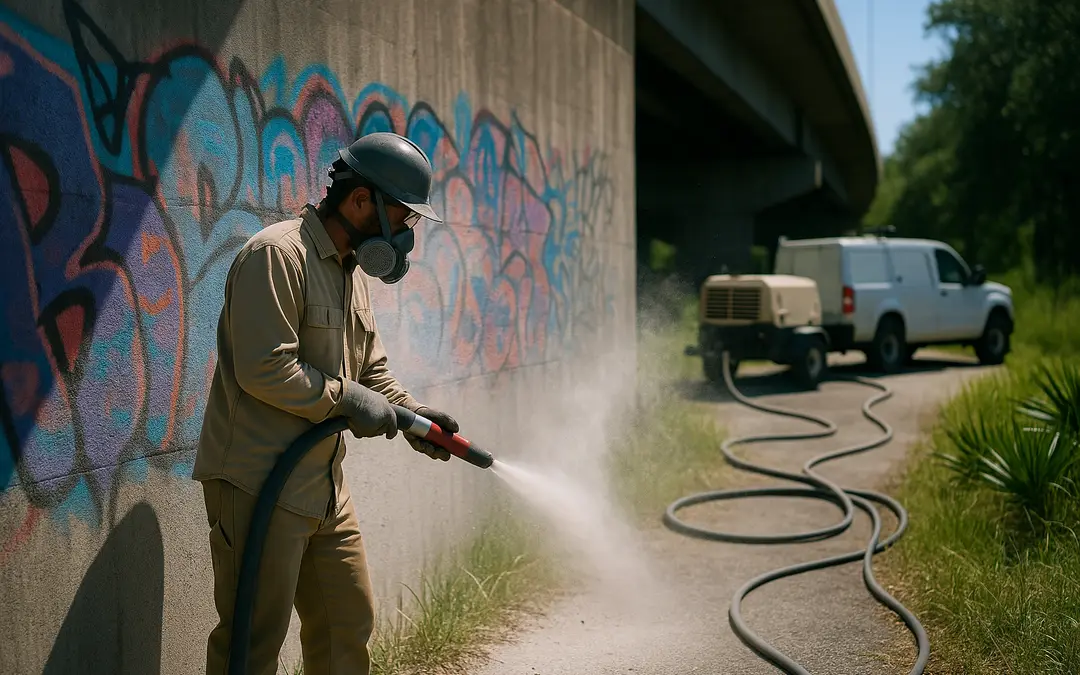
by Mike Folta | Oct 18, 2026 | Sandblasting & Painting
TL;DR: Graffiti removal from concrete starts with the gentlest method that works, usually water, detergent, or a chemical remover in a poultice. Controlled abrasive blasting is saved for paint that has soaked into the pores. A sacrificial or permanent anti-graffiti...