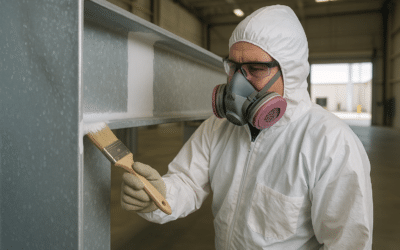
TL;DR: Painting over galvanized steel fails when the zinc surface isn't properly cleaned, profiled, and primed — not because the paint is wrong, but because prep is skipped or rushed. This guide walks facility managers, contractors, and coating specifiers through...
Articles
When Should an Elevated Water Tower Be Repainted? Signs, Standards, and Scheduling
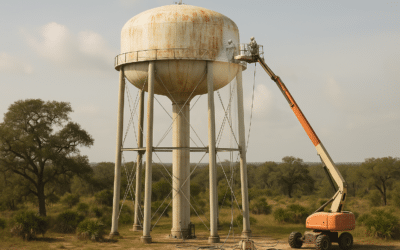
TL;DR: Elevated water towers should be formally inspected at least every five years per AWWA standards, with repainting typically triggered between 10 and 25 years depending on coating system, environment, and inspection findings. Florida's heat, humidity, and coastal...
Potable Water Tank Coating Standards Every Municipality Should Know
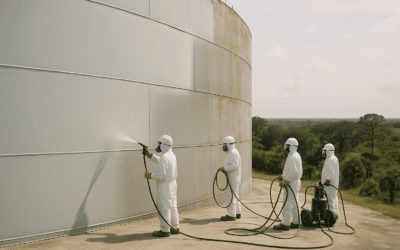
TL;DR: Potable water tank coatings must satisfy three overlapping frameworks: AWWA D102 (system selection and application), NSF/ANSI 61 (health-effects certification for water-contact products), and AMPP/SSPC surface preparation standards. Florida adds a state-level...
Bridge Coating Maintenance: How DOT and Municipal Structures Are Repainted
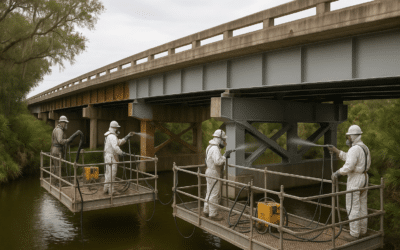
TL;DR: Bridge coating maintenance is the planned process of surface-preparing and repainting structural steel to stop corrosion before it compromises load capacity or safety. Projects follow SSPC/NACE surface-preparation standards and typically use a three-coat...
Lead Paint Removal from Steel Structures: Methods, Regulations, and Safety Requirements
TL;DR: Lead paint on steel structures creates serious compliance, safety, and environmental obligations under OSHA 29 CFR 1926.62 and EPA hazardous waste rules. Removal method selection — abrasive blasting, wet blasting, vacuum blasting, or chemical stripping —...
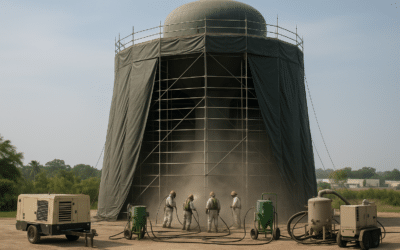
How Abrasive Blasting Containment Systems Work on Commercial Job Sites
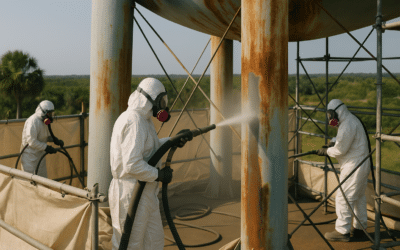
TL;DR: Abrasive blasting containment systems are engineered barriers and air-handling assemblies that capture spent media, dust, and hazardous debris at the source so they cannot reach workers, the public, or the surrounding environment. OSHA, EPA, and AMPP (formerly...
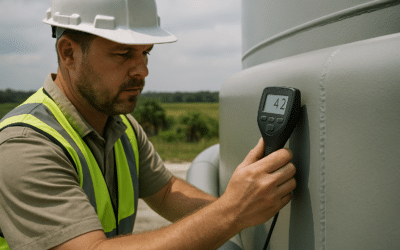
How Dry Film Thickness Measurement Ensures Coating Performance on Industrial Steel
TL;DR: Dry film thickness (DFT) measurement verifies that a cured protective coating meets its specified mil range — not too thin to leave steel exposed, not too thick to cause adhesion or curing failures. Governed by ASTM D7091 and SSPC-PA 2, DFT readings are a...
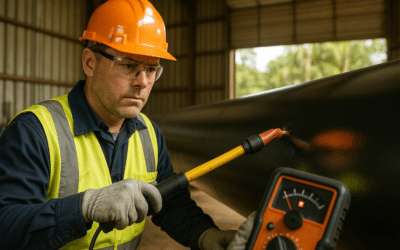
What Is Holiday Testing and Why It Matters for Industrial Protective Coatings
TL;DR: Holiday testing is a nondestructive electrical inspection that finds pinholes, voids, and missed areas in protective coatings before a structure goes into service. It is required on virtually every immersion-service, buried, or tank-lining project — including...
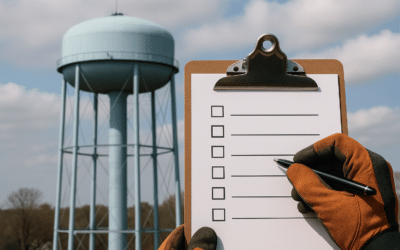
The Complete Tank Lining Inspection Checklist for Municipal Water Systems
TL;DR: Municipal water tank linings require structured inspections every three to five years under AWWA D101 guidance, with every interior coating verified for NSF/ANSI 61 compliance before the tank returns to potable service. This checklist walks public works...