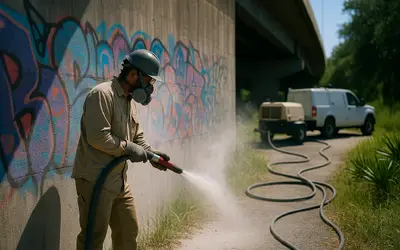
TL;DR: Graffiti removal from concrete starts with the gentlest method that works, usually water, detergent, or a chemical remover in a poultice. Controlled abrasive blasting is saved for paint that has soaked into the pores. A sacrificial or permanent anti-graffiti...
Articles
Pipeline Recoating Shutdown Planning: 9 Steps for Orlando
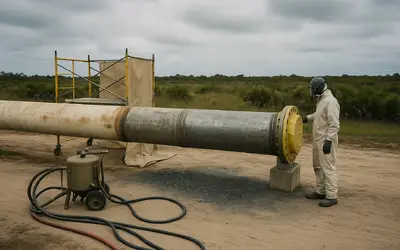
TL;DR: To plan a pipeline recoating shutdown, break the line into isolated segments, choose a shutdown approach for each one, and build the schedule from coating cure times and weather. In Central Florida, the best time for heavy blasting and coating is usually...
Fuel Storage Tank Exterior Coating in Florida: How to Choose
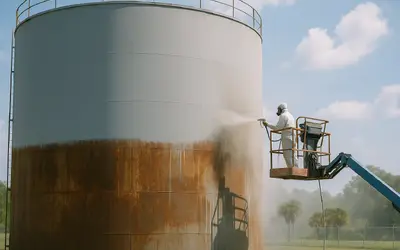
TL;DR: A fuel storage tank exterior coating is a multi-coat system, usually primer, epoxy and a UV-stable topcoat, applied over abrasive-blasted steel. Florida rules require regulated aboveground tank exteriors to be protected from corrosion. In Central Florida, the...
Aircraft Hangar Floor and Door Coatings: An Orlando Guide
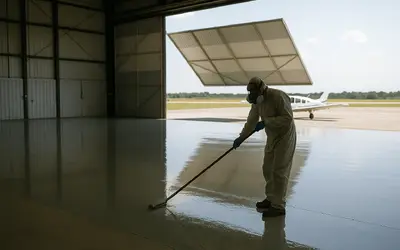
TL;DR: Hangar floors usually need a thick resin system, often a high-build epoxy with an aliphatic urethane topcoat, that stands up to phosphate ester hydraulic fluid, fuel, and tire loads. The floor must also keep the drainage NFPA 409 requires. Steel hangar doors...
What Goes Into Steel Roller Coaster Repainting in Orlando?
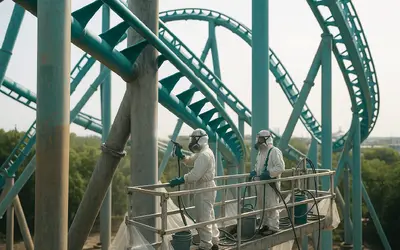
TL;DR: Repainting a steel roller coaster is a full protective coatings project. It covers testing, cleaning, surface prep, a primer and UV-resistant topcoat, and inspection, all fit into park downtime. In Central Florida, the hard parts are humidity, dew point, and...
How Does Amusement Ride Coating Maintenance Work in Florida?
TL;DR: Amusement ride coating maintenance is a repeating cycle: survey the steel, prep the surface, recoat, and keep records. In Central Florida, heat, humidity, UV and daily storms make the cycle shorter, so it has to be planned around park hours and the...
Dustless Blasting for Historic Masonry: How to Strip Coatings Without Damaging the Substrate
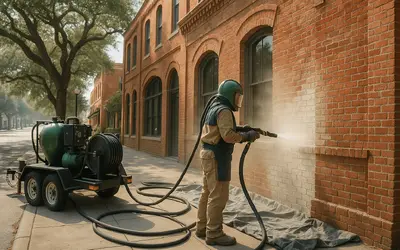
TL;DR: Dustless (wet) blasting can remove paint and coatings from historic masonry with far less risk than dry sandblasting, but national preservation standards still treat all abrasive methods as a last resort. For Orlando-area municipal buildings, DOT structures,...
Vapor Abrasive Blasting vs. Dry Blasting: Comparing Performance, Dust, and Cost
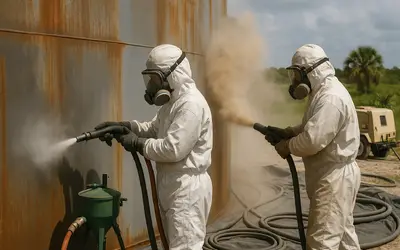
TL;DR: Vapor (wet) abrasive blasting mixes water with media to cut airborne dust and allow work closer to occupied areas, while dry blasting cuts faster and leaves a more aggressive, consistent surface profile. The right choice in Central Florida depends on the...
Garnet vs. Coal Slag Blasting Media: Which Abrasive Is Right for Your Project?
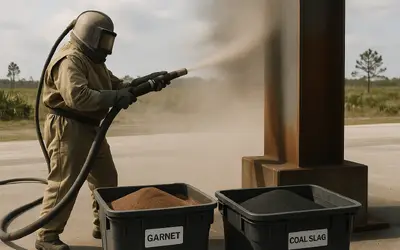
TL;DR: Garnet and coal slag are both silica-free alternatives to sand for abrasive blasting, but they perform very differently: garnet is harder, recyclable, and produces far less dust, while coal slag is cheaper upfront but single-use and dustier. For most commercial...