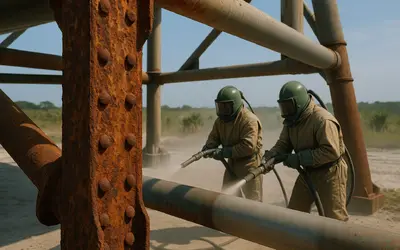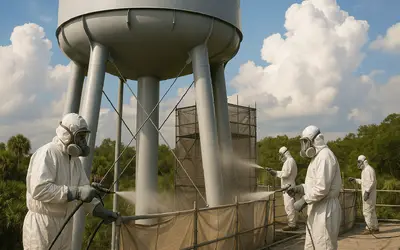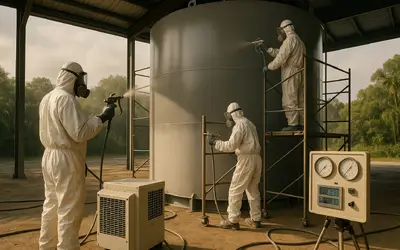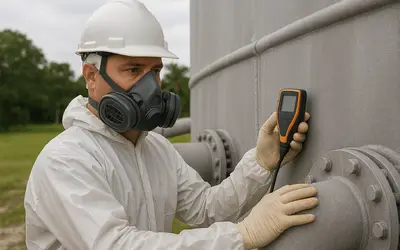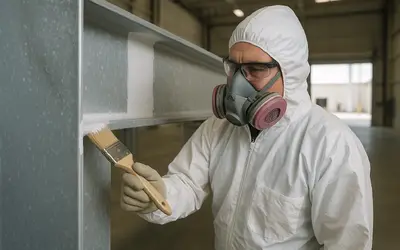
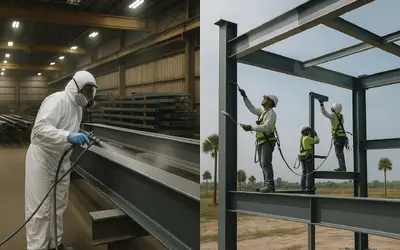
TL;DR: Shop painting applies coatings to structural steel in a controlled plant before it ships to the jobsite, while field painting happens on-site after erection, repair, or maintenance. Most Central Florida steel projects use both — a shop primer for...
Articles
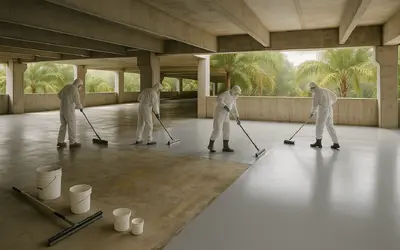
Parking Garage Coating Restoration: What the Process Looks Like and What It Costs
TL;DR: Parking garage coating restoration protects concrete decks from water, chlorides, and UV damage that cause cracking, spalling, and rebar corrosion. The process involves inspection, surface prep, crack repair, and a traffic-bearing waterproof coating system —...
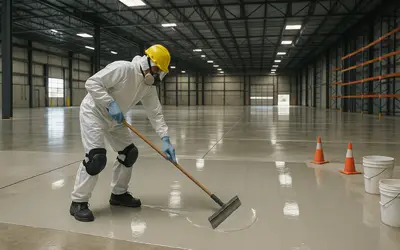
How to Write a Warehouse Floor Coating Specification That Holds Up to Heavy Use
TL;DR: A durable warehouse floor coating specification needs documented moisture testing, a concrete surface profile (CSP) matched to the coating system, and clear mil-thickness and slip-resistance requirements. In Central Florida, humidity and high water tables make...
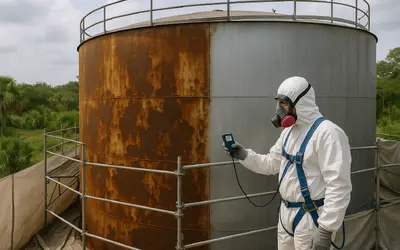
Salt Spray Corrosion on Coastal Steel: How It Destroys Structures in Central Florida — and How to Stop It
TL;DR: Salt spray corrosion is an electrochemical attack that chloride ions accelerate on unprotected or poorly coated steel, and it’s a year-round risk across Central Florida — not just at the beach. The fix is proper surface preparation to recognized standards...
Common Causes of Industrial Coating Failure and How to Prevent Them
TL;DR: Most industrial coating failures trace back to a handful of preventable root causes: bad surface prep, wrong environmental conditions during application, thin or uneven film thickness, and mismatched coating systems. In Central Florida’s heat, humidity,...
How to Schedule Industrial Coating Projects Around Florida’s Hurricane Season
TL;DR: Florida’s Atlantic hurricane season runs June 1 through November 30, with the heaviest storm activity from mid-August through mid-October, so industrial coating projects need to be planned around that window, not squeezed into it. This guide walks...
How Humidity Control During Industrial Coating Protects Long-Term Performance
TL;DR: Humidity control during industrial coating means monitoring and managing relative humidity, dew point, and surface temperature so coatings bond, cure, and perform as specified. In Central Florida’s humid subtropical climate, skipping this step is one of...
Dew Point, Surface Temperature, and Why They Make or Break a Coating Application
TL;DR: Applying a protective coating when the steel surface is too close to the dew point traps invisible moisture under the film, guaranteeing adhesion failure — even on a surface that looks and feels dry. Industry standards require surface temperature to be at least...
How to Properly Prepare Galvanized Steel Surfaces Before Painting
TL;DR: Painting over galvanized steel fails when the zinc surface isn’t properly cleaned, profiled, and primed — not because the paint is wrong, but because prep is skipped or rushed. This guide walks facility managers, contractors, and coating specifiers...