

Most American municipalities face a relentless challenge as more than 60 percent of public infrastructure in Florida is now past its intended lifespan. Aging bridges, water tanks, and pipelines stretch maintenance budgets while safety regulations continue to grow stricter. Discover why protective coatings are not just another layer on concrete or steel but a science-driven necessity that can help infrastructure managers extend asset life, cut costs, and meet demanding public safety standards.
Table of Contents
- Defining Protective Coatings And Their Purpose
- Types Of Industrial Coatings For Longevity
- How Coatings Prolong Asset Lifespans
- Regulatory Standards For Public Infrastructure Coatings
- Common Pitfalls And Risks In Coating Selection
Key Takeaways
| Point | Details |
|---|---|
| Importance of Protective Coatings | Protective coatings are essential for shielding infrastructure from environmental damage, extending asset lifespans. |
| Types of Industrial Coatings | Industrial coatings are categorized into barrier and non-barrier systems for specific protective needs based on environmental challenges. |
| Regulatory Standards | Adherence to regulatory standards ensures coatings meet safety and performance criteria to protect public infrastructure. |
| Common Coating Pitfalls | Improper surface preparation and mismatched coating types can lead to premature failure; careful analysis and testing are crucial. |
Defining Protective Coatings and Their Purpose
Protective coatings represent a critical technological solution for preserving infrastructure and equipment across multiple industries. These specialized materials are scientifically engineered to shield surfaces from environmental degradation, chemical exposure, and mechanical stress. Protective coatings serve complex functions beyond simple aesthetic enhancement, acting as a critical barrier between valuable assets and potential damage sources.
At their core, protective coatings are engineered layers designed to interact strategically with underlying surfaces. Their primary objectives include preventing corrosion, resisting environmental wear, and extending the functional lifespan of infrastructure components. Advanced coatings improve durability by blocking harmful agents such as oxygen, carbon dioxide, chloride ions, and water, creating a sophisticated protective membrane that guards against multiple forms of structural deterioration.
The effectiveness of protective coatings depends on several critical performance characteristics:
- Strong adhesion to the substrate surface
- Resistance to abrasion and mechanical stress
- Chemical stability under varying environmental conditions
- Ability to withstand ultraviolet radiation exposure
- Maintaining substrate breathability to prevent moisture entrapment
Modern protective coating technologies have evolved to address complex infrastructure challenges, offering specialized formulations tailored to specific environmental conditions and material requirements. Whether protecting water tanks, industrial pipelines, or municipal infrastructure, these advanced materials represent a strategic investment in long-term asset preservation.
Pro Tip for Infrastructure Protection: Conduct comprehensive surface preparation and professional assessment before applying any protective coating, as proper substrate cleaning and evaluation are fundamental to achieving maximum coating performance and longevity.
Types of Industrial Coatings for Longevity
Industrial coatings represent a sophisticated spectrum of protective technologies designed to extend the functional lifespan of critical infrastructure and equipment. These specialized materials are engineered to address specific environmental challenges and substrate requirements, providing targeted protection against corrosion, wear, and structural degradation. Industrial coatings are strategically categorized based on their protective functions, with each type offering unique performance characteristics tailored to specific application needs.
Two primary categories of industrial coatings emerge as critical solutions for infrastructure preservation: barrier and non-barrier systems. Barrier coatings function by creating an impenetrable shield that completely blocks moisture, chemical agents, and environmental contaminants from reaching the underlying substrate. Conversely, non-barrier coatings like silanes and silicates allow substrates to breathe while still providing substantial protective properties. Smart coatings represent a technological advancement, incorporating active agents such as corrosion inhibitors and self-healing mechanisms that dynamically respond to potential degradation threats.
Key types of industrial coatings include:
Here is a comparison of major industrial coating types and their ideal use cases:
| Coating Type | Distinct Strength | Best Suited For |
|---|---|---|
| Epoxy | High chemical resistance | Water tanks, pipelines |
| Polyurethane | UV/weathering protection | Outdoor equipment |
| Zinc-Rich | Corrosion prevention | Steel bridges, metal beams |
| Ceramic | Heat and abrasion resistance | High-temperature areas |
| Fluoropolymer | Environmental resilience | Harsh industrial settings |
- Epoxy Coatings: Exceptional chemical resistance and durability
- Polyurethane Coatings: Superior UV and weathering protection
- Zinc-Rich Coatings: Excellent corrosion prevention for metal surfaces
- Ceramic Coatings: High-temperature and abrasion resistance
- Fluoropolymer Coatings: Outstanding chemical and environmental resilience
The selection of an appropriate industrial coating depends on multiple critical factors, including substrate material, environmental exposure, expected service life, and specific performance requirements. Municipal infrastructure managers must carefully evaluate these variables to ensure optimal protection and long-term asset preservation. Surface treatment processes play a crucial role in coating effectiveness, determining the initial adhesion and long-term performance of protective systems.
Pro Tip for Coating Selection: Always conduct comprehensive substrate analysis and environmental assessment before selecting an industrial coating, as proper matching of coating technology to specific conditions is fundamental to achieving maximum protective performance.
How Coatings Prolong Asset Lifespans
Protective coatings play a pivotal role in extending the functional lifespan of critical infrastructure by creating sophisticated barriers against environmental degradation. These advanced materials function as sophisticated shields, intercepting and neutralizing multiple forms of structural damage before they can compromise asset integrity. The fundamental mechanism involves creating a protective layer that prevents direct interaction between the substrate and potentially destructive environmental agents.
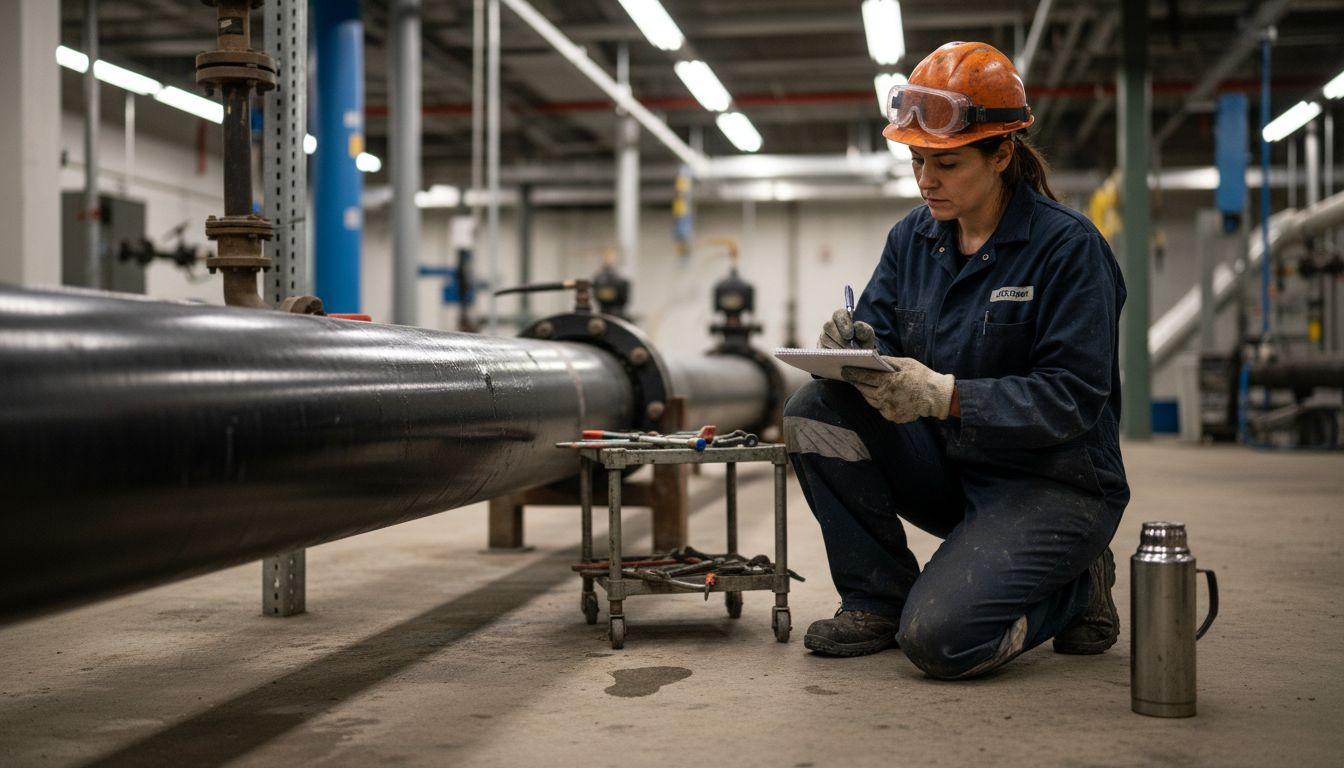
Polymer protective coatings specifically demonstrate remarkable capabilities in reducing structural deterioration, particularly for reinforced concrete and metal infrastructures. By establishing a molecular-level barrier, these coatings dramatically slow penetration of corrosive elements, moisture, and chemical contaminants. Degradation mechanisms are effectively disrupted, transforming what might be rapid structural decline into a significantly prolonged service life.
The longevity extension process occurs through multiple strategic protective mechanisms:
- Preventing direct oxidation of substrate materials
- Blocking moisture penetration
- Reducing thermal stress and expansion
- Minimizing chemical interaction with environmental agents
- Providing a sacrificial protective layer that absorbs environmental damage
Municipal infrastructure managers must understand that coating selection is not a one-size-fits-all solution. Each protective system must be carefully matched to specific environmental conditions, substrate materials, and anticipated stress factors. Surface treatment processes fundamentally determine the initial adhesion and long-term performance of these critical protective technologies.
Pro Tip for Asset Protection: Implement a proactive inspection and maintenance schedule that includes regular coating condition assessments, as early detection of coating degradation can prevent exponentially more expensive infrastructure repairs.
Regulatory Standards for Public Infrastructure Coatings
Regulatory standards for public infrastructure coatings represent a critical framework designed to ensure safety, durability, and performance of essential municipal assets. These comprehensive guidelines establish precise requirements for material selection, application processes, and long-term protective capabilities that safeguard public investments against environmental degradation and structural compromise.
Heat-resistant protective coatings have been specifically developed to protect structures against chemical destruction in extreme environmental conditions, with specialized materials like silicate enamels and glass-crystalline enamels emerging as key technological solutions. Regulatory compliance demands that these protective systems demonstrate exceptional resistance to temperature variations, chemical exposure, and mechanical stress, ensuring infrastructure can withstand challenging operational environments.
Key regulatory considerations for public infrastructure coatings include:
- Minimum performance thresholds for corrosion resistance
- Comprehensive chemical stability requirements
- Specified durability under extreme temperature ranges
- Mandated environmental impact assessments
- Precise application and surface preparation protocols
Technological advancements are driving innovation in nanostructured coating solutions, with regulatory frameworks continuously evolving to incorporate cutting-edge materials that enhance operational resistance and extend service life. Surface treatment processes play a crucial role in meeting these stringent regulatory standards, determining the initial and long-term performance of protective systems.
Pro Tip for Regulatory Compliance: Maintain meticulous documentation of coating specifications, application processes, and performance testing to demonstrate adherence to regulatory standards and protect municipal infrastructure investments.
Common Pitfalls and Risks in Coating Selection
Coating selection represents a complex decision-making process fraught with potential risks that can significantly compromise infrastructure durability and performance. Municipal infrastructure managers must navigate a nuanced landscape of material compatibility, environmental challenges, and application intricacies to ensure effective protective solutions. Understanding the most common pitfalls is crucial for preventing premature coating failure and protecting critical public assets.
The application method of protective coatings critically influences their overall effectiveness, with seemingly minor technical details potentially derailing entire protection strategies. Application complexity encompasses multiple critical variables including drying time, layer thickness, number of application layers, and precise surface preparation techniques. Even subtle deviations from recommended protocols can dramatically reduce coating performance and accelerate structural degradation.
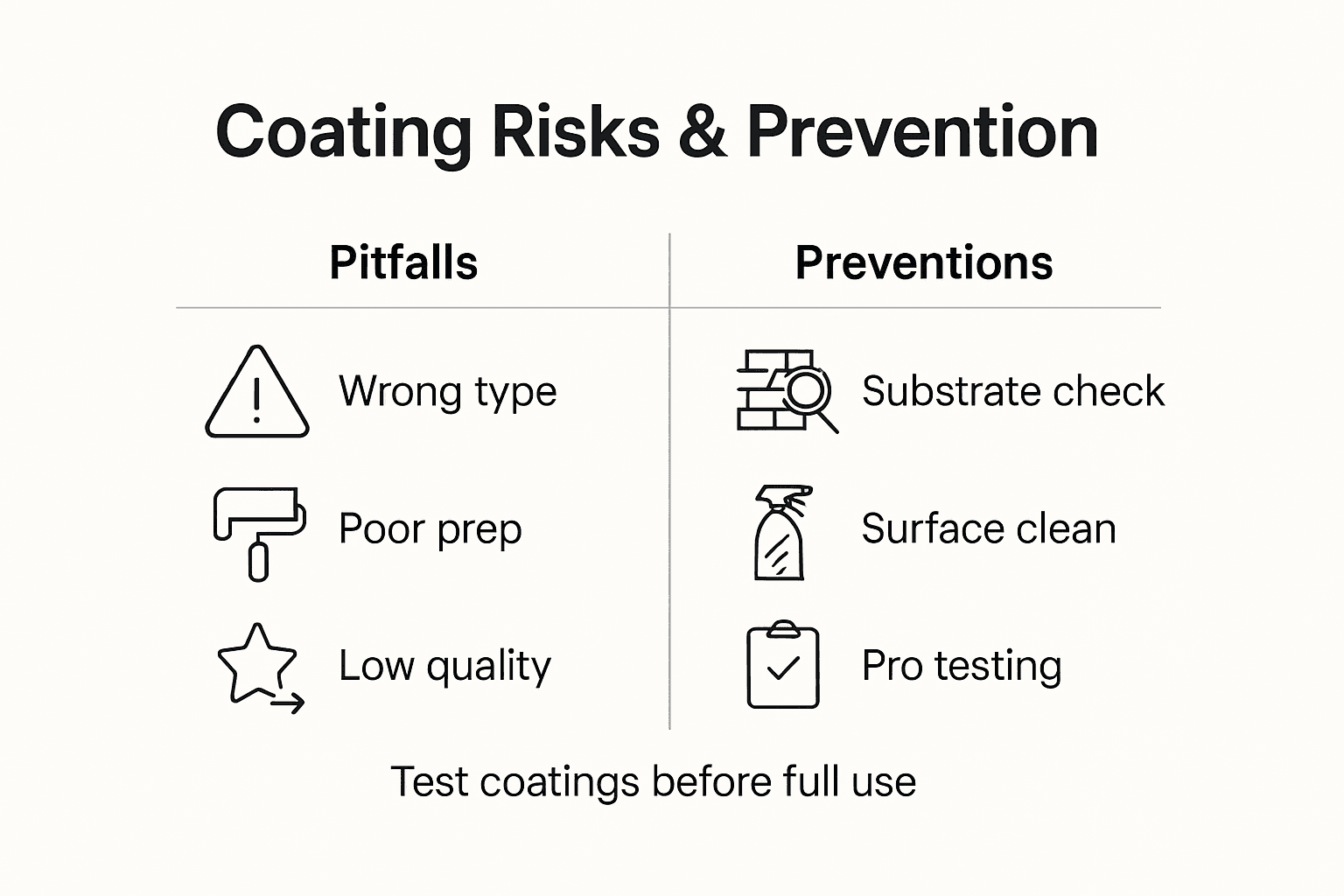
Key risks and potential pitfalls in coating selection include:
- Inappropriate substrate surface preparation
- Mismatched coating chemistry for specific environmental conditions
- Inadequate thickness leading to premature material breakdown
- Poor understanding of thermal expansion characteristics
- Insufficient consideration of long-term environmental exposure factors
- Neglecting compatibility between existing substrate materials and new coatings
Technical sophistication requires comprehensive evaluation beyond surface-level considerations. Surface treatment processes fundamentally determine the initial and long-term performance of protective coating systems, emphasizing the need for meticulous professional assessment. Infrastructure managers must recognize that coating selection is not merely a materials decision, but a strategic investment in long-term asset preservation.
The following table summarizes common coating selection mistakes and their consequences:
| Pitfall | Potential Consequence | Prevention Strategy |
|---|---|---|
| Poor surface preparation | Weak adhesion, early failure | Thorough cleaning, inspection |
| Wrong coating chemistry | Rapid degradation, loss of protection | Match coating to conditions |
| Insufficient layer thickness | Reduced protective lifespan | Follow manufacturer guidelines |
Pro Tip for Risk Mitigation: Conduct comprehensive laboratory and field testing of coating systems under simulated environmental conditions before full-scale implementation, allowing for empirical validation of performance expectations.
Protect Your Infrastructure with Expert Surface Preparation and Coatings
Extending asset lifespans requires more than just choosing the right protective coatings. The article highlights key challenges like preventing moisture penetration and ensuring strong adhesion through proper surface treatment. At Southern Sandblasting & Painting LLC, we understand that comprehensive surface preparation is vital to achieve the full benefits of your coatings and avoid common pitfalls such as poor adhesion or premature failure. Our 20-plus years of experience in professional sandblasting and industrial coating services ensures your assets resist environmental damage and last longer.

Take action now to safeguard your critical infrastructure by partnering with a trusted specialist. Visit Southern Sandblasting & Painting to learn how our customized solutions for water tanks, pipelines, and municipal projects deliver superior protection. Contact us today for a consultation and extend the life of your valuable assets with proven surface treatment expertise.
Frequently Asked Questions
What are protective coatings and how do they extend asset lifespans?
Protective coatings are engineered layers applied to surfaces to shield them from environmental degradation, chemical exposure, and mechanical stress. They extend asset lifespans by preventing corrosion and structural damage, thereby maintaining integrity over time.
What types of industrial coatings are most effective for longevity?
Key types of industrial coatings that enhance longevity include epoxy coatings (high chemical resistance), polyurethane coatings (UV protection), zinc-rich coatings (corrosion prevention), ceramic coatings (heat resistance), and fluoropolymer coatings (environmental resilience). Each type serves specific protection needs.
How does surface preparation affect the effectiveness of protective coatings?
Proper surface preparation is crucial for effective coatings. It ensures strong adhesion, which is necessary for the coating to perform optimally. Inadequate surface preparation can lead to premature coating failure and reduced asset protection.
What are common pitfalls in coating selection that can compromise asset lifespan?
Common pitfalls in coating selection include poor surface preparation, mismatched coating chemistry, insufficient thickness, and inadequate consideration of long-term environmental exposure. These issues can lead to accelerated material degradation and reduced effectiveness.


