
Over 80 percent of American infrastructure projects face delays or added costs because of inadequate surface preparation at the very beginning. Surface condition matters more than most realize since even minor flaws can mean premature failure, expensive repairs, or safety risks. This guide breaks down the proven steps every American contractor and project manager should take to assess, clean, treat, and inspect surfaces so each project starts strong and lasts longer.
Table of Contents
- Step 1: Assess Surface Condition And Project Requirements
- Step 2: Select Appropriate Cleaning And Preparation Methods
- Step 3: Execute Sandblasting To Remove Contaminants
- Step 4: Apply Industrial-Grade Coatings For Protection
- Step 5: Inspect Treated Surfaces For Quality And Compliance
Quick Summary
| Key Point | Explanation |
|---|---|
| 1. Conduct a thorough assessment | Begin with a visual and technical inspection to gather data on surface conditions and project requirements. |
| 2. Choose appropriate cleaning methods | Match cleaning techniques to surface characteristics to maximize effectiveness and minimize damage. |
| 3. Ensure safety during sandblasting | Follow OSHA regulations and use proper protective gear and procedures while conducting sandblasting. |
| 4. Apply industrial-grade coatings | Select suitable coatings based on environmental conditions, and apply them in multiple thin layers for best results. |
| 5. Perform comprehensive inspections | Validate treatment effectiveness through systematic inspections, documenting findings and addressing any deficiencies. |
Step 1: Assess surface condition and project requirements
Successfully preparing an infrastructure surface starts with a comprehensive initial assessment that determines the specific treatment needs. Your goal here is to gather critical data about the current surface condition, project specifications, and environmental factors that will influence your surface treatment approach.
Begin by conducting a thorough visual and technical inspection of the surface. Use specialized tools like moisture meters, corrosion gauges, and surface profilometers to quantify the current state of the infrastructure. The Federal Highway Administration recommends detailed methodologies for evaluating structural surface integrity that go beyond simple visual assessments. Look for key indicators such as rust levels, paint degradation, existing coating thickness, contaminant presence, and substrate condition. Pay close attention to areas showing signs of wear like chipping, cracking, or uneven texture.
Document your findings systematically by creating a comprehensive report that includes precise measurements, photographic evidence, and detailed observations. This report will serve as your roadmap for selecting the appropriate surface treatment techniques. Consider factors like surface material composition, anticipated environmental stress, project timeline, and budget constraints. Consulting industry standards from organizations like NACE International can provide additional guidance on corrosion evaluation and maintenance planning.
Pro tip: Always conduct your initial assessment during optimal lighting conditions and use calibrated professional measurement tools to ensure the most accurate evaluation of surface conditions.
Step 2: Select appropriate cleaning and preparation methods
Selecting the right cleaning and preparation method is crucial for ensuring a successful surface treatment that maximizes durability and performance. Your goal in this step is to match the most effective technique to your specific surface characteristics and project requirements.
NACE International standards provide comprehensive guidance on specialized cleaning and surface preparation methodologies that can help you make informed decisions. Different surfaces demand unique approaches some might require abrasive blasting to remove rust and old coatings while others need chemical treatments or precision mechanical cleaning. Evaluate your surface material substrate hardness contamination levels and environmental exposure to determine the optimal preparation strategy. The Federal Highway Administration recommends techniques that specifically enhance coating adhesion and infrastructure longevity ensuring your chosen method thoroughly prepares the surface without causing additional damage.
Carefully consider factors like surface profile roughness cleaning intensity and potential environmental impact when selecting your preparation method. Techniques such as water blasting sand blasting chemical stripping and mechanical grinding each have specific advantages depending on your project needs. Your selection should balance effectiveness efficiency and minimal substrate disruption creating an ideal surface for subsequent protective coating applications.
Pro tip: Always conduct a small test area first to validate your chosen cleaning method and confirm it achieves the desired surface profile without compromising the underlying material integrity.
Here’s a side-by-side comparison of common cleaning and preparation methods for infrastructure surfaces:
| Method | Best Use Cases | Advantages | Potential Drawbacks |
|---|---|---|---|
| Abrasive Blasting | Heavy rust, old coatings | Fast, highly effective cleaning | Dust, substrate damage risk |
| Water Blasting | Removing soluble contaminants | Environmentally friendly, no dust | Less effective on tough coatings |
| Chemical Stripping | Paints, difficult residues | Penetrates complex profiles | Requires neutralization, disposal |
| Mechanical Grinding | Small/localized repairs | Precise control, minimal mess | Labor-intensive, slower process |
Step 3: Execute sandblasting to remove contaminants
Sandblasting represents a critical technique for thoroughly cleaning and preparing infrastructure surfaces by removing rust, old coatings, and embedded contaminants. Your primary objective is to create a pristine surface profile that ensures maximum adhesion for subsequent protective treatments.
OSHA regulations provide comprehensive safety guidelines for conducting sandblasting operations that protect workers and ensure effective cleaning processes. Begin by selecting the appropriate abrasive media for your specific surface type. Options like steel grit ceramic particles and aluminum oxide each offer different levels of aggressiveness and surface preparation intensity. Carefully adjust your equipment pressure and nozzle distance to achieve the optimal surface profile without causing substrate damage. NACE International standards outline precise protocols for achieving specific surface cleanliness levels that meet industrial coating requirements.
Wear full protective equipment including respirators sealed work suits and comprehensive eye protection during the sandblasting process. Establish a controlled work environment with proper ventilation and containment measures to prevent environmental contamination. Systematically move the blasting nozzle in consistent overlapping patterns maintaining a uniform distance from the surface to ensure even cleaning and profile creation. Pay close attention to corners edges and hard to reach areas that might require specialized nozzle attachments or manual touch up techniques.
Pro tip: Always conduct a small test area first to confirm your selected abrasive media and blasting parameters produce the desired surface profile without causing unintended substrate damage.
Step 4: Apply industrial-grade coatings for protection
Applying industrial-grade coatings is the final critical step in creating a robust protective barrier for infrastructure surfaces. Your objective is to select and apply a coating that provides long lasting corrosion resistance and environmental durability.
NACE International standards provide comprehensive guidance for selecting optimal coating systems that match specific infrastructure requirements. Begin by carefully evaluating environmental conditions substrate characteristics and anticipated mechanical stress. Choose coating materials with proven performance characteristics such as epoxy polyurethane or specialized marine grade formulations. Ensure the surface preparation from previous steps meets the coating manufacturers recommended specifications regarding cleanliness profile and moisture content. The Federal Highway Administration recommends precise application techniques that maximize coating effectiveness and infrastructure longevity.
Apply the coating using professional grade equipment such as airless spray systems or specialized industrial application tools. Maintain consistent environmental conditions during application including appropriate temperature and humidity levels. Use multiple thin layers rather than one thick application to ensure uniform coverage and optimal adhesion. Monitor coating thickness using specialized measurement gauges and follow manufacturer recommended curing times and procedures. Pay special attention to edges corners and complex geometric areas that might require additional manual application techniques.
Pro tip: Always perform a small test application on a representative surface area to verify coating compatibility performance and aesthetic characteristics before completing the entire project.
Step 5: Inspect treated surfaces for quality and compliance
Inspecting treated surfaces represents the final critical verification step in ensuring your infrastructure protection meets the highest standards of quality and performance. Your objective is to conduct a comprehensive evaluation that confirms the effectiveness of your surface treatment process.
NACE International standards provide detailed protocols for systematic surface inspection that help professionals validate coating quality and integrity. Begin by performing a visual examination under optimal lighting conditions using both natural and supplemental illumination. Look for consistent color uniformity smooth surface texture and absence of defects such as pinholes bubbles runs or uneven coating thickness. Utilize specialized inspection tools like digital microscopes coating thickness gauges and holiday detectors to quantify surface characteristics beyond visual assessment. The Federal Highway Administration recommends comprehensive multi stage inspection techniques that verify coating performance and long term durability.
Document your inspection findings systematically using standardized reporting templates that capture precise measurements and photographic evidence. Pay special attention to critical areas like edges joints and complex geometric surfaces that are more prone to coating irregularities. Check coating adhesion through specialized tests such as crosshatch and pull off assessments. Compare your results against project specifications manufacturer recommendations and industry standards to ensure complete compliance. If any deficiencies are identified develop a targeted remediation plan to address specific coating imperfections before final project sign off.
Pro tip: Maintain a detailed inspection log with measurements environmental conditions and repair notes to create a comprehensive record of surface treatment quality for future reference and maintenance planning.
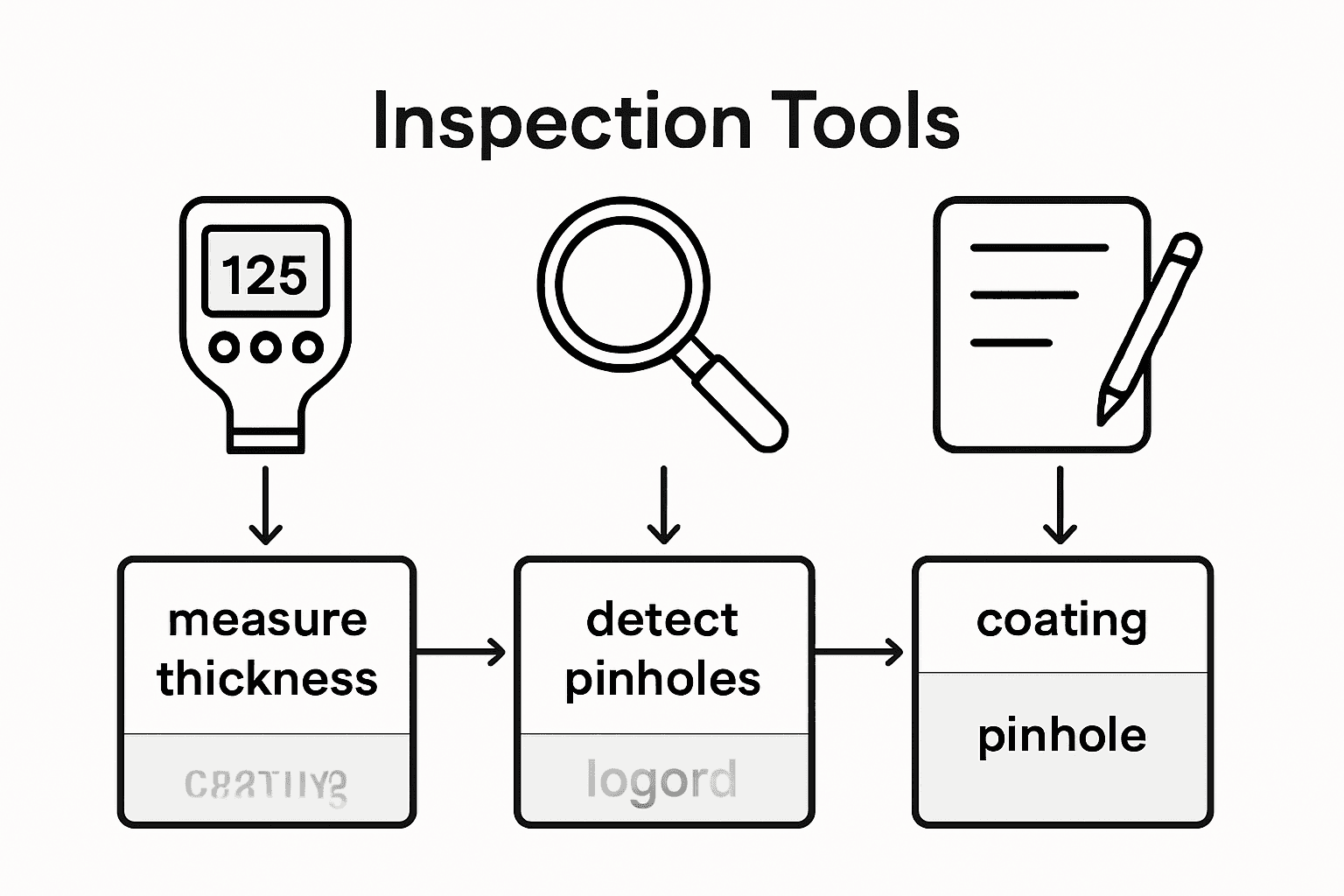
This table summarizes key inspection tools and their main purposes during surface treatment evaluation:
| Tool | Primary Purpose | Measurement Type |
|---|---|---|
| Coating Thickness Gauge | Measures applied coating thickness | Thickness in mils or microns |
| Holiday Detector | Detects pinholes or voids in coatings | Electrical continuity |
| Pull-Off Tester | Assesses coating adhesion strength | Measured bond force |
| Digital Microscope | Examines surface texture and defects | High-magnification imagery |
Enhance Infrastructure Longevity with Expert Surface Treatment Solutions
The detailed surface treatment process outlined in the article shows how essential it is to assess, prepare, and protect infrastructure surfaces for long-term durability. Whether you are challenged by stubborn rust, old coatings, or uneven surface profiles, achieving the right preparation and industrial-grade coatings is critical to prevent costly deterioration and maintain safety. Key concerns such as precise sandblasting techniques, adherence to safety standards, and rigorous post-application inspection underscore the importance of partnering with a provider that delivers trusted expertise on every project.
At Southern Sandblasting & Painting LLC, we understand these challenges firsthand. With over 20 years of experience serving commercial, municipal, and government clients in Central Florida, we specialize in comprehensive surface preparation including professional sandblasting to remove contaminants, followed by application of durable industrial coatings. Our commitment to NACE International and OSHA standards ensures your infrastructure is treated with precision and care from start to finish. Your project deserves the confidence that comes from partnering with a company focused on quality, safety, and extended asset lifespan.
Ready to protect your infrastructure investments with proven surface treatment techniques?

Explore how our tailored solutions at Southern Sandblasting & Painting LLC can meet your specific project needs today. Contact us to discuss your surface preparation and coating requirements and get expert guidance that aligns with your operational goals. Don’t wait until surface degradation threatens your assets take action now and experience the difference that skilled industrial surface treatment brings.
Frequently Asked Questions
What are the initial steps in the surface treatment process?
To start the surface treatment process, conduct a comprehensive inspection of the infrastructure surface. Gather data on surface condition, project requirements, and environmental factors to determine the specific treatment needs.
How do I select the right cleaning and preparation method for a surface treatment?
Choose a cleaning and preparation method based on the specific characteristics of the surface and contamination levels. Consider options like abrasive blasting, chemical stripping, or water blasting to ensure the surface is adequately prepared for coating application.
What safety measures should be taken during the sandblasting process?
Ensure all personnel wear full protective equipment, including respirators and protective suits, during sandblasting. Create a controlled work environment with proper ventilation and containment to prevent any health risks and environmental contamination.
How do I inspect treated surfaces for quality after applying industrial-grade coatings?
Perform a thorough visual and technical inspection to check for defects such as pinholes or uneven coating thickness. Utilize specialized tools to measure coating adhesion and document findings to confirm compliance with project specifications.
Why is surface profile important in the surface treatment process?
Creating the right surface profile is crucial for ensuring good adhesion of the coating. Aim for a profile that supports optimal coating performance and reduces the risk of deterioration, which can ultimately extend the lifespan of your infrastructure.
How can I document the surface treatment process effectively?
Maintain a detailed log of inspections, measurements, environmental conditions, and any necessary repairs throughout the treatment process. Use standardized reporting templates to capture and organize information systematically for future reference and maintenance planning.


