

Managing large-scale infrastructure projects across Central Florida often means tackling stubborn coatings, corrosion, and contaminants on surfaces that demand both speed and strict compliance. Facility managers and procurement officers need methods that deliver reliable results while meeting increasing regulatory and environmental standards. This article uncovers the core principles of sandblasting, explores essential equipment options, and highlights safety strategies designed to keep your projects efficient, compliant, and on budget.
Table of Contents
- Sandblasting Methods And Core Principles
- Types Of Sandblasting And Media Options
- Equipment And Process Differences Explained
- Industry Standards And Safety Compliance
- Evaluating Cost, Efficiency, And Project Fit
- Common Mistakes And Best Practices
Key Takeaways
| Point | Details |
|---|---|
| Understanding Media Choice | Selecting the appropriate abrasive media is critical for achieving optimal surface preparation results. Consider factors like surface material and desired finish. |
| Equipment Selection Matters | Choose between suction and pressure blast systems based on project scale and surface treatment requirements to enhance efficiency and safety. |
| Safety Compliance is Essential | Adhere to OSHA regulations and implement rigorous safety protocols to protect workers and ensure environmental integrity during sandblasting operations. |
| Cost Efficiency in Evaluation | Balance direct material costs and operational expenses to optimize project fit and enhance long-term infrastructure performance. |
Sandblasting methods and core principles
Sandblasting is a critical surface preparation technique used across multiple industrial sectors to clean, smooth, and prepare surfaces for further treatment. At its core, the process involves forcibly propelling abrasive materials against surfaces under high pressure to remove contaminants, rust, or old coatings.
The fundamental principles of sandblasting revolve around three key components: the abrasive media, the propulsion system, and the surface being treated. Modern sandblasting techniques utilize various media types, each selected based on the specific project requirements and surface characteristics. These can include:
- Silica sand: Traditional and economical
- Aluminum oxide: Highly aggressive and durable
- Steel grit: Ideal for heavy industrial applications
- Walnut shells: Gentler option for delicate surfaces
- Ceramic media: Provides consistent, uniform surface preparation
Portable sandblasting machines have revolutionized the industry by improving efficiency and reducing operational costs. These specialized devices are designed to handle complex surface treatment tasks in confined spaces, enhancing both productivity and operator safety.
Surface interaction dynamics play a crucial role in determining the effectiveness of the sandblasting process. The angle of impact, media velocity, and pressure settings must be precisely calibrated to achieve optimal results without damaging the underlying surface.
Successful sandblasting requires a deep understanding of material properties, media characteristics, and precise equipment control.
Technical considerations for selecting sandblasting methods include:
- Surface material composition
- Desired surface profile
- Environmental constraints
- Project-specific performance requirements
- Regulatory compliance standards
Pro tip: Always conduct a small test area to validate your sandblasting parameters and media selection before initiating full-scale surface treatment.
Types of sandblasting and media options
Sandblasting techniques encompass a diverse range of methods tailored to specific surface treatment requirements. Various sandblasting types exist based on media selection, application technique, and intended surface outcome, each offering unique advantages for different industrial and infrastructure projects.
The primary categories of sandblasting methods include:
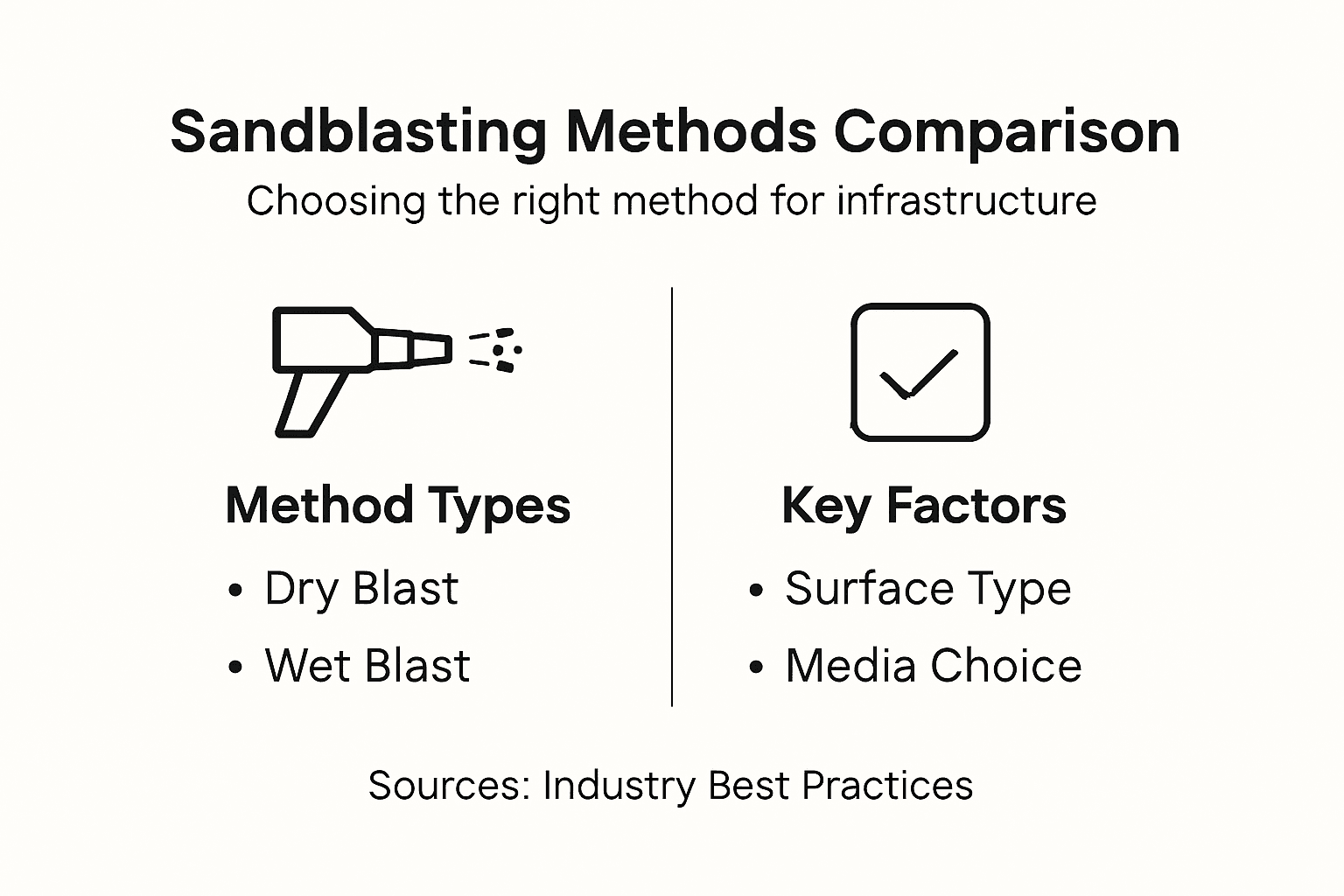
- Dry sandblasting: Traditional method using compressed air to propel abrasive media
- Wet abrasive blasting: Incorporates water to reduce dust and minimize surface impact
- Shot blasting: Uses metal media for aggressive surface preparation
- Soda blasting: Employs sodium bicarbonate for delicate surface cleaning
- Wheel blasting: Utilizes centrifugal wheels to propel media at high velocities
Abrasive media selection is critical and depends on multiple factors such as surface material, desired finish, and project specifications. The range of available media includes:
- Silica sand (traditional)
- Aluminum oxide (highly aggressive)
- Steel grit (industrial applications)
- Glass beads (precision surfaces)
- Plastic media (delicate substrates)
- Walnut shells (gentle cleaning)
Surface compatibility plays a pivotal role in media selection. Harder surfaces can withstand more aggressive media, while softer or more delicate surfaces require gentler approaches. Infrastructure projects demand careful consideration of media characteristics to prevent unintended surface damage.
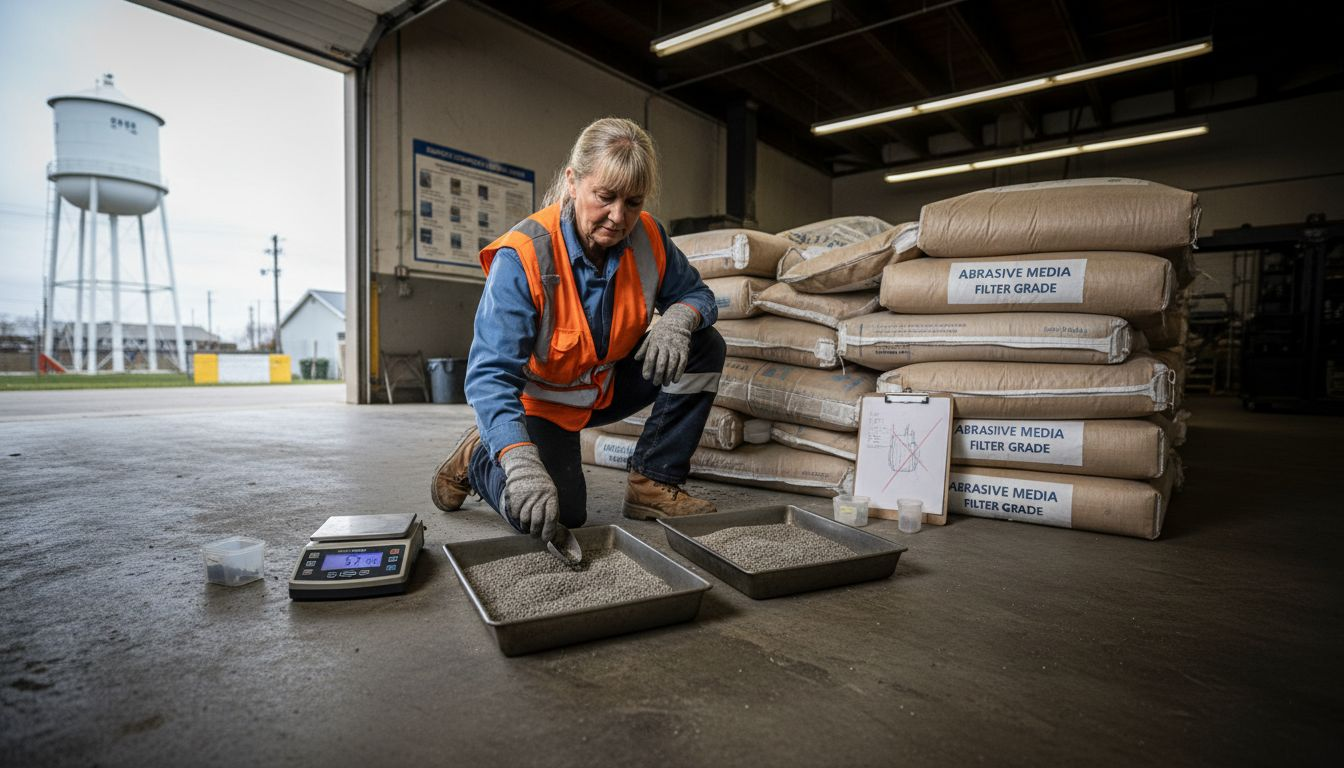
Here is a comparison of common sandblasting media and their typical applications:
| Abrasive Media | Ideal Application | Aggressiveness Level |
|---|---|---|
| Silica Sand | General cleaning and paint removal | Moderate |
| Aluminum Oxide | Heavy-duty rust removal | High |
| Steel Grit | Structural steel prep | Very High |
| Walnut Shells | Restoration of wood and delicate items | Low |
| Glass Beads | Finishing of stainless components | Medium |
| Plastic Media | Removing coatings from composites | Low to Medium |
Selecting the appropriate sandblasting method and media is crucial for achieving optimal surface preparation without compromising material integrity.
Technical criteria for media selection involve evaluating:
- Surface material composition
- Required surface profile
- Contamination level
- Environmental restrictions
- Regulatory compliance standards
Pro tip: Conduct preliminary testing with small surface samples to determine the most effective sandblasting method and media for your specific infrastructure project.
Equipment and process differences explained
Sandblasting equipment represents a complex system of interconnected components designed to efficiently prepare surfaces across various industrial applications. Sandblasting systems typically consist of four fundamental components, each playing a critical role in achieving precise surface treatment results.
The primary equipment configurations include:
- Suction (Siphon) Blast Systems
- Uses atmospheric pressure to draw media through the nozzle
- Lower pressure, suitable for smaller projects
- More economical for lighter surface treatments
- Pressure Blast Systems
- Uses compressed air to forcefully propel media
- Higher media velocity and more aggressive treatment
- Ideal for heavy-duty industrial applications
Operational components of sandblasting equipment are designed to enhance efficiency and safety. These critical elements include:
The table below summarizes key differences between suction and pressure blast systems:
| System Type | Media Delivery Method | Typical Use Cases | Cost and Efficiency |
|---|---|---|---|
| Suction (Siphon) | Draws media by vacuum effect | Small parts, light cleaning | Lower cost, slower process |
| Pressure | Forces media with compressed air | Large-scale, industrial prep | Higher cost, faster results |
- Compressed air source or gas supply
- Blasting cabinet or containment enclosure
- Advanced dust collection system
- Media storage and delivery mechanism
- Pressure regulation and control systems
Modern sandblasting equipment incorporates sophisticated safety features to protect operators and ensure consistent performance. These technological advancements aim to reduce operator fatigue and maximize operational efficiency through automated controls and precision engineering.
Advanced sandblasting equipment transforms surface preparation from a manual process to a highly controlled, technologically driven operation.
Key equipment selection criteria involve evaluating:
- Project scale and complexity
- Surface material characteristics
- Required surface finish
- Operational environment
- Safety and compliance requirements
Pro tip: Invest in equipment with modular design and adjustable parameters to maximize flexibility across different infrastructure projects.
Industry standards and safety compliance
Sandblasting operations are subject to rigorous safety standards and regulatory requirements designed to protect workers and the environment. OSHA mandates strict safety protocols that encompass comprehensive worker protection and environmental safety measures.
Critical safety compliance requirements include:
- Respiratory Protection
- NIOSH-approved respirators mandatory
- Supplied air breathing equipment for operators
- Regular fit testing and equipment maintenance
- Equipment Safety
- Proper grounding of blasting equipment
- Static discharge prevention
- Regular equipment integrity checks
Regulatory frameworks governing sandblasting operations focus on multiple key areas of worker and environmental protection:
- Exposure control for respirable crystalline silica
- Engineering control implementations
- Personal protective equipment (PPE) standards
- Environmental contamination prevention
- Noise exposure management
Specialized safety protocols are especially critical in confined spaces, where additional precautions must be implemented to ensure worker safety and operational integrity. This includes comprehensive ventilation systems, continuous air quality monitoring, and strict procedural guidelines.
Comprehensive safety compliance is not just a legal requirement, but a fundamental commitment to protecting human lives and environmental integrity.
Key compliance documentation typically involves:
- Detailed safety procedure manuals
- Worker training certifications
- Equipment maintenance logs
- Exposure monitoring records
- Personal protective equipment logs
Pro tip: Develop a comprehensive safety management system that exceeds minimum regulatory requirements and demonstrates proactive commitment to worker protection.
Evaluating cost, efficiency, and project fit
Project efficiency in sandblasting requires a comprehensive approach that balances technical requirements, economic constraints, and operational capabilities. Infrastructure managers must consider multiple interconnected factors to optimize surface treatment processes and maximize return on investment.
Key cost evaluation criteria include:
- Direct Material Costs
- Abrasive media pricing
- Equipment depreciation
- Replacement part expenses
- Consumable supply requirements
- Operational Expenses
- Labor hours
- Equipment maintenance
- Downtime impact
- Energy consumption
- Safety compliance costs
Project fit assessment involves analyzing several critical dimensions:
- Surface complexity
- Required surface finish
- Environmental constraints
- Infrastructure material composition
- Project timeline and scheduling
The selection of abrasive media dramatically influences both cost efficiency and project outcomes. More aggressive media might reduce blasting time but increase material expenses and potential surface damage. Conversely, gentler media could extend project duration while preserving substrate integrity.
Optimal sandblasting strategy balances technical precision, economic constraints, and long-term infrastructure performance.
Efficiency optimization strategies involve:
- Utilizing automated equipment
- Implementing portable blasting solutions
- Conducting comprehensive project pre-planning
- Selecting media matched to specific substrate requirements
- Developing detailed performance metrics
Pro tip: Conduct a comprehensive cost-benefit analysis that evaluates not just immediate expenses, but long-term infrastructure preservation and performance outcomes.
Common mistakes and best practices
Sandblasting operations require meticulous attention to safety and procedural standards to prevent potential hazards and ensure optimal infrastructure treatment. Understanding common mistakes and implementing best practices is crucial for maintaining operational excellence and worker safety.
Critical operational mistakes frequently encountered include:
- Equipment-Related Errors
- Inadequate equipment maintenance
- Improper static discharge prevention
- Neglecting regular calibration
- Using damaged or worn equipment
- Safety Compliance Failures
- Insufficient respiratory protection
- Lack of proper personal protective equipment
- Ignoring dust containment protocols
- Inadequate worker training
Best practices for effective sandblasting involve comprehensive approaches:
- Conduct thorough pre-operation equipment inspections
- Implement rigorous safety training programs
- Use approved respiratory protection
- Maintain detailed operational logs
- Perform regular equipment maintenance
Professional sandblasting requires a systematic approach that balances technical precision with stringent safety protocols. Operators must understand that cutting corners can lead to significant risks to personal health and project outcomes.
Successful sandblasting is not just about removing surface materials, but protecting workers, equipment, and project integrity.
Recommended safety and performance strategies include:
- Utilizing remote control nozzles
- Implementing dead-man switches
- Conducting regular safety audits
- Developing comprehensive emergency response plans
- Maintaining detailed equipment maintenance records
Pro tip: Create a comprehensive checklist that covers equipment inspection, personal protective gear, and operational protocols to minimize potential mistakes during sandblasting operations.
Expert Sandblasting Solutions Tailored for Your Infrastructure Needs
Choosing the right sandblasting method is essential to protect and extend the life of critical infrastructure. We understand the challenge of balancing aggressive surface preparation with safety and regulatory compliance. Whether you need precise abrasive media selection or advanced equipment management, Southern Sandblasting & Painting LLC excels at delivering durable solutions that meet your exact project specifications. Our expertise addresses key concerns like surface compatibility, media aggressiveness, and operational efficiency helping you avoid costly mistakes and ensuring optimal outcomes.
Explore our professional Sandblasting services that combine industry-leading techniques with strict safety standards.

Don’t settle for anything less than expert care when preparing your infrastructure for long-term performance. Take advantage of over 20 years of experience with our trusted team in Orlando Florida. Visit our website Southern Sandblasting & Painting LLC and learn more about integrated Sandblasting & Painting solutions designed to protect your assets and maximize project value. Contact us today to discuss your next project and secure reliable, high-quality surface treatment services.
Frequently Asked Questions
What are the key components involved in the sandblasting process?
The sandblasting process involves three key components: the abrasive media, the propulsion system, and the surface being treated. These elements work together to effectively clean and prepare surfaces.
How do I choose the right abrasive media for sandblasting?
Selecting the right abrasive media depends on factors such as the surface material, the level of aggressiveness required, and the desired surface finish. Options include silica sand, aluminum oxide, steel grit, and more, each suited for different applications.
What are the main types of sandblasting methods available?
The main types of sandblasting methods include dry sandblasting, wet abrasive blasting, shot blasting, soda blasting, and wheel blasting. Each method has its own advantages and is selected based on specific surface treatment needs.
What safety precautions should be taken during sandblasting operations?
Safety precautions include using NIOSH-approved respirators, proper grounding of equipment, and ensuring regular maintenance checks. It’s essential to follow OSHA safety standards and implement environmental protection measures.
Recommended
- What Is Industrial Sandblasting and Its Local Impact
- 7 Essential Surface Preparation Tips 2025 for Infrastructure
- Surface Treatment Process for Durable Infrastructure Results
- Surface Treatment Process for Durable Infrastructure Results
- Sandblasting Contractor Baldwin Park FL
- Sandblasting Services Oviedo FL


