
Most American public facilities in Central Florida face intense humidity, rainfall, and chemical exposure that can accelerate infrastructure deterioration. Managing long lasting durability under these conditions means prioritizing advanced asset protection coatings. A well chosen coating system can help infrastructure managers safeguard critical investments and improve long term performance. This guide highlights every essential step from precise surface assessment to professional application and compliance verification so you maximize the safety and resilience of your facilities.
Table of Contents
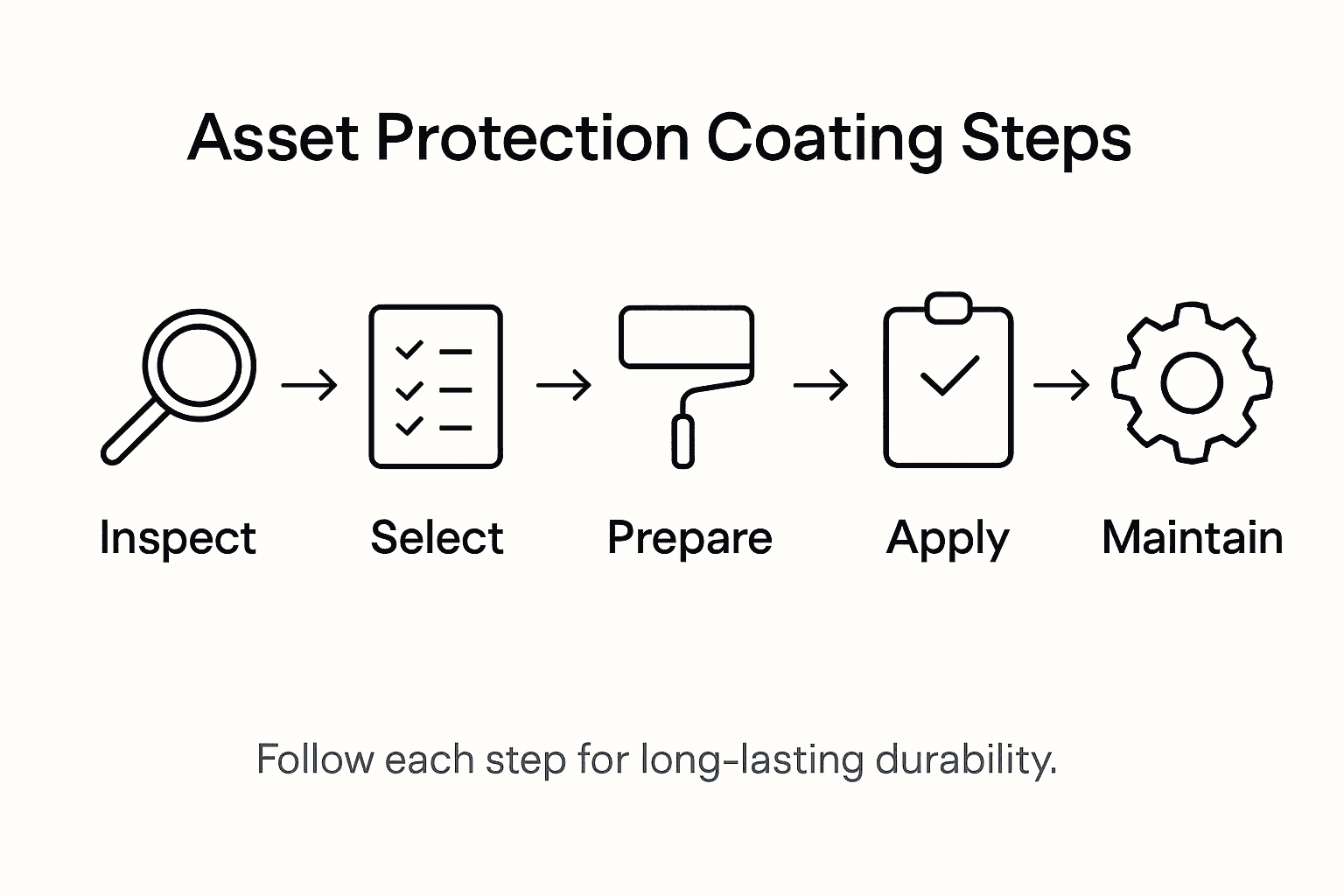
- Step 1: Assess Asset Surface Conditions And Requirements
- Step 2: Select The Right Protection Coating System
- Step 3: Prepare Surfaces With Professional Sandblasting
- Step 4: Apply Coatings For Optimal Coverage And Protection
- Step 5: Verify Coating Integrity And Compliance Standards
Quick Overview
| Main Insight | Detailed Explanation |
|---|---|
| 1. Assess Surface Conditions | Conduct a thorough visual inspection to identify issues like corrosion and rust. |
| 2. Choose Protective Coatings | Select coatings based on environmental factors and substrate materials for optimal use. |
| 3. Use Professional Sandblasting | Ensure surfaces are properly prepared for coatings using high-pressure abrasive materials. |
| 4. Apply Multiple Coating Layers | Implement a systematic approach with primer, intermediate, stripe coats, and a topcoat. |
| 5. Verify Coating Integrity | Conduct regular professional inspections to ensure coating durability and compliance. |
Step 1: Assess asset surface conditions and requirements
Understanding the current condition of your infrastructure surface is the foundation for effective asset protection coating. This crucial initial assessment determines the appropriate preparation and coating strategy that will maximize durability and performance.
Begin by conducting a comprehensive visual inspection to identify existing surface conditions. Look for signs of corrosion, rust, paint degradation, or mechanical damage. Establishing precise surface preparation standards ensures proper coating adhesion and long term protection. Pay close attention to environmental factors like humidity, temperature exposure, and chemical interactions that could impact your coating performance.
Make sure to document your findings systematically. Measure and record surface profile depth, existing coating thickness, and substrate material characteristics. By following ISO 12944 standards for corrosion protection, you can align your assessment with globally recognized guidelines that specify coating requirements based on specific environmental and operational conditions.
Pro tip: Invest in professional surface measurement tools like digital profilometers to get precise surface roughness readings that will guide your coating selection process.
Step 2: Select the right protection coating system
Choosing the optimal protection coating system is critical for ensuring long term infrastructure durability and performance. Your selection will directly impact the asset’s resistance to environmental challenges and potential maintenance requirements.
Start by thoroughly analyzing the specific environmental conditions your infrastructure will encounter. This includes assessing humidity levels, temperature variations, chemical exposure, and potential mechanical stresses. Comprehensive paint system guidelines from ISO 12944-5 provide detailed recommendations for selecting protective coatings based on different corrosivity categories. You will need to evaluate multiple coating layers including primers, intermediate coats, stripe coats, and topcoats that work together to create a comprehensive protective system.
Consider the substrate material, expected service life, and budget constraints when making your selection. Different infrastructure assets require unique coating approaches metals like steel might need different primer systems compared to concrete or composite materials. Match the coating system complexity to the environment’s corrosivity level to optimize protection and minimize future maintenance costs.
Pro tip: Consult with coating specialists who can perform comprehensive environmental testing and provide customized coating recommendations specific to your infrastructure’s unique conditions.
Step 3: Prepare surfaces with professional sandblasting
Professional sandblasting is a critical surface preparation technique that ensures your infrastructure coating will adhere properly and provide maximum protection. This precision process removes contaminants, rust, and old coatings to create an ideal surface for new protective layers.
Professional surface preparation standards define the exact requirements for surface cleanliness and profile roughness. Specialized sandblasting equipment uses high-pressure abrasive materials to mechanically clean surfaces, creating a textured profile that allows coating materials to bond effectively. When executing sandblasting for infrastructure projects, technicians must carefully select abrasive media that matches the substrate material and desired surface profile, whether working on steel pipelines, concrete structures, or industrial equipment.
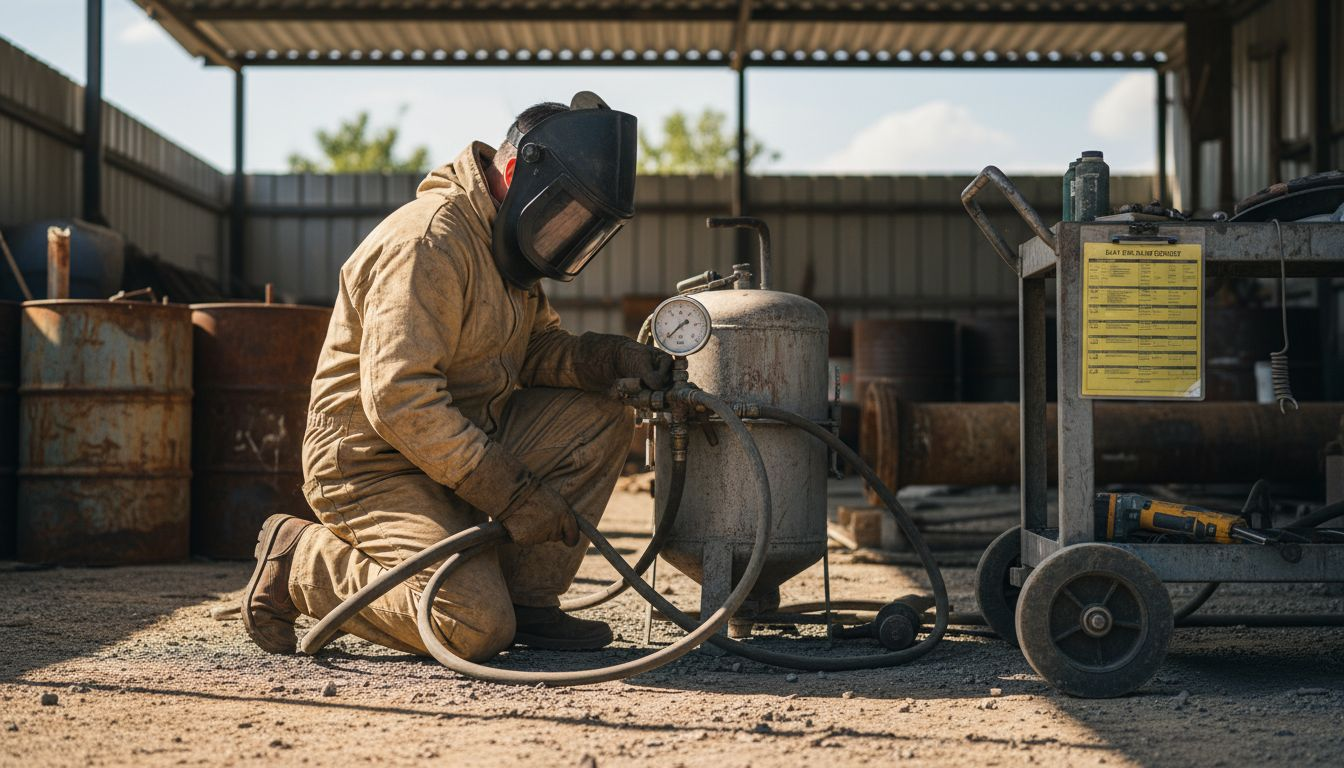
Achieving SSPC-SP 10 Near-White Blast Cleaning standards requires precision and expertise. Professionals use specialized equipment and techniques to remove at least 95% of surface contaminants, ensuring a clean surface that maximizes coating adhesion and long-term durability. The goal is to create a consistent surface profile that provides optimal mechanical bonding for protective coating systems.
Pro tip: Always confirm the specific surface preparation standards with your coating manufacturer to ensure compatibility and warranty compliance.
Step 4: Apply coatings for optimal coverage and protection
Successfully applying protective coatings requires precision, expertise, and a systematic approach to ensure comprehensive infrastructure protection. Your coating application strategy will determine the long-term durability and performance of your asset.
Recognized coating application guidelines emphasize the importance of using multiple coating layers to create a comprehensive defense system. Begin with a high-quality primer that promotes adhesion and creates a stable base. Apply intermediate coats to build thickness and enhance corrosion resistance, followed by specialized stripe coats that provide additional protection in complex geometric areas with potential coating thin spots. The topcoat serves as the final barrier against environmental challenges, selecting colors and formulations that match your specific infrastructure requirements.
Here is a summary of key coating layers and their roles in advanced protection systems:
| Coating Layer | Main Function | Typical Application Area | Impact on Durability |
|---|---|---|---|
| Primer | Promotes adhesion | Applied directly to substrate | Establishes strong foundation |
| Intermediate Coat | Builds thickness | Over primer, mid-system | Enhances resistance, longevity |
| Stripe Coat | Covers complex areas | Edges, welds, corners | Protects vulnerable geometry |
| Topcoat | Final environmental shield | Surface exposed to environment | Maximizes long-term protection |
Careful attention to application conditions is critical. Quality requirements for coating application specify precise environmental parameters like temperature, humidity, and surface conditions that impact coating performance. Professional applicators use specialized equipment to ensure uniform coverage, maintaining consistent film thickness and avoiding potential holidays or pinholes that could compromise protection. Implement rigorous inspection protocols to verify each coating layer meets industry standards before proceeding to the next application.
Pro tip: Document each coating layer’s application conditions and thickness measurements to maintain a comprehensive quality record for future maintenance and warranty purposes.
Step 5: Verify coating integrity and compliance standards
Verifying the integrity of your protective coating is the final critical step in ensuring long-term infrastructure protection. This comprehensive assessment determines whether your applied coating meets industry performance standards and will provide the expected durability.
Coating inspection techniques require specialized training and sophisticated equipment to accurately assess surface conditions. Professional inspectors will systematically evaluate coating thickness, check for potential holidays or pinholes, measure adhesion strength, and confirm uniform coverage across the entire infrastructure surface. They use advanced tools like ultrasonic thickness gauges, holiday detectors, and adhesion testing equipment to provide precise measurements that go beyond visual inspection.
Below is a comparison of popular inspection tools and their main uses in coating quality verification:
| Inspection Tool | Primary Purpose | Key Benefit |
|---|---|---|
| Ultrasonic Thickness Gauge | Measures coating thickness | Verifies protective layer depth |
| Holiday Detector | Finds pinholes or misses | Detects flaws in coverage |
| Adhesion Tester | Tests bonding strength | Ensures coatings remain intact |
| Visual Survey Equipment | Records surface appearance | Supports documentation and review |
Comprehensive coating surveys help identify potential weaknesses before they become significant problems. Inspectors will document detailed findings, including precise measurements, photographic evidence, and recommendations for any necessary repairs or touch-ups. These surveys not only validate current coating performance but also create a baseline for future maintenance planning and help predict potential degradation points in your infrastructure protection system.
Pro tip: Schedule professional coating integrity inspections annually to catch and address potential issues before they compromise your infrastructure protection.
Protect Your Infrastructure with Proven Surface Preparation and Coating Expertise
Every infrastructure asset faces unique challenges from corrosion, weather, and mechanical stress. The Complete Guide to Asset Protection Coatings for Infrastructure highlights how precise surface assessment, professional sandblasting, and expert coating application are essential for long-lasting protection. Southern Sandblasting & Painting LLC understands these pain points—whether you need to meet strict standards like SSPC-SP 10 Near-White Blast Cleaning or ensure rigorous inspection compliance, we bring over 20 years of experience serving Central Florida’s critical infrastructure sector.

Take control of your asset’s lifespan today by partnering with a trusted leader in industrial surface preparation and coating. Visit our Professional Sandblasting Services page to learn how we remove rust and contaminants with precision. Then explore our comprehensive industrial coatings solutions to achieve optimal adhesion and protection. With industry compliance, high-quality equipment, and local expertise, Southern Sandblasting & Painting LLC is your reliable partner. Start your project with us now at https://southernsandblastingandpainting.com and safeguard your infrastructure for the long term.
Frequently Asked Questions
What steps should I follow to assess surface conditions before applying asset protection coatings?
Begin with a comprehensive visual inspection to identify signs of corrosion, rust, or damage. Document your findings systematically, measuring surface profile depth and coating thickness to ensure proper preparation.
How do I select the right protection coating system for my infrastructure?
Choose a coating system based on the specific environmental conditions, including humidity and chemical exposure. Evaluate the substrate material and service life to match the coating complexity with the expected corrosivity level.
Why is professional sandblasting important when preparing surfaces for coatings?
Professional sandblasting effectively removes contaminants and old coatings to ensure maximum adhesion of new protective layers. This precision process creates an optimal surface profile for coating application, reducing the risk of coating failure.
What should I consider during the application of protective coatings?
Focus on applying multiple coating layers for comprehensive protection, starting with a high-quality primer. Ensure uniform coverage and maintain consistent film thickness by monitoring environmental conditions during the application process.
How can I verify the integrity of my protective coatings after application?
Conduct a thorough inspection using specialized tools to measure coating thickness and check for pinholes. Document findings and schedule annual inspections to identify potential issues before they compromise the protective layer.
What are the benefits of maintaining detailed records of the coating application process?
Keeping thorough records of application conditions and thickness measurements helps ensure compliance with quality standards and warranties. This documentation creates a baseline for future maintenance and can inform necessary repairs.


