
Coating failures cost infrastructure projects thousands in repairs and downtime, yet certified coating inspectors detect 25-40% more defects than uncertified personnel. Understanding what coating inspectors do and how they safeguard your infrastructure investments is essential for project managers overseeing municipal and industrial coating applications. This guide explains their vital roles, inspection standards, and how to select the right inspector for your Central Florida projects.
Table of Contents
- Introduction To Coating Inspection In Infrastructure
- Core Functions And Duties Of Coating Inspectors
- Inspection Methods: Visual, NDT, And Advanced Techniques
- Local Factors And Challenges In Central Florida Infrastructure Coating Inspection
- Bringing It All Together: Choosing The Right Coating Inspection Service
- Ensure Your Infrastructure Coatings Stand The Test Of Time
- Frequently Asked Questions About Coating Inspectors
Key takeaways
| Point | Details |
|---|---|
| Standards compliance | Coating inspectors ensure adherence to ASTM, NACE, and SSPC standards critical for infrastructure protection. |
| Three-phase inspection | Inspection covers pre-application surface prep, in-process monitoring, and post-application verification stages. |
| Defect detection advantage | Certified inspectors identify significantly more coating defects, preventing corrosion and extending asset life. |
| Cost reduction | Proper inspection reduces long-term maintenance expenses and prevents premature coating failures. |
| Selection criteria | Choose inspectors with relevant certifications, local experience, and advanced testing capabilities. |
Introduction to coating inspection in infrastructure
Coating inspection is the systematic evaluation of protective coatings applied to infrastructure assets to verify compliance with specifications and standards. This process ensures coatings perform as intended, protecting critical infrastructure from corrosion and environmental degradation. For municipal water tanks, pipelines, bridges, and industrial facilities in Central Florida, proper inspection is non-negotiable.
Coating inspectors ensure compliance with industry standards such as ASTM D7091 and NACE SP0169, which outline criteria for coating application and inspection ensuring long-term asset protection. These standards provide measurable benchmarks for surface preparation, coating thickness, adhesion, and environmental conditions during application.
Coatings serve as the primary defense against corrosion for steel and concrete infrastructure. Without adequate protection, metal structures deteriorate rapidly in humid, salt-laden environments. The cost of replacing failed infrastructure far exceeds the investment in quality coating systems and thorough inspection.
Central Florida’s regulatory landscape includes municipal codes, environmental protection requirements, and safety standards that govern coating projects. Inspectors must navigate these frameworks while ensuring contractor compliance. Projects involving government facilities, water treatment plants, and transportation infrastructure face particularly strict oversight.
Continuous inspection throughout the coating process matters more than final quality checks alone. Early detection of surface contamination, improper mixing, or application errors prevents compounding problems. Key inspection checkpoints include:
- Surface preparation verification before coating application
- Environmental condition monitoring during application
- Wet film thickness measurements to ensure proper coverage
- Dry film thickness testing after curing
- Holiday detection to identify coating discontinuities
This comprehensive approach catches issues when they’re easiest and least expensive to correct.
Core functions and duties of coating inspectors
Coating inspectors operate within a three-phase inspection model that ensures quality at every project stage. This systematic approach minimizes risk and maximizes coating system performance throughout the asset’s lifecycle.
Pre-application inspection focuses on surface preparation quality. Inspectors verify that substrates meet cleanliness and profile specifications before coating application begins. Surface contaminants like oil, salt, or mill scale compromise coating adhesion. Coating inspectors ensure compliance with industry standards such as ASTM D7091 and NACE SP0169 during this critical phase. Without proper surface prep, even premium coating systems fail prematurely.
In-process monitoring occurs during coating application. Inspectors document environmental conditions, verify proper mixing ratios, and measure wet film thickness in real time. They ensure contractors follow manufacturer specifications and project requirements. This oversight prevents application errors that become costly repairs later.
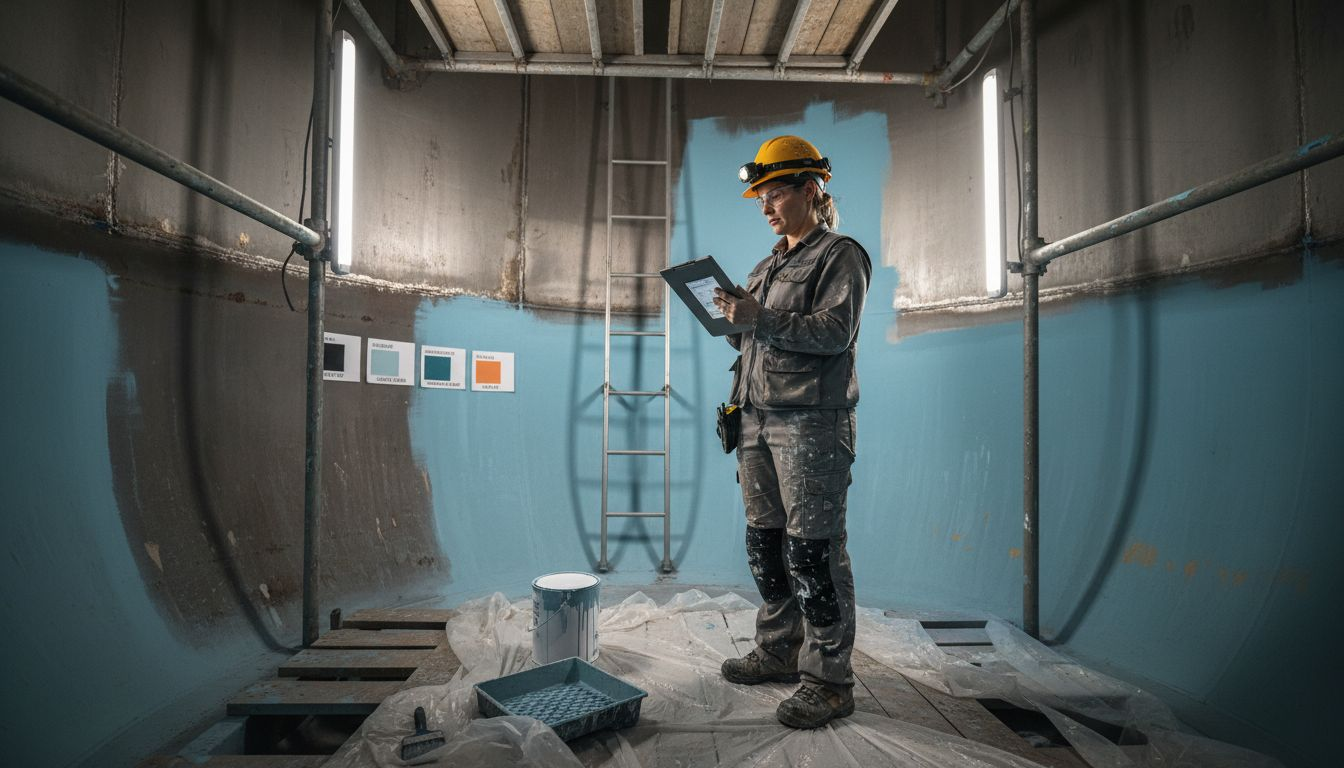
Post-application verification confirms the finished coating system meets all specifications. Inspectors conduct holiday testing to detect pinholes, measure dry film thickness across surfaces, and assess coating appearance and adhesion. They document any deficiencies requiring correction before project closeout.
Specific inspector duties include:
- Conducting surface profile measurements using replica tape or digital profilometers
- Monitoring ambient temperature, relative humidity, and substrate temperature during application
- Performing wet film thickness checks to verify proper application rates
- Conducting dry film thickness measurements with magnetic or ultrasonic gauges
- Executing holiday detection using high-voltage spark testers
- Documenting all findings with photographs, measurements, and detailed reports
- Recommending corrective actions for non-conforming work
Inspectors also enforce safety and environmental regulations on job sites. They verify proper ventilation, containment systems, and waste disposal practices. Their documentation creates an audit trail demonstrating regulatory compliance.
Pro Tip: Engage coating inspections for longevity early in your project lifecycle, ideally during the planning phase. Early involvement allows inspectors to review specifications, identify potential issues, and establish clear quality benchmarks before work begins.
Inspection methods: visual, NDT, and advanced techniques
Coating inspectors employ multiple testing methods, each offering distinct advantages for different project requirements and coating systems. Understanding these techniques helps project managers make informed decisions about inspection scope and budget.
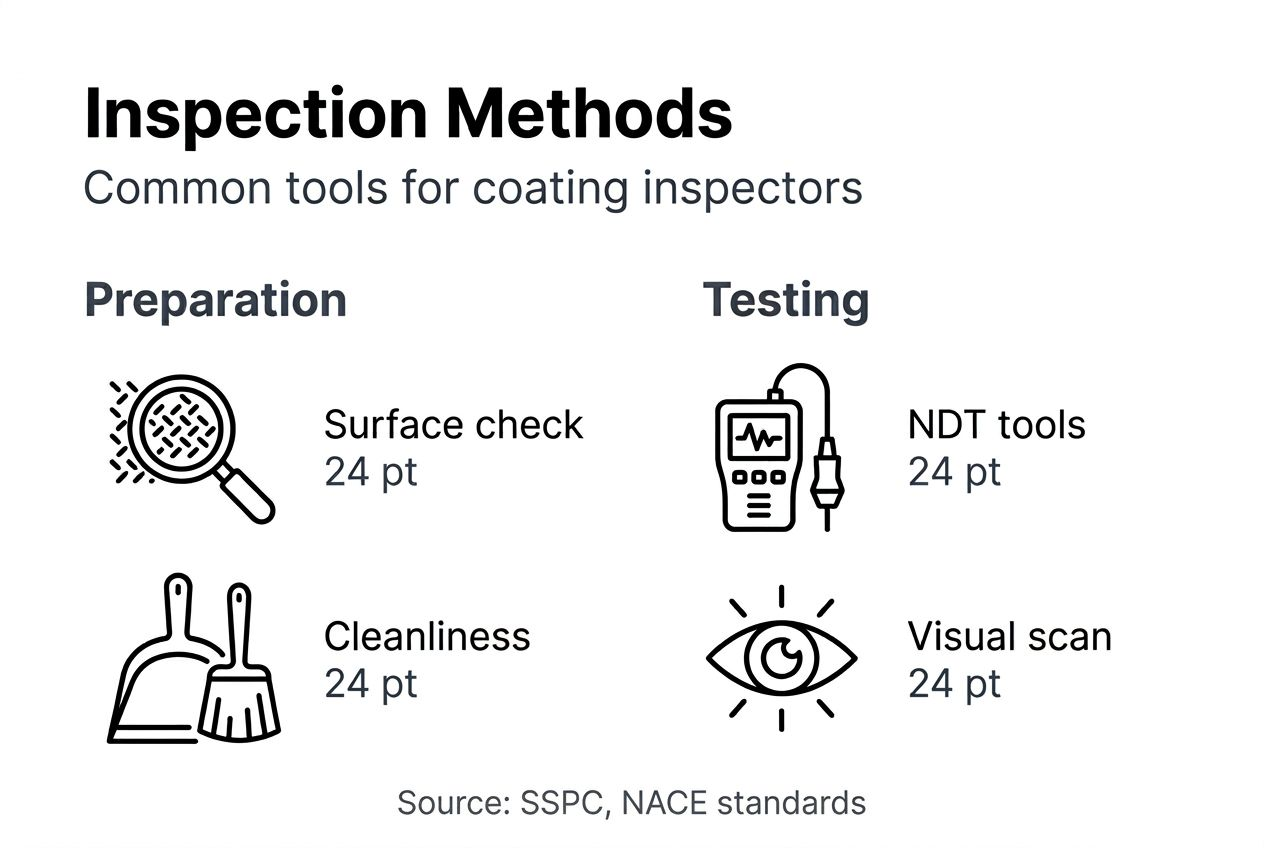
Visual inspection forms the foundation of coating quality assessment. Inspectors examine surfaces for visible defects like holidays, blistering, runs, sags, or contamination. While cost-effective and immediate, visual inspection alone cannot detect subsurface defects or accurately measure coating thickness. It works best as a screening method complemented by instrumental testing.
Non-destructive testing (NDT) methods provide objective, measurable data about coating systems without damaging the coating. Common NDT techniques include:
- Magnetic pull-off gauges for measuring dry film thickness on ferrous substrates
- Ultrasonic thickness gauges for non-ferrous metals and complex geometries
- Holiday detection using low-voltage wet sponge or high-voltage spark testing
- Infrared thermography to identify delamination or moisture intrusion
- Adhesion testing with pull-off dollies to quantify coating bond strength
Holiday testing deserves special attention for infrastructure coatings. This technique applies electrical current to detect coating discontinuities (holidays) where bare substrate is exposed. Even microscopic pinholes allow corrosion initiation. High-voltage spark testing effectively locates these defects on thick coatings typically used in industrial applications.
| Method | Cost | Accuracy | Best Use Case |
|---|---|---|---|
| Visual | Low | Moderate | Initial screening, obvious defects |
| Magnetic gauge | Low | High | Dry film thickness on steel |
| Ultrasonic | Moderate | Very high | Non-ferrous metals, multi-layer systems |
| Holiday detection | Moderate | Very high | Pinhole detection in thick coatings |
| Infrared | High | High | Large area scanning, moisture detection |
Pro Tip: Use layered inspection approaches combining visual assessment with NDT methods for comprehensive quality assurance in humid, coastal areas. Central Florida’s environmental conditions demand thorough inspection because moisture and salt accelerate coating degradation. A small missed defect becomes a major corrosion site within months.
Advanced techniques like infrared thermography excel at scanning large surface areas quickly. This method detects temperature variations indicating coating delamination or trapped moisture. While equipment costs are higher, the efficiency gains justify the investment for extensive infrastructure projects.
Local factors and challenges in Central Florida infrastructure coating inspection
Central Florida’s unique environmental conditions create specific challenges for coating systems and the inspectors who evaluate them. High humidity, intense UV exposure, and coastal salt air accelerate coating degradation compared to drier, inland climates.
Humidity affects both coating application and long-term performance. When relative humidity exceeds manufacturer limits, moisture contamination prevents proper coating cure and adhesion. Inspectors must vigilantly monitor environmental conditions, often requiring application delays until conditions improve. Regular coating inspections in Florida account for these climate variables through adjusted inspection frequencies.
Salt air corrosion poses particular risk to infrastructure near the coast. Chloride ions penetrate coating defects, initiating aggressive corrosion even in properly prepared systems. This reality demands zero-tolerance inspection standards for holidays and thin spots. A small coating defect that might be acceptable inland becomes critical in coastal environments.
Inspection intervals require adjustment for local climate challenges. Standard annual inspections may be insufficient for assets in high-corrosion zones. Many Central Florida municipalities implement semi-annual or quarterly inspection programs for critical infrastructure. This proactive approach catches coating degradation early when repairs are simpler and less expensive.
Compliance with specific municipal codes adds another layer of complexity. Orange County, Seminole County, and surrounding jurisdictions maintain distinct requirements for coating systems on water tanks, wastewater facilities, and other infrastructure. Inspectors must understand local codes alongside national standards.
Infrastructure coating failures in Florida often stem from moisture-related issues like trapped moisture under coatings or inadequate surface preparation in humid conditions. Inspectors familiar with these regional failure modes provide more effective oversight. They recognize warning signs specific to Florida’s climate.
Examples of local challenges include:
- Water tank coatings requiring marine-grade specifications despite inland locations
- Pipeline coatings needing enhanced UV resistance due to intense sun exposure
- Bridge coatings demanding specialized inspection access equipment
- Wastewater facility coatings requiring chemical resistance testing beyond standard protocols
Specialized local expertise makes a measurable difference in inspection effectiveness. Inspectors with regional experience understand which coating systems perform best in Central Florida conditions. They anticipate common failure modes and focus inspection efforts accordingly.
Bringing it all together: choosing the right coating inspection service
Selecting qualified coating inspectors directly impacts project success, compliance, and long-term asset performance. Project managers should evaluate potential inspection partners against specific criteria that predict quality outcomes.
Certification and experience form the foundation of inspector qualification. Look for NACE Level 2 or SSPC C5 certifications at minimum. These credentials verify inspectors possess comprehensive knowledge of coating systems, application methods, and testing procedures. Level 3 certifications indicate advanced expertise suitable for complex projects or specification development.
Verify the inspection process includes transparent, thorough reporting. Quality inspection services provide detailed documentation with photographs, measurement data, and clear recommendations. Reports should reference specific standards and specifications while explaining any non-conformances in plain language. This documentation protects project stakeholders and creates accountability.
Assess experience with similar project types. An inspector experienced with water tank coatings understands the unique requirements of potable water contact surfaces. Similarly, pipeline coating inspection demands different expertise than bridge coating evaluation. Match inspector background to your specific infrastructure assets.
Inspection service capabilities must align with project schedules and regulatory requirements. Confirm the service can provide adequate coverage during critical application periods. Verify they maintain calibrated testing equipment and follow documented quality procedures. Ensuring coating compliance for city facilities requires coordinated inspection timelines that don’t delay project completion.
Practical selection criteria include:
- Current certifications from recognized organizations (NACE, SSPC, FROSIO)
- Minimum five years experience with municipal or industrial infrastructure
- Comprehensive testing equipment inventory including holiday detectors and thickness gauges
- Professional liability insurance coverage
- References from similar projects in your region
- Familiarity with local codes and environmental regulations
Pro Tip: Prioritize services with local knowledge and advanced inspection methods. Inspectors familiar with Central Florida conditions provide more valuable insights than generic inspection services. Their understanding of regional failure modes and environmental challenges translates to more effective quality assurance. Coating inspections for longevity benefit significantly from this specialized expertise.
Consider the inspector’s role as a project team member, not an adversary. The best inspection services work collaboratively with contractors and owners to achieve quality outcomes. They communicate clearly, provide timely feedback, and focus on solutions rather than just identifying problems.
Ensure your infrastructure coatings stand the test of time
Protecting your infrastructure investments requires more than quality coatings. It demands expert inspection integrated throughout the project lifecycle. Professional coating inspection catches problems early, ensures specification compliance, and extends asset service life by decades.

Southern Sandblasting & Painting combines 20+ years of Central Florida experience with comprehensive sandblasting services in Orlando and protective coating application. Our team understands the regional challenges affecting infrastructure coatings and delivers solutions that withstand Florida’s demanding environment.
We offer complete sandblasting and painting services backed by thorough quality assurance and industry compliance. From initial surface preparation through final coating application and inspection, we ensure your assets receive protection that performs as specified. Our expertise with industrial coatings for Florida infrastructure means you work with professionals who understand local requirements and environmental conditions.
Contact us to discuss your infrastructure coating project and learn how professional inspection and application services protect your investments for the long term.
Frequently asked questions about coating inspectors
What certifications should I look for in a coating inspector?
Look for NACE Level 2 or SSPC C5 certifications as minimum qualifications for infrastructure projects. These credentials verify comprehensive training in coating systems, inspection methods, and quality standards. Level 3 certifications indicate advanced expertise suitable for complex specifications or project oversight roles.
How do coating inspectors prevent corrosion failures specifically?
Inspectors verify proper surface preparation, which is critical for coating adhesion and performance. They detect holidays and thin spots where corrosion initiates, measure coating thickness to ensure adequate protection, and confirm environmental conditions during application meet specifications. This thorough oversight prevents the application defects that lead to premature corrosion.
Can inspection reduce overall project maintenance costs?
Yes, significantly. Proper inspection catches coating defects during application when corrections cost pennies per square foot compared to dollars for repairs after corrosion begins. Quality coatings properly applied and inspected can double or triple asset service life, dramatically reducing lifecycle maintenance expenses.
How often should inspections occur in humid environments?
Central Florida infrastructure typically requires more frequent inspection than national standards suggest. Consider semi-annual inspections for critical assets in high-humidity or coastal locations. Quarterly inspections may be appropriate for water tanks, pipelines, and other assets where coating failure creates immediate operational impact.
What is the difference between visual inspection and NDT methods?
Visual inspection identifies surface defects visible to the eye but cannot measure coating thickness or detect subsurface issues. NDT methods like magnetic gauges, ultrasonic testing, and holiday detection provide objective, measurable data about coating properties. Comprehensive quality assurance combines both approaches for thorough evaluation.


