
Most American municipal water treatment plants face coating failures that lead to costly repairs long before assets reach their expected lifespan. For facility managers in Central Florida, protecting valuable infrastructure while meeting rigorous environmental rules is a daily challenge. By following proven strategies for coating inspection, repair, and documentation, you can address vulnerabilities early and maximize system reliability while maintaining full regulatory compliance.
Table of Contents
- Step 1: Assess Coating Condition and Identify Issues
- Step 2: Clean Surfaces and Remove Contaminants
- Step 3: Repair Damaged Areas and Address Defects
- Step 4: Apply Recommended Touch-Ups or Recoats
- Step 5: Verify Coating Performance and Document Maintenance
Quick Summary
| Key Point | Explanation |
|---|---|
| 1. Conduct Thorough Inspections | Regularly assess coating conditions using visual evaluations and document findings to prevent significant damage. |
| 2. Ensure Optimal Surface Cleaning | Use appropriate methods to thoroughly clean surfaces, reducing bonding barriers for effective coating adhesion. |
| 3. Correctly Repair Damage | Identify and address coating defects with suitable materials to prevent environmental exposure and maintain integrity. |
| 4. Apply Touch-Ups Strategically | Use matching touch-up materials to seamlessly repair coatings, prioritizing uniformity and adhesion for long-term protection. |
| 5. Maintain Detailed Documentation | Track all maintenance activities, inspections, and repairs meticulously to monitor coating performance and anticipate future needs. |
Step 1: Assess Coating Condition and Identify Issues
Successfully maintaining industrial coatings requires systematic visual inspection and precise evaluation techniques. Your goal is to identify potential surface degradation, corrosion risks, and coating performance indicators before they escalate into significant infrastructure damage.
Start by conducting a comprehensive visual assessment using standardized defect evaluation methods. This process involves carefully examining the entire coating surface for signs of wear, including chalking, fading, cracking, peeling, or discoloration. Professional inspectors typically look for uniform changes in appearance and quantify defect sizes according to established industrial standards. Pay special attention to areas experiencing high mechanical stress, temperature fluctuations, or environmental exposure, as these regions are most likely to show early deterioration signs.
Carefully document your findings using detailed photographic evidence and precise measurements. This documentation helps track coating progression and provides a baseline for future maintenance planning. Focus on capturing high resolution images that clearly demonstrate the extent and nature of any detected surface irregularities.
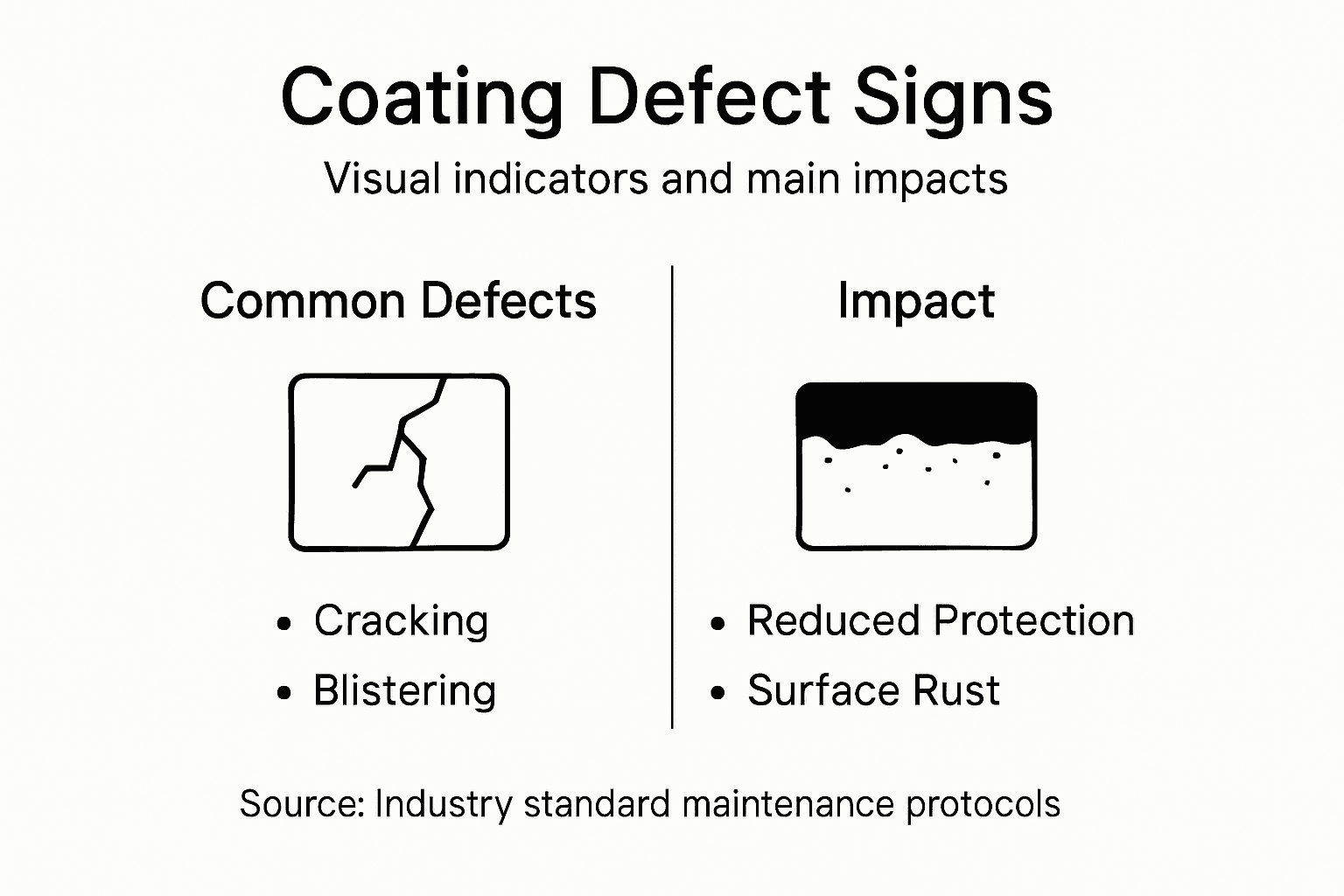
Here’s a summary of common coating defects and their potential impact:
| Defect Type | Common Visual Indicators | Potential Impact on Protection |
|---|---|---|
| Chalking | Powdery residue, loss of gloss | Reduced UV resistance |
| Blistering | Raised bumps, localized swelling | Possible corrosion underneath |
| Cracking | Visible lines or splits | Moisture intrusion risk |
| Peeling | Separation from substrate | Exposed substrate, high corrosion |
| Discoloration | Non-uniform fading or staining | Indicates chemical or UV damage |
Pro tip: Always use calibrated measurement tools and standardized inspection protocols to ensure consistent and accurate coating condition assessments.
Step 2: Clean Surfaces and Remove Contaminants
Preparing surfaces for coating requires thorough cleaning and systematic contaminant removal. Your primary objective is to create an optimal surface environment that ensures maximum coating adhesion and long term performance.
Begin by implementing comprehensive surface cleaning protocols that eliminate potential bonding barriers. This involves using specialized industrial detergents and solvents designed to remove dirt, oil, rust, old paint residues, and microscopic particulate matter. Select cleaning agents appropriate to your specific surface material, paying close attention to chemical compatibility and potential reactivity. Mechanical methods such as pressure washing, sandblasting, or chemical treatments may be necessary depending on the surface condition and existing contamination levels.
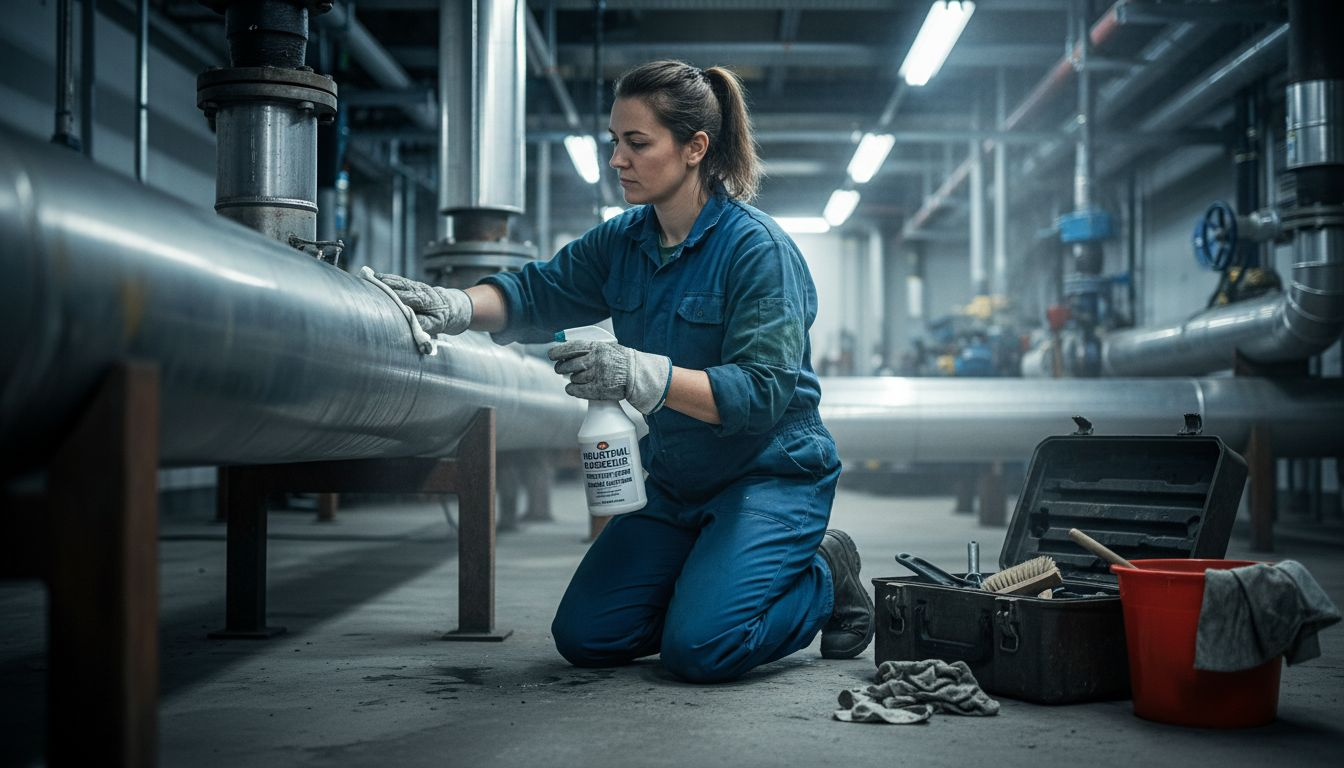
After initial cleaning, perform a detailed inspection to verify complete contaminant removal. Look for any remaining residues, oxidation patches, or surface irregularities that could compromise coating adhesion. Ensure the surface is completely dry and free from moisture, which can introduce additional contamination risks. Proper surface preparation is critical for achieving a durable, high performance protective coating that will withstand environmental stresses.
Compare surface cleaning methods for optimal coating preparation:
| Method | Recommended Use Case | Key Advantages |
|---|---|---|
| Pressure Washing | Large areas, mild contaminants | Quick, efficient removal |
| Sandblasting | Heavy rust or paint buildup | Deep cleaning, smooths |
| Chemical Solvent | Oil and grease residues | Non-abrasive, thorough |
| Industrial Detergent | General dirt, light surface prep | Safe for most materials |
Pro tip: Always use lint-free cloths and degreasing solvents specifically formulated for industrial surface preparation to minimize potential recontamination risks.
Step 3: Repair Damaged Areas and Address Defects
Restoring the integrity of damaged coating surfaces requires precision, careful assessment, and targeted repair techniques. Your primary goal is to eliminate potential vulnerabilities that could compromise the overall protective system and expose underlying materials to environmental risks.
Begin by thoroughly evaluating coating damage using standardized defect classification methods. This involves systematically identifying and quantifying specific types of damage such as blistering, cracking, peeling, or localized corrosion. Different repair approaches will be required depending on the extent and nature of the damage. For minor surface imperfections, specialized zinc-rich touch-up paints or repair compounds can effectively restore protective coverage. More extensive damage might necessitate complete section removal and recoating to ensure comprehensive surface protection.
When performing repairs, select materials that match the original coating composition and provide equivalent corrosion resistance. Apply repair products using manufacturer recommended techniques, ensuring proper surface preparation, optimal thickness, and complete coverage. Pay close attention to feathering edges and creating smooth transitions between repaired and original coating surfaces to prevent future moisture penetration or adhesion failures.
Pro tip: Always document repair locations and methods for future maintenance tracking and develop a comprehensive repair log that details each intervention.
Step 4: Apply Recommended Touch-Ups or Recoats
Successfully maintaining protective coatings requires strategic and precise touch-up techniques that restore surface integrity and prevent potential long term degradation. Your objective is to implement targeted recoating methods that seamlessly integrate with existing protective layers while providing comprehensive surface protection.
Carefully select and apply touch-up and repair methods that match the original coating specifications. This involves choosing appropriate materials such as zinc-rich paints, specialized repair compounds, or sprayed zinc coatings depending on the specific surface requirements. Ensure complete surface preparation before application, removing any contaminants and creating an optimal bonding environment. Pay close attention to recommended application thickness and technique to guarantee uniform coverage and maximum adhesion.
Apply touch-up materials using precise techniques that create smooth transitions between repaired and existing coating surfaces. Use professional grade application tools and follow manufacturer recommended curing times and environmental conditions. Multiple thin layers are often more effective than a single thick application, allowing for better penetration and more consistent protection.
Pro tip: Always match touch-up materials exactly to the original coating composition and keep detailed records of each repair to track long term performance and maintenance history.
Step 5: Verify Coating Performance and Document Maintenance
Evaluating the long term effectiveness of your protective coating requires systematic performance verification and meticulous documentation. Your primary objective is to develop a comprehensive tracking system that monitors coating condition and preserves critical maintenance insights.
Implement structured coating inspection protocols that include quantitative measurements and detailed visual assessments. This involves conducting regular thickness measurements, adhesion tests, and comprehensive surface examinations to detect early signs of potential degradation. Utilize precision measurement tools to track coating thickness, checking for uniform coverage and identifying areas that might require intervention. Pay close attention to environmental exposure zones and regions experiencing higher mechanical stress, as these areas are most susceptible to premature coating failure.
Create a systematic documentation framework that captures every aspect of the coating maintenance lifecycle. Record inspection dates, observed conditions, repair interventions, environmental parameters, and performance metrics. This detailed tracking enables predictive maintenance strategies and provides a historical reference for future protection decisions. Photographs, measurement logs, and comprehensive notes will help you develop a clear understanding of coating performance trends and potential long term vulnerabilities.
Pro tip: Digitize your maintenance records and implement a standardized tracking template to ensure consistent and easily retrievable documentation across multiple asset maintenance cycles.
Protect Your Assets with Expert Coating Maintenance Solutions
Maintaining industrial coatings for long-lasting protection is a challenge that requires precise surface preparation and expert application. If you face issues like peeling, cracking, or corrosion risk outlined in the article, Southern Sandblasting & Painting LLC offers trusted solutions designed to restore and extend the life of your coatings. Our team specializes in thorough sandblasting to remove rust and contaminants followed by high-quality industrial painting that ensures optimal adhesion and durability. With over 20 years of experience serving Orlando and Central Florida, we understand the local environmental conditions and compliance standards crucial to protecting your infrastructure.
Take control of your asset’s protection and prevent costly deterioration by partnering with Southern Sandblasting & Painting. Visit our website at Southern Sandblasting & Painting LLC to discover how our surface preparation and coating services can provide lasting value for your industrial projects. Contact us today to schedule an evaluation and secure durable coatings tailored to your facility’s unique needs.
Frequently Asked Questions
What are the common signs of coating wear that I should look for?
To identify potential coating wear, look for signs such as chalking, cracking, peeling, and discoloration. Conduct a visual inspection every few months to track these indicators and assess the need for maintenance or repairs.
How can I effectively clean surfaces before recoating?
To prepare surfaces for recoating, implement thorough cleaning using industrial detergents or solvents appropriate for your surface material. Ensure you remove all contaminants like dirt, oil, and rust, and confirm that the surface is completely dry before applying any new coating.
What materials should I use for repairing damaged coating areas?
Select repair materials that closely match the original coating composition and offer similar corrosion resistance. Use zinc-rich touch-up paints or specialized repair compounds for minor imperfections, while more extensive damage may require complete recoating of the affected area.
How often should I verify the performance of my coatings?
Conduct performance verifications at least once a year, focusing on checking coating thickness, adhesion, and overall surface condition. This routine inspection helps detect early signs of degradation and informs your maintenance planning.
What steps should I take after repairing a coating?
After any coating repairs, document your work meticulously by noting the location, method, and materials used. This record will serve as a valuable reference for future maintenance, enabling you to track the performance and longevity of your coatings.
Recommended
- Role of Coatings in Longevity – Extending Asset Lifespans
- Protective Coating Trends 2025: Innovations for Infrastructure
- Complete Guide to Asset Protection Coatings for Infrastructure
- Industrial Coating Terminology: Keys for Asset Longevity
- 10 Best Tent Waterproofing Spray 2025 & Comparison – Tent Explorer
- Industrial Painting Services in Orlando, FL
- Sandblasting Services Orlando FL


