
Municipal infrastructure managers across Florida face a persistent challenge: coating systems that fail prematurely despite substantial investment. While many assume cheap paint is to blame, up to 70% of coating failures in humid coastal regions are linked to moisture penetration. Understanding the true root causes of these failures, from environmental stressors to application errors, empowers you to make smarter coating choices, extend asset lifespans, and reduce costly emergency repairs.
Table of Contents
- Introduction To Infrastructure Coating Failures In Florida Municipalities
- Causes Of Infrastructure Coating Failure: Moisture And Corrosion
- Environmental Stressors: Salt And UV Exposure Effects
- Surface Preparation And Application Errors Leading To Failure
- Common Misconceptions About Infrastructure Coating Failures
- Selecting Appropriate Coating Systems For Florida Infrastructure
- Preventive Maintenance And Longevity Improvements
- Conclusion: Enhancing Infrastructure Durability Through Informed Coating Practices
- Protect Your Florida Infrastructure With Expert Sandblasting & Coatings
- Frequently Asked Questions
Key Takeaways
| Point | Details |
|---|---|
| Moisture drives most failures | Up to 70% of coating failures stem from moisture intrusion and inadequate surface preparation in Florida’s coastal climate. |
| Salt and UV accelerate breakdown | Salt contamination can reduce coating lifespan by 30-50%, while UV radiation causes polymer brittleness and elasticity loss. |
| Application errors compound risks | Coatings applied without proper abrasive blasting have adhesion failure rates three times higher than properly prepared surfaces. |
| Climate-appropriate selection matters | Epoxy and polyurethane systems adapted to Florida’s environment demonstrate 50% longer service life than generic coatings. |
| Preventive maintenance reduces failures | Regular inspection protocols and moisture testing reduce coating failure rates by 40% compared to reactive approaches. |
Introduction to Infrastructure Coating Failures in Florida Municipalities
Municipal infrastructure assets like water tanks, bridges, pipelines, and structural steel face constant assault from Florida’s unique climate. The combination of high humidity, salt-laden coastal air, and intense ultraviolet radiation creates an environment where protective coatings must perform at their absolute peak or fail catastrophically.
Durable coatings serve as the first line of defense against corrosion, structural degradation, and costly asset replacement. For municipalities managing tight budgets and strict compliance requirements, coating failures translate directly into emergency repairs, public safety concerns, and accelerated infrastructure decay. Florida’s environmental conditions present challenges that demand specialized knowledge and strategic planning.
Common municipal assets requiring protective coatings include:
- Water storage tanks and treatment facilities exposed to constant moisture
- Bridge structures and supports facing salt spray and traffic pollution
- Wastewater infrastructure subjected to chemical exposure and humidity
- Structural steel in coastal zones battling continuous corrosion threats
- Concrete surfaces degrading from moisture intrusion and freeze-thaw cycles
The prevalence of coating failures in Florida municipalities stems from environmental exposure combined with maintenance gaps and preparation shortcuts. Many managers discover too late that coating durability depends less on product brand than on proper surface preparation, appropriate system selection, and vigilant maintenance protocols.
Causes of Infrastructure Coating Failure: Moisture and Corrosion
Moisture represents the single most destructive force compromising coating integrity on Florida infrastructure. When water vapor penetrates coating layers, it reaches the substrate beneath and initiates corrosion processes that undermine adhesion from within. Moisture intrusion beneath coatings is a leading cause of premature failure on concrete and steel municipal infrastructure in coastal Florida.
The mechanism unfolds in stages. First, moisture migrates through microscopic pores or defects in the coating film. Once it contacts steel substrates, electrochemical reactions begin, forming iron oxide (rust) that expands and physically lifts the coating away from the surface. On concrete, moisture carries dissolved salts that crystallize within pores, creating pressure that fractures the coating bond.
Corrosion beneath failed coatings accelerates exponentially once moisture establishes pathways. The trapped environment between coating and substrate becomes ideal for sustained corrosion, often invisible until extensive damage occurs. In Florida’s coastal assets, this process happens faster due to elevated temperatures that speed chemical reactions and constant humidity that prevents substrates from drying.
Quantitative studies confirm moisture intrusion and corrosion causes account for the vast majority of coating system breakdowns. For municipalities, this means substrate moisture content must be verified before any coating application. Applying even premium coatings over damp surfaces guarantees failure within months.
Pro Tip: Use calibrated moisture meters to test substrate dampness levels before coating application. Concrete moisture should be below 4% and steel surfaces completely dry to touch and free of condensation. Schedule coating work during low-humidity periods when possible.
Environmental Stressors: Salt and UV Exposure Effects
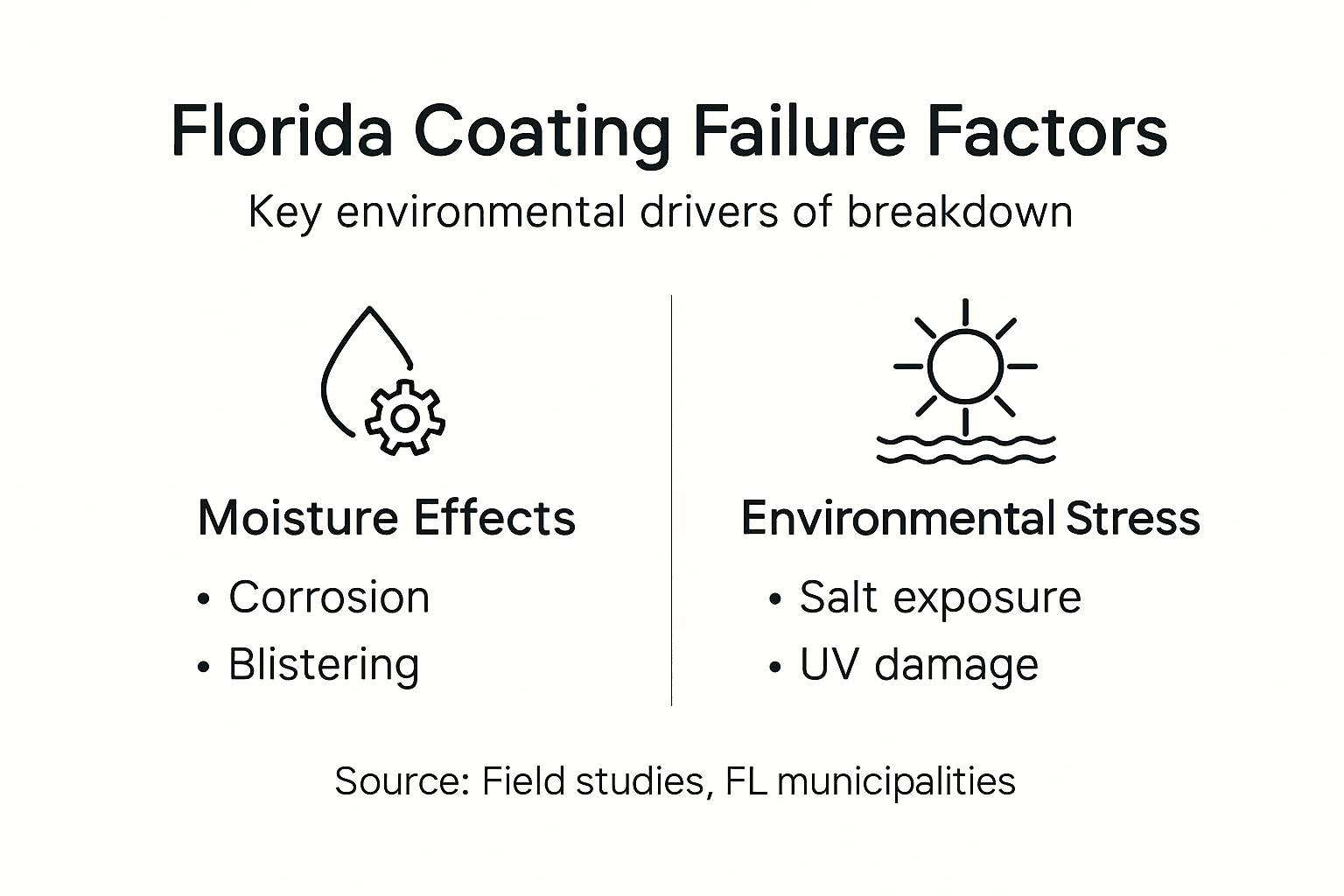
Florida’s coastal proximity subjects infrastructure to salt contamination that severely compromises coating performance. Salt deposits on surfaces before coating create osmotic cells that draw moisture through the coating film. This salt contamination can reduce coating lifespan by 30-50% in exposed coastal infrastructure environments, making thorough surface cleaning absolutely critical.
Osmotic blistering occurs when salt particles trapped beneath coatings attract water molecules through the coating membrane. Pressure builds as water accumulates, forming visible blisters that eventually rupture and expose the substrate. Underfilm corrosion follows, as salt contamination and osmotic blistering create ideal conditions for accelerated metal degradation.
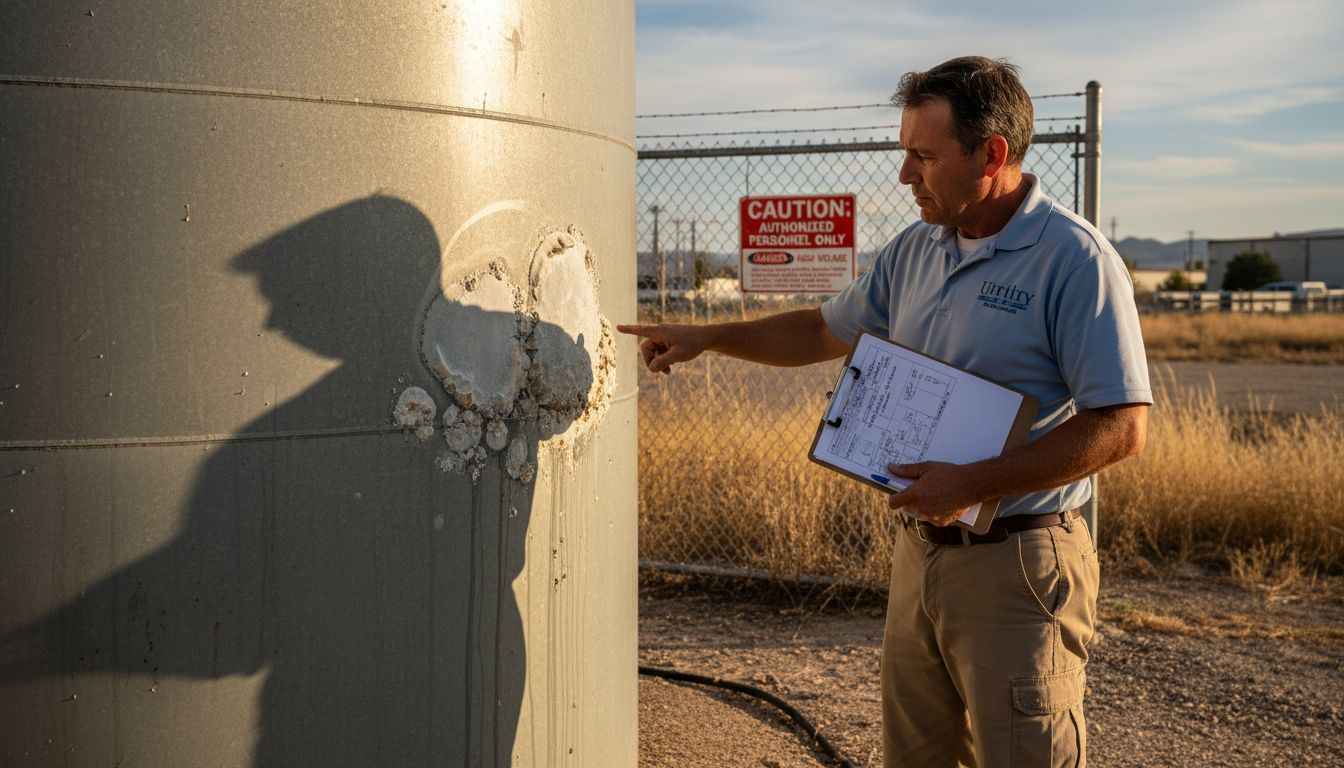
Ultraviolet radiation adds another dimension of stress. UV radiation accelerates polymer degradation in coating systems, causing chemical bonds to break down. Polymer chains fracture, leading to brittleness, cracking, and loss of elasticity. Coatings lose their ability to flex with substrate movement, resulting in stress cracks that admit moisture and contaminants.
The combined effect of salt and UV exposure creates a harsh environment where coating systems face simultaneous chemical and physical attack:
| Stressor | Mechanism | Lifespan Reduction | Primary Effect |
|---|---|---|---|
| Salt contamination | Osmotic blistering, underfilm corrosion | 30-50% | Adhesion failure, accelerated substrate corrosion |
| UV radiation | Polymer chain breakdown | 20-40% | Brittleness, cracking, loss of protective barrier |
| Combined salt + UV | Synergistic degradation | Up to 60% | Rapid coating failure requiring premature replacement |
| High humidity | Moisture penetration enhancement | 25-35% | Substrate corrosion, coating delamination |
Managing these UV degradation impacts requires selecting coating systems specifically formulated with UV stabilizers and salt-resistant properties matched to Florida’s coastal environment.
Surface Preparation and Application Errors Leading to Failure
Inadequate surface preparation benefits represent the most controllable yet frequently overlooked cause of coating failures. Abrasive blasting removes contaminants, creates surface profile for mechanical adhesion, and exposes clean substrate for optimal coating bonding. Research demonstrates coatings applied without proper abrasive blasting have adhesion failure rates 3x higher than properly prepared surfaces.
Application errors compound preparation deficiencies. Coating over moist surfaces, applying during unfavorable weather, inadequate film thickness, and insufficient curing time all guarantee premature failure. A Florida case study revealed 30% of coated surfaces delaminated within 3 years due to application errors, demonstrating how human factors undermine even quality coating products.
Best practices for Florida surface preparation standards and application include:
- Conduct thorough substrate assessment identifying all defects, contamination, and existing coating condition before work begins.
- Remove all contaminants through abrasive blasting to SSPC-SP 10 (near-white metal) or SSPC-SP 6 (commercial blast) standards minimum.
- Verify surface cleanliness and profile depth meet coating manufacturer specifications using replica tape and visual standards.
- Test and document substrate moisture levels, confirming dry conditions before coating application proceeds.
- Apply coatings only when ambient temperature, substrate temperature, and humidity fall within manufacturer-specified ranges.
- Maintain specified wet film thickness using calibrated gauges, adjusting application technique to achieve uniform coverage.
- Allow full curing time between coats and before placing assets back in service, protecting from moisture during cure.
- Document all preparation and application steps with photographs and inspection reports for quality assurance.
The effects of improper surface prep extend beyond immediate adhesion problems. Contamination left on surfaces continues degrading substrates beneath coatings, while inadequate profile prevents mechanical keying. Understanding these Florida coating application errors helps municipalities avoid repeating costly mistakes.
Pro Tip: Follow manufacturer curing and environmental guidelines strictly to avoid failure. Temperature and humidity windows exist for good reason. Rushing application outside specified conditions saves no money when coatings fail prematurely.
Common Misconceptions About Infrastructure Coating Failures
Municipal managers often operate under misconceptions that misguide coating strategy and waste budgets on ineffective solutions. Correcting these myths focuses resources on true failure drivers and evidence-based practices.
The most persistent myth blames coating failures primarily on cheap or low-quality paint products. While product quality matters, up to 60% of coating failures result from preparation and environmental factors rather than coating material defects. Premium coatings applied over contaminated or moist substrates fail just as quickly as economy products.
Key misconceptions about coating failures and corresponding realities include:
- Myth: Recoating over failed systems solves the problem. Reality: Moisture issues, substrate corrosion, and contamination remain beneath new coatings, guaranteeing rapid re-failure and wasted application costs.
- Myth: All coating products perform equally in Florida environments. Reality: Generic coatings lack UV stabilizers, moisture resistance, and salt tolerance needed for coastal durability, requiring climate-specific system selection.
- Myth: Visual inspection adequately assesses coating condition. Reality: Hidden moisture intrusion and early-stage substrate corrosion proceed undetected until catastrophic failure occurs, making testing equipment essential.
- Myth: Coating thickness compensates for poor surface preparation. Reality: No film thickness overcomes contamination or inadequate profile, as adhesion depends on clean substrate contact and mechanical keying.
- Myth: Lowest bid coating contractors deliver equivalent results. Reality: Preparation shortcuts and application errors by unqualified contractors create failures costing multiples of initial savings in emergency repairs.
Understanding these realities redirects municipal coating programs toward substrate preparation quality, environmental monitoring, and contractor qualification rather than product price alone.
Selecting Appropriate Coating Systems for Florida Infrastructure
Choosing coating systems optimized for Florida’s environment dramatically improves durability and service life. Climatic-adapted epoxy and polyurethane systems demonstrated 50% longer service life in Florida municipalities compared to generic coatings, making proper selection a high-return investment.
Epoxy coatings provide excellent adhesion, chemical resistance, and moisture barrier properties, making them ideal for water tanks and wastewater structures. Two-component epoxies cure through chemical reaction rather than solvent evaporation, forming dense cross-linked films that resist moisture penetration and chemical attack.
Polyurethane topcoats offer superior UV resistance and color retention compared to epoxies, protecting underlying layers from photodegradation. Aliphatic polyurethanes maintain gloss and prevent chalking even under intense Florida sunlight, extending system life in exposed applications like bridges and elevated structures.
Acrylic coatings cure quickly and tolerate marginally damp substrates better than epoxies, providing options for rapid-turnaround projects. However, they offer less chemical resistance and durability than epoxy or polyurethane systems, limiting use to less demanding applications.
Comparison of coating systems for Florida municipal infrastructure:
| Coating Type | Corrosion Resistance | UV Resistance | Durability (Years) | Cost-Effectiveness | Best Applications |
|---|---|---|---|---|---|
| Epoxy | Excellent | Fair | 10-15 | High | Water tanks, submerged structures, chemical exposure |
| Polyurethane | Good | Excellent | 12-18 | Very High | Bridges, exposed steel, architectural finishes |
| Epoxy/Polyurethane System | Excellent | Excellent | 15-20+ | Highest | Critical infrastructure, coastal bridges, long-term protection |
| Acrylic | Fair | Good | 5-8 | Moderate | Quick repairs, non-critical structures, temporary protection |
For coastal bridges and elevated steel structures, epoxy primers combined with polyurethane topcoats provide optimal protection. Water tanks benefit from 100% solids epoxies meeting NSF-61 potable water standards. General municipal assets require assessment of exposure severity, expected service life, and budget constraints.
Consulting coating system lifespan data and manufacturer technical sheets ensures selected systems match Florida’s humidity, salt exposure, and UV intensity. Understanding industrial coatings types available helps municipalities make informed decisions balancing performance and cost.
Pro Tip: Consult product data sheets for environmental suitability before final selection. Verify temperature and humidity application windows, recoat times, and service environment compatibility to avoid specification errors.
Preventive Maintenance and Longevity Improvements
Structured maintenance and inspection regimens reduce coating failures by identifying problems early when repairs cost less than emergency replacements. Regular maintenance and inspection protocols reduce coating failure rates by 40% compared to reactive approaches that address only obvious failures.
Key preventive maintenance activities include:
- Moisture content measurement using calibrated meters to detect substrate dampness before visible coating damage appears
- Visual surface integrity checks identifying early blistering, cracking, chalking, or delamination requiring attention
- Adhesion testing with pull-off gauges quantifying coating bond strength and predicting remaining service life
- Thickness measurements verifying adequate film build and identifying areas requiring touch-up before substrate exposure
- Environmental monitoring tracking humidity, temperature, and salt deposition affecting coating degradation rates
- Scheduled cleaning removing surface contaminants that accelerate coating breakdown and substrate corrosion
- Timely spot repairs addressing minor defects before they expand into major failures requiring complete recoating
Inspection intervals depend on asset criticality and exposure severity. Coastal structures warrant quarterly assessments, while inland assets may require only annual reviews. Following maintenance reduces failure rates protocols transforms coating management from reactive crisis response to proactive asset preservation.
Implementing structured assessment programs delivers multiple benefits beyond failure prevention. Documentation of coating condition supports capital planning, budgeting for planned maintenance rather than emergency funding requests. Trending deterioration rates optimizes recoating schedules, maximizing coating service life without risking substrate exposure.
Understanding importance of inspection and adopting coating maintenance best practices transforms municipal infrastructure management from perpetual repair cycles to strategic asset protection.
Pro Tip: Schedule inspections seasonally to catch Florida’s environmental impacts early. Post-hurricane assessments identify salt and moisture damage, while summer inspections reveal UV degradation before winter budget planning.
Conclusion: Enhancing Infrastructure Durability through Informed Coating Practices
Moisture intrusion, corrosion, salt contamination, UV radiation, and inadequate surface preparation drive the majority of coating failures on Florida municipal infrastructure. These causes interact synergistically, accelerating degradation in the state’s uniquely challenging coastal environment. Generic approaches and lowest-cost contractors guarantee premature failures that multiply long-term costs.
Success requires expertise in surface preparation matched to substrate conditions, coating system selection appropriate for environmental exposure, and maintenance protocols that catch problems early. Municipalities adopting evidence-based practices see dramatic reductions in failure rates, extended asset service lives, and lower total ownership costs. Strategic investment in proper preparation, climate-appropriate coatings, and preventive maintenance transforms infrastructure coating from perpetual expense into lasting protection.
Protect Your Florida Infrastructure with Expert Sandblasting & Coatings
Southern Sandblasting & Painting brings over 20 years of specialized experience helping Florida municipalities prevent coating failures through proper surface preparation and climate-appropriate protective systems. Our professional sandblasting services ensure optimal substrate cleanliness and profile for lasting coating adhesion.
We offer durable industrial coatings specifically selected for Florida’s humid, salt-laden coastal environment. Our proven strategies for effective surface preparation reduce infrastructure maintenance costs and improve regulatory compliance. Partner with trusted local professionals who understand Florida’s unique challenges and deliver coating solutions that protect your critical assets for the long term.
Frequently Asked Questions
Why do infrastructure coatings fail so often in Florida?
Florida’s combination of high humidity, salt-laden coastal air, and intense UV radiation creates uniquely harsh conditions for protective coatings. Moisture penetration accounts for up to 70% of failures, while salt contamination and UV exposure accelerate coating breakdown. Poor surface preparation compounds environmental stresses, with inadequate blasting tripling adhesion failure rates compared to properly prepared substrates.
How can municipal managers prevent coating failure on critical infrastructure?
Rigorous substrate assessment and proper abrasive blasting to industry standards provide the foundation for coating success. Select climate-appropriate coating systems with UV stabilizers and moisture resistance matched to Florida’s environment. Implement regular maintenance and inspection programs that detect early deterioration before catastrophic failures occur, reducing overall failure rates by 40%.
What are the signs that a coating is failing prematurely?
Visible symptoms include blistering from moisture or salt contamination beneath the coating, delamination where coatings lift away from substrates, and cracking from loss of flexibility. Discoloration and chalking indicate UV degradation breaking down polymer bonds. Schedule timely inspections and moisture testing when any signs appear, as hidden substrate corrosion often progresses beneath surface symptoms until extensive damage occurs.


