
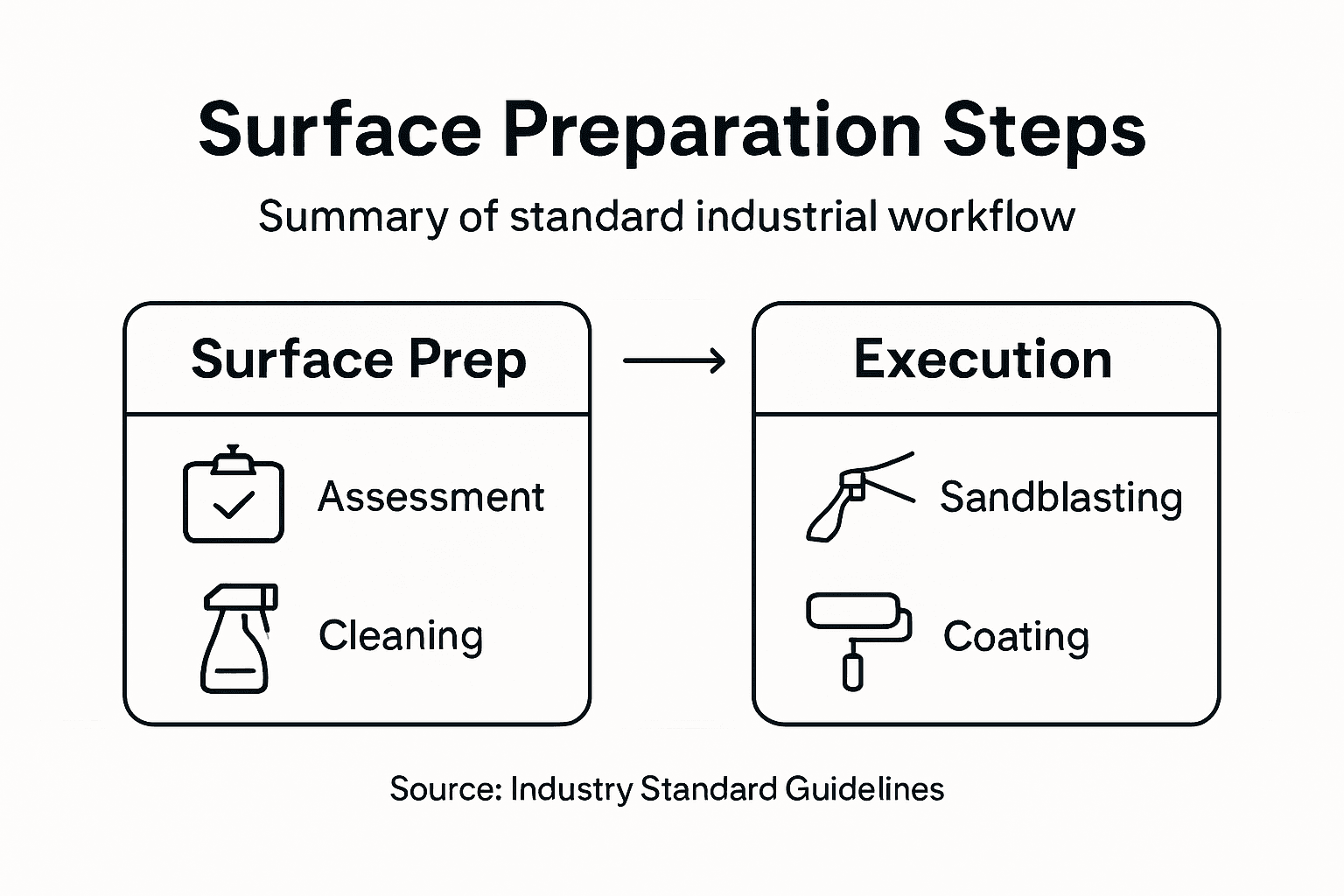
Meeting compliance while extending the lifespan of public assets is no small feat for municipal infrastructure managers in Central Florida. Every project begins with assessing existing surface conditions to identify risks and select the right sandblasting and coating strategy. With safety regulations and project durability in mind, this guide shows you how proven preparation steps and targeted protective coatings can reduce liabilities and keep your community’s infrastructure strong for years.
Table of Contents
- Step 1: Assess Existing Surface Conditions
- Step 2: Select Appropriate Cleaning Methods
- Step 3: Prepare Site and Ensure Safety Compliance
- Step 4: Execute Sandblasting and Contaminant Removal
- Step 5: Apply Protective Industrial Coatings
- Step 6: Verify Quality and Project Completion
Quick Summary
| Key Point | Explanation |
|---|---|
| 1. Assess Existing Surface Conditions | Conduct a thorough evaluation to identify challenges and suitable treatment strategies before starting any project. |
| 2. Choose Effective Cleaning Methods | Select cleaning techniques based on substrate type and contamination levels to ensure optimal adhesive performance. |
| 3. Establish Safety Compliance Protocols | Implement rigorous safety measures and training to protect workers and comply with regulatory standards. |
| 4. Execute Sandblasting Correctly | Use precise setups and monitor conditions during sandblasting to effectively remove contaminants while ensuring safety. |
| 5. Verify Quality After Coating Application | Conduct thorough inspections and tests to confirm that surface treatments meet industrial quality standards. |
Step 1: Assess Existing Surface Conditions
Before initiating any industrial surface preparation project, comprehensive assessment of existing surface conditions becomes the critical foundation for successful outcomes. Your initial task involves meticulously evaluating the current state of the surface, identifying potential challenges, and determining the most appropriate treatment strategy.
To start your assessment, conduct a thorough visual inspection of the surface area. Look for signs of corrosion, existing paint layers, rust, scale, or contamination that could interfere with your surface preparation process. Specific environmental site assessment protocols help identify potential liabilities and risks associated with surface conditions. Phase I environmental site assessment techniques provide structured methodologies for documenting existing surface characteristics and potential contamination issues.
Documenting your findings is crucial. Photograph the surface from multiple angles, measure existing coating thickness, and record environmental conditions such as temperature and humidity. Pay special attention to substrate material, identifying whether you are working with concrete, metal, wood, or composite surfaces. Each material requires unique preparation approaches and may present distinct challenges during surface treatment.
Pro tip: Invest in digital documentation tools that allow precise measurement and tracking of surface conditions to create a comprehensive baseline assessment record.
Step 2: Select Appropriate Cleaning Methods
Selecting the right cleaning method is crucial for ensuring optimal surface preparation and coating adhesion. Your goal in this step is to identify the most effective technique that will remove contaminants and create an ideal surface for further treatment.
Multiple cleaning approaches exist for different surface types and conditions. Surface preparation techniques range from solvent cleaning to mechanical methods like hand and power tool cleaning. Your selection depends on several critical factors including substrate material, contamination type, and project specifications. Metal surfaces often require specialized approaches to remove oily soils and ensure complete contaminant removal. Consider factors such as surface texture, existing coatings, and environmental constraints when determining your cleaning strategy.
When evaluating cleaning methods, assess the pros and cons of different approaches. Solvent cleaning works well for removing light contaminants, while mechanical methods like wire brushing or abrasive blasting provide more aggressive surface preparation. Industrial environments might benefit from automated cleaning cycles that systematically remove residues and prepare surfaces for subsequent treatments. Always prioritize methods that minimize surface damage while maximizing contaminant removal.
Pro tip: Perform a small test area first to validate your chosen cleaning method and ensure it achieves the desired surface profile without causing unintended damage.
Here’s a comparison of common industrial cleaning methods and their typical applications:
| Cleaning Method | Typical Substrate | Main Advantage | Key Limitation |
|---|---|---|---|
| Solvent Cleaning | Metal | Removes oils and grease | Limited on heavy rust |
| Hand Tool Cleaning | Wood, Metal | Simple and cost-effective | Labor intensive |
| Abrasive Blasting | Concrete, Steel | Deep contaminant removal | Potential substrate damage |
| Automated Cleaning | Large Metal Systems | Efficient for high volume | High initial investment |
Step 3: Prepare Site and Ensure Safety Compliance
Preparing the industrial site and establishing comprehensive safety protocols are critical steps that protect workers and ensure project success. Your primary objective is to create a secure work environment that meets all regulatory requirements and minimizes potential risks.
OSHA safety standards provide the foundational framework for site preparation and worker protection. Begin by conducting a thorough hazard assessment that identifies potential risks specific to your surface preparation project. This involves examining the work area for environmental challenges, structural considerations, and potential safety impediments. Create a detailed site map that highlights restricted zones, emergency access points, and critical safety equipment locations. Verify that all team members have appropriate personal protective equipment including respiratory protection, safety glasses, gloves, and protective clothing specific to the surface treatment process.
Developing a comprehensive site specific safety plan is essential for managing potential workplace hazards. Document all safety protocols, emergency response procedures, and communication channels. Ensure clear signage is installed, designate a safety coordinator, and establish precise communication protocols for reporting potential risks or incidents. Conduct a mandatory safety orientation for all workers before beginning the project, reviewing specific hazards, emergency procedures, and site specific requirements.
Pro tip: Create a safety checklist that workers must review and sign before starting work to ensure everyone understands and acknowledges the site specific safety requirements.
Below is a summary of critical safety compliance steps for industrial surface preparation:
| Safety Step | Purpose | Impact on Project |
|---|---|---|
| Hazard Assessment | Identify workplace risks | Prevents accidents |
| PPE Distribution | Protect workers from exposure | Ensures worker safety |
| Emergency Protocols | Prepare for incidents | Minimizes downtime |
| Safety Orientation | Educate staff on site rules | Increases compliance |
Step 4: Execute Sandblasting and Contaminant Removal
Sandblasting is a powerful surface preparation technique designed to remove rust, old coatings, and surface contaminants through high velocity abrasive projection. Your objective in this critical phase is to thoroughly clean the surface while maintaining equipment safety and worker protection.
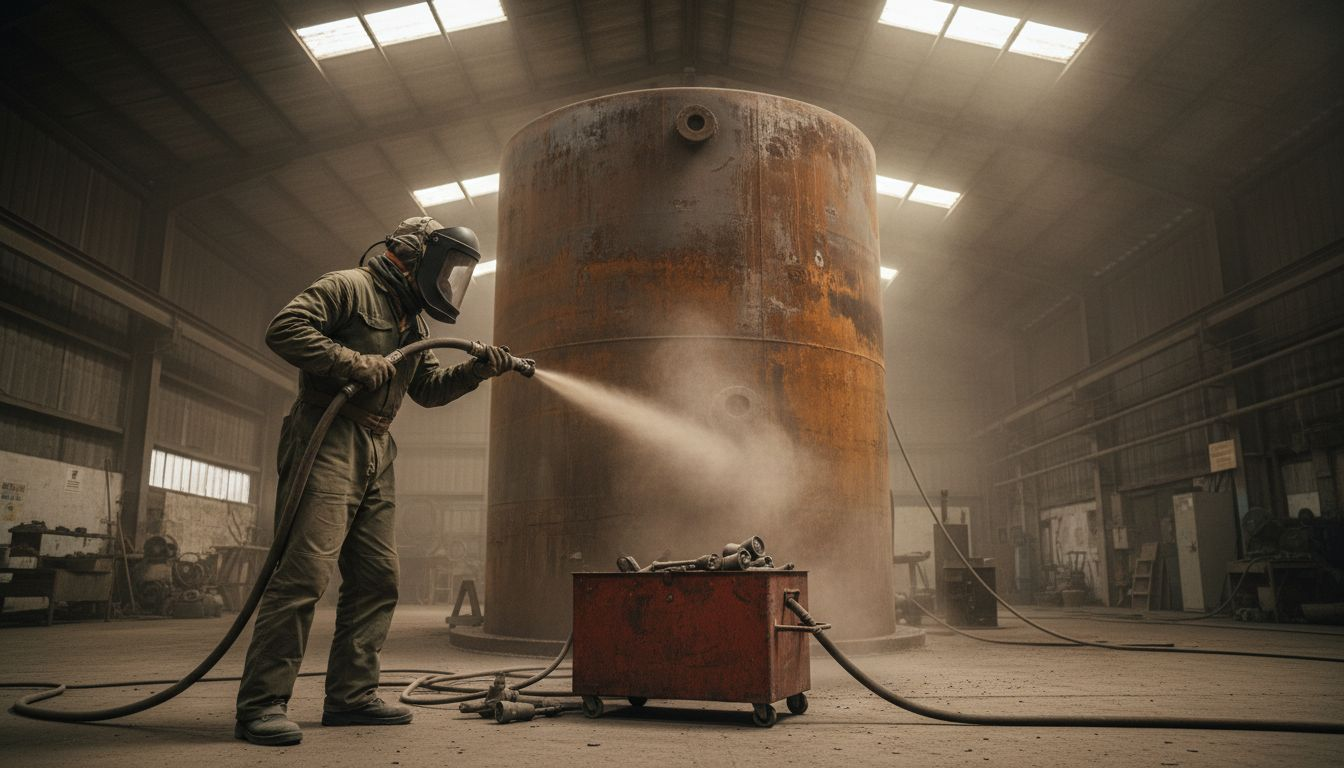
Sandblasting machinery requires precise setup and careful operation to achieve optimal results. Select the appropriate abrasive media based on your specific surface material and contamination level. Harder surfaces might require more aggressive media like steel grit, while softer substrates demand gentler options such as aluminum oxide or walnut shells. Adjust compressor pressure carefully to ensure effective contaminant removal without damaging the underlying surface. Sandblasting safety protocols mandate using supplied air breathing equipment and implementing comprehensive dust containment strategies to protect workers from silica exposure.
Maintain consistent blasting distance and angle to ensure uniform surface preparation. Monitor equipment performance continuously, checking for moisture buildup, pressure variations, and potential equipment wear. Move the blasting nozzle in smooth parallel passes to create an even surface profile. After completing the blasting process, conduct a thorough inspection to verify complete contaminant removal and surface readiness for subsequent coating applications.
Pro tip: Always perform a small test area first to validate your abrasive media and blasting parameters before proceeding with the full surface treatment.
Step 5: Apply Protective Industrial Coatings
Applying protective industrial coatings is the final critical step in ensuring long term asset durability and performance. Your objective is to create a uniform protective layer that shields surfaces from environmental degradation and potential corrosion.
Protective coating specifications require precise environmental and application conditions. Begin by selecting a coating compatible with your specific substrate material and anticipated environmental exposure. Carefully control application parameters including ambient temperature, humidity levels, and surface temperature to ensure optimal coating adhesion. Use specialized spray equipment or rollers depending on the surface geometry and coating type. Apply multiple thin layers rather than a single thick coating to promote better adhesion and uniform coverage.
Coating application standards emphasize achieving a water break free surface and maintaining strict environmental controls during application. Monitor coating thickness carefully using precision measurement tools. Implement adhesion testing protocols to verify coating quality and performance. Allow sufficient curing time between layers and after final application, following manufacturer recommended drying and curing specifications for your specific industrial coating.
Pro tip: Maintain a consistent application angle and distance during coating to ensure uniform thickness and prevent potential holiday or pinhole defects.
Step 6: Verify Quality and Project Completion
Final quality verification represents the critical concluding phase of your surface preparation workflow, ensuring that all project objectives have been met and the finished surface meets rigorous industrial standards. Your comprehensive review will validate the effectiveness of each preceding step and confirm project success.
Quality assurance surveillance demands systematic and thorough inspection processes. Conduct a detailed visual examination of the entire treated surface, looking for uniform coating coverage, absence of defects, and proper adhesion. Use specialized testing equipment to measure coating thickness, verify surface profile depth, and confirm that the prepared surface meets all predetermined specifications. Surface preparation quality verification involves checking for potential contaminants, irregularities, or imperfections that could compromise long term performance.
Document your findings comprehensively, including photographic evidence, measurement records, and any identified areas requiring potential touch up or rework. Compare your results against the original project specifications and industry standards. Perform adhesion testing, holiday detection, and thickness measurements to ensure complete compliance. Your final report should provide a clear assessment of project quality and performance readiness.
Pro tip: Maintain a structured digital documentation system that allows for easy reference and tracking of all quality verification measurements and observations.
Expert Surface Preparation Solutions for Industrial Success
Understanding the challenges of industrial surface preparation is the first step to ensuring long-lasting protection and performance of your assets. From assessing existing conditions to executing precise sandblasting and applying protective coatings, each phase demands expert attention to detail and compliance with safety and quality standards. If you are facing issues like stubborn rust removal, inconsistent coating adhesion, or safety hurdles during site preparation, you need trusted professionals who can guide you through every stage with confidence.
At Southern Sandblasting & Painting LLC, we specialize in delivering comprehensive surface preparation services tailored for complex industrial projects across Central Florida. Our team combines over 20 years of experience with advanced equipment and safety protocols to handle everything from Sandblasting to high-performance Industrial Painting, ensuring your infrastructure is protected against corrosion and environmental damage for the long term.
Take the next step toward durable asset protection now. Visit Southern Sandblasting & Painting LLC to explore how our expert surface preparation workflow can provide the reliable foundation your industrial project needs. Contact us today to discuss your requirements and secure a safer, cleaner, and more resilient surface treatment solution.
Frequently Asked Questions
What are the initial steps in the surface preparation workflow for industrial projects?
Before starting any surface preparation project, conduct a thorough assessment of the existing surface conditions. Begin with a visual inspection to identify signs of corrosion, rust, or contamination, and document your findings for reference.
How do I choose the right cleaning method for my industrial surface?
Select a cleaning method based on your substrate material and the type of contamination present. Consider factors like the surface texture and existing coatings, and perform a small test area to confirm that your chosen method removes contaminants effectively without damaging the surface.
What safety measures should be taken during surface preparation?
Establish comprehensive safety protocols, including a hazard assessment of the work site and distribution of personal protective equipment. Create a safety plan that includes emergency procedures and conduct an orientation for all workers to ensure they understand the specific site-related safety rules.
How do I ensure that sandblasting is conducted safely and effectively?
To sandblast safely and effectively, select the appropriate abrasive media for the surface material and contamination level while adhering to safety protocols. Monitor the equipment for consistent performance, and always perform a small test area to verify that your settings achieve the desired results without damaging the surface.
What are the key factors to consider when applying industrial coatings?
When applying industrial coatings, ensure environmental conditions such as temperature and humidity are optimal for adhesion. Apply multiple thin layers to enhance durability and monitor the coating thickness carefully to achieve a uniform protective layer.
How can I verify the quality of my surface preparation project?
Conduct a detailed visual and technical inspection of the treated surface, checking for uniform coating and proper adhesion. Document your findings, including any measurements and photographic evidence, to confirm that the project meets predetermined specifications and quality standards.


