
TL;DR:
- Florida’s harsh climate accelerates infrastructure corrosion, requiring specialized sandblasting techniques and compliance.
- Wet or dustless blasting is recommended to reduce rust risks and improve site management in humid conditions.
- Certified crews and thorough documentation ensure long-lasting protection and regulatory adherence for infrastructure projects.
Florida’s infrastructure faces a relentless enemy: moisture. Bridges corrode faster here than almost anywhere else in the continental United States, water tanks develop rust pockets within years of installation, and industrial pipes lose their protective coatings long before their design lifespan ends. When a municipal facility manager skips proper surface preparation or hires a crew without the right credentials, the repair bill doesn’t just double — it can trigger regulatory violations, service interruptions, and public safety risks. This guide covers the tools, step-by-step process, compliance requirements, and real-world mistakes to avoid when sandblasting critical infrastructure in Florida.
Table of Contents
- Understanding sandblasting for infrastructure in Florida
- Essential equipment and safety requirements
- Step-by-step surface preparation and sandblasting process
- Inspection, compliance, and coating application
- Why expert certification and climate awareness matter more than ever
- Protect your infrastructure with expert sandblasting and coating services
- Frequently asked questions
Key Takeaways
| Point | Details |
|---|---|
| Florida-specific prep is crucial | Ignoring climate and compliance requirements leads to premature coating failure. |
| Choose certified contractors | NACE/SSPC certified teams ensure projects meet regulatory and performance standards. |
| Use wet/dustless methods | These techniques help prevent flash rust and downtime in Florida’s humidity. |
| Invest in documentation and QA | Ongoing inspections and records are vital for legal compliance and asset longevity. |
Understanding sandblasting for infrastructure in Florida
Sandblasting, also called abrasive blasting, is the process of propelling abrasive media at high velocity against a surface to strip rust, old coatings, mill scale, and contaminants. For infrastructure managers, it’s not a cosmetic step. It’s the foundation on which every protective coating depends. A coating applied to a poorly prepared surface will fail in months, not years, costing far more than the original job.
In Florida, the stakes are especially high. The combination of salt air, tropical humidity, and UV exposure accelerates corrosion at a rate that surprises even experienced contractors from other states. Common infrastructure targets include potable water tanks, wastewater treatment structures, stormwater pipes, highway bridges, and industrial storage vessels. Each of these assets carries regulatory requirements that dictate how surface prep must be performed and documented.
There are two primary methods used on Florida projects: dry abrasive blasting and wet or dustless blasting. Dry blasting uses compressed air to propel media like steel grit or garnet. Wet blasting mixes water with the abrasive stream, suppressing dust and significantly reducing the risk of flash rust, which is surface oxidation that forms within minutes of blasting in high-humidity environments.
Here’s a quick look at Florida pricing benchmarks for 2026:
| Service type | Typical rate |
|---|---|
| Dry abrasive blasting | ~$150 per hour |
| Wet or dustless blasting | ~$175 per hour |
These sandblasting rates in Florida apply to water and wastewater tanks, pipes, and structures that must comply with state and federal regulations. Budget planning should also account for containment, waste disposal, and inspection costs, which can add 20 to 30 percent to the base rate on municipal projects.
Key infrastructure types that benefit from professional sandblasting in Florida:
- Potable water storage tanks and towers
- Wastewater treatment plant structures
- Stormwater drainage pipes and culverts
- Highway and railroad bridges
- Industrial processing vessels and pipelines
For a deeper look at method selection, review the available sandblasting methods for infrastructure and the range of abrasive blasting techniques used across Florida’s public works sector.
Pro Tip: In Florida’s climate, wet or dustless blasting is almost always the smarter choice for exterior steel. The modest cost premium over dry blasting pays for itself by eliminating flash rust rework and reducing containment complexity on open job sites.
Having set the stage, let’s get specific about what you need to start sandblasting infrastructure.
Essential equipment and safety requirements
With a clear picture of the technique and regulatory climate, let’s assemble the tools and processes you’ll need to do the job right.
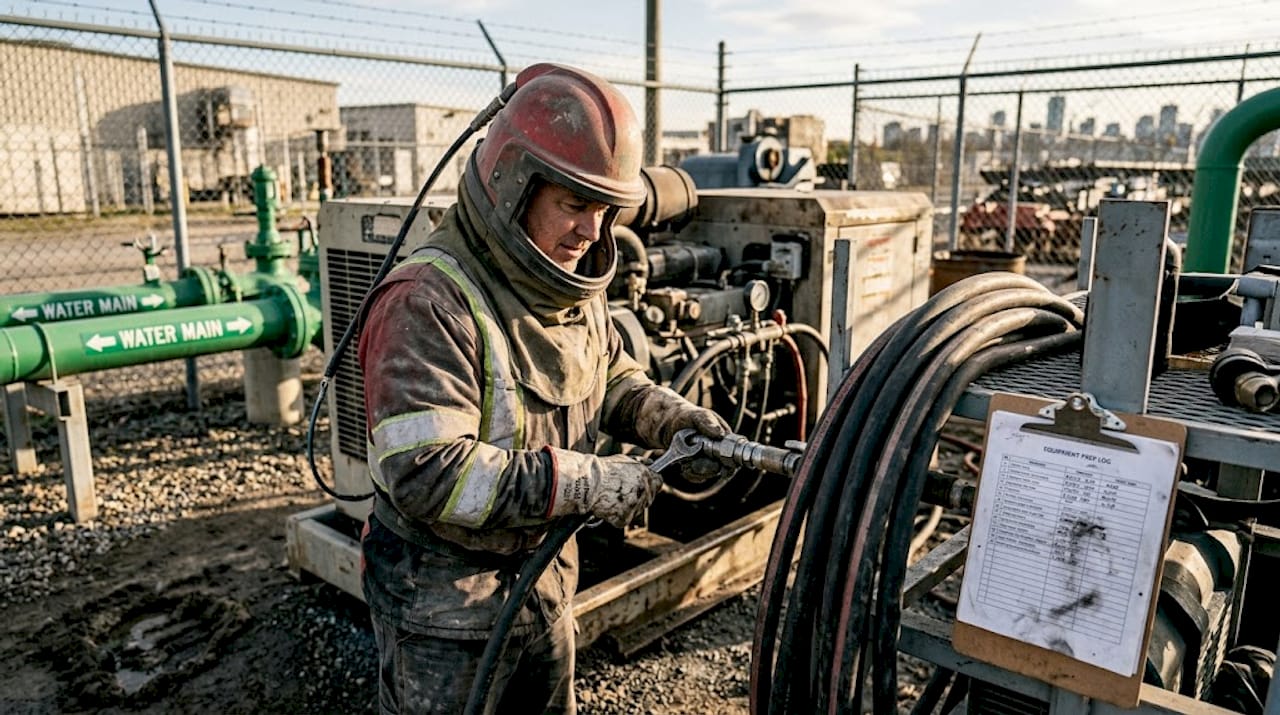
The equipment list for a compliant Florida infrastructure job goes well beyond a blast pot and a hose. Your setup must match the method, the substrate, and the regulatory environment of the specific project.
Dry vs. wet blasting: a side-by-side comparison
| Factor | Dry abrasive blasting | Wet or dustless blasting |
|---|---|---|
| Flash rust risk | High in Florida humidity | Significantly reduced |
| Dust generation | High, requires containment | Low, easier site management |
| Best for | Enclosed, controlled spaces | Open or semi-open structures |
| Media recovery | Easier | Requires slurry management |
| Regulatory fit | Standard projects | Preferred for potable water jobs |
Required PPE (Personal Protective Equipment) for sandblasting crews:
- Supplied air respirator or NIOSH-approved blast hood
- Blast-rated gloves and protective suit
- Steel-toed boots with metatarsal guards
- Hearing protection rated for high-decibel environments
- Safety harness for elevated or confined space work
Humidity control is non-negotiable on Florida projects. Before blasting begins, the surface temperature must be at least 5 degrees Fahrenheit above the dew point to prevent moisture condensation. Air monitoring for silica dust and lead paint particles is required on most public contracts. Containment systems — shrouds, tarps, and vacuum recovery units — must be installed before any blasting starts.
Special safety concerns on Florida infrastructure jobs include confined space entry for tank interiors, lead paint abatement on older bridges and industrial structures, and NSF 61 compliance for any surface that contacts potable water. Wet blasting prevents flash rust in Florida’s humidity, and steel must be repaired before blasting while potable water jobs require NSF approval at every stage.
Regulatory note: Florida sandblasting contracts increasingly require documented air quality monitoring, certified waste disposal for blast media, and third-party inspection sign-off before coating application begins. Review the Florida sandblasting contract guidelines to understand what your project scope must include.
For guidance on preparing aging steel assets before blasting, see the restoring steel infrastructure resource and the updated surface prep tips for 2025 and 2026 projects.
Step-by-step surface preparation and sandblasting process
Once your team is equipped and briefed, follow this process to ensure safety, compliance, and long-term asset durability.
-
Assess the substrate. Inspect all steel and concrete surfaces for cracks, corrosion pitting, weld failures, and existing coating condition. Document findings with photographs and written reports.
-
Complete steel repairs first. Steel repairs such as welding and cutting must be finished before abrasive blasting and coating begin. Blasting over unrepaired welds or open cracks creates voids that trap moisture and cause premature coating failure.
-
Install containment systems. Erect shrouds, blast curtains, and vacuum recovery equipment. For potable water tanks, containment must prevent any blast media or debris from entering the water system.
-
Select the right abrasive. Match media to the substrate and the required anchor profile. Steel grit produces a sharp angular profile ideal for heavy industrial coatings. Garnet is preferred for projects requiring tighter cleanliness standards.
-
Mask and protect adjacent surfaces. Cover valves, gauges, vents, and any non-blast areas with tape and sheeting before the blast nozzle opens.
-
Blast to the specified cleanliness standard. Most Florida municipal contracts require SSPC-SP 10 Near-White Metal Blast or SSPC-SP 6 Commercial Blast as a minimum. Verify the anchor profile with a testex tape gauge immediately after blasting.
-
Monitor humidity and temperature continuously. Check conditions every 30 minutes during blasting. If relative humidity exceeds 85 percent or the surface temperature drops within 5 degrees of the dew point, stop work.
-
Clean and inspect. Remove all blast media, dust, and debris. Conduct a final cleanliness inspection before any coating is applied.
Pro Tip: In Florida, the window between blasting and coating can be as short as one hour on humid days. Have your coating crew staged and ready before the last blast pass is complete. Waiting even two hours in summer conditions can mean visible flash rust and a mandatory re-blast.
Studies on infrastructure maintenance show that proper surface preparation accounts for 80 percent of coating longevity, making it the single most important factor in long-term asset protection. For a complete field reference, see the Florida sandblasting guide and review real project examples that show how these steps translate to measurable results.
Inspection, compliance, and coating application
Your surface is now ready — the last steps are quality control, documentation, and proper coating application for long-term protection.
Compliance on Florida infrastructure projects is not optional, and it’s not just about passing an inspection. It’s about protecting public assets, meeting contract terms, and avoiding the kind of coating failures that generate headlines and budget overruns.
Key compliance checkpoints before coating:
- Verify contractor holds current NACE or SSPC certification. NACE/SSPC certified contractors like Southern Sandblasting bring documented competency that protects municipal clients during audits and warranty claims.
- Confirm all coatings for potable water contact carry NSF 61 approval, which is legally required for surfaces in contact with potable water.
- Document surface cleanliness grade, anchor profile measurement, and ambient conditions at time of inspection.
- Retain all inspection records, material safety data sheets, and coating product data sheets for the project file.
The coating application sequence matters as much as the blast itself. Apply the primer coat within the window specified by the coating manufacturer, typically within four hours of blasting in Florida conditions. Apply each subsequent coat only after the previous coat has cured to the manufacturer’s minimum recoat time. Measure dry film thickness (DFT) after each coat using a calibrated gauge.
Key takeaways: full process summary
| Phase | Critical action | Florida-specific concern |
|---|---|---|
| Assessment | Document substrate condition | Identify lead paint or asbestos |
| Steel repair | Weld and cut before blasting | Prevent void-related failures |
| Blasting | Achieve specified cleanliness grade | Control humidity, prevent flash rust |
| Inspection | Measure anchor profile and DFT | Verify NSF compliance for water tanks |
| Coating | Apply within manufacturer’s window | Monitor dew point continuously |
Common pitfalls include skipping the post-blast humidity check, using non-NSF-approved coatings on water infrastructure, and allowing delays between blasting and coating that exceed the manufacturer’s open time. For a structured approach to the full sequence, see the coating process for municipalities and the workflow for surface prep used on Florida public works projects.
Why expert certification and climate awareness matter more than ever
Most infrastructure managers focus their attention on equipment specs and bid prices. That’s understandable. But the projects that fail — the ones that require costly re-blasting and recoating within two or three years — almost always trace back to one of two problems: an uncertified crew that didn’t know the standards, or a certified crew that ignored the weather.
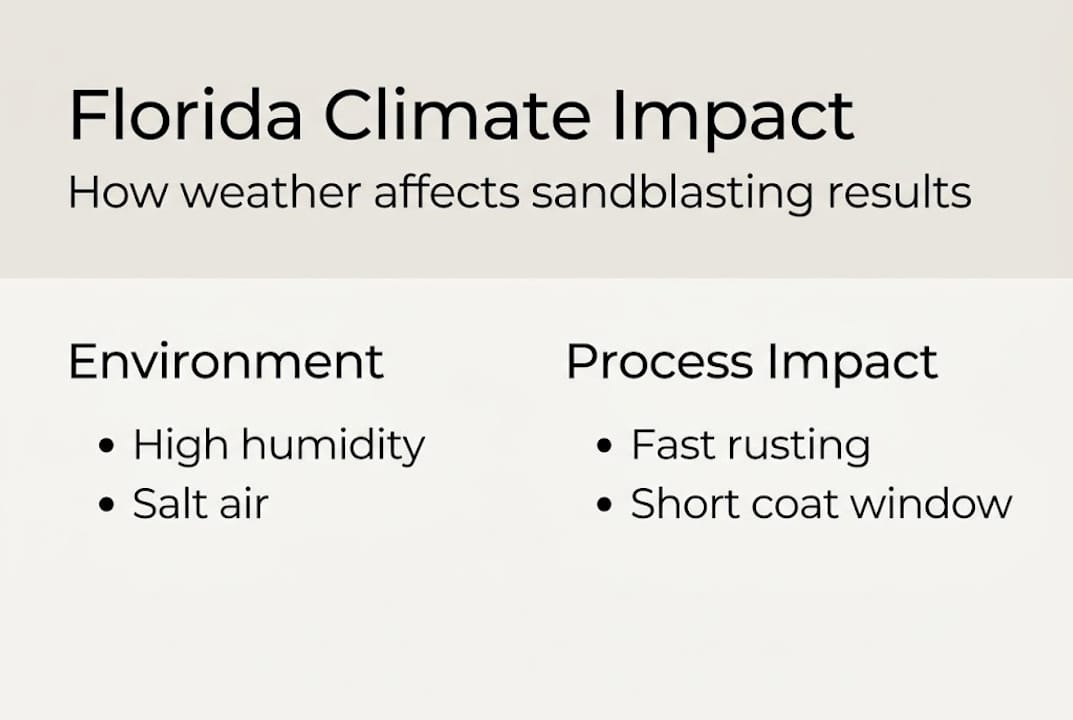
Florida’s climate is genuinely different from what most national coating standards were written to address. The humidity swings, the afternoon thunderstorms, the overnight dew — these are not edge cases here. They’re the daily operating environment. A contractor who treats Florida like Ohio will deliver Ohio-quality results on a Florida timeline, which means early failure.
Certified teams trained under NACE and SSPC standards bring more than a credential. They bring a documented methodology for tracking ambient conditions, adjusting procedures in real time, and maintaining the kind of recordkeeping that protects your agency during audits. Investing in preventing coating failures through certified crews is almost always cheaper than the alternative. The NACE/SSPC certified approach is not a luxury on Florida municipal projects — it’s the baseline for responsible asset management.
Pro Tip: Every time you award a sandblasting contract, require the contractor to submit a written humidity and temperature monitoring plan. If they can’t produce one, that tells you everything you need to know about how they’ll manage your project.
Protect your infrastructure with expert sandblasting and coating services
If you want every sandblasting and coating job to pass muster the first time, here’s how to get help from Florida’s leading experts.
Southern Sandblasting & Painting LLC brings over 20 years of experience serving municipal agencies, industrial facility operators, and government clients across Central Florida. Our certified crews handle the full scope — from initial assessment and containment setup through blasting, inspection, and final coating — so you get one accountable team from start to finish.
Whether your project involves sandblasting services in Orlando for a water tower or applying industrial coatings for Florida infrastructure on a wastewater treatment facility, we deliver documented compliance and durable results. Explore the full range of types of industrial coatings we apply and contact our team to schedule a site assessment.
Frequently asked questions
What infrastructure types benefit most from sandblasting in Florida?
Sandblasting is vital for water and wastewater tanks, pipes, bridges, and other metal or concrete structures exposed to Florida’s harsh climate. These assets face accelerated corrosion from humidity, salt air, and UV exposure that makes regular surface preparation essential.
How much does sandblasting infrastructure usually cost in Florida?
Abrasive blasting typically costs around $150 per hour, while dustless blasting runs about $175 per hour for municipal and industrial projects. Total project costs also include containment, waste disposal, and inspection, which can add significantly to the base rate.
What compliance requirements must be met for infrastructure sandblasting in Florida?
Projects must follow state and federal regulations, use NSF-approved coatings for potable water contact, and typically require NACE/SSPC certified contractors to meet municipal contract standards. Documentation of cleanliness grades, ambient conditions, and coating application records is also required.
How do Florida’s climate and humidity affect sandblasting results?
High humidity sharply increases the risk of flash rust, which can form within an hour of blasting on exposed steel. Wet blasting prevents flash rust in Florida’s humid conditions, and environmental controls like dew point monitoring are essential for achieving lasting results.


