
Florida’s infrastructure faces a silent threat that most facility managers underestimate until it’s too late. Corrosion doesn’t announce itself. It works underneath coatings, inside joints, and along weld seams, quietly eating through steel and concrete while budgets stay focused elsewhere. In Central Florida, the combination of high humidity, salt air, and intense UV exposure accelerates this process faster than in most other regions of the country. Sandblasting is the single most effective first step in stopping that cycle, yet it’s often treated as a formality rather than the foundation of every durable coating system. This guide breaks down why sandblasting matters, which methods work best for your assets, and how to implement it correctly.
Table of Contents
- Why sandblasting matters for Central Florida infrastructure
- Core functions and benefits of sandblasting
- Types of sandblasting and their impact on project success
- Compliance, safety, and climate-specific considerations in Florida
- Expert tips for maximizing sandblasting project ROI
- Professional sandblasting and coating services for Florida infrastructure
- Frequently asked questions
Key Takeaways
| Point | Details |
|---|---|
| Combat corrosion | Sandblasting removes rust and contaminants, dramatically slowing infrastructure decay. |
| Improve coating performance | A properly blasted surface ensures coatings adhere well for long-term protection. |
| Match methods to environments | Wet or dry sandblasting must be selected based on location, safety, and project needs. |
| Comply with Florida standards | Florida’s humidity and regulations require specialized sandblasting safety and timing protocols. |
| Maximize return on investment | Following expert tips and hiring compliant contractors prevent costly rework and asset loss. |
Why sandblasting matters for Central Florida infrastructure
Central Florida’s climate is genuinely hostile to metal and concrete structures. Humidity regularly exceeds 80%, salt particles travel inland from both coasts, and summer storms deposit moisture into every surface crack and crevice. The result is accelerated coating failure and structural degradation that can cut an asset’s service life in half if surface preparation is skipped or done poorly.
Sandblasting, also called abrasive blasting, is the process of propelling abrasive media at high velocity to strip rust, old coatings, mill scale, and contaminants from steel, concrete, and other surfaces. The surface treatment process creates an optimal surface profile for protective coatings that enhance durability and prevent corrosion. Without it, even the most expensive coating system will fail prematurely because it has nothing solid to grip.
Common applications in this region include:
- Municipal water tanks and storage vessels
- Bridges and elevated roadway structures
- Parking garage steel supports and concrete decks
- Marine and waterfront assets
- Airport infrastructure and hangar steel
- Pipeline exteriors and industrial equipment
When choosing sandblasting methods for these asset types, the goal is always the same: expose sound base material and create a surface that holds a coating for decades, not years.
“Sandblasting sets the foundation. Without proper surface preparation, even the best coating fails prematurely, wasting both material costs and labor investment.”
Core functions and benefits of sandblasting
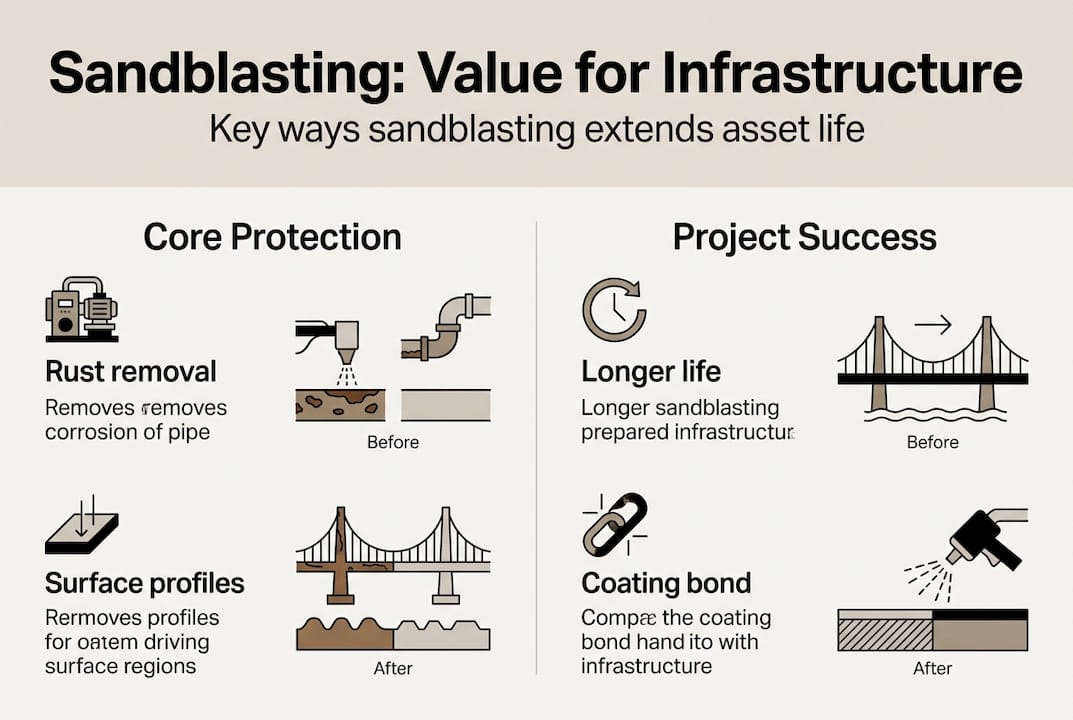
The mechanics of sandblasting are straightforward, but the results are measurable and significant. When abrasive media strikes a surface at high pressure, it removes contaminants down to bare metal or concrete and simultaneously creates a microscopic texture called a surface profile. This profile, measured in mils (thousandths of an inch), is what allows primers and topcoats to mechanically bond to the substrate.
Key benefits for infrastructure managers include:
- Contamination removal: Eliminates rust, chlorides, oils, and old coatings that cause adhesion failure
- Profile creation: Produces the anchor pattern required for industrial primers to bond correctly
- Corrosion control: Removes the root cause of rust rather than painting over it
- Extended asset life: Proper preparation can extend an asset’s service life by two to three times compared to poor prep
- Reduced lifecycle costs: Fewer recoating cycles mean lower long-term maintenance budgets
The numbers matter here. SSPC-SP 10 achieves profiles of 1.5 to 3.0 mils, which is the standard range for zinc-rich primers used on bridges, tanks, and structural steel. Meeting this specification is not optional on most municipal contracts. It’s the baseline for coating system performance.
Review sandblasting project results from comparable infrastructure to understand what properly executed preparation looks like before committing to a contractor. And always reference surface prep best practices when writing your project specifications.
Pro Tip: Always confirm that the NACE/SSPC surface profile specified in your coating system documentation matches what the contractor is actually achieving on-site. A profile that’s too shallow or too rough will compromise adhesion regardless of coating quality.
Types of sandblasting and their impact on project success
Not all sandblasting is the same. The two primary methods, dry and wet abrasive blasting, each have distinct advantages and limitations. Choosing the wrong one for your site conditions can create regulatory problems, damage sensitive substrates, or slow your project timeline significantly.
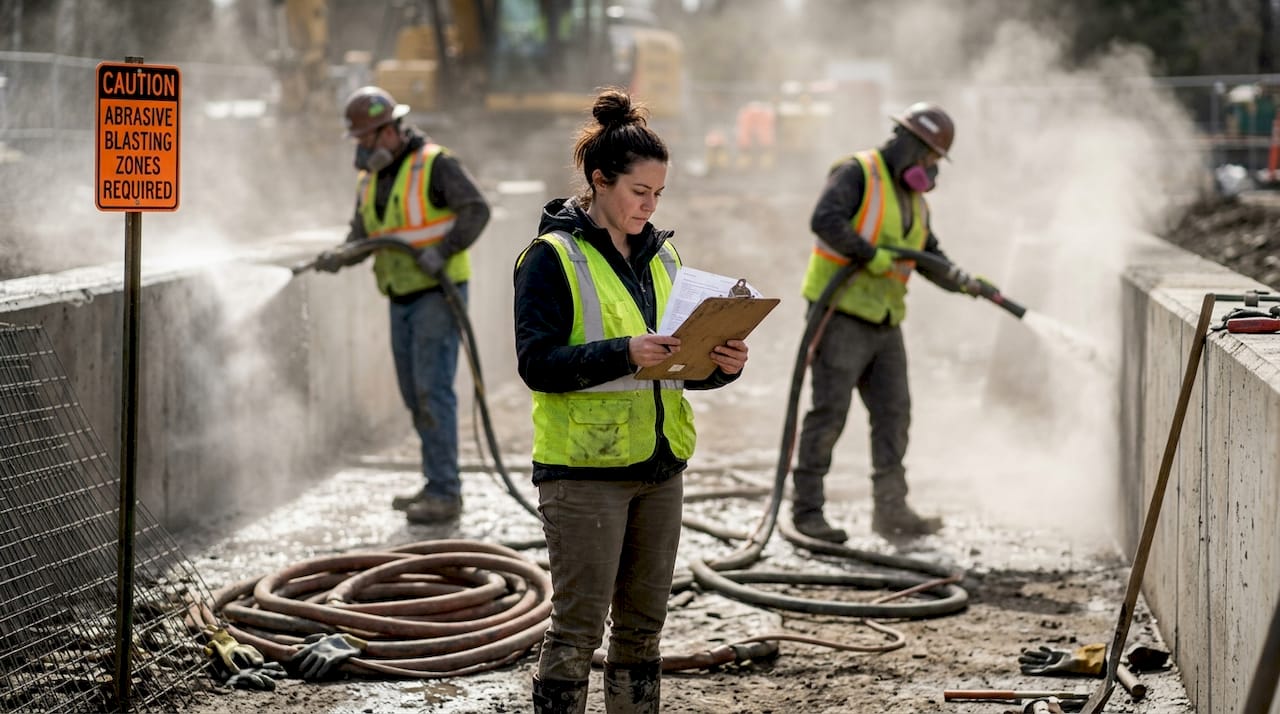
Wet blasting is preferred for dust-sensitive urban areas, bridges over waterways, and thin metals where warping is a risk. Dry blasting is the right call for heavy rust and scale on thick steel where speed is critical. Test areas are always recommended to optimize media type, pressure, and nozzle distance before full-scale work begins.
| Factor | Dry sandblasting | Wet sandblasting |
|---|---|---|
| Speed | Faster, high output | Slower, more controlled |
| Dust generation | High, requires containment | Minimal, safer in urban areas |
| Surface finish | Aggressive, deep profile | Gentler, finer profile |
| Cost | Lower per square foot | Higher due to equipment and drying |
| Regulatory compliance | Strict containment required | Easier to meet urban ordinances |
Dry abrasive blasting is faster and more aggressive for large-scale heavy removal, but high dust output requires full containment systems and PPE. Wet blasting is safer and more environmentally friendly, but slower and requires post-blast drying to prevent flash rust.
For environmental considerations near waterways, occupied facilities, or sensitive public areas, wet blasting is almost always the correct choice. Use the sandblasting method selection process to document your decision and protect yourself from liability.
Pro Tip: Specify the blasting method explicitly in your bid documents. Do not leave method selection to the contractor’s discretion. Requiring documentation of the chosen method and the rationale protects your project from shortcuts.
Compliance, safety, and climate-specific considerations in Florida
Florida’s regulatory and environmental conditions create a narrow window for successful sandblasting and coating work. Get this wrong and you face two problems at once: regulatory fines and coating failure.
OSHA and NACE standards require full PPE including respirators and protective suits, plus containment systems to capture blast media and debris. Florida’s high humidity adds another layer of urgency: flash rust can form on freshly blasted steel within hours, sometimes within 30 minutes in peak summer conditions. Recoating immediately after blasting is not a preference. It’s a requirement.
Here is a practical compliance checklist for Florida infrastructure projects:
- Schedule blasting during low-humidity windows, typically early morning before afternoon storms
- Require full containment and dust control systems on every project, regardless of location
- Verify that all personnel hold current NACE/SSPC certifications
- Conduct test blasts and document surface profile readings before full-scale work
- Ensure coating is applied within the manufacturer’s specified recoat window after blasting
- Archive all compliance documentation for regulatory review and warranty purposes
Review the surface prep workflow for industrial projects and use the city project prep checklist to verify your contractor’s process before work begins.
“Lapsed compliance doesn’t just risk fines. It risks coating failure that wipes out the entire investment in surface preparation and materials.”
Expert tips for maximizing sandblasting project ROI
Getting the most value from a sandblasting project comes down to oversight, documentation, and procurement discipline. These are areas where municipal and facility managers have direct control, and where small decisions create large downstream differences in asset performance.
For Central Florida operators, NACE/SSPC-compliant contractors using wet blasting for urban compliance and dry blasting for remote heavy infrastructure deliver the best outcomes. Always verify the surface profile, which should represent 20 to 30 percent of the dry film thickness of the coating system, and require test blasts before full production begins.
Here are the key steps to maximize your return on investment:
- Conduct test blasts on representative areas before mobilizing full crews
- Verify surface profile and cleanliness ratings against your coating system specifications
- Monitor humidity and dew point throughout the workday, not just at the start
- Confirm coating is applied within the manufacturer’s recoat window after blasting
- Archive all compliance documentation including inspector sign-offs and profile readings
Review surface preparation tips for 2026 projects and study asset longevity case studies to benchmark what properly executed work delivers over time.
Pro Tip: Build NACE/SSPC documentation requirements, test blast protocols, and humidity monitoring into your procurement specifications and contractor sign-off sheets. This creates accountability before the first nozzle fires.
Professional sandblasting and coating services for Florida infrastructure
If your next project involves a water tank, bridge, parking structure, or any critical municipal asset, the preparation phase will determine whether your coating investment lasts 5 years or 25 years. That’s not an exaggeration. It’s the reality of industrial coating performance.
Southern Sandblasting & Painting LLC brings over 20 years of experience delivering NACE/SSPC-compliant surface preparation and industrial coating systems across Central Florida. Our team understands the local regulatory environment, the climate challenges, and the specific demands of municipal and commercial infrastructure projects. We handle everything from Orlando sandblasting services for individual structures to large-scale full service sandblasting and painting programs for city-wide asset maintenance. Our Florida industrial coatings are specified to match your substrate, environment, and compliance requirements. Contact us to discuss your project and get a detailed scope of work built around your asset protection goals.
Frequently asked questions
How does sandblasting help prevent corrosion on infrastructure?
Sandblasting removes rust, chlorides, and contaminants down to bare metal, then creates a surface profile that allows protective coatings to bond tightly. That bond is what prevents corrosion from forming underneath the coating.
Is wet or dry sandblasting better for urban locations?
Wet sandblasting is the better choice for urban locations because it generates far less airborne dust, making it safer for nearby workers, residents, and waterways. Wet blasting in urban areas also simplifies regulatory compliance.
What compliance standards matter for Florida sandblasting contracts?
NACE/SSPC cleanliness and profile standards are the baseline for any Florida infrastructure contract. OSHA and NACE requirements also mandate full PPE and containment, and Florida’s humidity makes immediate recoating after blasting a non-negotiable requirement.
How soon should coatings be applied after sandblasting in humid climates?
In Florida’s climate, coatings should be applied as soon as possible after blasting, ideally within the same work shift. Flash rust forms quickly in high humidity, sometimes within 30 minutes on freshly blasted steel.
What surface profile is recommended before applying zinc-rich primers?
A surface profile of 1.5 to 3.0 mils is the standard range for zinc-rich primer adhesion per SSPC-SP 10 specifications. Confirming this measurement with a certified inspector before coating application is essential.
Recommended
- Choosing Sandblasting Methods for Infrastructure
- Examples of sandblasting projects for asset longevity
- Why paint infrastructure: extend asset life and cut costs
- How environmental protection shapes safe sandblasting
- How to Maintain Outdoor Signs for Lasting Impact –
- Industrial Painting Services in Orlando, FL
- Sandblasting Services in Orlando, FL


