
When a coastal bridge in Norway lasted 40 years maintenance-free with the right protective coating system, it challenged everything facility managers assumed about paint. Most Central Florida infrastructure managers view painting as a cosmetic expense, yet proper coating systems can triple asset lifespan while cutting lifecycle costs by 30% or more in our humid, salt-laden environment. This article reveals how protective coatings work, what preparation ensures success, and which systems deliver maximum value for bridges, water towers, and municipal assets facing Florida’s aggressive corrosion conditions.
Table of Contents
- Key takeaways
- How protective coatings extend infrastructure lifespan
- The essential role of surface preparation
- Choosing the right coating system for Central Florida infrastructure
- Lifecycle cost benefits and maintenance considerations
- How Southern Sandblasting & Painting supports your infrastructure projects
- FAQ
Key Takeaways
| Point | Details |
|---|---|
| Duplex coating benefits | Combining galvanizing with compatible paint topcoats can deliver more than 40 years of maintenance-free service in harsh marine environments. |
| Coastal Florida protection | Protective coatings create physical and chemical barriers against moisture, salt spray, and pollutants to extend asset life in humid coastal conditions. |
| Critical surface prep | Proper surface preparation is essential for coating adhesion and project success. |
| Lifecycle cost savings | Quality coating investments can reduce lifecycle costs by cutting maintenance and emergency replacements by 30 percent or more. |
How protective coatings extend infrastructure lifespan
Protective coatings prevent corrosion on steel infrastructure by creating physical and chemical barriers against moisture, ultraviolet radiation, salt, and airborne pollutants. Without these barriers, Central Florida’s 80% average humidity and coastal salt spray accelerate oxidation that can destroy unprotected steel structures within a decade. The coating acts as a sealed envelope, blocking oxygen and water from reaching the metal surface where electrochemical corrosion reactions occur.
The barrier mechanism works through multiple protective layers. Zinc-rich primers provide sacrificial protection, corroding preferentially to protect underlying steel. Epoxy intermediate coats offer excellent adhesion and chemical resistance, sealing the substrate from moisture penetration. Polyurethane topcoats resist UV degradation and maintain the barrier integrity over decades of sun exposure.
“Duplex coating systems combining galvanizing with paint can deliver 40+ years of maintenance-free service in harsh marine environments, compared to 15-30 years for paint-only systems in similar conditions.”
Empirical data from Norwegian infrastructure projects demonstrates that properly specified duplex systems extend service life far beyond typical expectations. These systems combine hot-dip galvanizing with compatible paint topcoats, creating redundant protection that performs exceptionally well in corrosive environments similar to coastal Florida.
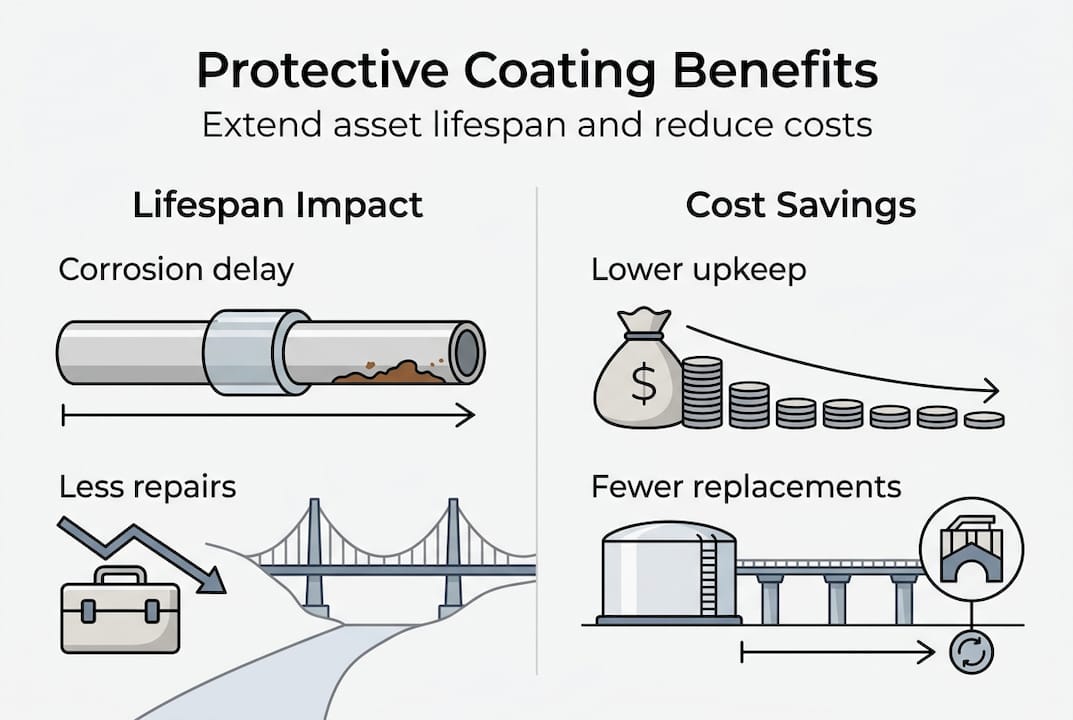
The role of protective coatings infrastructure extends beyond simple corrosion prevention. Quality coating systems reduce lifecycle costs by minimizing repair frequency, extending asset functionality, and preventing catastrophic failures that require emergency replacements. A bridge that receives proper coating maintenance every 12-15 years can serve 70+ years, while neglected structures may require replacement after 30-40 years at exponentially higher cost.
Central Florida’s environmental conditions demand robust coating specifications. The combination of high humidity, salt-laden coastal air, intense UV radiation, and temperature cycling creates one of the most aggressive corrosion environments in North America. Standard industrial-grade paint infrastructure systems must be carefully selected to withstand these specific challenges.
Key protective mechanisms include:
- Physical barrier blocking moisture and oxygen from steel surfaces
- Sacrificial protection from zinc-rich primers that corrode preferentially
- UV resistance preventing coating breakdown and chalking
- Chemical resistance to salt spray and industrial pollutants
- Flexibility accommodating thermal expansion without cracking
Manufacturers like Sherwin-Williams offer specialized steel coatings engineered specifically for bridge and highway infrastructure in corrosive environments. These formulations balance performance characteristics needed for long-term durability in challenging climates.
The essential role of surface preparation
Surface preparation determines whether your coating investment succeeds or fails catastrophically. Surface preparation is critical because even the highest-quality coating cannot adhere properly to contaminated, rusted, or improperly profiled surfaces. Inadequate preparation accounts for up to 50% of coating project costs when adhesion failures force complete removal and reapplication.
Abrasive blasting to SSPC-SP5 white metal blast cleaning standard creates the optimal surface condition for coating adhesion. This process removes all rust, mill scale, paint, and contaminants while creating a 2-3 mil anchor profile that mechanically locks the coating to the substrate. The roughened surface dramatically increases bonding area compared to smooth metal, ensuring the coating grips tenaciously even under stress.
Moisture control presents unique challenges in Florida’s humid climate. Coating application over damp surfaces or during high humidity conditions causes adhesion failures, blistering, and premature coating breakdown. Dew point testing ensures the steel surface temperature stays at least 5°F above the dew point during application, preventing invisible moisture condensation that destroys the coating-substrate bond.
The surface prep contractors expert guide Florida 2026 emphasizes environmental monitoring as critical to project success. Temperature, humidity, and dew point must be continuously tracked and documented throughout surface preparation and coating application phases.
Proper surface preparation follows this sequence:
- Remove loose rust, paint, and debris through mechanical cleaning
- Perform abrasive blasting to specified cleanliness standard (typically SSPC-SP5 or SP10)
- Create appropriate surface profile depth (2-3 mils for most coating systems)
- Remove all blast media, dust, and contaminants through vacuuming or blowing
- Test surface for soluble salts if in coastal environment
- Monitor and document environmental conditions before coating
- Apply first coat within maximum recoat window (often 4-8 hours)
Stripe coating represents another critical preparation step often overlooked. Edges, welds, corners, and fasteners receive extra coating attention because these areas experience accelerated corrosion due to thinner coating coverage. Applying an additional stripe coat to these vulnerable zones before full coating prevents premature corrosion initiation that spreads across the entire structure.
Pro Tip: Schedule surface preparation and coating application during Florida’s dry season (November through April) when humidity levels drop and rain is less frequent, dramatically improving coating success rates and reducing weather delays.
The surface prep best practices coatings approach includes comprehensive surface inspection before coating. Visual assessment confirms complete contaminant removal, while adhesion testing on sample areas validates that the profile depth and cleanliness meet specifications. These quality control steps prevent costly failures discovered only after the entire structure has been coated.
Roof coating surface preparation principles apply equally to vertical infrastructure. Whether coating a water tower, bridge girder, or building facade, the fundamental requirements remain consistent: clean surface, proper profile, controlled environment, and timely coating application.
Choosing the right coating system for Central Florida infrastructure
Common systems include zinc-rich primer combined with epoxy intermediate coats and polyurethane topcoats, creating a multi-layer defense against Central Florida’s aggressive environment. Each layer serves a specific protective function, working together to provide decades of corrosion resistance.
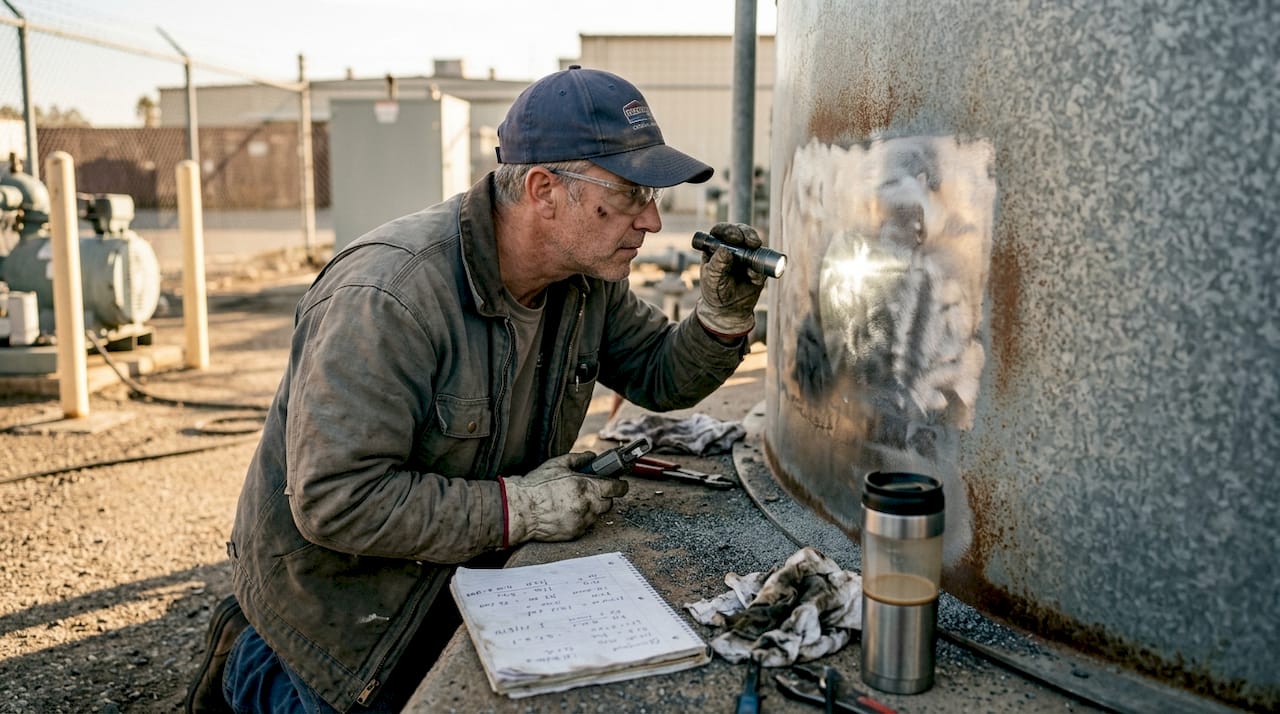
Inorganic zinc coatings excel for bridge structures due to their exceptional adhesion and cathodic protection properties. However, Florida steel deck applications often favor epoxy-zinc systems because inorganic zinc can be sensitive to high humidity during curing. The epoxy binder provides better moisture tolerance during application while maintaining excellent long-term performance.
Polyurethane topcoats deliver essential UV protection for coastal infrastructure. Unlike epoxies that chalk and fade under intense sunlight, polyurethanes maintain color and gloss while providing a durable barrier against salt spray. This topcoat layer takes the brunt of environmental exposure, protecting the underlying primer and intermediate coats that provide corrosion resistance.
| Coating System | Initial Cost | Service Life | Best Application | Maintenance Frequency |
|---|---|---|---|---|
| 3-coat paint system | Moderate | 15-25 years | Bridges, tanks | Every 12-15 years |
| Hot-dip galvanizing | High | 20-70 years | Structural steel | Minimal to none |
| Duplex (galvanize + paint) | Highest | 40-70+ years | Coastal/marine | Every 20-25 years |
| Metallizing | High | 30-50 years | Specialty applications | Every 15-20 years |
Paint offers aesthetics and color options with lower initial cost but requires more frequent maintenance compared to galvanizing or metallizing. Paint systems typically need recoating every 10-15 years in Central Florida’s corrosive environment, while hot-dip galvanizing can provide 20-70 years of protection with minimal maintenance. The tradeoff involves balancing upfront investment against long-term operational costs.
Galvanizing provides self-healing corrosion protection through the zinc coating’s sacrificial properties. When the zinc layer is scratched or damaged, it continues protecting nearby steel through cathodic action. This inherent advantage makes galvanizing particularly cost-effective over 40-70 year lifecycles in harsh environments, despite higher initial expense.
Duplex systems combining galvanizing with compatible paint topcoats deliver optimal performance under the most challenging conditions. The galvanized layer provides baseline corrosion protection and cathodic action, while the paint topcoat shields the zinc from direct environmental exposure, dramatically extending its service life. This synergistic approach can double or triple the protection duration compared to either system alone.
Pro Tip: For coastal Central Florida infrastructure within 5 miles of saltwater, specify duplex systems or minimum 3-coat paint with zinc-rich primer to ensure adequate protection against accelerated corrosion from salt spray and marine atmosphere.
The types industrial coatings florida selection process must account for specific exposure conditions:
- Atmospheric corrosivity classification (C3 through C5-M for coastal/marine)
- Expected service life and maintenance budget
- Aesthetic requirements and color retention needs
- Application constraints (temperature, humidity, access)
- Compatibility with existing coatings if overcoating
Specialized protective paint systems explained resources help facility managers navigate the complex selection process. Factors like substrate condition, environmental exposure, and budget constraints all influence the optimal system choice for each specific project.
The industrial coatings florida infrastructure market offers numerous product options, but proper system design requires matching coating properties to actual service conditions. A water tower 20 miles inland faces different challenges than a bridge over coastal waterways, requiring tailored specifications rather than one-size-fits-all approaches.
Lifecycle cost benefits and maintenance considerations
Empirical benchmarks show coatings extend bridge life while reducing lifecycle costs through delayed replacement and reduced maintenance frequency. Data from long-term infrastructure studies demonstrates that sealers applied every 12 years cut lifecycle costs by approximately 6%, while complete 3-coat paint systems last 20-30 years in C3-C5 corrosivity environments typical of Central Florida.
Quality paint systems transform infrastructure economics by extending structure lifespan and lowering cumulative maintenance costs compared to reactive repair approaches. A bridge receiving proper coating maintenance every 12-15 years can serve 70-80 years, while similar structures with deferred coating maintenance may require major rehabilitation or replacement after 40-50 years at costs exceeding ten times the preventive maintenance investment.
Periodic recoating schedules optimize cost and protect your investment. Rather than waiting for coating failure and substrate corrosion, planned maintenance applies fresh topcoats while underlying layers remain intact. This approach costs 30-40% less than full system replacement and extends overall service life by preventing corrosion from ever initiating.
| Maintenance Approach | 30-Year Cost | 50-Year Cost | Structure Lifespan | Hidden Costs |
|---|---|---|---|---|
| Deferred (reactive) | $850K | $2.1M | 45-55 years | Traffic disruption, emergency repairs |
| Periodic recoating | $420K | $780K | 70-80 years | Minimal, planned downtime |
| Premium duplex system | $680K | $920K | 80-100 years | Lowest, rare maintenance |
| No coating maintenance | $1.2M | Replacement | 30-40 years | Structure failure, public safety risk |
The data reveals that upfront investment in quality preparation and coating systems generates substantial savings over typical 70+ year bridge lifecycles. Facility managers who view coatings as operational expenses rather than capital investments miss the fundamental economic advantage of preventive protection.
Proper maintenance reduces social disruption and environmental impact from infrastructure work. Planned recoating during scheduled maintenance windows causes minimal traffic delays and community impact compared to emergency repairs on corroded structures. The environmental benefits include reduced material consumption, lower carbon footprint from avoiding premature replacement, and decreased construction waste.
Pro Tip: Develop a coating maintenance database tracking application dates, product specifications, and environmental conditions for each asset, enabling data-driven decisions on optimal recoating timing and system selection for future projects.
The guide to asset protection coatings emphasizes lifecycle planning over initial cost minimization. Specifications that prioritize lowest bid often result in inadequate surface preparation, inferior coating products, or insufficient dry film thickness, all of which dramatically shorten service life and increase total ownership cost.
Key lifecycle cost factors include:
- Initial coating system cost and application labor
- Frequency and cost of planned maintenance recoating
- Costs of unplanned repairs from coating failure
- Traffic management and access costs during maintenance
- Productivity losses from asset downtime
- Replacement cost if premature failure occurs
The protective coating advantages for facility managers extend beyond direct cost savings. Properly maintained infrastructure presents a positive community image, reduces liability from deteriorated structures, and ensures reliable service delivery. These intangible benefits justify investment in quality coating systems even when initial costs exceed budget-grade alternatives.
Invest upfront in quality prep and coatings to realize savings over decades. The difference between adequate and excellent surface preparation might cost 15-20% more initially but can double coating service life. Similarly, specifying premium coating products adds 10-15% to material costs while extending recoating intervals from 10 years to 15-20 years, generating substantial net savings.
How Southern Sandblasting & Painting supports your infrastructure projects
Protecting Central Florida’s critical infrastructure requires specialized expertise in surface preparation and coating application adapted to our unique environmental challenges. Southern Sandblasting & Painting delivers comprehensive sandblasting & painting services Orlando facility managers trust for bridges, water towers, and municipal assets requiring maximum durability.
Their expert surface preparation ensures coating adhesion and longevity through proper abrasive blasting, contamination removal, and environmental monitoring during application. With 20+ years serving Central Florida infrastructure projects, they understand the critical importance of SSPC standards compliance and moisture control in our humid climate. Whether you need industrial coatings Florida consultation for system selection or complete coating application for complex projects, their team provides proven solutions. The surface prep contractors expert guide Florida approach they follow ensures your infrastructure investment delivers decades of reliable service with minimal maintenance.
FAQ
Is painting infrastructure necessary in humid climates like Central Florida?
Yes, protective coating systems create essential barriers against humidity-driven corrosion that would otherwise destroy steel infrastructure within 10-15 years in Central Florida’s environment. The combination of 80% average humidity, salt-laden coastal air, and intense UV radiation accelerates oxidation exponentially compared to dry climates. Without proper coatings, facility managers face costly emergency repairs, premature replacement, and potential safety hazards from corroded structures.
What surface preparation standards should I require for infrastructure painting?
Specify abrasive blasting to SSPC-SP5 white metal or SSPC-SP10 near-white metal cleanliness standards with 2-3 mil surface profile for optimal coating adhesion. Your specifications must also require moisture and dew point testing before coating application, ensuring steel surface temperature remains at least 5°F above dew point throughout the process. This environmental monitoring is absolutely critical in Florida’s humid conditions where invisible moisture condensation destroys coating adhesion and causes premature failure.
How do paint systems compare to galvanizing for Florida infrastructure protection?
Paint systems offer superior aesthetics, color options, and lower initial costs but typically provide 15-25 year service life in coastal environments requiring periodic recoating. Hot-dip galvanizing lasts 20-70 years with minimal maintenance and often delivers lower lifecycle costs despite 40-60% higher upfront expense. Duplex systems combining galvanizing with compatible paint topcoats provide optimal durability for harsh Central Florida conditions, extending protection to 40-70+ years through synergistic corrosion resistance.
When should I schedule recoating for painted infrastructure?
Plan topcoat renewal every 10-15 years for standard paint systems in Central Florida’s corrosive environment, applying fresh coats while underlying primers remain intact. This preventive approach costs 30-40% less than waiting for coating failure and complete system replacement. Monitor coating condition annually through visual inspection, looking for chalking, color fading, or breakthrough rust as indicators that recoating should be scheduled within the next 1-2 years.
What coating systems work best for coastal Central Florida infrastructure?
Zinc-rich epoxy primers combined with epoxy intermediate coats and polyurethane topcoats deliver optimal performance for infrastructure within 5 miles of saltwater. The zinc primer provides sacrificial cathodic protection, epoxy intermediate offers moisture barrier properties, and polyurethane topcoat resists UV degradation and salt spray. For maximum durability in the harshest coastal exposures, specify duplex systems with hot-dip galvanizing plus compatible paint topcoats, extending service life to 40-70+ years with minimal maintenance.
Recommended
- Painting in facility management: Durability and compliance
- Industrial-Grade Paint: Lasting Protection for Infrastructure
- Role of Coatings in Longevity – Extending Asset Lifespans
- Complete Guide to Asset Protection Coatings for Infrastructure
- Industrial Painting Services in Orlando, FL
- Sandblasting Services in Orlando, FL


