
Coating failures plague contractors across Florida, with studies showing poor surface preparation causes most epoxy flooring failures within the first 12 months. These failures stem from inadequate surface prep, leading to costly repairs averaging $12 per square foot. For contractors managing large-scale municipal and industrial projects, mastering proven surface preparation techniques and Florida-specific compliance requirements is essential. This guide delivers actionable strategies for sandblasting, mechanical profiling, regulatory compliance, and workflow optimization to ensure durable, long-lasting coatings on every project.
Table of Contents
- Understanding The Surface Preparation Problem
- Essential Surface Preparation Techniques For Contractors
- Florida-Specific Compliance And Environmental Considerations
- Step-By-Step Surface Preparation Workflow For Durable Coatings
- Explore Expert Sandblasting And Coating Services In Florida
- Frequently Asked Questions
Key takeaways
| Point | Details |
|---|---|
| Prep prevents failures | Proper surface preparation prevents 83-90% of coating failures and extends coating life significantly. |
| CSP matching is critical | Concrete Surface Profile must align with coating thickness to ensure molecular adhesion and prevent peeling. |
| Sandblasting delivers results | Sandblasting and mechanical methods create optimal surface profiles for superior coating adhesion. |
| Florida requires compliance | Projects disturbing one acre or more must file SWPPP and NOI with Florida DEP to avoid fines. |
| Upfront prep saves money | Skipping preparation steps costs significantly more in repairs than proper initial surface preparation. |
Understanding the surface preparation problem
Contractors face a harsh reality: 83 to 90% of coating failures trace back to inadequate surface preparation. When coatings peel, bubble, or delaminate within months of application, the culprit is rarely the coating itself. Instead, invisible contaminants like oils, salts, moisture, and weak surface layers block molecular adhesion, preventing coatings from bonding properly to concrete, steel, or other substrates.
The financial impact hits hard. Failed coatings can cost up to $12 per square foot to remove and replace, far exceeding the initial investment in proper preparation. Beyond direct costs, project delays damage contractor reputations and strain client relationships. Municipal contracts and industrial facilities demand reliability, and coating failures undermine trust.
Florida’s climate compounds these challenges. High humidity, salt air in coastal areas, and intense UV exposure accelerate surface degradation. Moisture trapped beneath coatings causes blistering and adhesion loss. Without meticulous surface prep before painting, even premium coatings fail prematurely.
Contaminants operate at the microscopic level, invisible to the naked eye. A surface may appear clean yet harbor oils from formwork release agents, carbonation layers, or laitance that compromise adhesion. Coating manufacturers specify surface profiles and cleanliness standards for a reason: their products perform only when applied to properly prepared substrates.
Pro Tip: Always test for moisture vapor emissions before coating application. Moisture levels exceeding 3 to 5 pounds per 1,000 square feet per 24 hours will cause coating failure regardless of surface profile quality.
Common prep mistakes include:
- Skipping moisture testing on concrete slabs
- Using incompatible cleaning methods that leave residues
- Applying coatings before surfaces fully cure
- Ignoring manufacturer specifications for surface profiles
- Rushing prep to meet unrealistic deadlines
Research confirms that skipping preparation steps costs more in repairs than investing in proper initial prep. Contractors who cut corners on surface preparation inevitably face callbacks, warranty claims, and damaged reputations. The solution lies in understanding proven preparation techniques and implementing them systematically on every project.
Essential surface preparation techniques for contractors
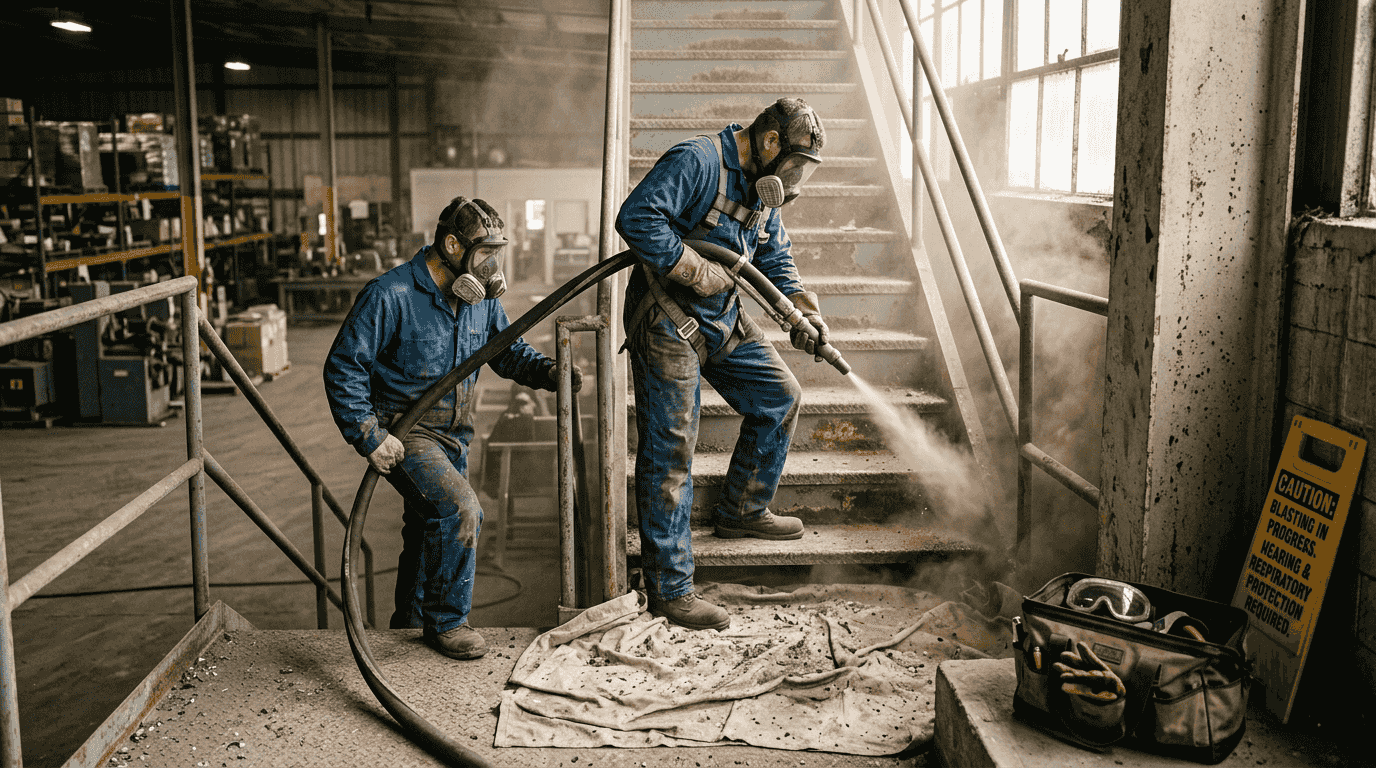
Sandblasting effectively removes paint, rust, scale and other contaminants while creating ideal surface profiles for coating adhesion. This method uses compressed air to propel abrasive materials at high velocity, stripping away surface layers and texturing the substrate. For industrial projects requiring durable, long-lasting coatings, sandblasting delivers unmatched results.
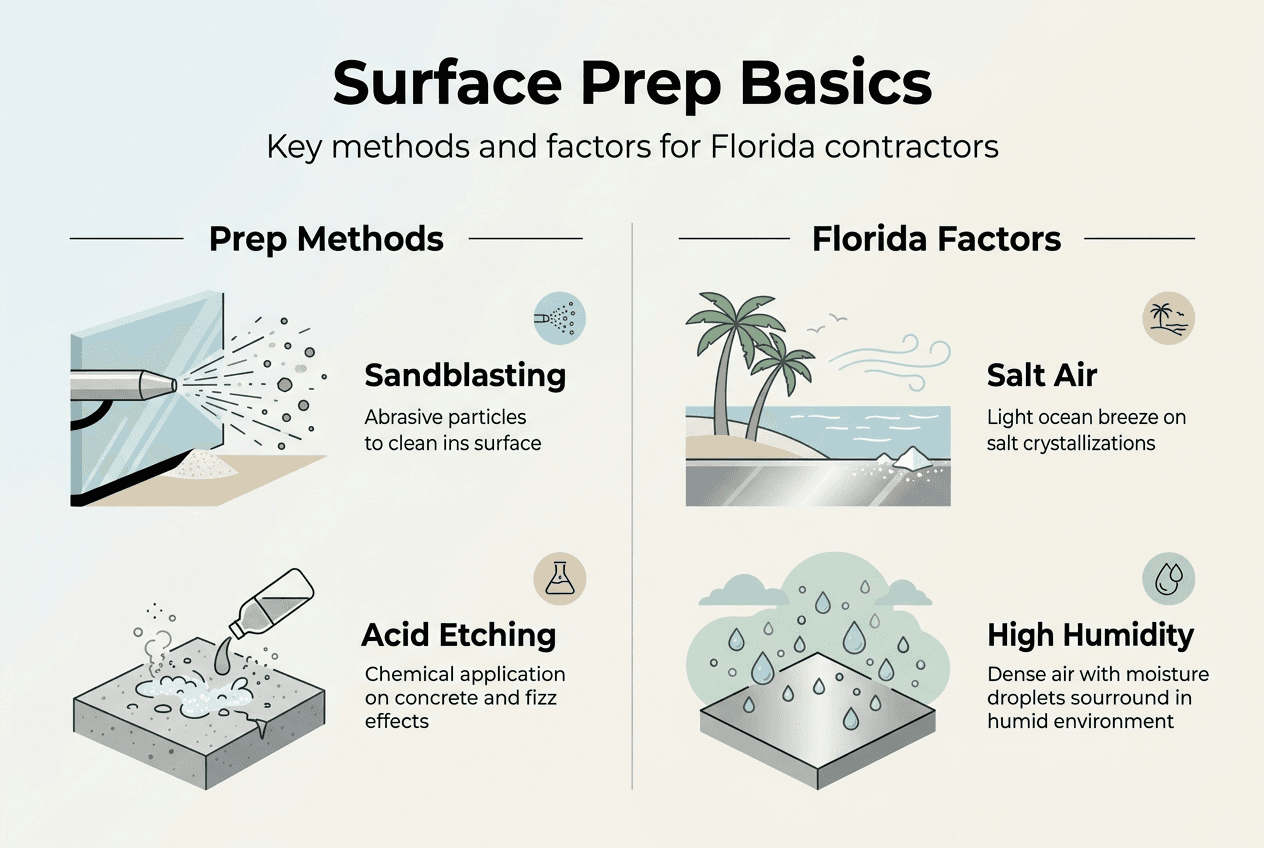
Concrete Surface Profile (CSP) ratings guide method selection and coating compatibility. The International Concrete Repair Institute established a scale from CSP 1 (nearly smooth) to CSP 9 (heavily textured) to standardize surface preparation. Different prep methods yield different CSP values critical for coating adhesion, and matching CSP to coating thickness prevents failures.
| Preparation Method | CSP Range | Best Applications |
|---|---|---|
| Acid Etching | CSP 1-2 | Thin coatings, sealers |
| Grinding | CSP 2-3 | Medium-build epoxies |
| Shot Blasting | CSP 3-6 | Standard industrial coatings |
| Scarifying | CSP 6-10 | Heavy-duty coatings, overlays |
Mechanical methods provide superior adhesion compared to manual scraping or chemical stripping. Shot blasting propels steel shot at surfaces, removing contaminants and creating consistent profiles ideal for epoxy and polyurethane systems. Scarifying uses rotating cutters to aggressively texture concrete, perfect for thick coating applications or overlay preparations.
Choosing the right technique depends on substrate condition, coating specifications, and project requirements. Thin decorative coatings require minimal texture (CSP 1-2), achieved through acid etching or light grinding. Industrial floor coatings performing under heavy traffic demand deeper profiles (CSP 3-5) from shot blasting. Structural overlays need aggressive scarification creating CSP 6-9 profiles.
Pro Tip: Avoid over-prepping surfaces beyond coating requirements. Excessive texture wastes abrasive materials, increases coating consumption, and can create application difficulties without improving performance.
Sandblasting advantages for contractors:
- Removes all surface contaminants in a single operation
- Creates uniform, controlled surface profiles
- Works on diverse substrates including concrete, steel, and masonry
- Scales efficiently for large municipal and industrial projects
- Provides visual confirmation of cleanliness and profile depth
For surface prep best practices, contractors must verify profile depth using replica tape or comparator chips before coating application. This simple step confirms the surface meets manufacturer specifications and prevents costly adhesion failures. Understanding the role of surface preparation in coating performance transforms contractors from applicators into surface preparation specialists who deliver guaranteed results.
Florida-specific compliance and environmental considerations
Florida construction projects face stringent environmental regulations that contractors must navigate to avoid penalties and delays. Projects disturbing one acre or more require SWPPP and Notice of Intent (NOI) filed with the Florida Department of Environmental Protection before work begins. These requirements apply to most municipal infrastructure projects, industrial facility upgrades, and commercial developments involving surface preparation and coating work.
Stormwater Pollution Prevention Plans (SWPPP) mandate specific controls and documentation throughout project execution. Key SWPPP components include:
- Site maps identifying drainage patterns and sensitive areas
- Best Management Practices (BMPs) for erosion and sediment control
- Spill prevention and response procedures
- Regular inspection schedules and documentation
- Worker training records and certifications
- Waste management and disposal protocols
Noncompliance carries serious consequences. Florida DEP issues fines ranging from thousands to tens of thousands of dollars for violations, and enforcement actions can halt projects entirely. Beyond financial penalties, noncompliance damages contractor reputations and jeopardizes future municipal contract opportunities.
Common SWPPP mistakes include lack of worker training and skipped inspections, both easily preventable through systematic planning. Contractors must designate certified personnel responsible for SWPPP implementation and conduct weekly inspections during active work periods. After rain events exceeding 0.5 inches, inspections must occur within 24 hours to verify BMP effectiveness.
Environmental controls integrate directly into surface preparation workflows. Sandblasting operations generate dust requiring containment through water suppression, enclosures, or vacuum systems. Abrasive materials and removed coatings must be collected, characterized, and disposed of according to waste classifications. Lead-based paint removal triggers additional regulations under EPA RRP rules, requiring certified renovators and specific containment practices.
Pro Tip: Maintain thorough records at each prep stage, including photos, test results, and inspection reports. This documentation streamlines regulatory audits, supports warranty claims, and demonstrates due diligence if disputes arise.
Florida’s coastal environment demands additional considerations. Salt contamination on surfaces near marine areas requires specialized cleaning beyond standard mechanical preparation. Chloride testing confirms surfaces meet coating manufacturer limits before application. High humidity affects coating cure times and pot life, requiring climate-controlled application windows or modified product selections.
For comprehensive guidance on surface preparation standards in Florida, contractors should reference both state regulations and industry standards like SSPC and NACE specifications. Municipal projects often require adherence to these technical standards in addition to environmental compliance. Using a detailed surface preparation checklist for city projects ensures nothing falls through the cracks during complex, multi-phase work.
Step-by-step surface preparation workflow for durable coatings
Successful surface preparation follows a systematic workflow ensuring every critical step receives proper attention. This procedural approach eliminates guesswork and delivers consistent, verifiable results across projects of any scale.
- Conduct comprehensive site assessment. Begin by testing moisture levels using calcium chloride tests or relative humidity probes. Identify existing contaminants through visual inspection and chemical testing. Determine target CSP based on coating manufacturer specifications and substrate conditions. Document baseline conditions with photos and measurements.
- Establish environmental controls. Verify temperature and humidity fall within coating application windows, typically 40-90°F with relative humidity below 85%. Set up containment systems for dust, debris, and waste materials. Install erosion controls and stormwater BMPs per SWPPP requirements. Brief crew on safety protocols and environmental compliance procedures.
- Execute mechanical surface preparation. Perform sandblasting or selected mechanical profiling method to achieve specified CSP. Work systematically across the surface, maintaining consistent technique and coverage. Remove all dust, debris, and loose material using industrial vacuums or compressed air. Verify cleanliness meets SSPC standards for the coating system.
- Verify surface readiness. Test profile depth using replica tape, comparing results against target CSP. Conduct final moisture testing to confirm levels remain below 3-5 pounds per 1,000 square feet per 24 hours. Inspect for remaining contaminants or defects requiring remediation. Document all test results with photos and written records.
- Prepare for coating application. Ensure surfaces remain clean and dry until coating begins. Brief coating crew on verified substrate conditions and any special considerations. Confirm coating materials match surface preparation specifications. Schedule application during optimal environmental conditions.
| Workflow Stage | Key Verification | Documentation Required |
|---|---|---|
| Site Assessment | Moisture levels, contaminants | Test results, photos |
| Environmental Setup | Temperature, humidity, BMPs | Weather data, inspection logs |
| Mechanical Prep | CSP achievement, cleanliness | Profile tests, visual records |
| Final Verification | Moisture retest, profile confirmation | Signed checklists, certifications |
Research shows surface preparation accounts for 80% of epoxy coating success, making workflow discipline non-negotiable. Moisture must be controlled below specified thresholds, as even properly profiled surfaces fail when excessive moisture vapor pressure builds beneath coatings.
Pro Tip: Use moisture vapor testing to confirm readiness, especially on concrete slabs with questionable cure times or unknown moisture conditions. This single test prevents the majority of premature coating failures.
For detailed implementation guidance, contractors should reference proven surface preparation workflows for industrial projects that outline equipment requirements, crew sizing, and productivity benchmarks. Following established coating application steps after proper surface preparation ensures the entire system performs as designed, protecting assets for decades rather than months.
Thorough documentation serves multiple purposes beyond regulatory compliance. Detailed records support warranty claims, demonstrate professional standards to clients, and provide valuable reference data for future projects. Digital photos with timestamps, laboratory test reports, and signed inspection checklists create an audit trail proving due diligence at every stage.
Explore expert sandblasting and coating services in Florida
Achieving optimal surface profiles and durable coating performance requires specialized equipment, trained personnel, and deep regulatory knowledge. Professional sandblasting services in Orlando deliver the precision and consistency large-scale projects demand, eliminating the risks and costs associated with inadequate preparation.
Experienced contractors understand that surface preparation success depends on matching methods to substrate conditions and coating requirements. Expert teams handle environmental controls, SWPPP compliance, and verification testing as integrated workflow components, not afterthoughts. This comprehensive approach protects your assets and prevents the costly failures that plague projects with shortcuts.
Partner with proven professionals offering complete sandblasting and painting services who implement surface prep best practices on every project. Their expertise ensures your municipal infrastructure, industrial facilities, and commercial properties receive preparation that guarantees coating performance for years to come.
Frequently asked questions
What is the Concrete Surface Profile (CSP) and why does it matter?
CSP measures surface texture depth on a scale from 1 to 9, with higher numbers indicating more aggressive profiles. Matching CSP to coating thickness ensures mechanical interlocking between substrate and coating, providing the physical adhesion necessary for long-term performance. Mismatched profiles cause delamination, with thin coatings failing on overly rough surfaces and thick coatings peeling from insufficient texture.
How does sandblasting improve coating adhesion compared to other methods?
Sandblasting simultaneously removes all surface contaminants and creates uniform texture in a single operation, surpassing manual scraping or chemical cleaning in both efficiency and effectiveness. The abrasive impact opens substrate pores, eliminates weak surface layers, and produces consistent profiles across large areas. This deep cleaning and texturing combination delivers superior molecular and mechanical adhesion that other methods cannot match.
What are the key Florida regulatory requirements for surface preparation projects?
Large projects disturbing one acre or more require SWPPP development and NOI filing with Florida DEP before work begins, mandating erosion controls, inspection schedules, and worker training. Contractors must designate certified personnel, conduct weekly inspections, and maintain detailed documentation throughout project execution. Noncompliance results in substantial fines, project shutdowns, and potential loss of future municipal contract opportunities.
What common mistakes should contractors avoid during surface prep?
Skipping moisture testing, misjudging required CSP, inadequate contaminant removal, and poor documentation cause the majority of coating failures and compliance violations. Rushing preparation to meet deadlines without verifying surface readiness guarantees problems. Following systematic workflows, conducting all specified tests, and documenting each stage eliminates these preventable errors and ensures coating success.
How can contractors ensure their surface prep work meets long-term durability standards?
Perform comprehensive moisture vapor and profile testing to confirm surfaces meet coating manufacturer specifications before application begins. Document all preparation stages with photos, test results, and inspection checklists creating an audit trail. Follow tailored CSP guidelines per coating type rather than generic approaches, and verify environmental conditions remain within application windows throughout the process.
Recommended
- Role of painting contractors in Florida projects 2026
- Surface Preparation Standards 2025: Raising Compliance in Florida
- Infrastructure painting checklist for Florida 2026
- Surface Prep Cuts Florida Infrastructure Costs 50%
- Orlando’s Premier Sandblasting & Industrial Painting Experts
- Industrial Painting Services in Orlando, FL


