
Maintaining Orlando’s municipal infrastructure takes more than routine maintenance—it requires proactive and detailed surface preparation to achieve lasting results. Facility managers and contractors know that skipping essential steps like surface inspection, equipment checks, and effective contaminant removal can mean costly failures down the road. This guide delivers practical, step-by-step solutions tailored to your projects, helping you secure durable coatings that keep critical assets protected and performing year after year.
Table of Contents
- Step 1: Assess Surface And Prepare Equipment
- Step 2: Remove Contaminants By Sandblasting
- Step 3: Apply Primer For Optimal Adhesion
- Step 4: Apply Industrial Coating Evenly
- Step 5: Inspect Coated Surface For Quality
Quick Summary
| Key Point | Explanation |
|---|---|
| 1. Thorough Surface Assessment | Inspect surfaces for contaminants and damage to ensure coating adhesion. |
| 2. Effective Sandblasting | Use proper abrasive materials to clean surfaces and create profiles for better adhesion. |
| 3. Primer Application Technique | Apply primer evenly to enhance adhesion and corrosion resistance before final coating. |
| 4. Consistent Coating Application | Maintain technique and environmental conditions for a uniform protective layer. |
| 5. Detailed Quality Inspection | Conduct thorough inspections with tools to ensure adherence to standards for durability. |
Step 1: Assess Surface and Prepare Equipment
Successful coating applications start with meticulous surface assessment and equipment preparation. Your goal is to create an optimal environment that ensures maximum coating adhesion and long-lasting protection for municipal infrastructure assets.
Begin by thoroughly inspecting the surface for contaminants, rust, old coatings, and structural irregularities. Surface examination requires careful visual and tactile evaluation. Focus on identifying potential barriers to coating adhesion such as:
- Loose paint or rust flakes
- Grease or oil residues
- Surface oxidation or corrosion
- Uneven texture or damaged areas
Prepare your equipment by checking spray guns, compressors, and protective gear for optimal functionality. Surface preparation techniques from professional laboratories recommend comprehensive equipment diagnostics before starting any coating project.
Professional surface preparation is the foundation of a successful coating application.
Clean and calibrate all spray equipment, ensuring nozzles are unclogged and pressure settings match manufacturer specifications. Verify personal protective equipment includes respirators, chemical-resistant gloves, and protective eyewear designed for industrial coating work.
Pro tip: Always perform a test spray on a small, inconspicuous area to confirm equipment performance and coating consistency before starting the full application.
Step 2: Remove Contaminants by Sandblasting
Sandblasting is a critical surface preparation technique that effectively removes rust, old coatings, and embedded contaminants to create an ideal surface for new protective coatings. Your objective is to thoroughly clean and profile the surface while minimizing potential environmental and safety risks.
Abrasive blasting techniques require careful selection of media and precise equipment calibration. Common abrasive materials include:
- Silica sand
- Coal slag
- Garnet
- Steel shot
- Glass beads
Each media type offers unique advantages depending on your specific surface and coating requirements. Compressed air systems propel these abrasive materials at high velocity, stripping away old layers and creating a rough texture that promotes superior coating adhesion.
Here’s a comparison of common abrasive blast media and their best-use scenarios:
| Media Type | Surface Suitability | Key Advantage |
|---|---|---|
| Silica Sand | Heavy rust removal | Cost-effective, abrasive |
| Steel Shot | Thick metal surfaces | Reusable, aggressive |
| Glass Beads | Light cleaning | Smooth finish, reusable |
| Garnet | Sensitive metals/alloys | Low dust, versatile |
| Coal Slag | Tough coatings, steel | Fast cleaning, expendable |
Proper sandblasting transforms a contaminated surface into a pristine canvas ready for protection.
Prepare your work area by establishing comprehensive containment zones and implementing robust dust control measures. Ensure all personnel wear appropriate protective equipment, including respirators, safety glasses, and full-body coverings to prevent exposure to airborne particles.
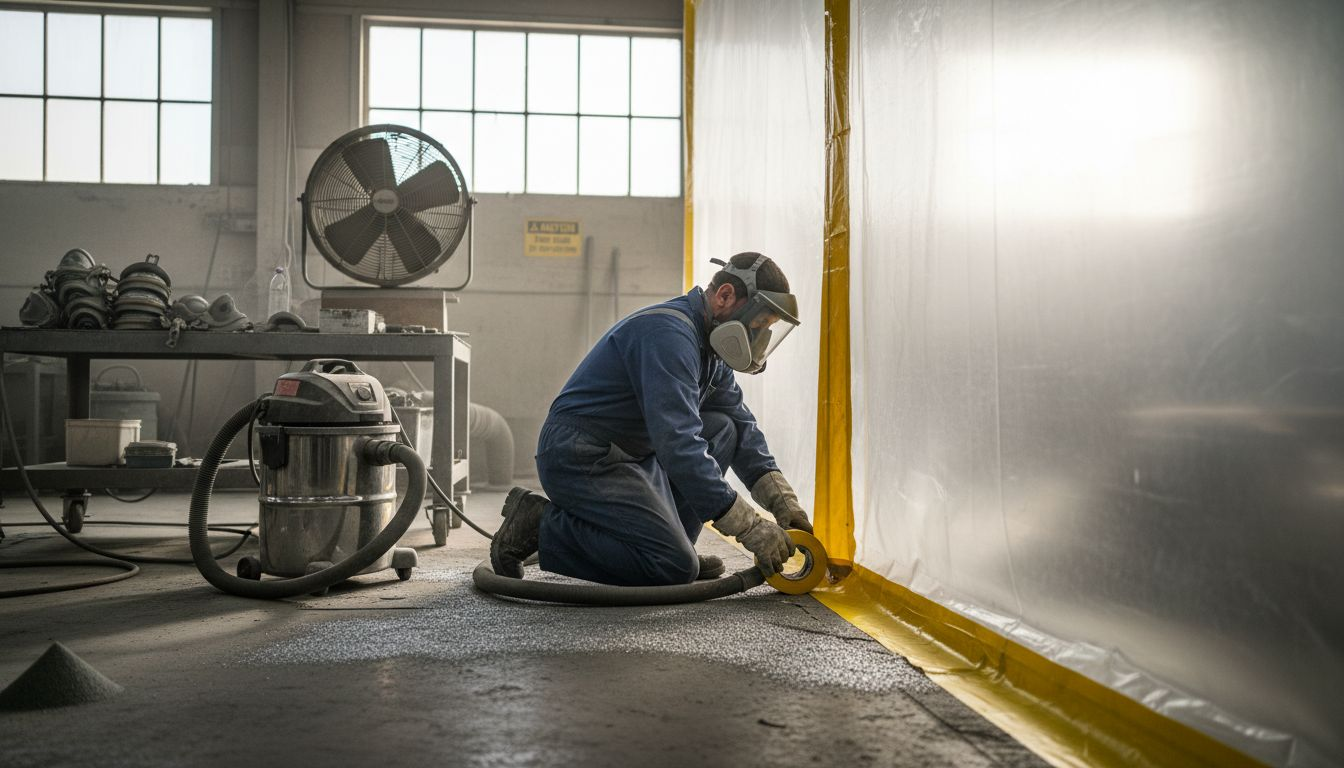
Pro tip: Always perform a small test area first to determine the most effective blast media and pressure settings for your specific surface material.
Step 3: Apply Primer for Optimal Adhesion
Primer application is a crucial step in creating a durable, long-lasting protective coating that ensures maximum adhesion and corrosion resistance. Your primary objective is to establish a uniform, chemically compatible layer that bridges the prepared surface and final coating.
Primer application techniques require precise environmental and technical considerations. Key factors for successful primer application include:
- Surface temperature
- Humidity levels
- Application method
- Primer thickness
- Drying time
Spray application provides the most consistent and even primer coverage, allowing you to achieve a uniform layer that maximizes coating performance. Use professional-grade spray equipment calibrated to deliver a fine, consistent mist that creates a smooth surface profile without runs or pooling.
Proper primer application transforms a prepared surface into a robust foundation for long-term protection.
Monitor environmental conditions carefully, ensuring the surface temperature and humidity fall within manufacturer specifications. Some primers require specific application windows to achieve optimal chemical bonding and performance characteristics.
Pro tip: Maintain a clean workspace and use filtered compressed air to prevent contaminants from compromising your primer’s adhesion and effectiveness.
Step 4: Apply Industrial Coating Evenly
Even industrial coating application requires precision, technique, and careful environmental control to ensure maximum protection and durability for your infrastructure assets. Your goal is to create a uniform protective layer that provides comprehensive surface coverage without imperfections.
Coating application methods vary depending on surface type and project requirements. Professional coating techniques include:
- Spray coating
- Brush application
- Roller coating
- Dip coating
- Flow coating
Spray application remains the most versatile and consistent method, allowing for quick color changes and precise coverage. Position your spray equipment at a consistent distance from the surface, typically 6-12 inches away, and use overlapping horizontal or vertical strokes to ensure complete and even distribution.
Uniform coating application is the key to long-lasting infrastructure protection.
Monitor environmental conditions carefully during application. Temperature, humidity, and air movement can significantly impact coating performance. Aim for ideal application conditions: temperatures between 60-80 degrees Fahrenheit and relative humidity below 85% for optimal results.
Pro tip: Practice your spray technique on a test panel before applying the final coating to perfect your stroke consistency and coverage.
Step 5: Inspect Coated Surface for Quality
Critical surface inspection is the final quality assurance step that ensures your coating application meets industry standards and provides maximum infrastructure protection. Your comprehensive evaluation will verify coating integrity, thickness, and performance potential.
Coating inspection techniques involve multiple assessment methods to detect potential defects. Key inspection strategies include:
- Visual surface examination
- Dry film thickness measurement
- Adhesion testing
- Environmental condition monitoring
- Defect mapping and documentation
Surface inspection requires systematic and detailed examination using both visual and instrumental approaches. Begin by conducting a thorough visual assessment under optimal lighting conditions, looking for signs of:
Below is a summary of essential inspection methods and what they help detect:
| Inspection Method | Defect Detected | Tool Used |
|---|---|---|
| Visual examination | Surface blemishes | Good lighting, magnifier |
| Dry film thickness testing | Insufficient thickness | Digital thickness gauge |
| Adhesion testing | Coating delamination | Pull-off adhesion tester |
| Environmental monitoring | Application inconsistencies | Thermo-hygrometer |
- Uneven coating thickness
- Pinholes or bubbles
- Surface irregularities
- Color inconsistencies
- Potential adhesion failures
Meticulous surface inspection is the guardian of long-term coating performance and infrastructure durability.
Utilize professional measuring tools to quantify coating characteristics precisely. Employ digital thickness gauges, adhesion testers, and scribing tools to validate coating quality beyond surface-level observations.
Pro tip: Document your inspection findings photographically and maintain a detailed log for future reference and continuous improvement of coating application techniques.
Ensure Lasting Protection with Expert Surface Preparation and Coating Services
The article highlights the critical challenge of achieving durable, high-quality protective coatings through proper surface assessment, sandblasting, primer application, and final coating. Key goals include removing contaminants, ensuring maximum coating adhesion, and conducting thorough inspections to prevent premature coating failures. Understanding terms like sandblasting, primer application, and coating inspection underscores the importance of precision and industry standards in safeguarding infrastructure.
If you want to overcome these common challenges and protect your valuable assets, turn to proven professionals. Southern Sandblasting & Painting LLC offers the expertise and equipment needed to prepare surfaces correctly and apply industrial-grade coatings that stand the test of time. Experience seamless sandblasting and painting solutions tailored for large-scale municipal and industrial projects.
Start by exploring our Sandblasting & Painting services designed to remove rust, old paint, and contaminants effectively. Discover our comprehensive Industrial Painting offerings that deliver consistent, uniform coatings for lasting protection.

Take action now to secure the longevity of your infrastructure with Orlando’s trusted experts. Visit Southern Sandblasting & Painting LLC today and request a consultation to customize a surface treatment plan that meets your project needs and exceeds expectations.
Frequently Asked Questions
How do I assess the surface before coating application?
To assess the surface effectively, perform a detailed visual and tactile examination to identify contaminants like loose paint, rust, or oil residues. Make a checklist of potential barriers to coating adhesion and address these issues before proceeding with your coating project.
What is the purpose of sandblasting in the coating process?
Sandblasting is crucial for removing rust, old coatings, and embedded contaminants to prepare the surface for new protective coatings. Ensure to select the right abrasive media and calibrate your equipment for optimal cleaning and surface profiling.
How should I apply primer for best adhesion?
Apply primer using a spray technique to achieve an even and uniform layer that enhances bonding with the final coating. Monitor environmental conditions, ensuring ideal temperature and humidity for primer application to maximize its effectiveness.
What are the steps to ensure even industrial coating application?
For an even industrial coating application, use a consistent spray technique and maintain the proper distance from the surface. Aim for overlapping strokes and controlled environmental factors to eliminate imperfections and achieve a durable protective layer.
How do I inspect the coated surface for quality?
Conduct a thorough inspection of the coated surface using visual examination and specific measurement tools to assess coating thickness and integrity. Document any defects and take corrective actions to ensure long-lasting protection of the infrastructure.
Recommended
- Role of Coatings in Longevity – Extending Asset Lifespans
- How to Apply Protective Coatings for Lasting Asset Durability
- Industrial Coating Application Steps for Lasting Protection
- What Is Protective Coating and Why Asset Longevity Depends On It
- Sandblasting Contractor Baldwin Park FL
- Sandblasting Services Oviedo FL


