
Surface preparation can mean the difference between a coating that lasts decades and one that fails in months. For infrastructure managers responsible for Central Florida’s public assets, the battle against corrosion and concrete deterioration is relentless due to constant humidity, salt air, and strong UV exposure. Surface preparation removes deleterious matter from steel and concrete substrates, creating a stable foundation for coatings that protect municipal investments and keep projects compliant with industry standards.
Table of Contents
- Defining Surface Preparation And Its Purpose
- Methods And Types Of Surface Preparation
- Paint Adhesion And Longevity Explained
- Avoiding Failures And Costly Repaints
- Compliance, Safety, And Local Best Practices
Key Takeaways
| Point | Details |
|---|---|
| Importance of Surface Preparation | Proper surface preparation is crucial for ensuring that coatings adhere effectively and provide long-lasting protection against environmental factors. Neglecting this step can lead to premature failures and costly repairs. |
| Combination of Methods | Utilizing both mechanical and chemical cleaning methods can enhance surface preparation, ensuring thorough removal of contaminants and promoting adhesion strength. Tailor the approach based on specific substrate conditions and coating requirements. |
| Adhesion and Longevity | The quality of adhesion between the coating and substrate directly impacts the lifespan of the protective system. Strong adhesion results from meticulous preparation, while poor adhesion leads to quick deterioration. |
| Compliance and Safety | Adhering to established industry standards and safety protocols is essential to prevent liability issues and ensure worker safety during surface preparation and coating applications. |
Defining Surface Preparation and Its Purpose
Surface preparation is the critical first step that determines whether your paint or coating actually protects your infrastructure or fails prematurely. For infrastructure managers in Central Florida, this is not a theoretical concept—it directly impacts how long your water treatment tanks, parking structures, and public works assets survive the region’s humid subtropical climate, salt air, and intense UV exposure. At its core, surface preparation removes deleterious matter from steel substrates such as mill scale, rust, old paint, concrete dust, and environmental contaminants that would otherwise prevent new coatings from bonding properly.
Think of it this way: applying coating to an unprepared surface is like trying to paint over mold. You might get temporary color coverage, but the underlying problem remains untouched. The paint won’t adhere to rust or old scaling—it will simply flake away, often within a year or two. That’s when your asset begins failing, corrosion accelerates, and you’re back to square one with failed maintenance budgets and emergency repairs. The real purpose of surface preparation goes beyond aesthetics. Mill scale and other contaminants directly initiate corrosion pathways that compromise structural integrity and coating performance. Proper surface preparation produces a sound, clean, and suitably roughened substrate that enables paint to grip securely and creates the conditions for long-term protection.
For concrete infrastructure specifically—which is everywhere in Central Florida municipalities—the challenge differs slightly but demands equal attention. Surface preparation of concrete involves producing a substrate that is clean, properly roughened, and free of contaminants. This means removing unsound concrete, delineating repair boundaries, and opening the concrete pore structure so that protective coatings can penetrate and bond effectively. Environmental factors matter here too. Specifications must address material compatibility with Florida’s humidity and temperature variations, ensuring that your repair and coating solutions remain durable year after year. The process includes removing burrs, sharp edges, weld spatter, and any other fabrication residue alongside mill scale and corrosion products. When accessibility and adequate lighting of the surface are ensured during preparation, your teams can catch additional vulnerabilities that might otherwise compromise the integrity of the entire asset.
What separates a coating that lasts five years from one that lasts twenty years often comes down to the quality of surface preparation conducted beforehand. Without proper foundation work, even the highest-grade industrial coatings become expensive waste. With meticulous preparation, you extend asset lifespans, reduce lifecycle costs, and maintain compliance with structural durability standards that municipalities increasingly require.
Pro tip: Document the condition of your substrate before and after preparation using photographs and condition reports—this creates accountability records for compliance audits and proves that preparation standards were met before coating application begins.
Methods and Types of Surface Preparation
Not all surfaces respond to the same preparation approach, and choosing the wrong method can waste time, money, and leave your coating vulnerable to failure. The method you select depends on what you’re working with, how degraded the substrate is, and what coating system you plan to apply. For Central Florida infrastructure managers, understanding these options helps you make informed decisions and communicate effectively with contractors about what your project actually requires.
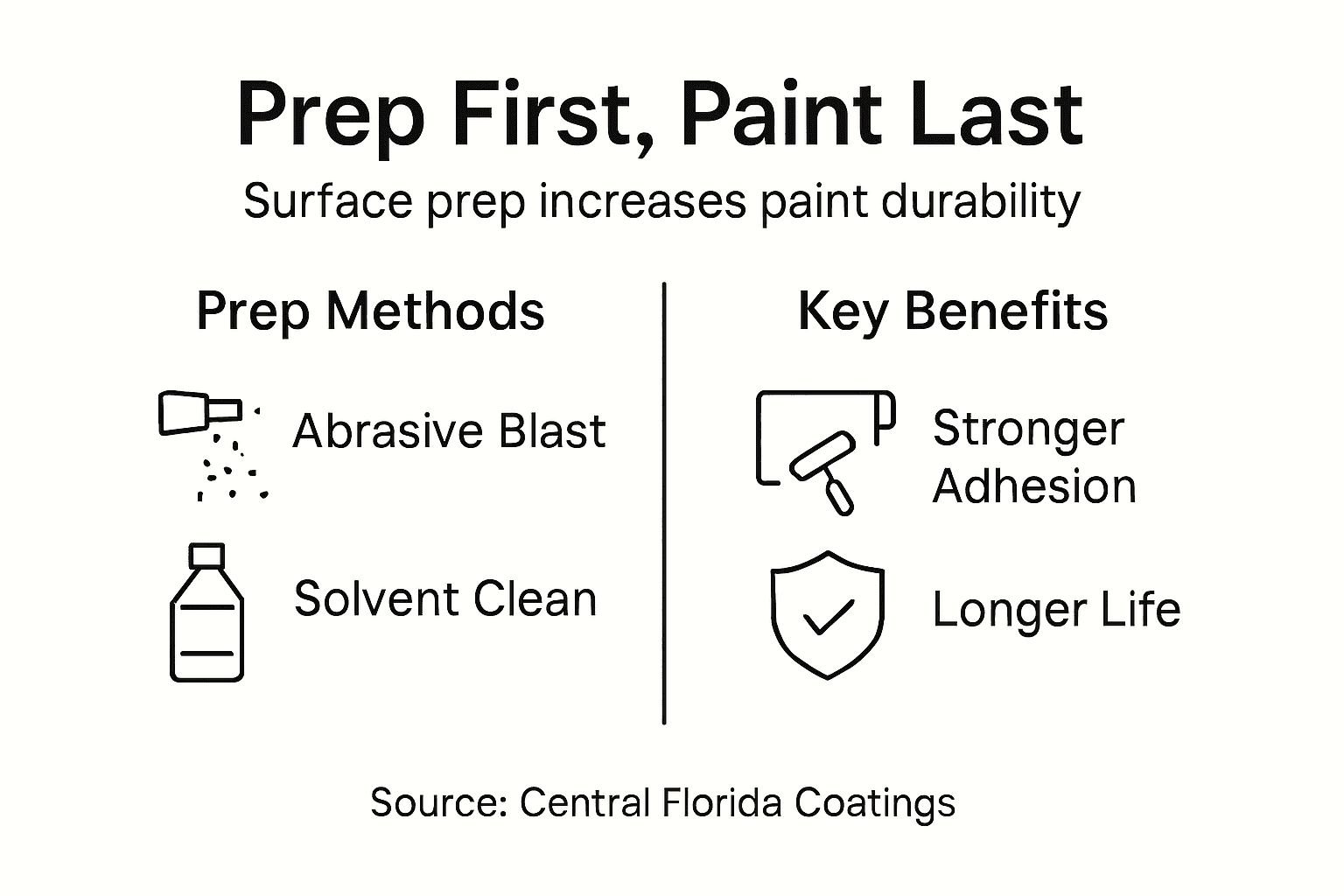
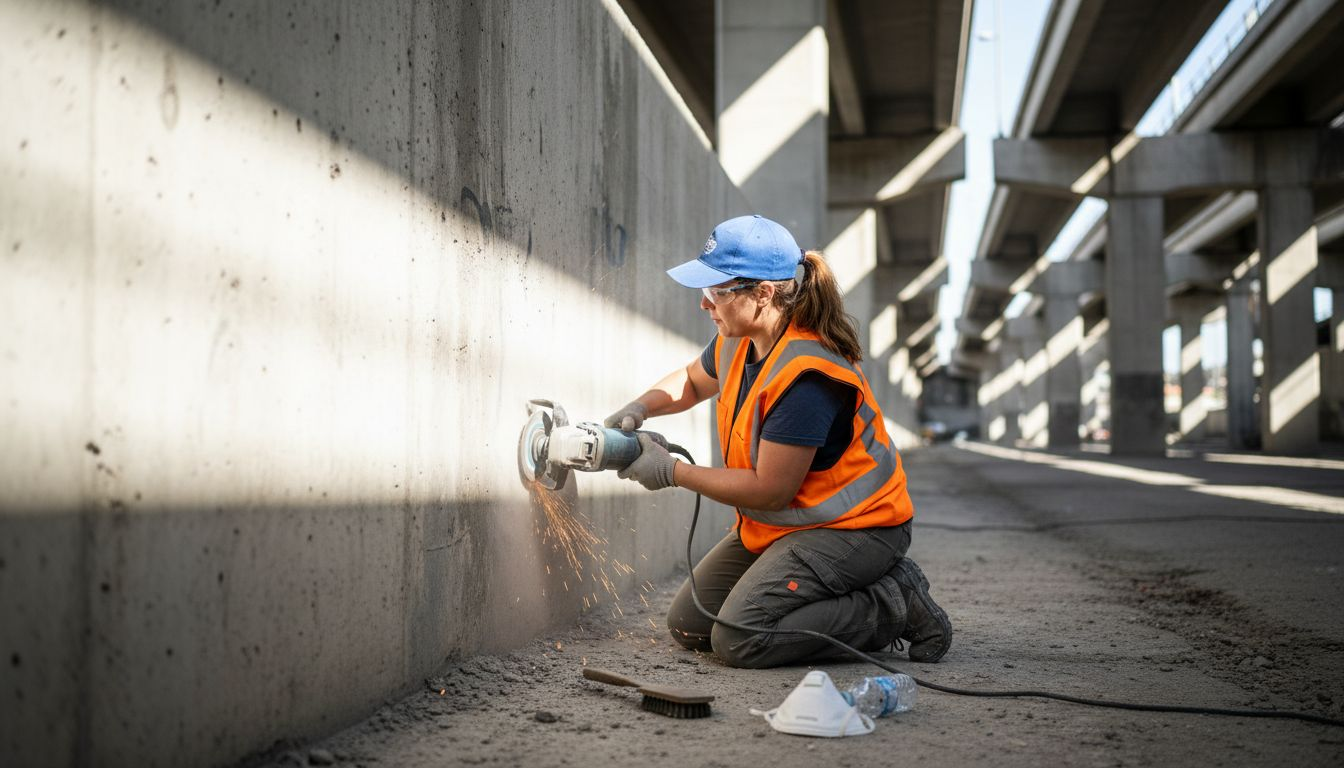
Mechanical cleaning methods are the workhorses of surface preparation. Abrasive blasting, grinding, scarifying, and water jetting all fall into this category. Sandblasting and shot blasting use pressurized abrasive materials to physically remove rust, mill scale, old paint, and contaminants from steel surfaces. Grinding works well for localized areas and edges where precision matters. For concrete, scarifying roughs up the surface and removes the weak outer layer, while water jetting uses high-pressure streams to clean without the dust and residue of traditional blasting. Mechanical methods like abrasive blasting produce a surface profile that enables coatings to grip securely and create mechanical anchoring. The goal is simple: create texture and remove everything that shouldn’t be there. These methods dominate in Florida’s industrial sector because they’re reliable, thorough, and work across diverse substrate conditions.
Chemical cleaning methods handle what mechanical approaches sometimes miss. Solvent cleaning removes oils, grease, and light contamination without aggressive abrasion. Acid etching, particularly on concrete, chemically opens the pore structure and removes calcium deposits that inhibit bonding. Conversion coatings are applied after cleaning to create a chemically reactive layer that further improves coating adhesion and corrosion resistance. The choice between mechanical and chemical methods often comes down to your specific deterioration mechanisms and environmental conditions. A water treatment tank coated with years of mineral buildup might benefit from acid etching to expose fresh concrete. A structural steel member corroded by salt air near the coast requires aggressive abrasive blasting to achieve the surface profile necessary for long-term protection.
The practical reality is that most projects use a combination approach. You might blast a steel surface to remove rust, then apply a solvent wash to eliminate dust and oils before coating application. For concrete, you might scarify the surface and follow with acid etching to ensure maximum bond strength. Your decision framework should consider the structure’s age, its location and exposure environment, the condition of the existing surface, and critically, what the coating manufacturer specifies. A high-performance epoxy system demands different preparation than a basic acrylic coating. Central Florida’s humid subtropical climate, salt spray exposure near airports and coastal facilities, and intense UV loading all influence which method makes sense for your specific asset.
Here’s how different surface preparation methods compare for steel and concrete in Central Florida:
| Method | Typical Use | Key Advantage | Special Consideration |
|---|---|---|---|
| Abrasive Blasting | Steel | Removes rust, creates texture | Controls dust, requires PPE |
| Grinding | Steel/Edges | Precision for small areas | Slow for large surfaces |
| Water Jetting | Concrete/Steel | No dust, deep cleaning | Requires water management |
| Scarifying | Concrete | Prepares rough bonding surface | Can damage sound concrete |
| Chemical Etching | Concrete | Opens pores for coatings | Requires waste management |
| Solvent Cleaning | All Substrates | Removes oils, light contamination | Not effective for heavy scale |
Pro tip: Before committing to a preparation method, request surface profile samples and cleanliness tests from your contractor to verify the surface meets your coating system’s specifications, preventing costly rework or coating failures down the line.
Paint Adhesion and Longevity Explained
Here’s a hard truth: the best paint in the world fails if it doesn’t stick to the surface beneath it. Paint adhesion is the mechanical and chemical bond between your coating and the substrate, and it determines whether your protective system lasts five years or twenty. For infrastructure managers in Central Florida, adhesion failures translate directly into budget overruns, accelerated asset deterioration, and compromised structural integrity. The relationship between surface preparation and adhesion is not optional or theoretical. It’s the difference between a coating that performs and one that becomes expensive waste peeling off your water towers, parking garages, or municipal equipment.
When a properly prepared surface receives coating, the paint molecules form strong interactions with the substrate at the bonding interface. This happens through two mechanisms: mechanical anchoring, where paint flows into the surface’s microscopic valleys and roughness created during preparation, and chemical bonding, where the coating’s molecules actually react with or adhere to the substrate material itself. Surface chemistry and roughness critically influence adhesive performance, affecting both peel and shear strength. When your surface contains contaminants, mill scale, loose rust, or old paint, that coating cannot make direct contact with the substrate. Instead, the paint sits on top of debris, creating a false bond that fails under stress, moisture intrusion, or UV exposure. Central Florida’s humidity and salt spray near coastal facilities accelerate this failure process. A coating on a contaminated surface might appear fine for months, but then begins peeling in patches as moisture penetrates the weak interface and undermines adhesion from within.
Longevity flows directly from adhesion quality. When coatings maintain their grip on the substrate, they function as intended barriers protecting steel from corrosion and concrete from water infiltration. The coating prevents oxygen, moisture, and chloride ions from reaching the base material. Over time, even well-applied coatings will experience some weathering from UV radiation and temperature cycling, but if the adhesion is strong, the remaining coating continues protecting the substrate. If adhesion is weak, failure accelerates dramatically. Small areas of adhesion loss become entry points for moisture and contaminants. The coating delaminates, rust blooms beneath the paint, and structural degradation accelerates. ASTM standards provide adhesion tests and accelerated weathering methods that verify coating durability before deployment on critical assets. These tests exist because adhesion failures cost money, and municipalities cannot afford preventable coating failures on infrastructure serving thousands of residents.
The practical implication is this: invest properly in surface preparation, and your coating system delivers predictable, extended service life. Skip this step or cut corners, and you’re gambling with public assets. A properly prepared surface creates the conditions for strong adhesion. A contaminated surface guarantees adhesion failure regardless of paint quality. Your surface preparation method, surface profile, cleanliness level, and environmental control during coating application all directly impact adhesion and subsequent longevity. This is not subjective. This is measurable, testable, and directly tied to asset performance and lifecycle costs.
Pro tip: Request pull-off adhesion tests from your contractor after surface preparation but before coating application to confirm adhesion strength meets specifications, preventing expensive failures after the coating has been applied.
Avoiding Failures and Costly Repaints
Coating failures don’t happen by accident. They result from predictable mistakes, most often rooted in insufficient surface preparation or inadequate assessment of substrate condition before work begins. For Central Florida infrastructure managers, a single failed coating project on a municipal water tank or parking structure can consume 30 to 40 percent of an annual maintenance budget while leaving the asset more vulnerable than before. The cost isn’t just financial. Repainting adds downtime, disrupts service delivery, and compounds structural deterioration. Prevention is exponentially cheaper than remediation.
The first defense against failure starts with thorough substrate assessment before any preparation work begins. You need to understand what you’re dealing with. Is the existing coating still adhering, or is it already failing? Are there active corrosion sites? Is the concrete sound or deteriorating? Thoroughly assessing substrate and coating condition guides appropriate surface preparation methods and primer selection. When you skip this step or rush through it, you’re essentially guessing. You might over-prepare one area and under-prepare another. You might select a primer incompatible with the substrate condition you actually have. You might miss localized corrosion that will continue spreading beneath your new coating. Detailed assessment identifies defect types and severity, revealing failure causes like flaking due to poor adhesion, erosion from weathering, or moisture intrusion. Understanding these causes lets you target remedial actions precisely rather than applying a generic solution that addresses symptoms but not root problems.
Once you understand the substrate condition, you can forecast accurate labor and material requirements, preventing the project overruns that plague municipalities when unexpected problems surface mid-project. A property mapped during assessment reveals that a steel beam requires removal of 80 percent of old coating instead of 30 percent. A concrete assessment shows that repair mortar is needed in addition to surface cleaning. These discoveries drive accurate budgeting and scheduling. Without them, contractors encounter conditions that weren’t anticipated, change orders multiply, and projects exceed budgets before they’re halfway complete. Industry standards establish guidelines and quality control requirements that minimize coating failures through defined inspection and acceptance criteria. Following these standards ensures financial responsibility for repairs and holds all parties accountable. When a project is specified to meet established standards, there’s clear documentation of what success looks like. Defects become measurable against defined criteria rather than subjective judgment. Financial responsibility shifts appropriately when standards are violated.
The practical chain is clear: thorough assessment leads to appropriate preparation methods, which produce proper surface conditions, which enable coatings to bond correctly and protect durably. Skip assessment, and the chain breaks. Poor preparation follows. Coatings fail. Costly repaints become inevitable. The mathematics are brutal. A proper assessment that costs 2 to 3 percent of project budget prevents failures that cost 40 to 100 percent additional investment. Central Florida’s hot, humid climate accelerates failure timelines, so skipping assessment isn’t just theoretically risky. It’s practically dangerous. Your infrastructure timeline is compressed. Failures occur faster. Budget impacts accumulate more quickly. Protect your projects by investing upfront in detailed substrate evaluation.
Pro tip: Require contractors to provide written substrate condition reports with photographic documentation and specific defect locations before finalizing preparation scope, creating accountability and preventing disputes over what condition was found versus what was actually addressed.
Compliance, Safety, and Local Best Practices
Surface preparation and painting work in Central Florida’s municipal infrastructure sector operates within a web of regulations, safety requirements, and industry standards that exist for good reasons. Workers get hurt when proper protocols are ignored. Assets fail ahead of schedule. Municipalities face liability exposure when contractors cut corners. Your responsibility as an infrastructure manager includes ensuring that contractors follow established standards and safety practices, not just deliver paint on surfaces. This isn’t bureaucratic overhead. It’s operational necessity.
Compliance begins with understanding what standards apply to your specific project. Industry standards from organizations like the Painting Contractors Association establish clear expectations for surface inspection, preparation methods, coating application procedures, and inspection hold points where work must be verified before proceeding. These standards address responsibilities for all parties involved in the project. They create accountability checkpoints. A contractor cannot simply blast a surface and immediately paint it. Standards require surface cleanliness verification, environmental condition documentation, and approval before coating application begins. When disputes arise about whether work was completed properly, documented standards provide objective criteria rather than subjective arguments. For municipalities in Central Florida, specifying work to meet established industry standards protects your interests and ensures consistency across projects. It also reduces the likelihood of coating failures that trigger expensive disputes about responsibility.
Safety considerations during surface preparation demand equal attention. Surface preparation operations involve hazards that can seriously injure workers if proper controls are absent. Safety protocols require evaluating job hazards and implementing controls including proper personal protective equipment such as gloves, respirators, and eye protection based on specific exposures. Abrasive blasting generates significant dust that workers inhale without proper respirators. Chemical cleaning solutions produce fumes that can harm respiratory and nervous systems. Grinding operations create flying debris and noise that damages hearing and eyes. Contractors must implement administrative controls like area marking to keep unauthorized personnel away from active work zones. Workers require training on hazard recognition and proper equipment use. Environmental exposure controls address dust containment, fume management, and noise reduction. When contractors cut safety corners, they’re not just risking worker injuries. They’re exposing your municipality to liability claims if workers are harmed during work on municipal assets. You bear responsibility for ensuring that contracted work meets applicable safety regulations and industry best practices.
Local best practices in Central Florida’s subtropical climate add another layer of requirements. The combination of high humidity, salt spray exposure near coastal facilities, intense UV radiation, and temperature cycling creates unique challenges. Contractors experienced in Central Florida understand these conditions. They know that surface preparation during humid conditions requires different timing and environmental controls than preparation in drier climates. They understand that salt spray can recontaminate a freshly prepared surface rapidly if it’s not protected or coated promptly. They know that temperature and humidity swings affect coating curing times and adhesion. When selecting contractors, prioritize those with demonstrated experience on similar Florida infrastructure projects. Ask for references from other Central Florida municipalities. Review their safety records and compliance history. Specify that work must comply with both national industry standards and local environmental best practices developed from Florida’s specific climate and infrastructure challenges.
Pro tip: Include contractual language that specifies all work must meet named industry standards and comply with identified safety regulations, with documented inspection hold points signed off by both contractor and municipality before proceeding to the next phase, creating clear accountability throughout the project.
This table summarizes key inspection and accountability practices recommended for municipal projects:
| Practice | Why It Matters | Benefit |
|---|---|---|
| Substrate Photo Documentation | Verifies initial condition | Prevents dispute on defects |
| Condition Reports | Confirms preparation quality | Ensures audit compliance |
| Surface Profile Sampling | Validates method effectiveness | Reduces rework risk |
| Adhesion Testing | Measures coating bond strength | Predicts long-term performance |
| Inspection Hold Points | Confirms work in phases | Creates clear accountability |
Secure Your Infrastructure With Expert Surface Preparation and Painting
Proper surface preparation is the foundation for durable coatings that protect your valuable assets from Central Florida’s harsh climate. If you want to prevent premature coating failures caused by poor adhesion, contaminants, or inadequate substrate cleaning, investing in professional sandblasting and industrial painting solutions is essential. Our experienced team at Southern Sandblasting & Painting LLC specializes in removing rust, mill scale, and old coatings to create the perfect surface profile that maximizes paint adhesion and extends service life.
Don’t risk costly repaints or structural damage from shortcuts during preparation. Discover how our tailored Sandblasting and Industrial Painting services combine industry compliance, safety, and 20+ years of local expertise to deliver reliable protection for municipal water tanks, parking garages, and critical infrastructure. Visit Southern Sandblasting & Painting LLC now to get your project started with confidence and ensure long-term coating success.
Frequently Asked Questions
Why is surface preparation crucial before painting?
Surface preparation is essential because it ensures that contaminants, such as rust, old paint, and dust, are removed, allowing new coatings to bond properly. This prevents premature coating failures and ensures long-lasting protection against corrosion and environmental damage.
What methods are commonly used for surface preparation?
Common surface preparation methods include mechanical cleaning (like abrasive blasting, grinding, and water jetting) and chemical cleaning (including solvent washing and acid etching). The choice of method depends on the substrate’s condition and the type of coating being applied.
How does surface preparation affect paint adhesion?
Proper surface preparation enhances paint adhesion by creating a clean, roughened surface that allows for mechanical anchoring and chemical bonding. A well-prepared surface prevents adhesion failures, ensuring the coating remains intact over time.
What can happen if surface preparation is skipped or done improperly?
Skipping or improperly conducting surface preparation can lead to poor adhesion, resulting in coatings peeling or flaking off within a short period. This not only increases maintenance costs but also exposes the underlying structure to potential damage and corrosion.


