
TL;DR:
- Surface preparation quality is critical; improper blasting leads to most coating failures.
- Proper abrasive selection and adherence to standards ensure durable, long-lasting coatings.
- Certified, compliant sandblasting with immediate coating application extends infrastructure lifespan.
Most facility managers and municipal infrastructure owners assume a quality coating is what protects a structure. The reality is far more inconvenient: the coating is only as good as the surface beneath it. Coating failures are overwhelmingly caused by inadequate surface preparation, not product defects or application errors. In Central Florida’s environment, where heat, humidity, and salt air accelerate corrosion year-round, skipping or shortchanging sandblasting is one of the costliest decisions a project owner can make. This guide breaks down how sandblasting works, where it’s used across municipal and commercial construction, what risks to manage, and how to choose the right certified partner.
Table of Contents
- What is sandblasting and why is it essential?
- Key applications of sandblasting in municipal and commercial construction
- Sandblasting process steps, challenges, and compliance for Central Florida
- Limitations, risks, and smart alternatives
- A smarter, future-ready approach to sandblasting for Florida infrastructure
- Secure your assets with certified sandblasting and coatings experts
- Frequently asked questions
Key Takeaways
| Point | Details |
|---|---|
| Surface prep drives outcomes | Most coating failures are directly linked to inadequate surface preparation, not the coatings themselves. |
| Sandblasting fits diverse assets | Sandblasting is crucial for prepping bridges, tanks, and commercial structures, extending asset life in Florida climates. |
| Humidity demands speed | In Central Florida, coatings should be applied within five minutes of blasting to prevent damaging flash rust. |
| Compliance extends asset life | Using certified contractors who follow SSPC/NACE and dustless guidelines protects both infrastructure and project budgets. |
What is sandblasting and why is it essential?
Sandblasting, also called abrasive blasting, is the process of propelling abrasive media at high velocity against a surface to strip rust, old paint, mill scale, and contaminants. The goal is not just cleaning. It’s creating a specific surface profile, a microscopic texture that allows industrial coatings to bond mechanically to the substrate. Without that profile, even premium coatings peel, blister, or delaminate within months.
As defined in industrial surface prep, abrasive blasting uses high-pressure air or water to propel media like steel grit, aluminum oxide, or garnet to remove rust, old paint, and contaminants while creating the surface profiles needed for coating adhesion in construction. The physics are straightforward: kinetic energy from the abrasive particles tears away weak material and etches the surface at a microscopic level. The result is a clean, textured anchor point for coatings.
Here’s the number that should drive every procurement decision: upwards of 90% of coating failures are directly linked to insufficient surface preparation. That means most premature coating failures, and the expensive recoating cycles that follow, are entirely preventable.
“A coating system is only as strong as the surface it’s applied to. Cutting corners on prep is not a cost savings. It’s a deferred liability.”
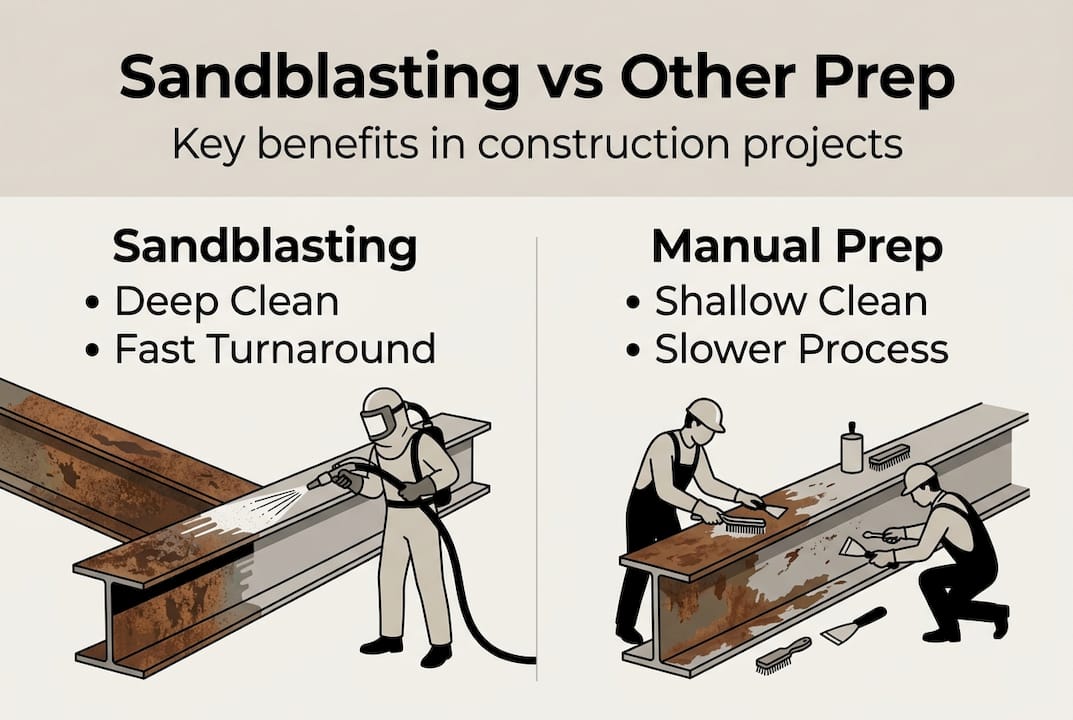
Common myths persist in the industry. Some believe power washing or wire brushing is equivalent to abrasive blasting. It is not. Manual methods cannot achieve the anchor profile depth or cleanliness levels required by SSPC and NACE standards for industrial coatings. Abrasive blasting remains the commercial and industrial standard for a reason: it works consistently at scale.
Pro Tip: Selecting the right abrasive depends entirely on the substrate. Use steel grit for heavy structural steel, garnet for concrete surfaces, and aluminum oxide for harder alloys or precision profiles. Matching media to material prevents overblasting and substrate damage.
| Abrasive type | Best substrate | Profile depth | Key advantage |
|---|---|---|---|
| Steel grit | Structural steel | Deep | Fast, aggressive removal |
| Garnet | Concrete, masonry | Medium | Low dust, recyclable |
| Aluminum oxide | Hard alloys, steel | Medium-deep | Consistent profile |
| Glass bead | Soft metals | Shallow | Non-damaging, smooth finish |
Choosing the wrong abrasive is one of the most common and avoidable mistakes on industrial projects. Matching media to substrate protects the asset and ensures the surface profile meets coating manufacturer specifications.
Key applications of sandblasting in municipal and commercial construction
Now that you know what sandblasting is and why it matters, let’s look at where it’s indispensable for Florida’s infrastructure. Central Florida’s combination of intense UV exposure, high ambient humidity, and proximity to coastal salt environments creates an accelerated corrosion environment. Assets that might last 20 years in a dry climate can degrade in half that time without proper surface treatment and protective coatings.
Key applications in municipal and commercial infrastructure include preparing steel beams, bridges, pipelines, concrete floors, water tanks, and facades for protective coatings, enhancing durability against corrosion in humid environments like Central Florida. Each asset type has distinct preparation requirements.
Five most common sandblasting applications in Central Florida:
- Water storage tanks: Interior and exterior blasting to remove corrosion before potable water-safe coatings are applied
- Bridge structures and steel beams: Full surface prep to SSPC SP-10 near-white metal standards before epoxy or urethane coatings
- Concrete parking decks and floors: Profile creation for traffic-grade coatings and waterproofing membranes
- Commercial building facades: Restoration of concrete, brick, and metal cladding on aging commercial properties
- Pipelines and utility infrastructure: Pre-coating prep for buried or exposed pipe sections to prevent corrosion-driven failures
For sandblasting services for Orlando infrastructure, the scope regularly includes DOT bridge projects, municipal water systems, and large commercial facilities where asset longevity is a budget priority.
Sandblasting vs. alternative prep methods:
| Prep method | Surface profile quality | Speed | Compliance level | Cost efficiency (long-term) |
|---|---|---|---|---|
| Abrasive blasting | Excellent | Fast | SSPC/NACE compliant | High |
| Manual wire brushing | Poor | Slow | Rarely compliant | Low |
| Chemical stripping | Moderate | Moderate | Variable | Moderate |
| Pressure washing | Low | Fast | Not compliant for coatings | Low |
The data is clear. Abrasive blasting consistently outperforms alternatives on every metric that matters for asset longevity and coating compliance.
Sandblasting process steps, challenges, and compliance for Central Florida
Understanding applications is only half the equation. How sandblasting is performed and regulated directly affects success and lifespan. A poorly executed blast on a water tower or bridge can create more problems than it solves, including flash rust, overblasted substrate, and regulatory violations.
Here is the standard workflow for a compliant sandblasting project:
- Site preparation and containment: Erect containment systems to capture abrasive media and debris. Protect adjacent surfaces, drainage, and vegetation.
- Abrasive selection: Choose media based on substrate type, required profile depth, and environmental constraints.
- Initial blasting pass: Remove bulk contamination, rust, and old coatings at appropriate pressure settings.
- Inspection and touch-up: Verify cleanliness and profile depth against SSPC standards using surface comparators.
- Cleanup: Collect and dispose of spent media and debris per local environmental regulations.
- Immediate coating application: Apply primer or first coat before flash rust can form.
The most underestimated risk in Florida is flash rust. After blasting, bare steel begins oxidizing almost immediately in humid air. Proper prep prevents 90% of coating failures, and Central Florida firms handling water towers, bridges, and DOT projects know that the window between blast and coat is critical. In high-humidity conditions, that window can be as short as five minutes.
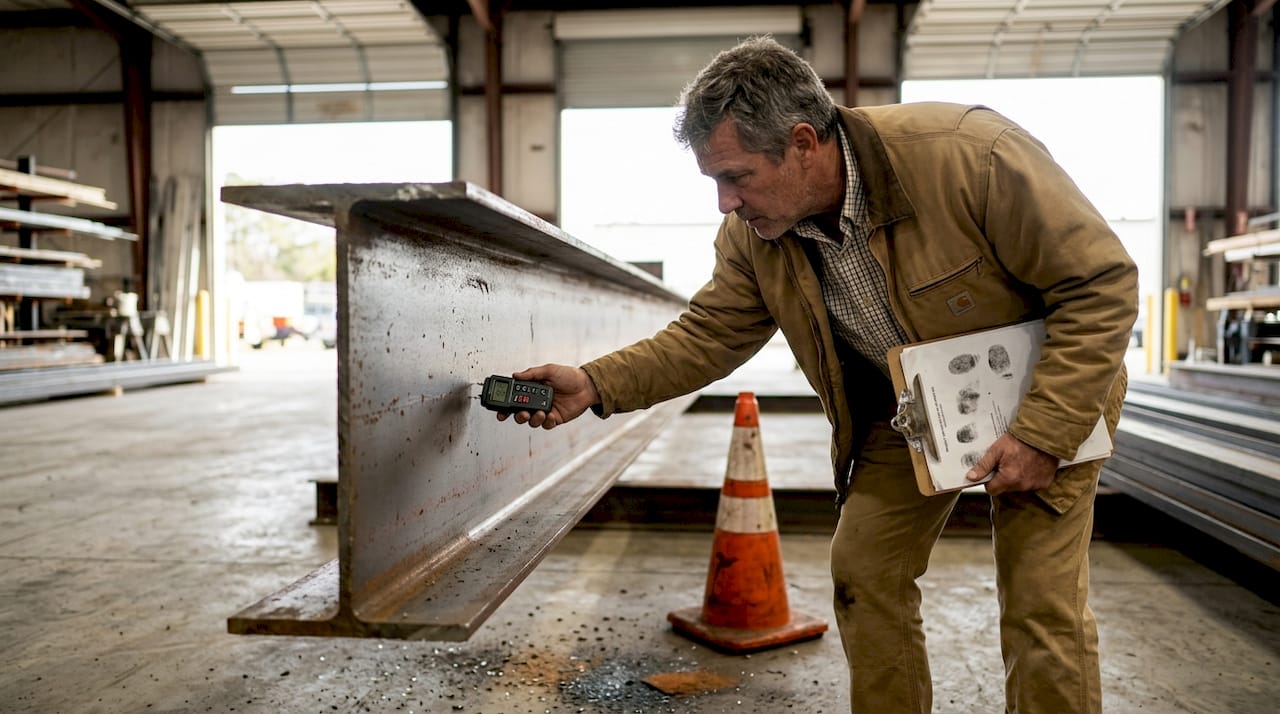
Pro Tip: Schedule blasting operations for early morning when temperatures are lower and relative humidity is more manageable. Use environmental controls like dehumidifiers in enclosed spaces to extend your coating window and reduce flash rust risk.
Compliance with SSPC and NACE standards is not optional for municipal and commercial projects. These standards define cleanliness levels (SP-6 commercial blast, SP-10 near-white, SP-5 white metal) and surface profile requirements. Dustless blasting methods are increasingly required in urban environments to limit particulate exposure for workers and nearby residents. Projects managed through sandblasting projects in Maitland and similar Central Florida municipalities regularly require full containment and dustless compliance as contract conditions.
For a detailed look at how a compliant project flows from mobilization to final inspection, the Orlando sandblasting service workflow outlines what certified contractors deliver at each phase.
Limitations, risks, and smart alternatives
While sandblasting offers unmatched prep, not every structure or situation is a fit. Here’s what to watch for and how to adapt when standard abrasive blasting is not the right tool.
Some of the most common mistakes come from applying a one-size-fits-all approach. Overblasting, using too much pressure or an overly aggressive abrasive, can erode the substrate itself, thinning steel sections or pitting concrete beyond acceptable tolerances. This is especially problematic on aging infrastructure where material thickness is already reduced.
As surface preparation standards make clear, delicate substrates like soft metals and historic masonry risk serious damage from traditional sandblasting. Lower PSI settings or alternative methods are required for these cases. Wet or dustless blasting systems are the standard solution for indoor and confined spaces where airborne particulate poses health and regulatory risks.
“Applying full-pressure abrasive blasting to a 100-year-old brick facade is not surface preparation. It’s demolition by another name. Know your substrate before you blast.”
Scenarios where standard sandblasting is not ideal:
- Historic masonry and brick: Soft, porous materials absorb impact differently; aggressive blasting causes irreversible surface erosion
- Thin-gauge soft metals: Aluminum sheeting, copper flashing, and similar materials distort or pit under standard blast pressures
- Occupied or indoor environments: Airborne silica and abrasive dust create serious health hazards without full containment and dustless systems
- Assets near sensitive drainage: Without proper containment, spent media and contaminants can violate stormwater regulations
For projects involving any of these scenarios, working with a Winter Park sandblasting contractor with documented experience in alternative methods ensures you get the right process for the substrate, not just the fastest or cheapest one.
The bottom line is that risk management in surface prep starts with substrate assessment, not with mobilizing equipment.
A smarter, future-ready approach to sandblasting for Florida infrastructure
Here is what 20-plus years of working on Florida infrastructure teaches you: the contractors who deliver the best long-term outcomes are not the ones with the lowest bids. They are the ones who treat SSPC and NACE compliance as a minimum baseline, not a selling point.
In Florida’s climate, a non-compliant blast followed by a rushed coating application does not just fail early. It fails expensively, often requiring full reblasting and recoating within three to five years instead of the expected fifteen to twenty. That gap represents millions of dollars in avoidable maintenance costs across a municipal asset portfolio.
The smartest approach combines certified abrasive blasting with dustless methods where required, immediate coating application to beat flash rust, and a post-blast inspection before any primer touches the surface. These are not premium add-ons. They are the standard that asset life extension insights consistently support across bridge, water tank, and pipeline projects.
Low-bid procurement that ignores compliance documentation is the single biggest driver of premature coating failure in the public infrastructure sector. Verify certifications, request post-blast inspection reports, and insist on documented surface profile readings before coatings are applied. That discipline separates a 20-year coating system from a 5-year problem.
Pro Tip: Always ask contractors for their SSPC certification documentation and a sample post-blast inspection checklist before signing a contract. A qualified contractor will have both ready.
Secure your assets with certified sandblasting and coatings experts
Ready to turn these strategic lessons into action for your infrastructure or property? Southern Sandblasting & Painting LLC brings 20-plus years of certified experience to municipal and commercial projects across Central Florida, from water towers and bridges to commercial facades and pipelines.
Our team delivers compliant Orlando sandblasting services using SSPC and NACE-certified methods, dustless systems for urban environments, and immediate coating application to protect your investment. We also specialize in industrial coatings for Florida infrastructure that are engineered to perform in Central Florida’s demanding climate. For project managers who want to get it right the first time, our team can walk you through surface prep best practices and help you build a maintenance plan that extends asset life by decades.
Frequently asked questions
What types of abrasives are commonly used in sandblasting for construction?
Steel grit, aluminum oxide, and garnet are the most common choices, with selection based on the substrate material, required surface profile depth, and project-specific goals.
How long should you wait to apply coatings after sandblasting in Florida’s humidity?
In Florida’s humid conditions, coatings should be applied within five minutes after blasting to prevent flash rust from forming on the freshly prepared steel surface.
Can sandblasting damage historic masonry or soft metals?
Yes. Traditional blasting can damage delicate materials like historic brick or aluminum; lower PSI settings or wet blasting alternatives are the correct approach for these substrates.
What are the main compliance standards for sandblasting in construction?
SSPC and NACE standards govern cleanliness and surface profile requirements. In urban settings, contractors must also use dustless or fully contained methods to meet air quality and worker safety regulations.
How does sandblasting compare to manual prep in terms of asset longevity?
Sandblasting reduces prep time while achieving superior surface profiles that manual methods cannot replicate, which directly translates to longer coating lifespans and fewer recoating cycles over the asset’s life.


