
TL;DR:
- Proper rust removal is essential to prevent premature coating failure and ensure long-term asset protection.
- Mechanical abrasive blasting and laser cleaning are effective methods, chosen based on asset type and site conditions.
- Experience, thorough validation, and compliance adherence are critical for successful rust removal in Florida’s harsh environment.
Painting over rust feels like a reasonable shortcut, especially when budgets are tight and project timelines are aggressive. But for facility managers overseeing bridges, water tanks, pipelines, or municipal infrastructure in Florida, that shortcut typically leads to coating failure within 12 to 24 months, followed by expensive rework and potential regulatory penalties. Florida’s environment is uniquely punishing. High humidity, salt air, and relentless heat accelerate corrosion at rates that outpace most other U.S. states. This guide breaks down the proven rust removal methods, how to choose between them, what compliance requires, and how to protect your assets for the long term.
Table of Contents
- Why rust removal matters for Florida infrastructure
- Key rust removal methods and when to use them
- Laser rust removal: The future for precision and sustainability?
- Steps to effective and compliant rust removal
- A perspective: Why experience trumps buzzwords in rust removal
- Need expert rust removal or surface prep in Florida?
- Frequently asked questions
Key Takeaways
| Point | Details |
|---|---|
| Rust removal is essential | Skipping or skimping on rust removal puts Florida infrastructures at risk of rapid corrosion and asset failure. |
| Method selection matters | Mechanical, chemical, and laser techniques each fit different jobs—no one-size-fits-all approach exists. |
| Laser cleaning advantages | Laser methods offer precision, speed, and eco-benefits for the right applications but require expert execution. |
| Regulatory compliance required | Industry and federal standards mandate thorough rust removal and thorough documentation to protect project investments. |
| Experience drives success | Partnering with experts ensures methods are matched to conditions, saving time, costs, and headaches for facility managers. |
Why rust removal matters for Florida infrastructure
Rust is not just a cosmetic issue. Left untreated, it compromises structural integrity, reduces asset lifespan, and creates genuine safety hazards for workers and the public. For municipal and industrial facility managers, the financial consequences of neglect go beyond repair costs. Think regulatory fines, liability exposure, and accelerated asset replacement cycles.
One of the most costly mistakes in infrastructure maintenance is painting over rust without proper surface preparation. The coating may look acceptable for a few months, but the rust underneath continues to expand. It pushes against the new paint from below, causing blistering and delamination. You end up recoating far sooner than planned, spending more money than a proper removal job would have cost in the first place.
Florida compounds this problem significantly. Coating failures Florida infrastructure managers face are often traced directly to inadequate prep in humid, salt-laden conditions. Coastal assets like bridges, port equipment, and water treatment facilities face corrosion cycles that can be two to three times faster than inland structures in drier climates.
Here is what’s at stake when rust removal is skipped or done poorly:
- Structural failure risk on load-bearing components like bridge beams and tank walls
- Asset value loss from shortened service life and accelerated depreciation
- Safety hazards including falling debris, weakened supports, and contaminated water systems
- Non-compliance fines from OSHA, EPA, and state regulatory bodies
- Recoating cycles that double or triple maintenance budgets over a 10-year period
Industry standards are clear. SSPC-SP10, also called Near-White Metal Blast Cleaning, is the benchmark for most critical infrastructure coating projects. It requires the removal of nearly all visible rust, mill scale, and contaminants. Florida humidity and salt accelerate rust, making thorough methods like SSPC-SP10 essential for bridges and tanks. Anything less is a short-term fix with long-term consequences.
For corrosion prevention steps that actually hold up in Florida’s climate, the foundation always starts with complete rust removal, not partial cleaning.
“Skipping proper rust removal is not saving money. It’s borrowing time against your asset’s lifespan at a very high interest rate.”
Pro Tip: In coastal Florida regions, assess at-risk assets quarterly. Salt deposits and humidity can initiate new corrosion cycles between annual inspections, especially on assets within five miles of the coast.
Key rust removal methods and when to use them
Knowing the risks, let’s explore the practical solutions available. Not every method fits every job, and choosing the wrong one can waste budget, delay timelines, or fail compliance checks.
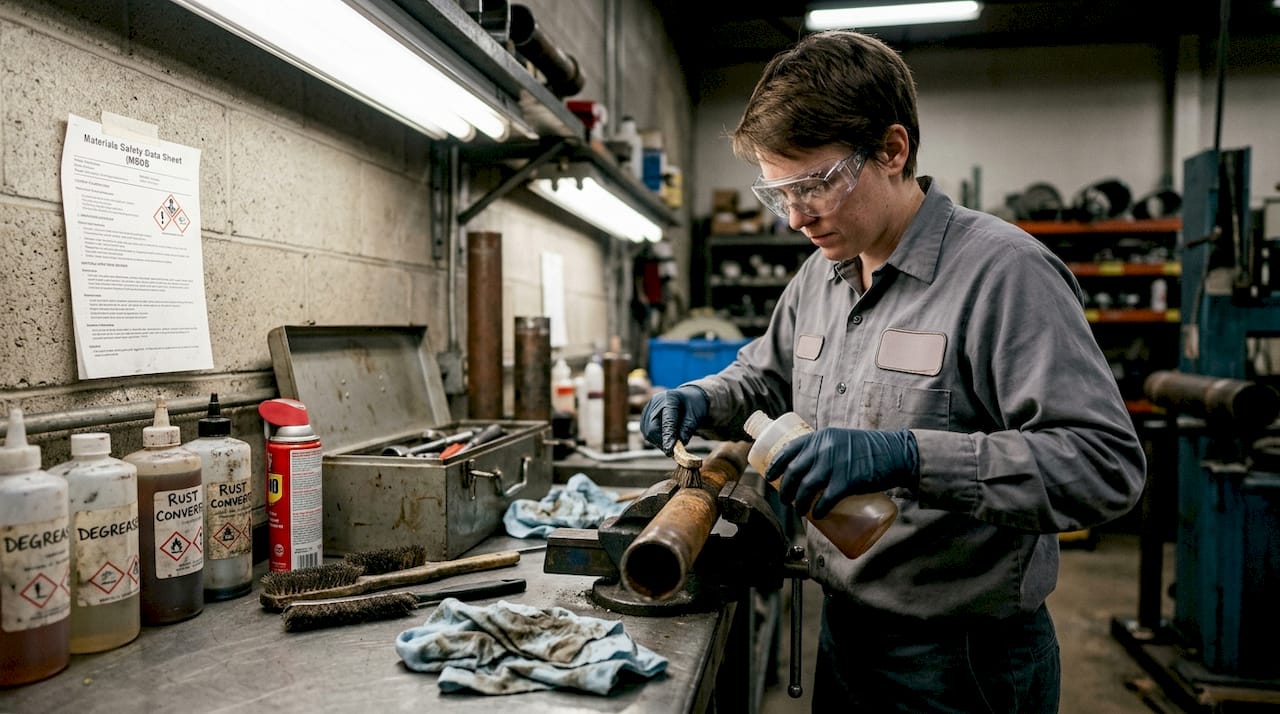
Primary methodologies include mechanical, chemical, and laser rust removal, each with distinct performance profiles. Mechanical methods, especially abrasive blasting using sand or steel grit, are the workhorses of industrial surface prep. They achieve SSPC-SP10 and SSPC-SP3 standards reliably, create the surface profile needed for coating adhesion, and work efficiently on large surface areas like tank exteriors and pipeline sections.
Chemical methods use acid-based or pH-neutral solutions to dissolve or neutralize rust. They work well in confined spaces or on assets where abrasive blasting creates containment problems. However, chemical waste disposal adds cost and complexity, and some formulations require careful handling under EPA guidelines.
For a clear comparison, see the table below:
| Method | Effectiveness | Speed | Cost | Best use case |
|---|---|---|---|---|
| Abrasive blasting | SSPC-SP10 capable | High | Moderate | Large surfaces, tanks, bridges |
| Power tool cleaning | SSPC-SP3 | Moderate | Low | Spot repairs, small areas |
| Chemical removal | Moderate | Low to moderate | Moderate to high | Confined spaces, light rust |
| Laser cleaning | 99% rust removal | Very high (precision) | High upfront | Welds, bridges, sensitive parts |
Here is a numbered decision framework for selecting the right method:
- Identify the asset type and its structural role (load-bearing vs. secondary)
- Assess rust severity using SSPC visual standards before choosing a method
- Check site constraints such as containment requirements, proximity to water, and access
- Match compliance level required by the project spec or regulatory body
- Weigh cost vs. asset value to determine if advanced methods like laser are justified
For a deeper breakdown, the detailed rust removal methods guide covers Florida-specific scenarios in detail. You can also review the surface restoration guide for asset-specific recommendations.
The surface treatment steps matter as much as the method itself. Even the best removal technique fails if the sequence is wrong or if validation is skipped.
Laser rust removal: The future for precision and sustainability?
With a toolkit of traditional and advanced options, Florida managers need practical advice on choosing the right method for each job. Laser cleaning has moved from aerospace labs into mainstream industrial use, and the performance data is compelling.
Laser rust removal works by directing a pulsed fiber laser beam at the corroded surface. The energy ablates rust and contaminants without damaging the base metal underneath. There are no abrasive media, no chemical waste, and no secondary contamination to manage. Laser cleaning ablates rust selectively, processing light rust at 50 cm² per second, up to 15 times faster than sandblasting in precision applications, with 99% effectiveness and 70% lower environmental impact compared to traditional methods.
For weld preparation on bridges or structural steel, laser methods are particularly valuable. They clean without introducing abrasive particles into weld zones, which can compromise weld quality. Automotive manufacturing has seen a 4x speedup in weld prep using laser cleaning, and similar gains are appearing in infrastructure maintenance.
The environmental advantages are real. Traditional abrasive blasting generates significant airborne particulates and spent media that require containment and disposal. Laser methods gaining traction for industrial and municipal use due to speed, eco-benefits, and automation potential, though they outperform abrasives in precision while carrying higher capital costs.
Here is a direct comparison on the three dimensions that matter most to facility managers:
| Factor | Abrasive blasting | Chemical removal | Laser cleaning |
|---|---|---|---|
| Labor intensity | High | Moderate | Low |
| Environmental impact | High (media waste) | High (chemical waste) | 70% lower |
| Upfront cost | Low to moderate | Moderate | High |
| Precision on complex surfaces | Low | Moderate | Very high |
| Compliance capability | SSPC-SP10 | SSPC-SP3 range | Equivalent to SP10 |
The main limitation of laser cleaning is the initial equipment investment, which can be significant for smaller operations. It also performs less efficiently on very heavy scale or thick rust deposits, where abrasive blasting still has the edge in raw throughput.
For assets where painting safety protocols require minimal airborne contamination, or where environmental sensitivity is a factor, laser cleaning is worth serious consideration. Pairing it with strong corrosion prevention strategies after treatment extends asset life significantly.
Steps to effective and compliant rust removal
Having covered the tools and tailored options, it is critical to outline the right process for reliable, compliant results. A good method applied in the wrong sequence still fails.
Painting over rust fails, causing blistering and delamination and ongoing corrosion beneath the coating. Full removal is essential for adhesion and compliance with OSHA and EPA standards. That means the process must be systematic, not improvised.
Follow this sequence for every rust removal project:
- Site assessment: Identify all corroded surfaces, document rust severity using SSPC visual standards, and flag any environmental or safety constraints before work begins
- Method selection: Choose the removal method based on asset type, rust severity, site access, and required compliance standard
- Compliance checklist: Confirm that the selected method meets SSPC-SP10 or SSPC-SP3 requirements as specified in the project contract or regulatory guidance
- Surface cleaning: Remove loose debris, oil, and surface contaminants before applying the primary rust removal method
- Method execution: Apply abrasive blasting, chemical treatment, or laser cleaning per manufacturer and safety guidelines, using appropriate PPE throughout
- Visual validation: Inspect treated surfaces against SSPC photographic standards to confirm rust removal grade before any coating is applied
- Surface profile measurement: Use a replica tape or digital profilometer to verify that the surface anchor profile meets coating manufacturer specifications
- Documentation: Record all results, including photos, surface profile readings, and compliance checklists, for OSHA, EPA, and internal audit files
For painting compliance tips specific to 2026 standards, review current OSHA and EPA guidance before finalizing your project plan. Protecting critical asset protection starts at the documentation stage, not after coating is applied.
Pro Tip: Document surface profiles and results with high-resolution photos immediately after rust removal and before priming. This creates a defensible compliance record and protects you during regulatory audits or contractor disputes.
Understanding corrosion control essentials helps facility managers build this process into their standard maintenance programs rather than treating it as a one-off project.
A perspective: Why experience trumps buzzwords in rust removal
With actionable steps laid out, it helps to step back and consider what really makes rust removal successful on the ground.
The industry loves new technology. Laser cleaning is genuinely impressive, and the data supports its use in the right situations. But after 20-plus years working on Florida’s bridges, water tanks, and municipal infrastructure, we have seen a consistent pattern: the most expensive failures are not caused by using the wrong method. They are caused by rushing the prep, skipping the validation step, or assuming that a newer tool compensates for less experienced judgment.
No single method fits every job. A crew that defaults to abrasive blasting on every project, regardless of site conditions, will eventually produce poor results. So will a crew that chases laser technology without understanding when heavy-scale rust demands a different approach. Real expertise means reading the asset, reading the site, and matching the method to both.
The rust removal expertise that protects Florida infrastructure comes from crews who treat compliance as a baseline, not a finish line. Working with detail-driven professionals who document everything and adapt their approach saves money and prevents the kind of asset loss that shows up as a budget crisis two years later.
Need expert rust removal or surface prep in Florida?
If you want reliable, evidence-based results without guesswork, it makes sense to bring in proven professionals. Southern Sandblasting & Painting LLC has spent over 20 years protecting Florida’s critical infrastructure, from municipal water tanks and bridges to airports and industrial facilities across Central Florida.
Our team works directly with facility managers and project leads to assess your assets, recommend the right removal method, and execute to SSPC compliance standards. Whether you need sandblasting services Orlando for a large-scale tank project or are evaluating industrial coatings Florida for long-term asset protection, we offer consultations tailored to your project scope. You can also explore more on rust removal methods to compare options before your next project.
Frequently asked questions
What is the difference between mechanical, chemical, and laser rust removal?
Mechanical, chemical, and laser rust removal each use distinct processes: mechanical methods abrade rust away, chemicals dissolve or neutralize it, and laser methods ablate it with focused energy, making each suited for different asset types and site conditions.
Why is rust removal critical before painting infrastructure assets?
Painting over rust fails, causing blistering and delamination as corrosion continues beneath the coating, which also puts projects out of compliance with OSHA and EPA requirements.
Is laser rust removal more effective for Florida’s infrastructure?
Laser cleaning delivers 99% rust removal effectiveness and 70% lower environmental impact, making it ideal for precision work on bridges and welds, though the higher upfront cost means traditional abrasive blasting remains the practical choice for large-scale surface areas.
What compliance standards apply to rust removal in Florida projects?
OSHA, EPA, and SSPC-SP10 require full rust removal and documented results before any protective coating is applied to infrastructure assets, with near-white metal blast cleaning as the standard for most critical projects.


