

Florida’s humid, salt-laden environment silently destroys billions of dollars in municipal and commercial infrastructure each year. Coastal facilities face accelerated metal degradation that threatens water systems, pipelines, and structural integrity. Without strategic corrosion prevention, asset lifespans shrink dramatically while repair costs skyrocket. This guide delivers proven techniques specifically designed for Florida’s challenging conditions, from protective coatings and cathodic protection to chemical inhibitors and inspection protocols. You’ll learn how to select materials, prepare surfaces correctly, and implement monitoring systems that extend infrastructure life by decades.
Table of Contents
- Understanding The Corrosion Challenge In Florida Infrastructure
- Preparing For Corrosion Prevention: Tools, Materials, And Standards
- Executing Industrial Corrosion Prevention Steps: Coatings, Cathodic Protection, And Inhibitors
- Verifying Effectiveness: Monitoring, Maintenance, And Inspections
- Expert Industrial Corrosion Prevention Services In Florida
- Frequently Asked Questions
Key takeaways
| Point | Details |
|---|---|
| Protective coatings and cathodic protection | Combine physical barriers with electrochemical protection for buried municipal pipes following AWWA M27 standards |
| Chemical inhibitors for water systems | Deploy targeted treatments to neutralize corrosive agents in treatment facilities and distribution networks |
| Surface preparation determines success | Sandblasting to near-white metal cleanliness ensures coating adhesion and prevents premature failure |
| Quarterly coastal inspections required | Salt exposure demands frequent monitoring and proactive repairs using epoxy polymer concrete |
| Material selection matters critically | Specify 316 stainless steel over 304 for Florida’s chloride-rich environment to minimize replacement cycles |
Understanding the corrosion challenge in Florida infrastructure
Corrosion represents one of the costliest threats to municipal and commercial assets across Florida. Metal deterioration leads to catastrophic failures in water distribution systems, structural collapses in bridges and towers, and environmental contamination from pipeline ruptures. Facility managers face mounting repair bills, emergency shutdowns, and liability risks when corrosion goes unchecked. The financial impact extends beyond direct replacement costs to include lost productivity, regulatory penalties, and public safety concerns.
Florida’s geographic position creates a perfect storm for accelerated metal degradation. Coastal proximity bathes infrastructure in salt-laden air and storm surge, while inland facilities contend with high humidity and intense ultraviolet radiation. Industrial coatings serve as the primary defense against these environmental assaults, but only when properly selected and applied. Hurricane events compound the problem by depositing concentrated salt deposits that penetrate protective barriers and accelerate electrochemical reactions.
Municipal pipelines buried underground face distinct corrosion mechanisms compared to exposed structures. Soil chemistry varies dramatically across Florida, with some areas exhibiting highly acidic conditions while others contain aggressive sulfates. Buried metal encounters oxygen differentials, microbial activity, and stray electrical currents that drive localized pitting and general surface loss. Water transmission lines also battle internal corrosion from dissolved gases and pH fluctuations.
Critical assets requiring protection include:
- Water treatment plant components and storage tanks
- Underground distribution and collection pipelines
- Elevated metal structures like communication towers
- Pump stations and lift station equipment
- Bridge supports and marine infrastructure
Environmental factors accelerate corrosion through multiple pathways. Chloride ions from salt penetrate protective films and initiate pitting on stainless steels. Moisture provides the electrolyte necessary for electrochemical reactions to proceed. Soil pH below 5.5 or above 8.5 increases metal dissolution rates significantly. Hydrogen sulfide gas generated in sewer systems creates sulfuric acid that attacks concrete and metal surfaces alike. Understanding these corrosion prevention examples helps managers prioritize protection strategies.
“Prioritize coatings and cathodic protection for buried municipal pipes, chemical treatments for water systems, and in Florida enhance with salt removal and storm inspections for coastal assets.”
Temperature cycling between scorching summers and mild winters stresses protective coatings through thermal expansion and contraction. UV radiation degrades polymer-based coatings over time, reducing their barrier effectiveness. The combination of heat, moisture, and salt creates conditions more aggressive than most other U.S. regions face. Infrastructure managers must account for these factors when designing prevention programs.
Preparing for corrosion prevention: tools, materials, and standards
Material selection forms the foundation of effective corrosion control. Not all metals perform equally in Florida’s environment. Standard 304 stainless steel suffers pitting and crevice corrosion in chloride-rich coastal zones, while 316 stainless steel provides superior resistance through higher molybdenum content. For critical applications, consider duplex stainless steels or specialized alloys designed for marine service. Carbon steel requires robust protective coatings since the base metal offers no inherent corrosion resistance.
Surface preparation determines whether protective coatings succeed or fail prematurely. Contaminants like mill scale, rust, oils, and salts prevent proper adhesion and create pathways for moisture infiltration. Even microscopic contamination compromises coating performance. Industry data shows that inadequate surface prep causes the majority of coating failures, making this step non-negotiable for long-term protection. The investment in thorough cleaning pays dividends through extended service life.
AWWA M27 provides comprehensive guidelines specifically for external corrosion control on buried pipelines. This manual addresses coating selection, application procedures, cathodic protection design, and ongoing monitoring requirements. Municipal managers should treat M27 as the authoritative reference for underground infrastructure protection. The standard reflects decades of field experience and laboratory research into what actually works in real-world conditions.
Essential preparation materials and equipment:
- Abrasive blasting systems with appropriate media for substrate type
- Surface profile gauges and salt contamination test kits
- Coating materials matched to service environment and temperature
- Cathodic protection rectifiers and reference electrodes
- pH meters and hydrogen sulfide detection equipment
- Inspection tools including holiday detectors and thickness gauges
Pro Tip: Establish baseline measurements before applying protective systems. Document original metal thickness, existing corrosion rates, and environmental parameters. These benchmarks enable you to quantify protection effectiveness and justify maintenance investments to stakeholders.
Sewer system managers must monitor pH levels and hydrogen sulfide concentrations as leading indicators of corrosion risk. H2S gas converts to sulfuric acid in the crown of pipes, creating highly acidic conditions that rapidly degrade concrete and metal. Regular sampling identifies problem areas before catastrophic failures occur. Portable gas detectors and pH strips provide quick field assessments, while laboratory analysis confirms trends.
| Material | Coastal Suitability | Typical Application | Maintenance Frequency |
|---|---|---|---|
| 316 Stainless Steel | Excellent | Fasteners, pump shafts | Annual inspection |
| Epoxy Coatings | Very Good | Pipeline exteriors, tanks | 3-5 year touch-up |
| Zinc-Rich Primers | Good | Structural steel | 2-4 year inspection |
| Polymer Concrete | Excellent | Sewer rehabilitation | 10+ year service |
The guide to asset protection coatings details specific coating systems for different substrates and exposures. Epoxy systems offer excellent chemical resistance and adhesion for immersed service. Polyurethane topcoats provide UV stability for exposed structures. Zinc-rich primers deliver galvanic protection to steel substrates. Matching the coating chemistry to the service environment optimizes performance and cost-effectiveness.
Tool calibration and operator training ensure consistent results. Abrasive blasting equipment requires regular maintenance to maintain proper air pressure and media flow. Coating application tools need cleaning between uses to prevent contamination. Operators should demonstrate proficiency through certification programs that verify their understanding of proper techniques. Cutting corners during preparation inevitably leads to expensive rework.
Executing industrial corrosion prevention steps: coatings, cathodic protection, and inhibitors
Successful corrosion prevention follows a systematic approach that layers multiple protection methods. Each technique addresses specific degradation mechanisms, and combining strategies creates redundant barriers against failure. The following steps represent industry best practices adapted for Florida’s demanding conditions.
Step 1: Surface cleaning and preparation
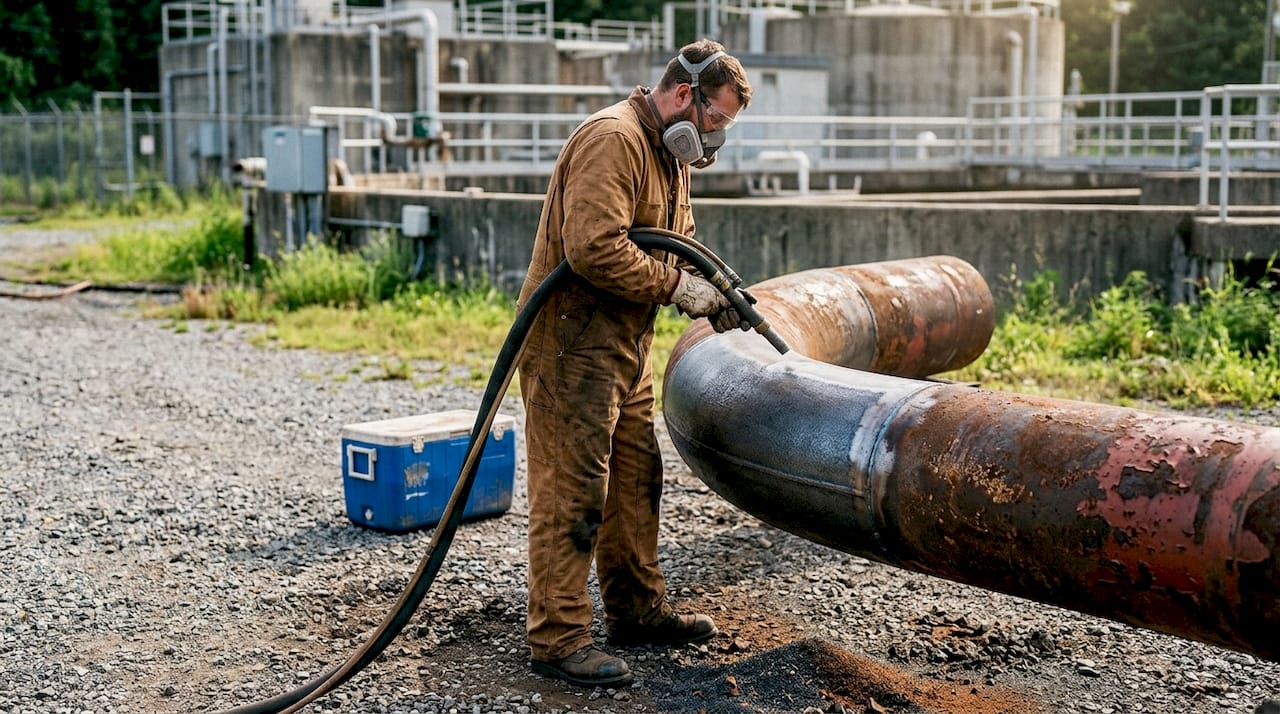
Remove all contaminants through abrasive blasting to achieve near-white metal cleanliness (SSPC-SP10/NACE 2). This standard removes 95% of visible residue and creates the anchor profile necessary for coating adhesion. Blast media selection depends on substrate hardness and desired profile depth. Steel grit cuts quickly but may embed in soft metals, while aluminum oxide provides cleaner results. Solvent wipe surfaces after blasting to eliminate dust and oils before coating application.
Step 2: Apply protective coatings matched to asset requirements
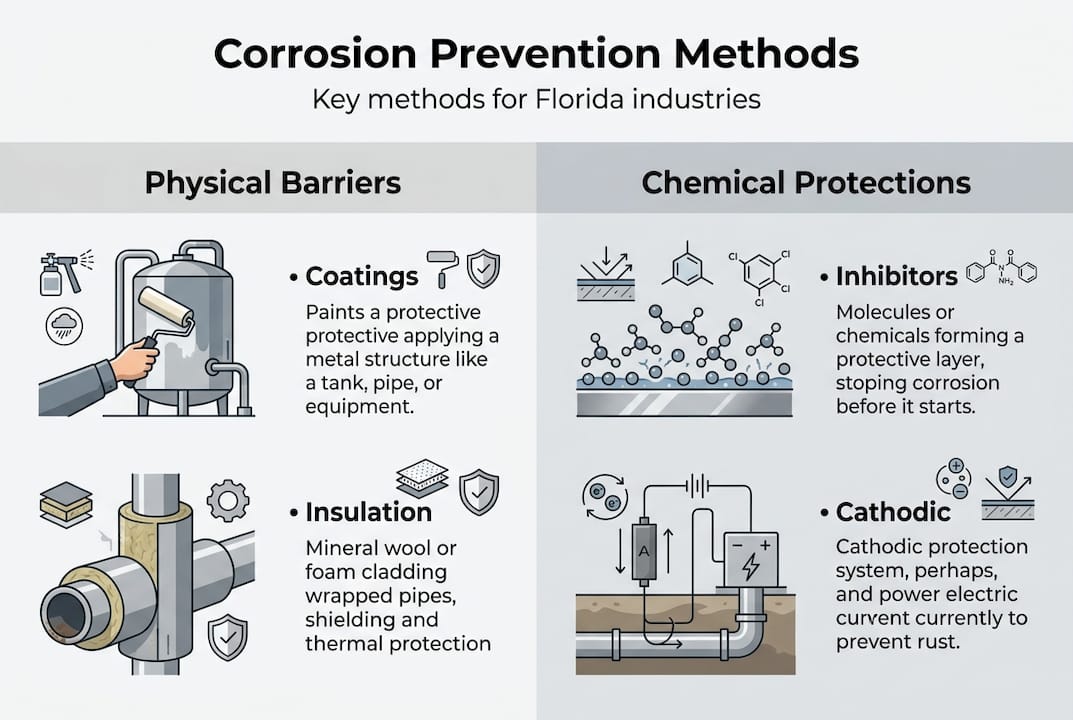
Select coating systems based on immersion depth, chemical exposure, and temperature ranges. Underwater pipelines need high-build epoxies that cure in wet conditions. Atmospheric structures benefit from epoxy primers with polyurethane topcoats for color retention. Apply coatings within the substrate temperature and humidity windows specified by manufacturers. Film thickness matters critically. Measure wet and dry film thickness continuously during application to ensure specification compliance. The protective coating advantages extend asset life by 15-25 years when properly applied.
Step 3: Install cathodic protection systems for buried infrastructure
Cathodic protection (CP) works by making the metal structure the cathode in an electrochemical cell, preventing it from corroding. Impressed current systems use rectifiers to drive protective current through anodes buried near the pipeline. Sacrificial anode systems employ more active metals like magnesium or zinc that corrode preferentially. Design CP systems according to soil resistivity measurements and pipeline coating quality. Bare or poorly coated pipe requires significantly more current than well-coated assets.
Step 4: Deploy chemical inhibitors in water systems
Corrosion inhibitors modify water chemistry to reduce metal dissolution rates. Phosphate-based inhibitors form protective films on pipe interiors. Silicate treatments passivate steel surfaces. Zinc orthophosphate combinations address both corrosion and scale formation. Dosing rates depend on water quality parameters including pH, alkalinity, and dissolved oxygen. Water treatment corrosion control strategies require continuous monitoring to maintain effective concentrations without overdosing.
Pro Tip: Combine physical barriers (coatings) with chemical protection (inhibitors) for maximum effectiveness. Coatings block moisture and oxygen penetration while inhibitors neutralize any corrosive species that breach the barrier. This defense-in-depth approach dramatically extends asset life compared to single-method strategies.
| Protection Method | Mechanism | Best Application | Typical Lifespan |
|---|---|---|---|
| Protective Coatings | Physical barrier | All exposed surfaces | 10-20 years |
| Cathodic Protection | Electrochemical | Buried/submerged metal | 20-40 years |
| Chemical Inhibitors | Water chemistry modification | Internal pipe surfaces | Continuous dosing |
| Material Upgrade | Inherent resistance | New construction | 30-50 years |
Regular maintenance keeps protective systems functioning optimally. Inspect coating integrity annually, looking for holidays, disbondment, or mechanical damage. Test CP system outputs quarterly to verify adequate current delivery. Monitor inhibitor residuals weekly in water systems. Document all findings in a centralized database that tracks trends over time. The role of coating contractors includes not just application but also providing maintenance recommendations based on observed conditions.
Coastal assets demand enhanced protection protocols. Salt spray accelerates coating degradation and increases CP current requirements. Schedule touch-up painting every 3-5 years rather than waiting for widespread failure. Wash exposed surfaces quarterly to remove salt deposits before they penetrate protective films. These proactive measures cost far less than emergency repairs or premature replacement.
Verifying effectiveness: monitoring, maintenance, and inspections
Protection systems require ongoing verification to ensure they deliver expected performance. Passive approaches fail because conditions change over time. Coating damage from impacts or UV exposure creates localized vulnerabilities. CP current output drifts as anodes deplete or rectifiers malfunction. Water chemistry shifts with seasonal source changes or treatment modifications. Only active monitoring catches problems before they escalate into failures.
Quarterly inspections of coastal and marine-exposed infrastructure provide early warning of degradation. Visual examination identifies coating blistering, rust staining, and mechanical damage. Adhesion testing with a knife or scraper reveals coating disbondment. Holiday detection using wet sponge or high-voltage methods locates pinholes and gaps in coating coverage. Operators should conduct quarterly coastal checks and deploy epoxy polymer concrete for rehabilitation when deterioration appears.
Critical monitoring parameters include:
- Coating dry film thickness at representative locations
- CP pipe-to-soil potential readings at test stations
- Rectifier output voltage and current for impressed current systems
- Corrosion inhibitor residual concentrations in water samples
- pH and dissolved oxygen levels in distribution systems
- Hydrogen sulfide gas concentrations in sewer atmospheres
Pro Tip: Create inspection checklists that standardize data collection across different assets and operators. Consistent documentation enables meaningful trend analysis and helps identify which protection methods deliver best value. Include photographic records to visually track changes over time.
Environmental parameter monitoring reveals whether conditions remain within design assumptions. Soil resistivity changes with moisture content, affecting CP system effectiveness. Water pH drifts impact inhibitor performance and coating compatibility. Temperature extremes stress protective films through thermal cycling. Measure these factors during each inspection cycle and adjust protection strategies when parameters exceed expected ranges.
Epoxy polymer concrete repairs offer rapid, durable solutions when corrosion damage appears. This material bonds tenaciously to prepared substrates and resists the same aggressive chemicals that attacked the original surface. Application requires thorough surface preparation to remove all deteriorated material and create a sound substrate. Mix ratios must follow manufacturer specifications exactly since deviations compromise strength and adhesion. Repairs typically cure within hours, minimizing downtime.
The role of coating inspectors extends beyond quality assurance during application. Inspectors provide objective assessments of existing coating condition and recommend maintenance timing. Their expertise helps prioritize limited budgets toward assets facing imminent failure. Third-party inspection reports document due diligence for liability protection and regulatory compliance.
Detailed record-keeping transforms raw data into actionable intelligence. Track corrosion rates, coating lifespan, and CP current requirements for each asset class. This historical perspective reveals which materials and methods perform best in your specific environment. Trend analysis identifies accelerating degradation before catastrophic failure occurs. Digital asset management systems streamline data collection and generate automated alerts when parameters exceed thresholds.
Water facilities require specialized protection approaches that address both internal and external corrosion mechanisms. Tanks and reservoirs need interior coatings rated for potable water contact. Exterior surfaces face atmospheric corrosion and UV exposure. Piping systems encounter flow-induced erosion corrosion at elbows and restrictions. Comprehensive protection programs address all exposure scenarios with appropriate materials and monitoring protocols.
Expert industrial corrosion prevention services in Florida
Implementing comprehensive corrosion prevention requires specialized equipment, trained personnel, and deep understanding of Florida’s unique challenges. Southern Sandblasting and Painting brings over 20 years of experience protecting municipal and commercial infrastructure across Central Florida. Our team understands how salt exposure, humidity, and storm events impact asset longevity.

We deliver complete surface preparation through professional sandblasting services in Orlando that achieve the cleanliness standards your coatings demand. Our industrial-grade equipment handles projects from small pump stations to large water storage tanks. We match industrial coating types to Florida conditions, selecting systems proven in marine and municipal environments. Our application teams follow strict quality control procedures to ensure proper film thickness and coverage. We implement surface preparation best practices on every project, because we know shortcuts lead to premature failures and costly rework. Partner with us to extend your infrastructure investments and minimize lifecycle costs.
Frequently asked questions
What are the most effective corrosion prevention steps for municipal pipes in Florida?
Apply protective coatings and cathodic protection following AWWA M27 standards for buried pipelines. Schedule quarterly inspections and salt removal for coastal assets. Deploy chemical inhibitors in water distribution systems to manage internal corrosion. Proper surface preparation ensures coating adhesion and maximizes system lifespan. Combining multiple protection methods creates redundant barriers against failure.
How often should coastal infrastructure be inspected for corrosion risks?
Quarterly inspections are recommended for coastal infrastructure to detect early deterioration and enable timely repairs. Salt exposure accelerates degradation significantly compared to inland locations. Use epoxy polymer concrete for rehabilitation when damage appears. More frequent inspections may be warranted after major storm events that deposit concentrated salt.
What surface preparation methods best ensure coating longevity in Florida?
Abrasive blasting to near-white metal cleanliness (SSPC-SP10) removes contaminants and creates proper anchor profile. This standard eliminates 95% of visible residue including rust, mill scale, and salts. Following surface prep best practices dramatically improves coating adhesion and durability. Florida’s humid, salty conditions demand thorough preparation since any remaining contamination compromises protection.
Can chemical inhibitors alone prevent corrosion in water systems?
Inhibitors reduce corrosion rates but work best combined with proper materials selection and pH control. They modify water chemistry to form protective films on pipe interiors. Effectiveness depends on maintaining correct dosing levels and water quality parameters. Physical barriers like coatings provide more reliable long-term protection for critical assets. Use inhibitors as part of a comprehensive strategy rather than a standalone solution.
How does cathodic protection work on buried pipelines?
Cathodic protection makes the pipeline the cathode in an electrochemical cell, preventing metal loss. Impressed current systems use rectifiers to drive protective current through buried anodes. Sacrificial anode systems employ more active metals that corrode preferentially. Proper design requires soil resistivity measurements and coating quality assessment. Regular monitoring ensures adequate current delivery to all pipeline sections.


