

Every american municipal water treatment plant in Central Florida faces the reality that corrosion is responsible for billions in infrastructure losses each year. Corroded pipelines and equipment threaten water quality, drive up repair costs, and put public trust at risk. Understanding how corrosion damages vital systems can make the difference between constant disruptions or decades of reliable service with smart maintenance strategies and proven protection solutions.
Table of Contents
- Defining Corrosion and Its Impact
- Types of Corrosion in Water Facilities
- How Corrosion Protection Methods Work
- Key Compliance and Safety Standards
- Risks and Costs of Insufficient Protection
- Common Missteps and Effective Alternatives
Key Takeaways
| Point | Details |
|---|---|
| Understanding Corrosion | Corrosion leads to the deterioration of metal in water infrastructure, impacting safety and system reliability. Regular inspections and proactive management are crucial to mitigating these effects. |
| Economic Implications | U.S. water sectors incur over $30 billion annually due to corrosion-related issues, emphasizing the need for effective management strategies. Investing in preventive measures can significantly reduce costs. |
| Compliance and Safety | Adhering to EPA and AWWA standards is essential for protecting public health from corrosion-related hazards. Continuous monitoring and compliance tracking systems can ensure these regulations are met. |
| Advanced Protection Strategies | Implementing sophisticated methods such as chemical treatments and cathodic protection can greatly enhance infrastructure longevity. Utilizing modern solutions tailored to specific conditions is vital for effective corrosion management. |
Defining Corrosion and Its Impact
Corrosion represents a complex and costly challenge for water infrastructure systems across Central Florida. At its core, corrosion involves the gradual deterioration of metal components through chemical and electrochemical interactions between water and plumbing materials. This process systematically weakens critical infrastructure like pipelines, reservoirs, and treatment plant equipment, compromising their structural integrity and operational reliability.
In municipal water facilities, corrosion manifests through several destructive mechanisms. Electrochemical reactions gradually break down metal surfaces, creating microscopic vulnerabilities that expand over time. These reactions can occur through direct water contact, mineral interactions, or electrical potential differences between metal components. The result is a progressive degradation that threatens water quality, system performance, and public safety. Water system corrosion can introduce hazardous metals like lead and copper into drinking water, presenting significant health risks for municipal populations.
The economic impact of corrosion in water infrastructure is staggering. U.S. water and wastewater sectors experience billions in annual losses due to infrastructure damage, premature equipment replacement, and operational disruptions. For facility managers in Central Florida, understanding these dynamics is crucial. Corrosion affects everything from small municipal pipelines to large-scale treatment reservoirs, making proactive management a critical operational priority. Effective strategies involve regular inspections, advanced protective coatings, cathodic protection techniques, and strategic material selection to minimize deterioration.
Pro Tip: Implement a comprehensive annual corrosion assessment program that includes detailed material evaluations, electrical conductivity testing, and microscopic surface analysis to catch potential infrastructure vulnerabilities before they become costly failures.
Types of Corrosion in Water Facilities
Water facilities face multiple complex corrosion challenges that systematically compromise infrastructure integrity. Different corrosion types emerge from unique environmental interactions, each presenting distinct risks and requiring specialized prevention strategies. Understanding these variations is crucial for municipal facility managers seeking to protect critical water infrastructure assets.
Uniform Corrosion represents the most straightforward and predictable form of metal deterioration. This type occurs evenly across metal surfaces, creating consistent material loss through chemical reactions with water. Characterized by a steady, predictable degradation pattern, uniform corrosion is typically influenced by water chemistry, pH levels, and ambient temperature. While potentially manageable through protective coatings, it can significantly reduce pipeline and equipment lifespans if left unaddressed.
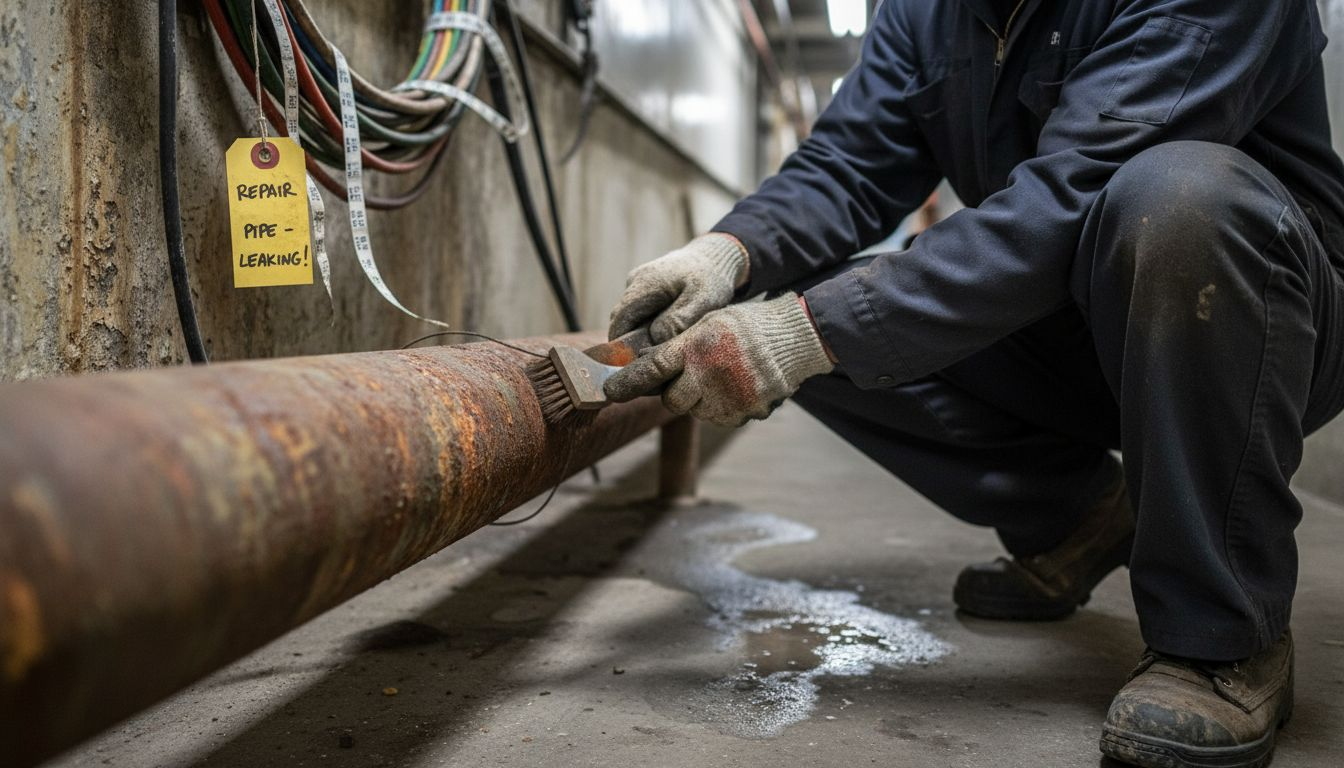
More complex corrosion types like galvanic corrosion and microbiologically influenced corrosion pose more nuanced challenges. Galvanic corrosion emerges when two dissimilar metals interact, creating electrical potential differences that accelerate metal degradation. Microbiologically influenced corrosion involves bacterial interactions that generate highly aggressive chemical environments, attacking metal surfaces through specialized metabolic processes. These advanced corrosion mechanisms can create localized damage zones that compromise structural integrity much faster than uniform corrosion patterns.
Pro Tip: Develop a comprehensive material compatibility matrix for your water facility infrastructure, documenting potential galvanic interactions between different metal components and implementing targeted protective measures to minimize electrochemical degradation risks.
How Corrosion Protection Methods Work
Comprehensive corrosion protection strategies represent a sophisticated approach to preserving water facility infrastructure. These methods combine multiple scientific techniques designed to interrupt and mitigate the electrochemical processes that cause metal degradation. By understanding and implementing targeted interventions, facility managers can significantly extend the operational lifespan of critical water system components.
Chemical treatment represents one of the primary defense mechanisms against corrosion. This approach involves carefully manipulating water chemistry through pH adjustment, introducing specialized corrosion inhibitors, and managing mineral content. These chemical interventions create protective molecular barriers that reduce metal reactivity, preventing oxidation and minimizing material loss. Techniques like phosphate-based treatments can form microscopic protective films on metal surfaces, effectively shielding infrastructure from aggressive water environments.
Physical protection methods offer another critical line of defense. Pipeline and equipment protection relies on advanced coating technologies such as cement-mortar linings, polyethylene encasement, and specialized industrial coatings. Cathodic protection stands out as a particularly sophisticated technique, utilizing sacrificial metal anodes that electrically neutralize corrosive interactions. By deliberately introducing a more reactive metal that corrodes preferentially, these systems protect primary infrastructure components, creating an electrochemical shield that prevents destructive oxidation processes.
The following table summarizes how different corrosion protection methods function and their main impact on water facility infrastructure:
| Protection Method | Main Function | Infrastructure Impact |
|---|---|---|
| Chemical Treatment | Adjusts water chemistry to inhibit reactions | Extends metal component lifespan |
| Physical Coatings | Creates barrier layer on surfaces | Reduces leak and failure risks |
| Cathodic Protection | Uses sacrificial anodes to neutralize currents | Prevents localized metal degradation |
Pro Tip: Implement a comprehensive corrosion monitoring program that includes regular electrical potential measurements, surface inspections, and predictive modeling to detect and address potential degradation before significant infrastructure damage occurs.
Key Compliance and Safety Standards
Water utility compliance standards represent a critical framework for protecting public health and infrastructure integrity. These regulatory guidelines establish comprehensive protocols that municipal water facilities must follow to ensure safe, reliable water distribution systems. The complex landscape of compliance demands a multifaceted approach that addresses technological, environmental, and health-related concerns across water infrastructure management.
The Environmental Protection Agency (EPA) and the American Water Works Association (AWWA) have developed rigorous standards specifically targeting corrosion control. These regulations focus intensely on minimizing potential health risks associated with metal contamination, particularly addressing lead and copper release through systematic water chemistry monitoring. Utilities must implement approved corrosion control treatments, conduct regular comprehensive evaluations, and maintain detailed documentation demonstrating their commitment to public safety and regulatory compliance.
Industry best practices are codified through multiple technical standards developed by organizations like the Association for Materials Protection and Performance (AMPP). These standards provide detailed guidelines covering critical aspects of corrosion prevention, including coating specifications, testing protocols, risk management frameworks, and systematic monitoring procedures. Compliance requires water facilities to not only meet minimum regulatory requirements but also adopt proactive approaches that anticipate potential infrastructure vulnerabilities and implement sophisticated preventative strategies.
Pro Tip: Develop a comprehensive compliance tracking system that integrates real-time monitoring data, automated reporting mechanisms, and predictive analytics to streamline regulatory documentation and demonstrate ongoing commitment to water safety standards.
Risks and Costs of Insufficient Protection
Corrosion management failures represent a critical threat to water infrastructure sustainability, with profound financial and operational consequences for municipal facilities. The economic impact extends far beyond immediate repair costs, encompassing complex ripple effects that can compromise entire water distribution systems. Facility managers must recognize that neglecting corrosion protection is not just a maintenance issue, but a strategic risk management challenge with potentially catastrophic implications.
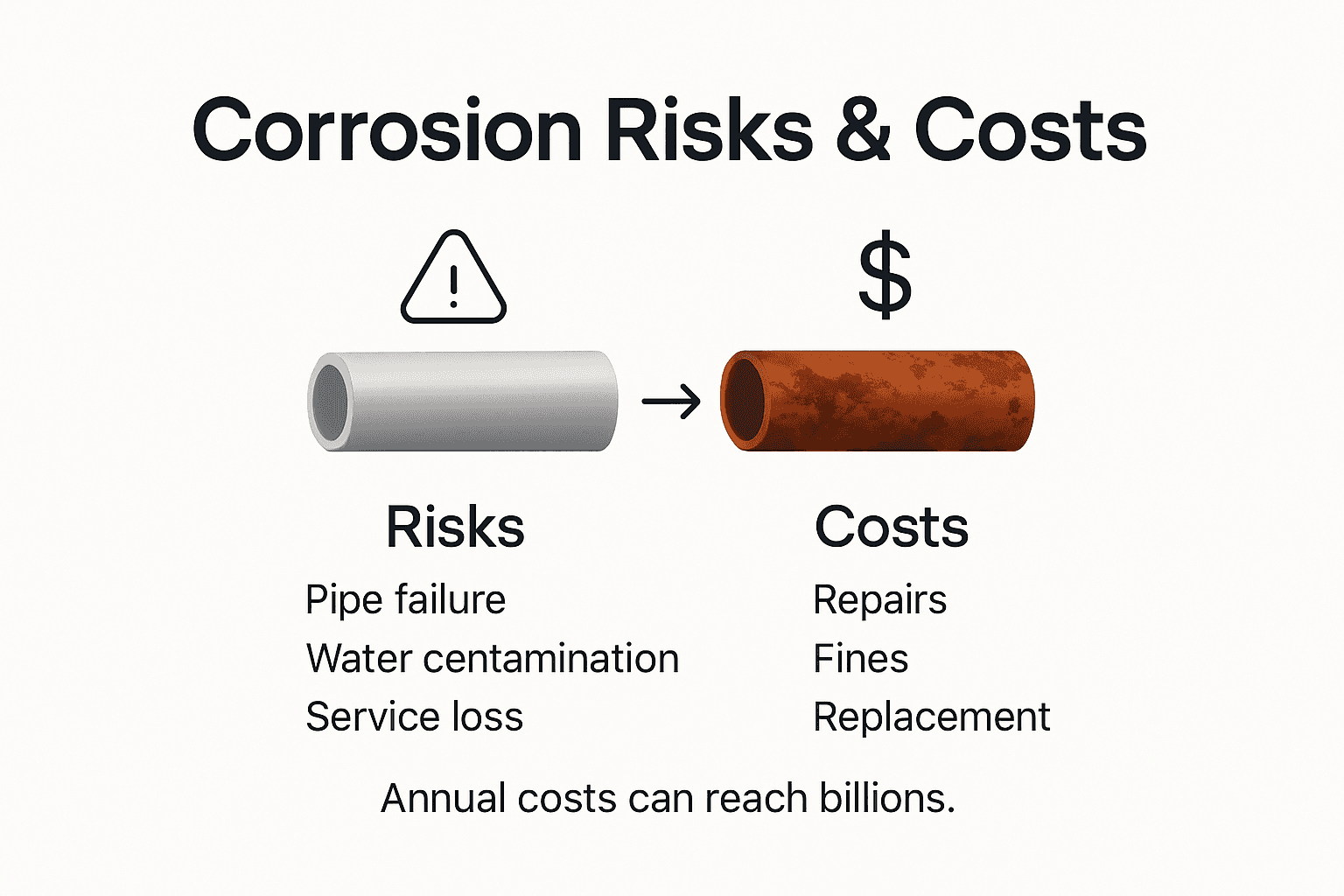
The financial burden of inadequate corrosion control is staggering. U.S. water and wastewater sectors experience over $30 billion in annual losses directly attributable to infrastructure degradation, emergency repairs, and premature asset replacement. These direct costs are compounded by indirect expenses including service disruptions, reduced operational efficiency, and potential legal liabilities arising from compromised water quality. Global economic studies suggest that insufficient corrosion management can account for up to 3.4% of total GDP, highlighting the massive economic significance of proactive infrastructure protection.
Beyond financial considerations, insufficient corrosion protection creates substantial public safety and environmental risks. Degraded infrastructure can lead to water contamination, pipe failures, and systemic breakdown of critical municipal services. The potential health risks include heavy metal exposure, bacterial contamination, and compromised water quality that can directly impact community well-being. Environmental consequences may include infrastructure-related water system failures, increased resource consumption for repairs, and potential ecological damage from emergency interventions.
Pro Tip: Implement a comprehensive risk assessment model that quantifies potential corrosion-related losses, integrating predictive maintenance algorithms to prioritize interventions and optimize infrastructure protection budgets.
Common Missteps and Effective Alternatives
Water facility corrosion management involves navigating complex technical challenges that require sophisticated, strategic approaches. Municipal infrastructure managers frequently encounter predictable pitfalls that can compromise long-term system reliability. Understanding these common missteps provides critical insight into developing more robust corrosion prevention strategies that protect critical water infrastructure assets.
Traditional corrosion inhibition techniques often fall short of comprehensive protection requirements. Many facilities rely on outdated or poorly matched chemical treatments that provide inadequate defense against complex electrochemical degradation processes. Emerging strategies now emphasize advanced, eco-friendly inhibitor systems and sophisticated mixed treatment approaches that offer more nuanced and sustainable protection. These modern solutions involve detailed analytical studies that precisely match intervention strategies to specific water chemistry and operational environments, moving beyond generic, one-size-fits-all protection methods.
Critical missteps in corrosion management typically include overlooking systematic monitoring protocols, using incompatible material combinations, and neglecting regular comprehensive maintenance assessments. Effective alternatives require a holistic approach that integrates continuous water quality monitoring, comprehensive material compatibility evaluations, targeted chemical interventions, and proactive risk management. Successful facilities develop integrated prevention strategies that combine advanced analytical techniques, predictive maintenance models, and adaptive intervention protocols to create robust, long-term infrastructure protection frameworks.
Here is a quick comparison of common mistakes in corrosion management and the advanced alternatives that address them:
| Common Misstep | Associated Risk | Effective Alternative |
|---|---|---|
| Outdated chemical inhibitors | Incomplete corrosion control | Advanced, targeted inhibitor blends |
| Irregular monitoring protocols | Unnoticed infrastructure failure | Continuous water quality surveillance |
| Ignoring material compatibility | Accelerated galvanic corrosion | Complete material compatibility matrix |
Pro Tip: Develop a comprehensive corrosion risk assessment matrix that systematically scores potential vulnerabilities, integrating water chemistry analysis, material performance data, and historical degradation patterns to create a predictive maintenance strategy.
Protect Your Water Infrastructure with Proven Surface Preparation and Coating Solutions
Corrosion poses a serious threat to the longevity and safety of municipal water facilities by weakening metal components and risking public health. If you manage critical water infrastructure in Central Florida, you need a trusted partner who understands the complexities of corrosion control, including uniform corrosion, galvanic corrosion, and advanced protective methods such as cathodic protection and industrial coatings. Southern Sandblasting & Painting LLC offers over 20 years of expert experience in restoring and protecting vital infrastructure through thorough surface preparation and the application of durable corrosion-resistant coatings tailored to each facility’s unique environmental challenges.

Don’t let corrosion undermine your water system reliability or incur costly repairs. Act now to extend the service life of your pipelines, tanks, and treatment equipment by partnering with proven specialists in industrial sandblasting and coating services. Visit Southern Sandblasting & Painting LLC to explore how our comprehensive solutions help you meet safety standards, reduce corrosion risks, and maintain compliance. Discover the advantage of professional surface treatment that safeguards your facility from the inside out. Reach out today to schedule a consultation and protect your investment for years to come.
Frequently Asked Questions
What is corrosion and how does it affect water facilities?
Corrosion is the gradual deterioration of metal components due to chemical and electrochemical interactions with water, which can weaken critical infrastructure like pipelines and treatment equipment, posing risks to water quality and public safety.
What are common types of corrosion found in water facilities?
Common types include uniform corrosion, which occurs evenly on metal surfaces, galvanic corrosion, which happens when dissimilar metals interact, and microbiologically influenced corrosion, caused by bacterial interactions that accelerate metal degradation.
What are effective corrosion protection methods for water facilities?
Effective methods include chemical treatments that adjust water chemistry, physical coatings that create barrier layers, and cathodic protection using sacrificial anodes to neutralize corrosive interactions and prevent metal degradation.
What are the risks and costs associated with insufficient corrosion protection?
Insufficient corrosion protection can lead to significant financial losses, including emergency repairs and asset replacement, as well as serious public safety and environmental risks due to water contamination and compromised infrastructure.


