
Every large-scale maintenance project in Central Florida puts the durability of public assets on the line. Municipal infrastructure managers face ongoing pressure to select coating contractors who understand the demands of corrosion protection and strict regulatory compliance. This article details what sets specialized professionals apart, highlighting protective coatings for corrosion resistance and advanced surface preparation, so you can confidently assess contractors for asset longevity and project success.
Table of Contents
- Defining Coating Contractors and Their Work
- Types of Industrial Coating Projects Handled
- Essential Surface Preparation Techniques
- Compliance Standards and Regulatory Requirements
- Responsibilities, Costs, and Common Pitfalls
Key Takeaways
| Point | Details |
|---|---|
| Role of Coating Contractors | Coating contractors are essential in protecting industrial and infrastructure assets through advanced coating techniques and surface preparation. |
| Types of Coating Projects | Contractors handle diverse projects across industries, focusing on corrosion resistance and functional protective layers tailored to specific environmental needs. |
| Surface Preparation Importance | Effective surface preparation is crucial for successful coating adhesion and longevity; proper methodologies must be followed to ensure quality. |
| Regulatory Compliance | Adherence to federal and state regulations is vital for safety and quality in coating projects; contractors should maintain comprehensive compliance documentation. |
Defining Coating Contractors and Their Work
Coating contractors are specialized professionals who play a critical role in protecting industrial and infrastructure assets from environmental degradation. These skilled technicians focus on applying protective coatings to various surfaces, primarily metal substrates like steel, using advanced techniques that prevent corrosion and extend asset lifespan.
The core responsibilities of coating contractors involve several key processes:
- Surface preparation through abrasive blasting
- Precise application of protective coating systems
- Quality control and thickness measurement
- Detailed inspection and performance verification
Professional coating contractors undergo rigorous training to understand complex surface treatment requirements. Coating inspection programs provide foundational skills that enable contractors to execute sophisticated coating strategies across diverse industrial environments.
In infrastructure settings like bridges, pipelines, and municipal facilities, these professionals are crucial for maintaining structural integrity. By applying specialized maintenance coatings, they protect critical assets from environmental exposure and potential corrosion risks. Coating contractors essentially serve as the frontline defense against structural degradation, using scientific techniques to preserve expensive infrastructure investments.
Pro tip: Always verify a coating contractor’s certification and practical experience before engaging their services to ensure high-quality asset protection.
Types of Industrial Coating Projects Handled
Industrial coating contractors manage a diverse range of projects across multiple sectors, demonstrating their critical role in protecting and enhancing infrastructure and equipment. Industrial coating projects span several key industries, including automotive, construction, packaging, and critical infrastructure, each requiring specialized coating techniques and materials.
The primary types of industrial coating projects include:
- Corrosion Resistance Coatings
- Decorative Surface Treatments
- Functional Protective Layers
- Specialized Thermal Spray Coatings
- High-Performance Industrial Finishes
Thermal spray coating represents a sophisticated technique used in complex industrial applications. These advanced coating methods are particularly crucial in challenging environments like aerospace, automotive manufacturing, and heavy industrial settings. By applying durable surface treatments, coating contractors can significantly extend the operational life and performance of expensive machinery and structural components.
Each industrial sector demands unique coating strategies tailored to specific environmental and functional requirements. Automotive projects might focus on aesthetic and protective finishes, while construction applications prioritize long-term structural protection against environmental degradation. Municipal infrastructure projects require robust coatings that can withstand extreme weather conditions and constant environmental stress.
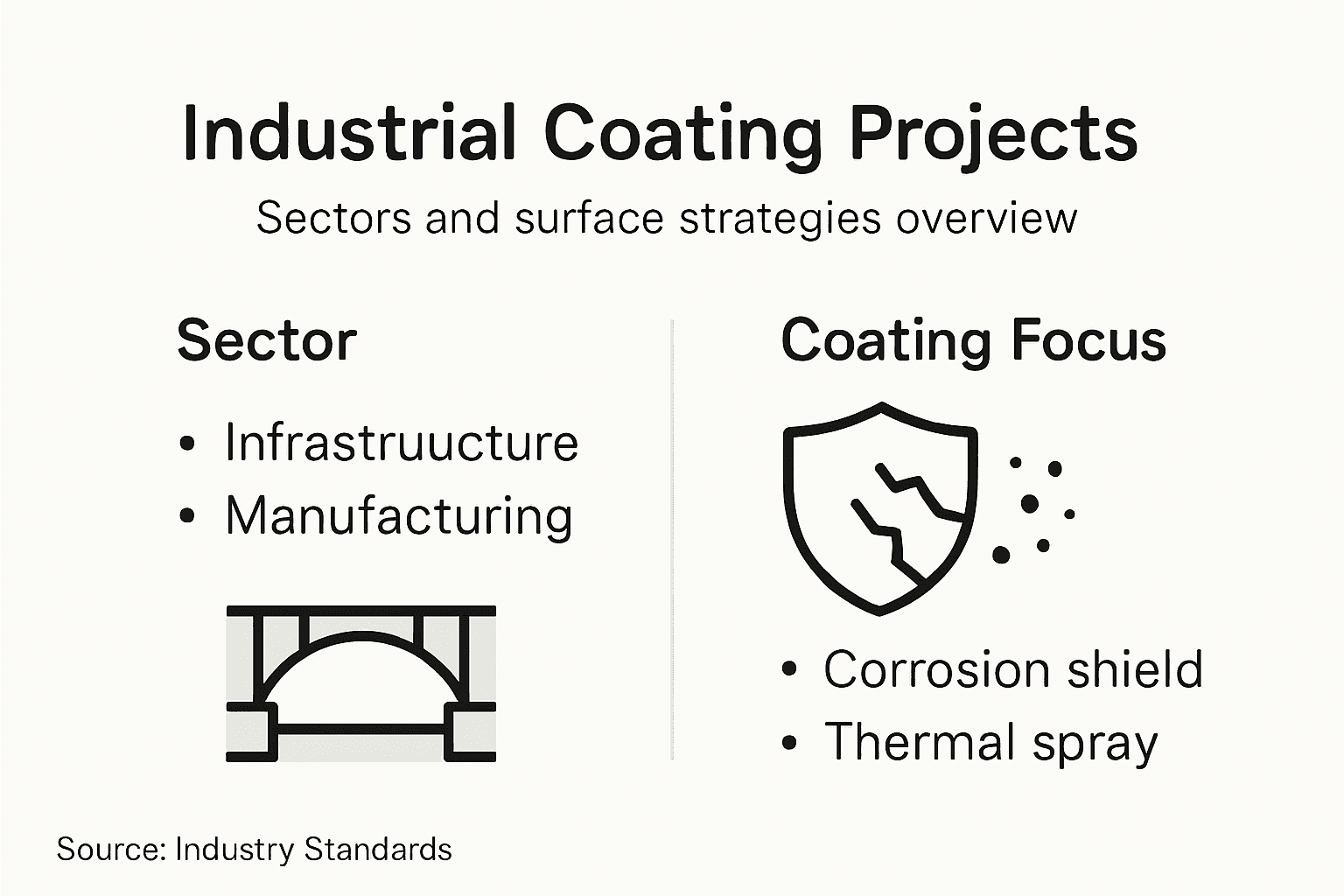
Here’s how different industrial sectors influence coating project priorities:
| Industry Sector | Main Coating Focus | Common Environments |
|---|---|---|
| Automotive | Aesthetics and protection | Vehicles, components |
| Construction | Long-term structural integrity | Bridges, buildings |
| Packaging | Safe, durable surfaces | Food cans, containers |
| Municipal Infrastructure | Weather-resistant coatings | Pipelines, water tanks |
Pro tip: Always request detailed documentation of coating performance specifications and environmental testing results before selecting a coating contractor for your specific industrial project.
Essential Surface Preparation Techniques
Surface preparation represents the critical foundation for successful industrial coating applications. Surface preparation techniques are meticulously designed to ensure optimal coating adhesion, durability, and long-term performance across various industrial environments.
Key surface preparation methods include:
- Solvent Cleaning
- Abrasive Blasting
- Hand and Power Tool Cleaning
- Chemical Degreasing
- Mechanical Surface Roughening
Mechanical surface preparation involves removing contaminants, rust, and existing coating layers through physical methods like sandblasting, grinding, and wire brushing. These techniques create a clean, roughened surface profile that allows new coatings to bond effectively, significantly improving adhesion and preventing premature coating failure.
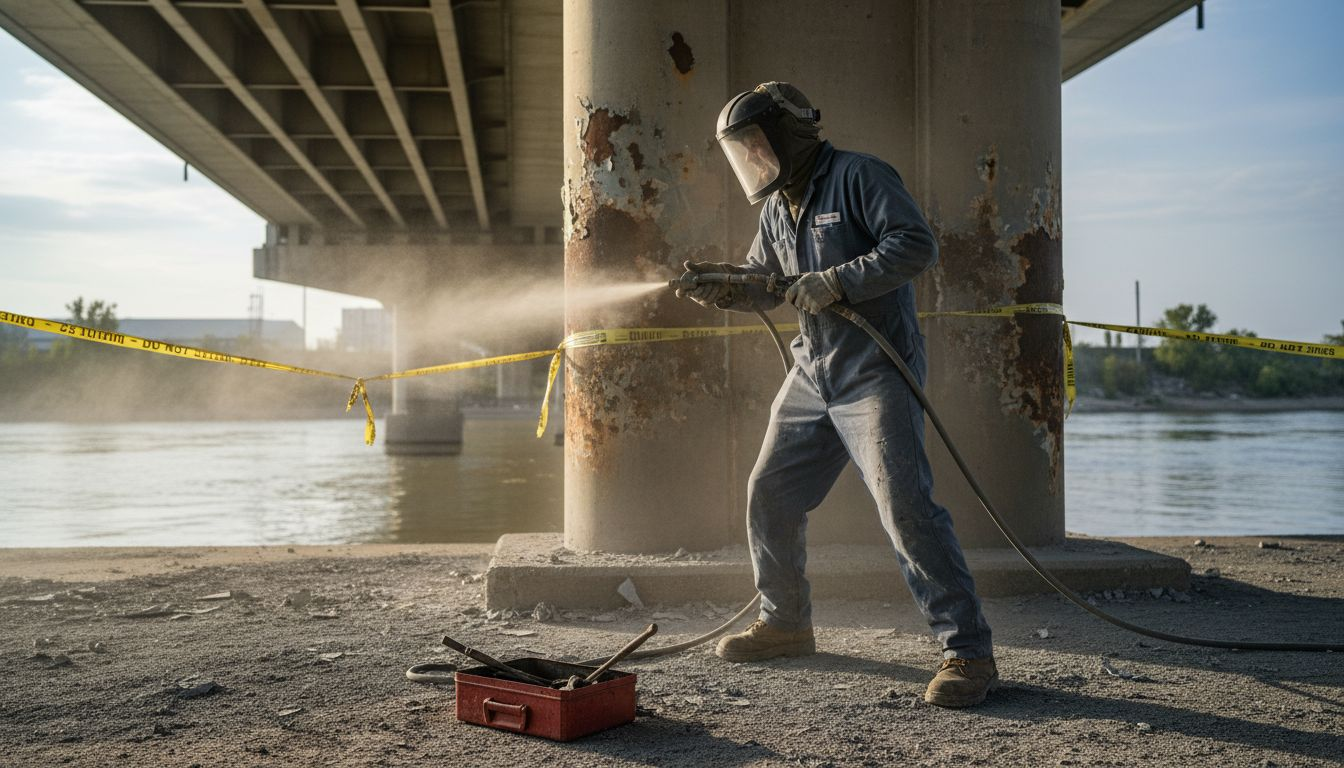
Professional coating contractors follow strict industry standards, such as those defined by the Society for Protective Coatings (SSPC), to ensure consistent and thorough surface preparation. Different substrates and environmental conditions require specific approaches, from delicate precision cleaning for aerospace components to aggressive removal techniques for heavy industrial equipment.
Below is a summary of typical surface preparation methods and their application scenarios:
| Preparation Method | Best Use Scenario | Key Advantage |
|---|---|---|
| Solvent Cleaning | Light oil/grease removal | Quick, non-abrasive process |
| Abrasive Blasting | Heavy rust/scale removal | Deep cleaning, high adhesion |
| Power Tool Cleaning | Spot repairs, small areas | Flexible, targeted cleaning |
| Chemical Degreasing | Precision part preparation | Removes invisible residues |
Pro tip: Always document and photograph surface preparation stages to maintain a comprehensive record of the coating application process and support future maintenance efforts.
Compliance Standards and Regulatory Requirements
Coating contractors operate within a complex landscape of federal, state, and industry-specific regulations designed to ensure safety, environmental protection, and quality standards. Lead renovation regulations represent a critical aspect of compliance, particularly for projects involving buildings constructed before 1978.
Key regulatory compliance areas include:
- Environmental Protection Standards
- Occupational Safety Requirements
- Hazardous Material Handling Protocols
- Worker Health and Safety Regulations
- Federal and State Environmental Guidelines
Certification requirements are fundamental to maintaining regulatory compliance in the coating industry. Contractors must obtain specialized certifications that demonstrate their understanding of safety protocols, environmental regulations, and technical standards. This includes EPA-mandated lead-safe work practices, OSHA safety training, and industry-specific qualifications that validate their expertise and commitment to professional standards.
Municipal infrastructure projects, in particular, demand rigorous adherence to complex regulatory frameworks. Coating contractors must navigate intricate requirements related to material selection, application methods, environmental impact, and long-term performance standards. These regulations ensure that public assets receive high-quality protective treatments that meet stringent safety and durability benchmarks.
Pro tip: Maintain comprehensive documentation of all regulatory certifications, training records, and compliance evidence to streamline project approvals and demonstrate professional credibility.
Responsibilities, Costs, and Common Pitfalls
Coating contractors must navigate a complex landscape of financial and operational responsibilities that directly impact project success and asset protection. Industrial coating project costs encompass multiple critical factors beyond simple material and labor expenses.
Key cost considerations include:
- Surface Preparation Expenses
- Material and Equipment Investments
- Labor and Technical Expertise Costs
- Regulatory Compliance Requirements
- Long-Term Performance Monitoring
Project management complexity demands meticulous planning to avoid costly pitfalls. Inefficient surface preparation, inadequate material selection, or poor application techniques can lead to significant financial risks, including premature coating failure, unexpected rework, and potential regulatory penalties. Successful coating contractors must balance technical precision with cost-effective strategies.
Municipal infrastructure managers face unique challenges in managing coating projects. Budget constraints, strict performance requirements, and extended asset lifecycles necessitate a comprehensive approach to contractor selection and project oversight. Contractors must demonstrate not just technical competence, but also a deep understanding of long-term asset preservation strategies that provide maximum value and minimal lifecycle costs.
Pro tip: Request detailed project lifecycle cost analyses from potential coating contractors to understand the true long-term economic impact of their proposed solutions.
Protect Your Valuable Assets with Expert Coating Solutions
Industrial asset protection demands precision surface preparation and durable coating applications to combat corrosion and environmental damage. If you are seeking to extend the lifespan of critical infrastructure or industrial equipment, understanding the importance of professional coating contractors is key. At Southern Sandblasting & Painting LLC, we specialize in surface preparation, abrasive blasting, and industrial-grade painting and coating services tailored to meet stringent compliance and performance standards.

Discover how our 20+ years of expertise in Industrial Painting and Sandblasting can safeguard your assets against degradation. Whether managing municipal infrastructure, pipelines, or commercial facilities, our team delivers reliable, quality-focused solutions that minimize costly maintenance and maximize longevity. Start protecting your investment today by visiting Southern Sandblasting & Painting and scheduling your consultation.
Frequently Asked Questions
What are the main responsibilities of coating contractors?
Coating contractors specialize in applying protective coatings to industrial and infrastructure assets. Their responsibilities include surface preparation, precise application of coatings, quality control, and detailed inspection to ensure optimal performance and longevity of the coatings.
What types of industrial coating projects do contractors typically handle?
Coating contractors manage a variety of projects across different sectors, including corrosion resistance coatings, decorative surface treatments, and thermal spray coatings. Each type is tailored to meet specific environmental and functional requirements of the respective industry.
Why is surface preparation important before applying coatings?
Surface preparation is crucial because it ensures optimal adhesion of the coating to the substrate. Effective preparation methods, such as abrasive blasting and cleaning, remove contaminants and create a surface profile that enhances durability and performance of the coating.
What regulatory compliance standards must coating contractors adhere to?
Coating contractors must comply with federal, state, and industry-specific regulations related to environmental protection, occupational safety, and hazardous material handling. Maintaining certifications and understanding these standards is essential for ensuring high-quality and safe coating applications.
Recommended
- What Is Protective Coating and Why Asset Longevity Depends On It
- 7 Key Protective Coating Advantages for Facility Managers
- Role of Coatings in Longevity – Extending Asset Lifespans
- Coating Inspection: Securing Infrastructure Longevity
- Concrete Solutions | Interlocking Etobico
- Sandblasting Contractor Baldwin Park FL
- Sandblasting Services Oviedo FL


