
Rust on industrial assets is more than just surface discoloration—it signals a hidden threat that eats away at your most valuable infrastructure. For facility managers across Central Florida, constant battles with humid and moisture-rich conditions mean rust forms rapidly on water treatment tanks, pipelines, and steel supports. Addressing this relentless corrosion starts with understanding why rust develops and how it quietly but relentlessly undermines asset strength and safety week after week.
Table of Contents
- What Is Industrial Rust And Why It Forms
- Major Risks Industrial Rust Presents
- Methods For Industrial Rust Removal
- Regulatory And Safety Compliance Requirements
- Long-Term Benefits Of Removing Rust
Key Takeaways
| Point | Details |
|---|---|
| Importance of Rust Prevention | Industrial rust poses serious risks to structural integrity and requires proactive measures to prevent costly emergencies. |
| Inspection Recommendations | Schedule regular rust inspections during dry seasons for better visibility and to identify potential issues early. |
| Effective Rust Removal Methods | Choose the appropriate rust removal method based on the asset type to ensure proper treatment and longevity. |
| Regulatory Compliance | Ensure all rust removal operations comply with OSHA and environmental regulations to avoid liabilities and maintain safety. |
What Is Industrial Rust and Why It Forms
Industrial rust is far more destructive than the surface-level corrosion you might see on a forgotten bike. Rust is a reddish-brown oxide that forms when iron and steel react with oxygen and moisture over time, creating a chemical breakdown that weakens the entire metal structure.
For facility managers in Central Florida, this isn’t just a cosmetic issue. Your water treatment tanks, pipeline infrastructure, and steel structural components face constant exposure to humidity and moisture that accelerates rust formation dramatically.
The Chemistry Behind Rust Formation
Rust develops through a straightforward electrochemical process. When water or moisture contacts iron or steel, electrons transfer between the metal and oxygen, creating iron oxide compounds. This oxidation reaction weakens metal by breaking down the material’s internal structure, making it brittle and crumbly over time.
Several factors speed up rust formation in your industrial environment:
- Moisture and humidity accelerate the corrosion process exponentially
- Salt exposure (especially near coastal areas or treated water systems) increases corrosion rates significantly
- Oxygen availability fuels the chemical reaction continuously
- Temperature fluctuations create condensation cycles that promote rust development
- Existing surface damage creates weak points where rust spreads rapidly
Florida’s subtropical climate creates a perfect storm for rust. High humidity levels, salt air near treatment facilities, and temperature swings create constant conditions for corrosion.
Why Industrial Rust Demands Immediate Action
Rust isn’t just cosmetic damage. As rust spreads, it compromises structural integrity and creates safety risks. Corroded metal loses strength, becomes unreliable under pressure, and can fail unexpectedly.
For municipal water treatment systems, compromised infrastructure threatens service reliability and public safety. A rusted joint fails. A corroded tank wall leaks. Structural failure becomes a real liability.
Rust doesn’t just weaken metal—it accelerates once it starts, creating cascading structural failures that are exponentially more expensive to repair than preventing rust from forming in the first place.
The longer you wait to address rust, the deeper it penetrates. Surface rust becomes deep pitting. Pitting becomes structural compromise. What started as a manageable maintenance issue becomes a critical asset replacement.
Industrial-grade protective coatings applied after proper surface preparation create barriers that stop rust before it starts, extending your infrastructure’s lifespan by decades.
Pro tip: Schedule rust inspections during Florida’s dry season (November through April) when humidity drops, giving you clearer visibility of corrosion patterns and rust progression on your critical assets.
Major Risks Industrial Rust Presents
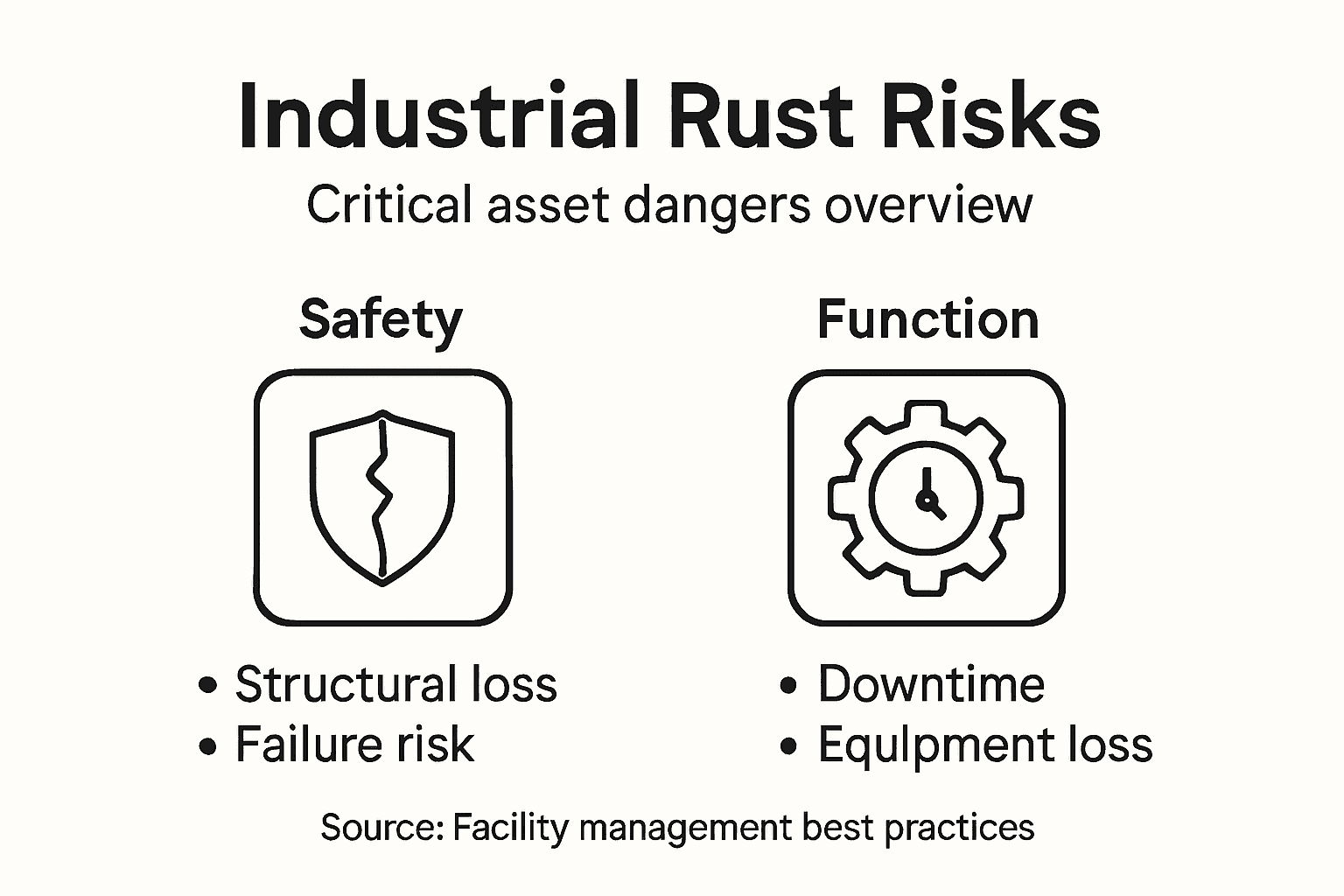
Rust isn’t just unsightly—it’s a silent threat that compromises the safety and reliability of your critical infrastructure. When rust takes hold, it converts strong metal into flaky powder, fundamentally weakening the structural integrity of tanks, pipes, and support systems your facility depends on.
For facility managers overseeing water treatment plants or industrial sites, rust presents concrete operational and safety risks that demand immediate attention.
Structural Failure and Safety Hazards
Rust weakens metal by converting it from a solid, reliable material into degraded material that can no longer bear its intended load. Metal parts become prone to seizure, creating holes and reducing the strength needed for critical applications.
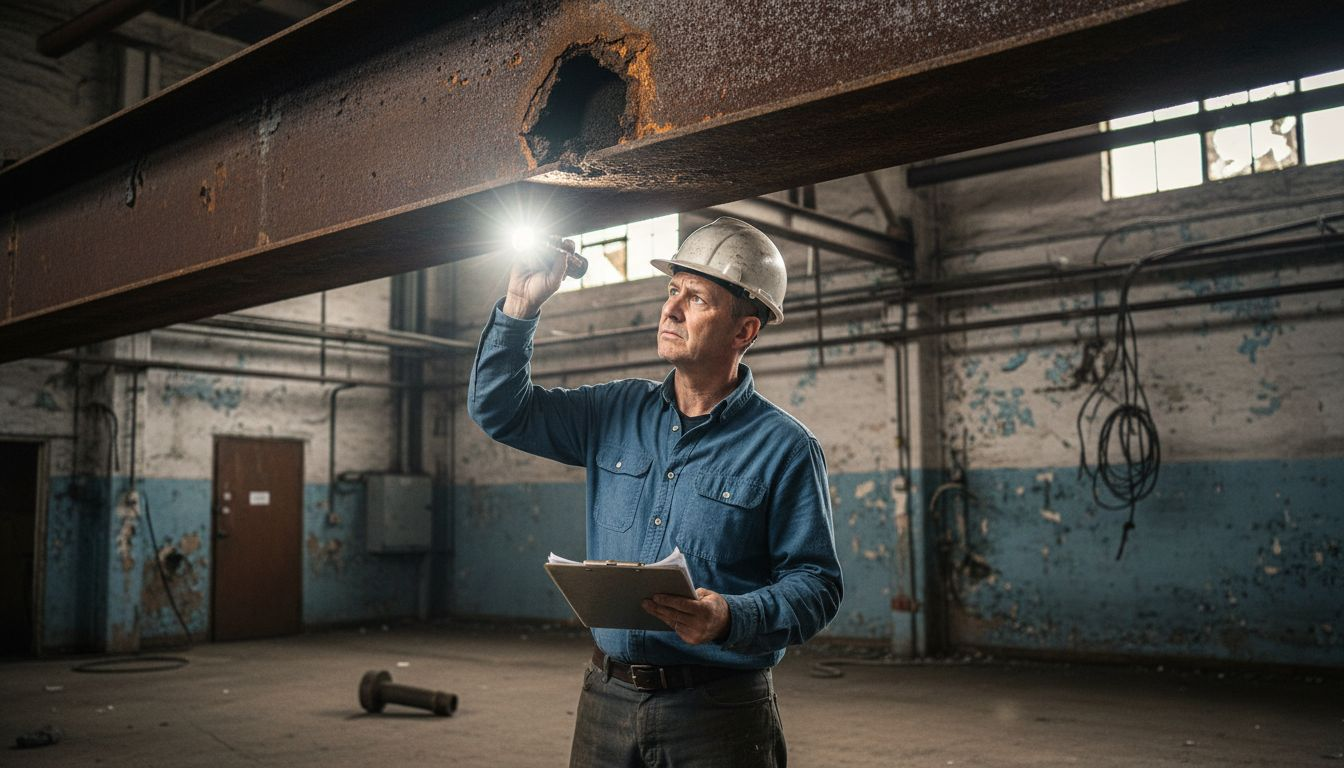
Consider what happens when rust attacks a water tank joint or pipeline connection. The corroded metal loses load-bearing capacity. Pressure builds. The connection fails catastrophically.
These aren’t theoretical problems—they’re real hazards:
- Sudden equipment failure without warning creates safety emergencies
- Structural collapse of corroded supports threatens personnel and infrastructure
- Leaks and spills contaminate surrounding areas or damage adjacent systems
- Water quality compromise when internal tank corrosion releases rust particles
- Pressure system failure when corroded joints give way under operational stress
In municipal water treatment, a single catastrophic failure can disrupt service to thousands of people and create environmental hazards.
Operational Downtime and Economic Impact
Rust doesn’t just create safety risks—it stops operations cold. When critical components fail, your facility shuts down. Emergency repairs cost exponentially more than preventive maintenance.
Industrial rust deterioration can cause catastrophic failures that compromise operational safety and create economic losses. A corroded pump fails mid-shift. Treatment processes halt. You’re running emergency responses instead of normal operations.
The financial impact compounds quickly:
- Emergency repair costs spike dramatically versus planned maintenance
- Lost operational capacity during downtime
- Overtime labor for emergency crews
- Potential regulatory fines if water quality suffers
- Asset replacement costs when failure is complete
Rust-related equipment failures don’t just disrupt operations—they create cascading costs that turn manageable maintenance into budget-busting emergencies.
A corroded asset that costs $500 to maintain and protect today becomes a $50,000 emergency replacement tomorrow.
Loss of Equipment Function
Rust attacks more than just strength. It degrades electrical conductivity, magnetic properties, and basic mechanical function. Corroded electrical connections fail. Sensors stop working. Control systems lose reliability.
For automated water treatment systems, this functional degradation means loss of monitoring capability and reduced system efficiency.
Corrosion protection safeguards critical infrastructure by creating barriers that prevent rust before it starts, maintaining full equipment performance and operational reliability.
Pro tip: Develop a rust documentation system—photograph suspicious areas quarterly and track corrosion progression to identify which assets need protection first, prioritizing your rust removal budget toward equipment with the highest failure risk.
Methods for Industrial Rust Removal
Removing rust from critical infrastructure requires choosing the right method for your specific situation. Not every approach works for every asset, and selecting the wrong technique can damage equipment or leave rust behind. Your facility managers need to understand which rust removal methods work best for water treatment tanks, pipelines, and structural steel.
Florida’s industrial environment demands solutions that handle humid conditions and prevent rapid re-rusting after treatment.
Sandblasting and Abrasive Blasting
Sandblasting remains the most effective industrial rust removal method for large-scale projects. This process uses high-velocity abrasive particles to strip rust, paint, and contaminants from metal surfaces completely.
Sandblasting excels at:
- Removing heavy rust and scale buildup efficiently
- Preparing surfaces for protective coatings that extend asset life
- Accessing complex geometry and hard-to-reach areas on equipment
- Creating the proper surface profile for coating adhesion
- Handling large infrastructure projects cost-effectively
The process leaves bare metal exposed, which makes immediate coating application critical. Without rapid protection, rust begins forming again within hours in Florida’s moisture-rich environment.
Surface preparation workflow guides outline proper sequencing to ensure rust removal is immediately followed by protective coating application, preventing re-rusting between steps.
Chemical Rust Converters
For surfaces difficult to sandblast, rust converters offer an alternative approach. These chemical solutions penetrate rust and convert iron oxide into a stable black oxide layer that resists further corrosion.
Rust converters contain tannic acid and organic polymers that chemically stabilize rust and create a moisture barrier. This stabilization prevents rust from spreading underneath the coating.
Rust converters work best for:
- Surfaces with light to moderate rust coverage
- Equipment that cannot be removed for sandblasting
- Interior tank walls and confined spaces
- Restoration of historic or specialized equipment
They require less aggressive surface preparation than sandblasting but provide less durable long-term protection. The converted rust layer typically works best when followed by protective coatings for enhanced durability.
Electrolysis Rust Removal
Electrolysis reverses the rust formation process chemically. This method submerges rusted metal in an electrolyte solution and applies electrical current, converting red rust back to metal.
Electrolysis reduces oxide back to metal through a non-invasive chemical process. The black rust produced can be brushed away easily, leaving clean metal underneath.
Electrolysis suits:
- Heavily rusted industrial components
- Equipment requiring precision restoration
- Parts that need gentle handling
- Situations where aggressive abrasive methods risk damage
This method works better for smaller components than facility-wide infrastructure, but provides excellent results for critical parts.
Here’s a side-by-side comparison of industrial rust removal methods and their ideal applications:
| Method | Best For | Business Impact |
|---|---|---|
| Sandblasting | Large structures, heavy rust | Maximizes coating longevity |
| Chemical Rust Converter | Confined spaces, light rust | Reduces labor and downtime |
| Electrolysis | Small precision parts, heavy rust | Restores sensitive components |
This summary helps facility managers select the most suitable approach based on asset type and operational goals.
Different rust removal methods serve different situations—sandblasting dominates large infrastructure projects, while chemical and electrolysis methods solve targeted problems where abrasive techniques aren’t practical.
Pro tip: For water treatment facilities, combine sandblasting with immediate industrial coating application on the same day to prevent re-rusting in Florida’s humidity—the time gap between rust removal and protection is your biggest re-rusting risk factor.
Regulatory and Safety Compliance Requirements
Rust removal isn’t just a maintenance task—it’s a regulated operation with strict compliance requirements. Municipal water treatment facilities and industrial sites must follow federal safety standards and environmental regulations whenever rust removal work occurs. Failure to comply creates liability, worker safety risks, and potential fines.
Understanding these requirements protects your facility, your workers, and your budget.
OSHA Workplace Safety Standards
OSHA regulations govern how rust removal must be conducted safely. These standards cover hazard identification, worker protection, and proper chemical handling during maintenance operations.
OSHA standards under 29 CFR Part 1910 establish requirements for workplace safety including controls on hazardous substance exposure and machine safety. Rust removal operations must comply with these standards to protect workers from injury and environmental contamination.
Key OSHA compliance areas include:
- Personal Protective Equipment (PPE) requirements for workers during sandblasting and chemical application
- Hazard communication for all chemicals used in rust removal processes
- Respiratory protection when dust or fumes pose inhalation risks
- Machine guarding on sandblasting equipment and tools
- Safe work procedures documented and followed consistently
Your facility managers must ensure all rust removal contractors comply with these standards. Non-compliance creates worker injury liability and federal penalties.
Environmental and Chemical Handling Requirements
Rust removal chemicals and blast residue require proper containment and disposal. Florida’s environmental regulations demand careful handling to prevent contamination of waterways and groundwater.
Compliance includes:
- Proper containment systems for blast media and rust particles
- Documentation of chemical disposal following Environmental Protection Agency (EPA) standards
- Worker training on hazardous material handling
- Emergency response procedures for chemical spills
- Regular inspections of containment systems
Municipal water treatment facilities face heightened scrutiny. Any environmental violation can trigger regulatory action and service interruptions.
Industry Safety Management Standards
Comprehensive safety compliance extends beyond OSHA basics. Modern industrial safety management systems address hazard identification, risk management, and operational controls.
Industry safety compliance frameworks cover hazard identification, risk assessment, and control measures to protect workers and assets during maintenance activities. Standards like ISO 45001 provide occupational health and safety management system guidelines that facilities increasingly adopt.
Effective safety programs include:
- Pre-work hazard assessments for each rust removal project
- Worker training and competency verification
- Equipment inspections and maintenance schedules
- Incident reporting and investigation procedures
- Regular safety audits and compliance reviews
Regulatory compliance isn’t optional—it’s the foundation of worker safety, environmental protection, and operational legitimacy for municipal water treatment and industrial facilities.
When you hire contractors for rust removal, verify their compliance certifications, insurance coverage, and safety records. A qualified contractor demonstrates OSHA training, proper equipment maintenance, and documented safety procedures.
Pro tip: Request contractors provide copies of OSHA certifications, liability insurance, environmental permits, and recent safety inspection reports before work begins—this documentation protects your facility from liability and ensures compliant operations.
Long-Term Benefits of Removing Rust
Removing rust isn’t an expense—it’s an investment that pays dividends for years. When you eliminate rust and apply protective coatings, you’re extending your asset’s lifespan, reducing emergency repairs, and protecting your operational budget. The long-term savings far outweigh the upfront rust removal cost.
For facility managers responsible for aging infrastructure, rust removal transforms maintenance from reactive crisis management into proactive asset protection.
Extended Asset Lifespan and Reliability
Rust removal preserves structural integrity and keeps equipment functioning reliably. By eliminating corrosion before it spreads, you maintain the strength and reliability your infrastructure needs to perform safely.
Removing rust maintains metal strength and prevents structural failure while prolonging equipment lifespan significantly. Clean, protected metal resists new rust formation and continues performing its intended function for decades longer than corroded assets.
Your water treatment tanks and pipelines operate with full capacity and safety margins when rust is removed and protective coatings applied. A properly maintained system doesn’t lose pressure, doesn’t leak contamination, and doesn’t require emergency replacement.
Lifespan extension benefits include:
- 20 to 30 year service extension for properly coated infrastructure
- Maintained safety margins protecting personnel and equipment
- Predictable asset performance without rust-related surprises
- Avoided catastrophic failures that disrupt service
Reduced Maintenance Costs and Downtime
Rust-free assets require less frequent maintenance and repairs. You’re no longer patching holes, replacing corroded sections, or managing emergency shutdowns caused by rust-related failures.
When you invest in rust removal and coating:
- Emergency repair calls drop dramatically
- Routine maintenance becomes simpler and less frequent
- Equipment operates at full efficiency without rust-related losses
- Labor costs for unplanned repairs disappear
- Service disruptions to customers or users decline
A municipal water treatment facility spending $15,000 annually on emergency rust repairs saves that entire amount once rust is eliminated. That’s $150,000 saved over a decade.
For quick reference, here are the long-term benefits of professional rust removal:
| Benefit | Description | Asset Value Impact |
|---|---|---|
| Extended Lifespan | Adds 20–30 years of service | Prevents premature failure |
| Lower Maintenance Costs | Reduces emergency repairs | Cuts annual spending by up to 60% |
| Enhanced Performance | Equipment runs reliably | Enables compliance and efficiency |
This table demonstrates how rust removal investments protect infrastructure and budgets over time.
Operational Efficiency and Safety Performance
Protected equipment performs better. Rust doesn’t just weaken metal—it interferes with function. Equipment reliability increases when corrosion is prevented, enabling consistent operational efficiency and regulatory compliance. Electrical conductivity, magnetic properties, and mechanical function all improve when rust is eliminated.
Your automated systems maintain sensor accuracy. Your control equipment stays reliable. Your infrastructure meets all safety and performance standards.
These operational gains include:
- Consistent water quality without rust particle contamination
- Reliable equipment operation without corrosion-induced failures
- Maintained regulatory compliance for safety and environmental standards
- Predictable performance enabling accurate operational planning
Long-term rust prevention creates a sustainable maintenance model where assets perform reliably for decades, requiring only routine care instead of constant emergency intervention.
This shift from reactive crisis management to proactive asset protection transforms your facility’s operational stability and budget predictability.
Coatings extend asset lifespan significantly by creating moisture barriers that prevent rust formation entirely, turning rust removal from a one-time treatment into a permanent protective solution.
Pro tip: Track maintenance costs before and after rust removal projects—most facilities discover they save 40 to 60 percent on annual maintenance spending within the first two years, providing clear financial justification for rust removal investment.
Protect Your Critical Assets with Expert Rust Removal and Coating Services
Industrial rust poses a serious threat to the safety and reliability of your infrastructure. If left unchecked, rust leads to costly failures and operational downtime that no facility manager wants to face. The article highlights how rust weakens metal structures through oxidation and can cause expensive emergencies when corrosion penetrates deeply. Your goal is clear — prevent rust before it turns into a crisis by employing proven, effective removal techniques followed by lasting protection.
Southern Sandblasting & Painting LLC specializes in comprehensive rust removal solutions tailored for Central Florida’s industrial environment. Our professional Sandblasting & Painting services strip rust efficiently and prepare surfaces for industrial-grade coatings that extend asset lifespans by decades. We also offer expert Industrial Painting to form moisture barriers that stop rust formation right at the surface. Backed by over 20 years of experience, we understand the unique challenges Florida facilities face from humidity, salt exposure, and temperature swings.
Don’t wait until rust causes emergency failures and costly downtime. Protect your water treatment tanks, pipelines, and steel infrastructure with trusted professionals who prioritize safety, compliance, and durability. Visit Southern Sandblasting & Painting LLC today to request a tailored rust removal and coating solution. Take action now to extend your asset life and safeguard your critical infrastructure.
Frequently Asked Questions
What is industrial rust and how does it form?
Industrial rust is a reddish-brown oxide that forms when iron and steel react with oxygen and moisture. This electrochemical process weakens the metal structure over time, making it brittle and crumbly, particularly in humid environments.
Why is it important to remove industrial rust?
Removing industrial rust is crucial because it compromises structural integrity, creates safety hazards, and can lead to sudden equipment failures. Addressing rust early prevents costly repairs and extends the lifespan of critical assets like tanks and pipelines.
What are the most effective methods for industrial rust removal?
The most effective methods for industrial rust removal include sandblasting, chemical rust converters, and electrolysis. Each method has specific applications based on the level of rust and the type of equipment being treated.
How can I prevent rust formation after removal?
To prevent rust formation after removal, apply industrial-grade protective coatings immediately following rust removal. This creates a barrier that shields the metal from moisture and oxygen, significantly extending the lifespan of the infrastructure.
Recommended
- 7 Effective Examples of Corrosion Prevention for Facilities
- Corrosion Protection: Safeguarding Critical Infrastructure
- Why Industrial Coatings Matter for Florida Infrastructure
- Role of Coatings in Longevity – Extending Asset Lifespans
- Perché usare droni nelle infrastrutture: vantaggi professionali
- Sandblasting Contractor Baldwin Park FL
- Sandblasting Services Oviedo FL


