
Rust can turn any Jacksonville water tank or Orlando bridge from a reliable asset into a ticking time bomb for your maintenance budget. Facility managers in Central Florida face a relentless climate that accelerates iron oxide formation on vital infrastructure, undermining both safety and compliance. Understanding why rust forms and how it spreads beneath paint reveals why efficient removal is critical to protecting investments and meeting strict regulatory standards.
Table of Contents
- What Is Rust and How It Forms
- How Rust Impacts Paint Performance
- Risks of Painting Over Unremoved Rust
- Industrial Standards and Regulatory Compliance
- Best Practices for Rust Removal and Coating
Key Takeaways
| Point | Details |
|---|---|
| Understanding Rust Formation | Rust is a chemical reaction caused by iron’s exposure to oxygen and moisture, necessitating removal before painting. |
| Impact of Environmental Factors | High humidity and salt exposure, particularly in coastal areas, significantly accelerate rust formation. |
| Importance of Proper Surface Preparation | Rust removal is crucial for effective paint adhesion, as painting over rust leads to premature failure of coatings. |
| Regulatory Compliance | Adhering to OSHA and EPA standards for rust removal and surface preparation is essential to mitigate liability risks. |
What Is Rust and How It Forms
Rust isn’t just a cosmetic problem—it’s a chemical breakdown of your metal infrastructure. Understanding what rust actually is helps explain why removing it before painting is non-negotiable for protecting your city’s assets.
Rust is iron oxide, a compound that forms when iron or steel reacts with two enemies: oxygen and moisture. This electrochemical process happens when metal atoms lose electrons (oxidation) while oxygen gains them (reduction). The result? A flaky, unstable surface that weakens your infrastructure and accelerates further corrosion.
Think of rust like an infection spreading beneath the surface. Water absorbs into the iron oxide layers, and once it gets in, it keeps working—eating away at the sound metal underneath. Your water tanks, bridge railings, and municipal equipment are all vulnerable to this process.
How Rust Actually Forms
Rust development follows a predictable pattern. Oxygen from the air meets iron or steel, water (moisture, rain, or humidity) accelerates the reaction, and the electrochemical process begins.
Here’s what happens step by step:
- Metal surface comes into contact with oxygen and moisture
- Iron atoms begin losing electrons (oxidation)
- Oxygen atoms gain those electrons (reduction)
- Iron oxide forms on the surface
- Water penetrates the oxide layers
- Corrosion spreads deeper into the metal
Environmental Factors That Speed Up Rust
In Central Florida, you’re dealing with a rust paradise—the wrong kind. Coastal salt air, humidity, and frequent moisture create optimal conditions for aggressive corrosion.
Key accelerators include:
- Salt exposure — Coastal salt air dramatically speeds corrosion; even inland facilities can experience salt contamination
- High humidity — Florida’s moisture-heavy climate keeps iron wet longer, feeding the rust process
- Rain and condensation — Trapped water against metal surfaces is rust’s fuel
- Existing rust — Once rust starts, it spreads exponentially faster than clean metal rusts
- Poor drainage — Water pooling on horizontal surfaces creates rust hotspots
Municipal facilities near the coast or in salt-treated areas experience accelerated rust rates compared to other regions. Your facility managers know this reality.
Why Paint Alone Doesn’t Work
Painting over rust is like putting a bandage on an infected wound. Paint coatings can shield metal from oxygen and moisture, but they can’t stop rust that’s already progressing beneath the surface.
Rust underneath continues expanding, pushing the paint up and off. Within months, you’ll see peeling and bare spots. The structural integrity keeps deteriorating while your paint investment fails.
Rust is a chemical reaction, not a surface stain—it requires removal, not concealment, before protective coatings can work effectively.
This is why proper industrial-grade surface preparation matters. Removing rust completely exposes sound metal, eliminates the chemical reaction driving corrosion, and creates a stable surface for paint adhesion.
Chemical rust converters can stabilize rust by converting it to iron tannate with tannic acid, but this approach requires existing rust to be accessible and light enough for treatment. Heavy rust still demands mechanical removal.
Pro tip: Schedule rust inspections during Florida’s dry season (October-April) when moisture levels drop—you’ll get a clearer picture of actual corrosion depth without fresh condensation obscuring problem areas.
How Rust Impacts Paint Performance
Paint is only as strong as the surface it bonds to. When rust covers that surface, even the best industrial coating fails prematurely, wasting your maintenance budget and leaving infrastructure vulnerable.
Rust creates an uneven, flaky, porous surface that paint cannot grip effectively. Paint requires a solid, clean substrate for adhesion. Rust is the opposite—it’s loose, electrochemically active, and electrically insulating, making it an enemy to paint bonding.
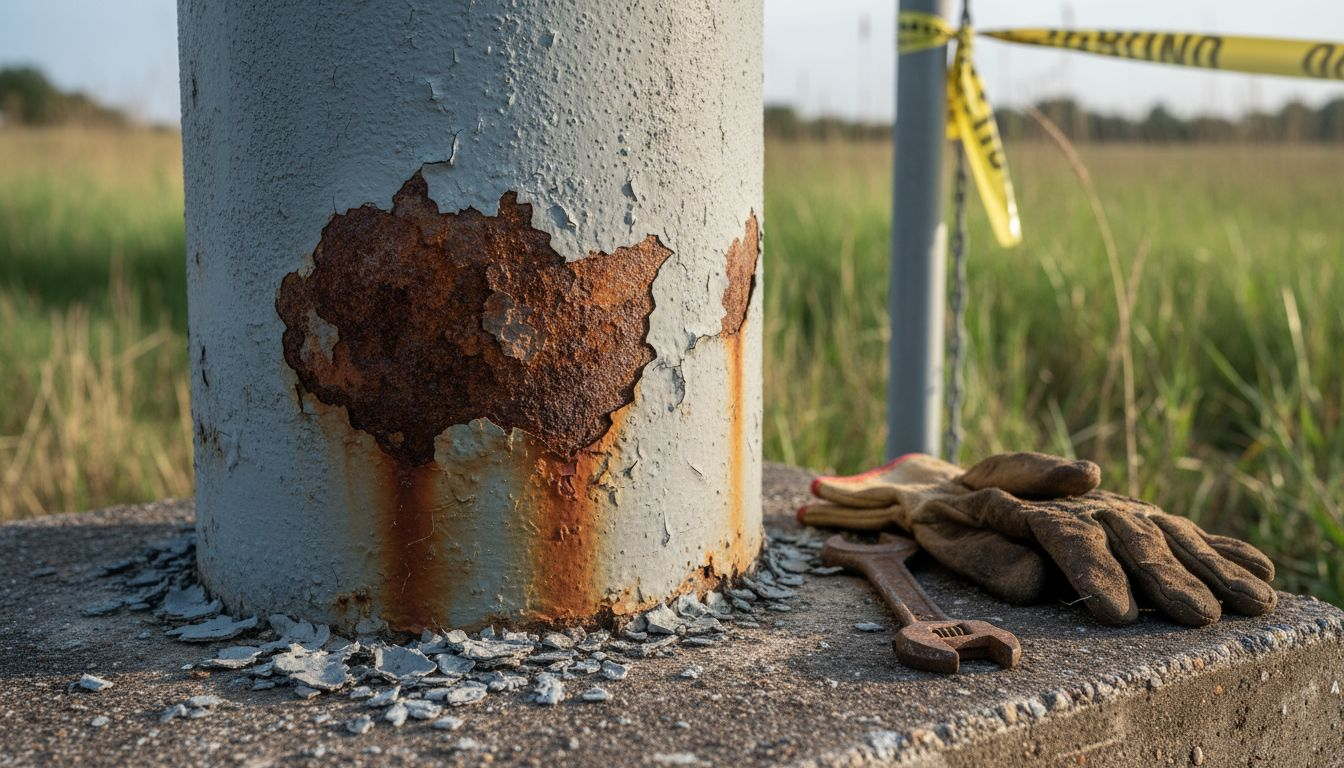
When you apply paint over rust, the coating sits on top of an unstable foundation. Moisture and oxygen creep underneath, accelerating corrosion that was already in progress. The result? Paint peeling within months.
Paint Adhesion Failures
Paint adhesion is the critical measure of coating success. Paint molecules need to grip the metal surface at a molecular level. Rust prevents this from happening.
Here’s what occurs when paint meets rust:
- Paint cannot bond to the porous rust surface
- Moisture penetrates beneath the coating
- Corrosion continues spreading under the paint layer
- Paint blisters, cracks, and peels away
- Bare metal re-rusts faster than before
You’re essentially sealing corrosion inside a package, which accelerates the rust process. The paint doesn’t stop rust—it traps moisture against the metal.
Peeling, Blistering, and Failure Cycles
Facility managers see this pattern repeatedly: newly painted water tank, bridge, or structural element starts failing within one or two seasons. The cause? Rust wasn’t removed first.
Paint failure modes over rust include:
- Peeling — Paint flakes off in sheets as rust expands underneath
- Blistering — Moisture creates bubbles under the coating
- Chalking — Surface degradation from UV and moisture exposure
- Flaking — Rust particles break free, taking paint with them
- Spot rust — New rust appears through failing paint sections
Each failure cycle requires repainting, multiplying your long-term costs. A facility manager in Tampa knows this: they painted a municipal pump station three times in five years before removing rust first.
Why Industrial Coatings Fail Over Rust
Even industrial-grade paint systems cannot overcome a rusty substrate. The problem isn’t paint quality—it’s substrate preparation.
Rust electrically insulates the metal, disrupting the protective barrier that paint creates. Additionally, rust beneath paint continues its electrochemical corrosion, pushing the coating upward and outward until it separates completely.
Paint longevity depends entirely on substrate condition—rust-free, clean metal is non-negotiable for coating durability.
You could use premium epoxy, polyurethane, or acrylic systems, but they’ll all fail over rusty substrates. The weak link becomes the surface preparation, not the paint itself.
This is why professional surface preparation protects your investment. Removing rust completely resets the corrosion clock, allowing paint to bond properly and provide genuine protection.
Pro tip: Inspect painted surfaces annually for peeling or blistering; these early warning signs indicate rust developing underneath, signaling immediate surface re-preparation is needed before failure spreads.
Risks of Painting Over Unremoved Rust
Painting over rust isn’t just ineffective—it’s a trap that accelerates infrastructure failure while hiding the damage. Municipal facility managers face real consequences when this shortcut is taken.
Unremoved rust beneath paint continues corroding the metal substrate, weakening structural integrity while the coating masks what’s happening underneath. You can’t see the problem until it’s catastrophic.
When moisture and oxygen penetrate through paint flaws over rust, metal degradation accelerates exponentially. The paint doesn’t stop corrosion; it traps an aggressive electrochemical environment directly against your steel or iron.
Accelerated Metal Deterioration
Rust doesn’t pause when you paint over it. The electrochemical corrosion process continues, expanding beneath the protective coating you applied.
This hidden deterioration creates serious risks:
- Structural weakening — Metal loss continues while paint hides the extent
- Safety hazards — Structural components fail without warning
- Asset failure — Water tanks, railings, bridges lose load-bearing capacity
- Cascading damage — Corrosion spreads laterally under the paint layer
- Unknown timeline — You can’t assess remaining asset lifespan
A facility manager in Jacksonville discovered this when a painted storage tank suddenly lost structural integrity. The rust had spread internally for two years beneath failing paint.
Paint Failure and Coating Breakdown
Paint adhesion failure over rust is inevitable, not a matter of “if” but “when.” Rust expansion pushes the coating away from the substrate, creating blistering, peeling, and flaking.
The failure sequence looks like this:
- Paint bonds poorly to the porous rust surface
- Moisture seeps beneath the coating at edges and flaws
- Rust expands, creating pressure under the paint
- Paint bubbles, blisters, and cracks develop
- Exposed metal begins rusting faster than before
- Repainting becomes necessary within 1-3 years
You’ve invested in coating that fails prematurely, requiring expensive re-application. The original cost becomes only the first of multiple painting cycles.
Compliance and Regulatory Exposure
Many municipal projects fall under renovation and repair standards. Proper surface preparation to remove rust ensures compliance with safety requirements and coating durability standards.
Failing to remove rust can create liability issues, especially on public infrastructure where safety is non-negotiable. Regulatory agencies and safety inspectors expect rust removal as standard practice.
Painting over rust creates hidden deterioration that becomes a liability—the coating conceals problems rather than solving them.
When failure occurs and investigation reveals rust beneath paint, accountability questions arise. Documentation showing proper rust removal protects your municipality legally and practically.
The cost of rust removal now is far lower than emergency repairs from structural failure later.
Pro tip: Document all surface conditions before painting with photographs and inspection notes; this establishes baseline condition records and protects against liability claims if coating failure occurs.
Industrial Standards and Regulatory Compliance
Municipal infrastructure projects aren’t discretionary when it comes to compliance. Federal and state standards mandate proper rust removal and surface preparation before painting, protecting worker safety and asset longevity.
Your facility must follow established standards for coating application and surface preparation. These aren’t suggestions—they’re regulatory requirements that protect your municipality from liability and ensure project success.
Central Florida municipalities operating under federal contracts or receiving government funding must comply with OSHA standards, EPA requirements, and industry-specific coating specifications. Non-compliance creates legal exposure and project rejection.
OSHA Requirements for Surface Preparation
OSHA standards regulate rust removal, sandblasting, and coating application in industrial settings. Occupational Safety and Health Standards define specific requirements for worker protection during these processes.
Key OSHA compliance areas include:
- Personal Protective Equipment (PPE) — Respirators, eye protection, and protective clothing during sandblasting and rust removal
- Hazardous substance exposure — Air quality monitoring and dust control during surface preparation
- Fall protection — Safety equipment when working on elevated structures or water tanks
- Equipment operation — Certified operators for sandblasting and industrial coating equipment
- Work environment controls — Containment and disposal of rust, paint chips, and abrasive materials
Facility managers must ensure contractors comply with these standards or face citations and work stoppages. Documentation of safety protocols becomes part of your compliance record.
EPA and Lead Paint Compliance
Older municipal infrastructure often contains lead-based paint. Renovation and repair projects require specific lead removal procedures separate from rust removal.
The EPA’s Renovation, Repair and Painting Program requires:
- Certified lead-safe contractors for pre-1978 structures
- Lead dust containment and safe disposal
- Worker training documentation
- Post-renovation cleaning verification
- Hazard assessment before any paint removal work
Failing to follow EPA lead requirements results in substantial fines and potential project shutdown. Your contractor must provide evidence of EPA certification and lead-safe practices.
Industry-Specific Coating Standards
Industry standards for coatings ensure compliance with durability, safety, and performance requirements specific to your asset type.
Water treatment facilities, airports, and municipal structures each have distinct standards:
- ASTM International standards — Coating thickness, adhesion, and performance metrics
- NACE standards — Corrosion control and protection levels for critical infrastructure
- AWS standards — Welding and surface preparation for structural steel
- Bridge-specific standards — Transportation department coating requirements
Compliance isn’t optional for municipal projects—standards exist because rust removal failures have caused infrastructure disasters and worker injuries.
Your facility manager must verify that any contractor demonstrates familiarity with applicable standards and maintains current certifications.
Proper documentation of rust removal methods, surface preparation verification, and coating application protects your municipality legally and ensures your investment delivers intended protection.
Here is a summary of key compliance standards for municipal painting projects:
| Standard | Focus Area | Typical Requirement |
|---|---|---|
| OSHA | Worker safety | PPE, dust control, certified crew |
| EPA Lead Program | Lead paint management | Lead-safe contractors, documentation |
| ASTM/NACE | Surface preparation | Cleanliness, profile, thickness |
| Transportation | Bridges, infrastructure | Coating specs, durability metrics |
Pro tip: Require contractors to provide pre-work and post-work certification documenting surface preparation compliance with ASTM standards; this creates an audit trail protecting your municipality if coating failures occur.
Best Practices for Rust Removal and Coating
Removing rust effectively requires a systematic approach. Skipping steps or using outdated methods wastes money and delivers poor results. Central Florida facility managers need proven procedures that work in humid conditions and deliver lasting protection.
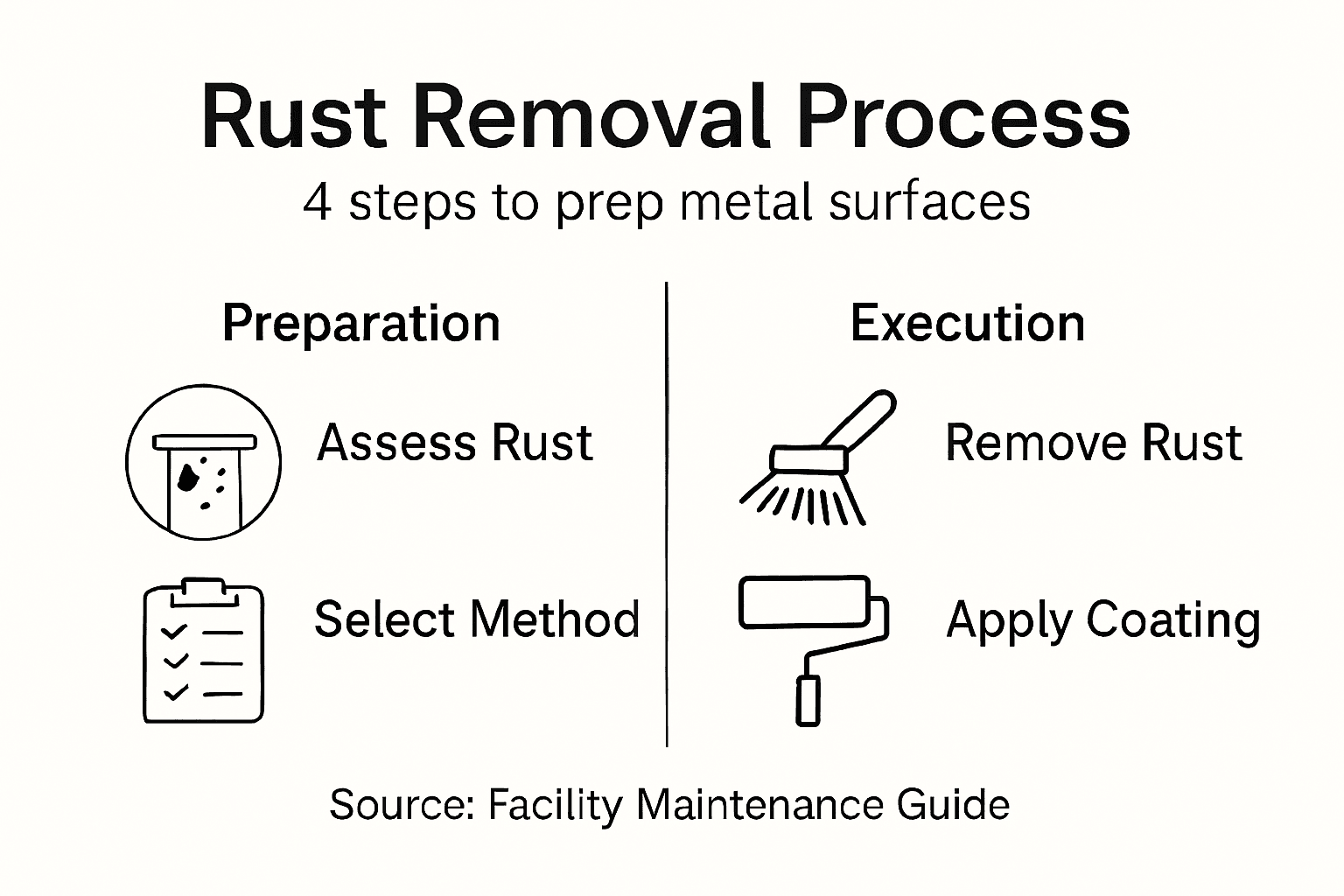
Proper rust removal starts with assessment. Evaluate rust severity, substrate type, and environmental exposure. Light surface rust requires different treatment than deep pitting or scale. Your approach depends on what you’re actually dealing with.
Once you understand the rust condition, select the appropriate removal method. Not every job calls for aggressive sandblasting—some surfaces benefit from chemical treatment first.
Rust Removal Methods
Different rust conditions demand different solutions. The goal is always the same: remove all corrosion and expose clean metal ready for coating adhesion.
Primary rust removal approaches include:
- Abrasive blasting — Sandblasting, shot blasting, or grit blasting removes heavy rust and scale efficiently
- Chemical cleaning — Phosphoric acid or similar treatments dissolve rust chemically for lighter corrosion
- Mechanical grinding — Wire brushing or grinding for small areas or detailed work
- Combination methods — Chemical treatment followed by light blasting ensures thorough preparation
- Advanced techniques — Precision laser removal minimizes substrate damage on sensitive equipment
Advanced removal methods like laser coating removal provide environmentally safe alternatives that reduce contamination and substrate damage while delivering clean, corrosion-free surfaces essential for high-performance coating adhesion.
Each method has timing and cost implications. Your facility manager should understand which approach fits your asset type and budget constraints.
Below is a quick reference comparing common rust removal methods and their best-use scenarios:
| Method | Best For | Cost Impact |
|---|---|---|
| Abrasive blasting | Heavy rust and scale | Higher upfront |
| Chemical cleaning | Light surface corrosion | Medium |
| Mechanical grinding | Small or detailed areas | Low |
| Combination methods | Complex contamination | Variable |
| Laser removal | Sensitive equipment | Highest |
Surface Preparation Standards
After rust removal, surface cleanliness becomes critical. Paint won’t adhere to contaminated surfaces—dust, salt, or chemical residue will cause failure.
Post-removal preparation requires:
- Blast cleaning to ASTM or NACE standards (typically SSPC-SP standards)
- Surface profile verification to ensure proper texture for coating adhesion
- Contamination testing to confirm salt and chemical removal
- Final inspection before coating application begins
- Documentation of all preparation steps and verification results
Surface preparation best practices ensure your investment in rust removal delivers the protection your infrastructure needs. Rushing this stage undermines everything that came before.
Protective Coating Application
Coating selection depends on exposure conditions. Water tanks, bridges, and coastal structures each require specific protective systems. Trivalent chromium conversion coatings provide environmentally friendly surface treatment that passivates metal and improves paint adherence before applying topcoats.
Multi-coat systems typically include:
- Primer — Provides initial corrosion resistance and topcoat adhesion
- Intermediate coats — Build protective thickness and durability
- Topcoat — Provides UV protection and final weather resistance
Rust removal without proper coating is incomplete—the coating system is what delivers years of protection after rust is gone.
Application temperature, humidity, and curing time all affect coating performance. Poor application conditions create adhesion failures and premature failure despite proper surface preparation.
Pro tip: Schedule rust removal and coating application during Florida’s dry season (October-April) when humidity is lower; this improves coating cure time and adhesion significantly compared to summer application.
Protect Your Infrastructure by Removing Rust the Right Way Today
Rust undermines your city’s most critical infrastructure by continuing corrosion beneath the surface when left untreated. If you want to stop peeling paint, blistering, and costly reapplications, you must remove rust completely before coating. Southern Sandblasting & Painting LLC specializes in professional rust removal and surface preparation designed to create the stable, clean substrate your industrial-grade coatings require. Our 20+ years of experience working with municipal facilities across Central Florida means we understand the local climate challenges and compliance requirements intimately.
Don’t let hidden rust threaten your structural safety and maintenance budget. Partner with Southern Sandblasting & Painting LLC to ensure proper rust removal, expert abrasive blasting, and precise coating application that prolongs asset life and meets regulatory standards. Visit Southern Sandblasting & Painting LLC now to schedule an assessment and protect your infrastructure investment before corrosion spreads beyond repair.
Frequently Asked Questions
Why is it important to remove rust before painting?
Removing rust is crucial because it prevents further corrosion and deterioration of the metal substrate, ensuring better adhesion and longevity of the paint. Painting over rust can lead to paint failure and hidden structural damage.
What methods are recommended for removing rust effectively?
Effective rust removal methods include abrasive blasting, chemical cleaning, mechanical grinding, and advanced techniques like laser removal. The choice of method should depend on the severity of the rust and the type of metal substrate.
Can I paint over rust with industrial-grade coatings?
No, industrial-grade coatings will not adhere properly to rusty surfaces. Even the best coatings require a clean, rust-free substrate to bond effectively and provide the necessary protection against further corrosion.
How does rust impact paint performance on infrastructure?
Rust creates an uneven and porous surface that hinders paint adhesion, leading to issues like peeling, blistering, and flaking. This undermines the protective qualities of the paint and can accelerate further rusting beneath the coating.
Recommended
- Why Remove Industrial Rust – Protecting Critical Assets
- Industrial-Grade Paint: Lasting Protection for Infrastructure
- Metal Surface Restoration Guide for Infrastructure Assets
- 7 Essential Surface Preparation Tips 2025 for Infrastructure
- Romanian Alloy Wheel Refurbishment in London – Repair, Paint & Lease Return
- Paint, Hull and Gelcoat
- Fire protection coating of all kinds of | HASPO.sk
- Sandblasting Contractor Baldwin Park FL
- Sandblasting Services Oviedo FL


