
TL;DR:
- Grit blasting creates a measurable anchor profile essential for durable coatings in Florida’s harsh environment.
- Proper process controls and documentation are vital to prevent coating failures and ensure asset longevity.
- Coastal conditions require specific media choice, inspection, and safety measures for effective surface preparation.
Most facility managers assume that any surface prep method will do the job before a protective coating goes on. That assumption costs Florida municipalities and commercial operators millions in premature coating failures every year. Grit blasting is not just another name for sandblasting. It is a precision surface treatment that creates the specific anchor profile coatings need to bond and endure in Florida’s punishing mix of humidity, salt air, and UV exposure. This guide breaks down exactly how grit blasting works, why it outperforms alternatives on critical infrastructure, and what you need to specify when managing a project from bid to final inspection.
Table of Contents
- What is grit blasting and how does it work?
- Key benefits of grit blasting for Florida infrastructure
- Nuances, risks, and mitigation in grit blasting
- Specifying grit blasting in your Florida facility projects
- A perspective: The real keys to successful grit blasting in Florida
- Next steps: Florida’s trusted grit blasting and coating resources
- Frequently asked questions
Key Takeaways
| Point | Details |
|---|---|
| Precision surface preparation | Grit blasting creates tailored profiles essential for long-lasting coatings on Florida infrastructure. |
| Manage risks proactively | Understanding defect risks and requiring safety controls leads to better long-term asset performance. |
| Specify and verify | Facility managers should specify profile depth, demand documentation, and ensure post-blast QA to optimize results. |
What is grit blasting and how does it work?
Grit blasting is a controlled abrasive process where angular particles are propelled at high velocity against a metal surface to strip contaminants, mill scale, rust, and old coatings while simultaneously creating a textured anchor profile. Unlike general abrasive blasting techniques, which can include rounded shot media that peens a surface smooth, grit blasting uses angular particles that cut into the substrate. That cutting action is what makes it particularly effective for infrastructure steel in Florida.
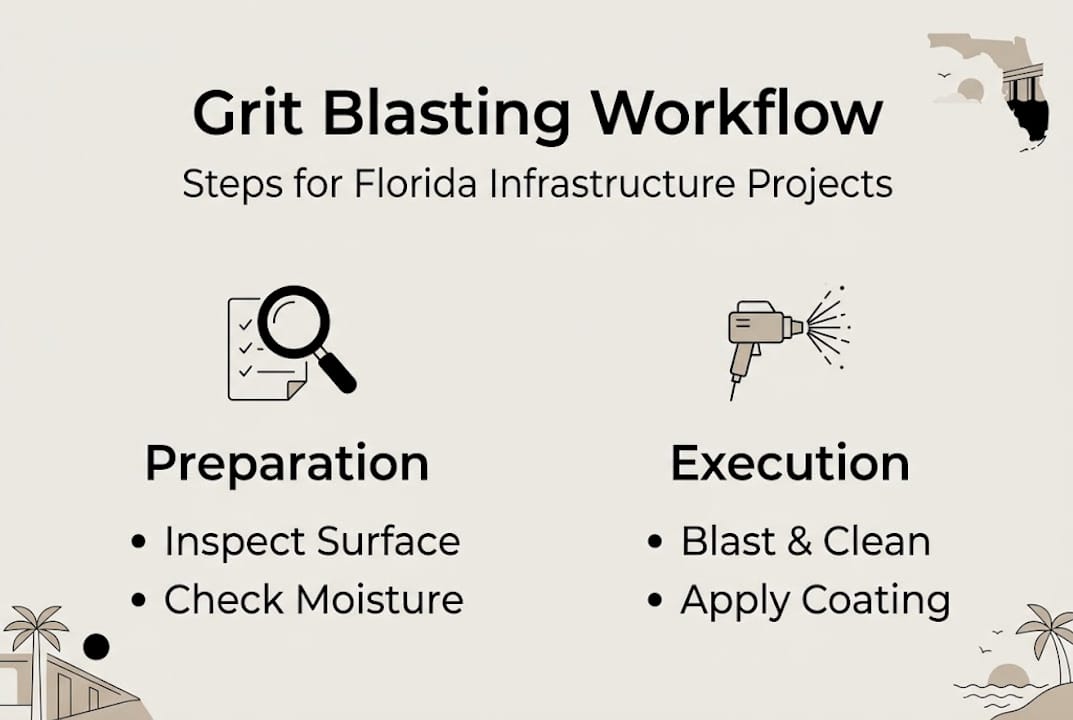
The process follows a clear sequence. First, the substrate is inspected for existing coatings, rust grade, and surface contamination. Next, the blast crew selects the appropriate media and pressure settings based on the steel type, coating spec, and environmental conditions. The grit is then propelled via compressed air or centrifugal wheel equipment, and the resulting surface is measured for cleanliness and profile depth before any coating is applied.
The three most common grit materials each have a distinct role:
- Steel grit: Angular, recyclable, and aggressive. Best for heavy mill scale removal on structural steel, bridges, and water tanks.
- Aluminum oxide: Harder than steel grit, non-metallic, and preferred where steel contamination is a concern, such as on aluminum substrates or near dissimilar metals.
- Garnet: A natural mineral that produces minimal dust and is favored in environmentally sensitive areas or where silica restrictions apply.
Grit blasting induces subsurface defects, a hardness gradient, and can cause minor corrosion increase after etching steel. Understanding this effect is not optional for managers specifying work on fatigue-sensitive structures.
Pro Tip: In Florida’s coastal and near-coastal environments, steel grit is often the preferred choice because it is fully recyclable across multiple blast cycles, reducing per-project cost while maintaining consistent profile quality. Just ensure post-blast etching is specified to remove any residual steel particles that could seed corrosion under the coating.
For managers new to choosing sandblasting methods in Florida, the key takeaway is this: media shape matters as much as media hardness. Angular grit creates peaks and valleys that coatings grip. Rounded shot creates a smoother, peened surface that coatings struggle to hold on steel exposed to salt-laden air. Review sandblasting safety essentials before finalizing any scope of work.
Key benefits of grit blasting for Florida infrastructure
Florida’s infrastructure faces a uniquely aggressive environment. Bridges along the coast, municipal water tanks, stormwater pipelines, and airport structures all deal with salt deposition, thermal cycling, and near-constant humidity. Grit blasting addresses these conditions directly by producing surface profiles that give protective coatings the mechanical grip they need to perform for their full rated service life.
The most critical benefit is profile quality. A properly grit-blasted surface achieves a measured anchor profile, typically between 1.5 and 4.0 mils, depending on the coating system. This profile is what separates a coating that lasts 15 years from one that starts delaminating in three. SSPC-compliant surface profiles are critical for protective coatings on steel in humid, salty Florida conditions, and grit blasting is the most reliable method for achieving them consistently.
Comparison: Grit blasting vs. common surface prep alternatives
| Method | Speed | Profile depth | Environmental fit | Cost efficiency |
|---|---|---|---|---|
| Grit blasting | Fast | High (1.5–4.0 mils) | Excellent for humid/salty | High over asset life |
| Grinding | Slow | Low (under 1 mil) | Moderate | Low, labor intensive |
| Power tool cleaning | Moderate | Very low | Poor for marine exposure | Low long-term |
| Chemical stripping | Slow | None | Poor, waste disposal issues | Low, regulatory burden |
Key benefits for Florida facility managers include:
- Removes mill scale, rust, and old coatings in a single pass
- Creates a repeatable, measurable anchor profile for coating adhesion
- Meets SSPC SP-6, SP-10, and SP-5 cleanliness standards depending on media and pressure
- Reduces coating application failures and warranty disputes
- Works efficiently on structural steel, pipework, tanks, and bridge decks
Pro Tip: Do not default to the deepest profile available. A profile that is too aggressive for a thin-film coating system will leave peaks that punch through the coating, creating corrosion initiation points. Match profile depth to your coating’s specified dry film thickness (DFT) before writing the blast spec.
For managers focused on preventing coating failures on municipal assets, grit blasting is the most defensible specification you can write. It is measurable, standardized, and directly tied to coating performance outcomes. The Florida sandblasting guide covers regional compliance requirements in more detail.
Nuances, risks, and mitigation in grit blasting
Grit blasting is powerful, but it is not without risk. Managers who treat it as a simple cleaning step often discover problems after the coating is already applied. Understanding the technical risks upfront is what separates projects that perform from those that fail early.
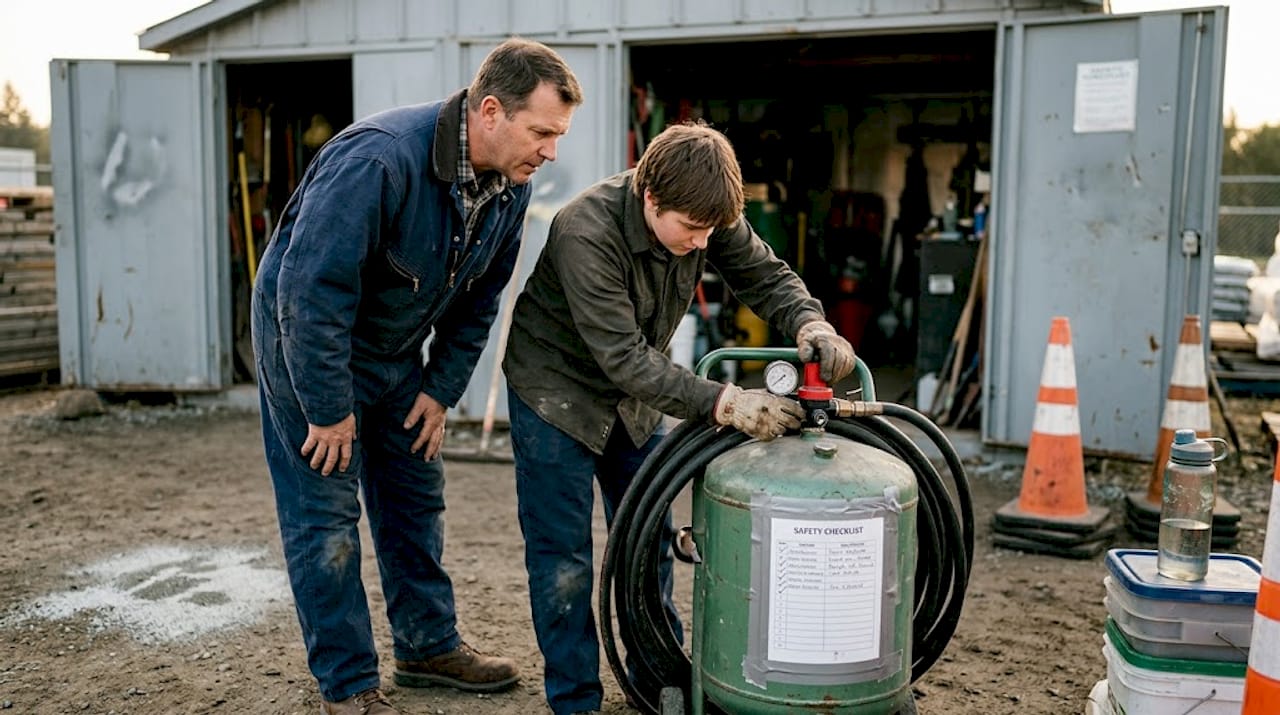
The primary technical concern is subsurface impact. Grit blasting can introduce subsurface fatigue risks, and these are mitigated by tight control of process parameters including media size, velocity, and impact angle. On fatigue-sensitive structures like bridge girders or pressure vessels, this is not a theoretical concern. It is a real engineering variable that must be managed.
Risk comparison: Steel grit vs. other abrasives
| Risk factor | Steel grit | Aluminum oxide | Garnet |
|---|---|---|---|
| Subsurface defects | Moderate | Low | Low |
| Corrosion after etch | Possible | Minimal | Minimal |
| Dust generation | Moderate | High | Low |
| Recyclability | High | Low | None |
| Cost per cycle | Low | High | Moderate |
Steps managers can take to reduce risk on active infrastructure projects:
- Require the contractor to document media type, size, and blast pressure in writing before work begins.
- Specify a maximum time between blast completion and coating application, typically two hours in Florida’s humidity.
- Require profile measurement with a certified testex tape or digital gauge at multiple locations.
- Mandate post-blast inspection for embedded grit or flash rust before primer is applied.
- Confirm OSHA-compliant containment is in place before any work starts near occupied facilities.
Vacuum containment, dust controls, and real-time monitoring are crucial for OSHA safety compliance during jobsite operations, particularly on municipal sites where public exposure is a liability concern.
For detailed guidance on industrial safety best practices during surface prep, and on managing metal surface restoration on aging infrastructure, both resources are worth reviewing before finalizing your project scope.
Specifying grit blasting in your Florida facility projects
A well-written blast specification protects you as much as it guides your contractor. Vague specs lead to disputes, rework, and coating failures. Here is how to build a specification that delivers results.
Step-by-step: Writing a grit blast specification
- Define the cleanliness standard: Reference SSPC SP-10 (Near-White Metal) for structural steel in severe environments, or SP-6 (Commercial Blast) for less critical applications.
- Specify the anchor profile range: Profile depth should be 20 to 30% of coating DFT, and post-blast etching can limit steel grit contamination on the substrate.
- Name the acceptable media types: Steel grit, garnet, or aluminum oxide depending on the substrate and environmental sensitivity of the site.
- Set the maximum blast-to-coat window: In Florida, two hours is a reasonable maximum given humidity levels. Some specs require one hour on coastal sites.
- Require documentation: Profile readings, cleanliness photos, and inspector sign-off before coating begins.
What to require from any contractor bidding this work:
- Written containment and dust control plan meeting OSHA and local environmental requirements
- Profile verification using testex tape or digital gauge with readings logged per zone
- Certified inspector or third-party QA for SSPC-standard verification
- Evidence of media recycling or disposal protocol for steel grit
- Proof of liability insurance and relevant industry certifications
Pro Tip: The most overlooked pre-blast check is substrate moisture. Florida’s humidity means steel surfaces can hold enough surface moisture to immediately contaminate a fresh blast profile. Require dew point checks and surface temperature readings before blasting begins. This single step eliminates a significant source of premature coating failure.
Integrating grit blasting with your full asset protection program means connecting it to your coating selection, inspection schedule, and long-term maintenance plan. Understanding why blasting before coating matters at a mechanical level helps you make better decisions at the specification stage. The facility sandblasting guide provides additional detail on integrating surface prep into broader asset management programs.
A perspective: The real keys to successful grit blasting in Florida
After working on infrastructure projects across Central Florida for over two decades, we have seen the same pattern repeat itself. A project gets a solid blast spec on paper, the contractor does acceptable work, and the coating fails within five years anyway. The culprit is almost never the coating product. It is the gap between what the spec says and what actually gets verified in the field.
Conventional specs miss local realities. Wind-borne salt deposition in Florida can re-contaminate a freshly blasted surface within minutes on a coastal site. Standard specs do not account for this. Managers who demand documentation of profile depth, not just a visual clean look, catch these problems before the primer goes on.
The quiet cost of ignoring subsurface defect management is also underappreciated. A surface that looks clean can still carry embedded grit or micro-corrosion that shortens coating life by years. Investing in avoiding coating failures at the specification stage is always cheaper than recoating a bridge or tank ahead of schedule.
Pro Tip: Mandate a post-blast QA walk with your contractor before any coating is applied. Walk the structure together, check profile readings at multiple points, and document everything. This single habit has saved more Florida infrastructure projects from early failure than any product upgrade ever has.
Next steps: Florida’s trusted grit blasting and coating resources
If your facility or municipal project involves structural steel, water tanks, pipelines, or any asset exposed to Florida’s coastal or humid conditions, the surface preparation decision you make now will define how that asset performs for the next decade or more.
Southern Sandblasting & Painting LLC brings 20+ years of hands-on experience to commercial and municipal projects across Central Florida. From SSPC-compliant Orlando sandblasting services to a full range of industrial coatings for Florida substrates, our team handles the full surface prep and coating cycle. Review our surface prep best practices or contact us directly to discuss your project scope with an experienced specialist.
Frequently asked questions
How does grit blasting differ from sandblasting?
Grit blasting uses angular abrasive materials like steel grit for a more aggressive, measurable clean, while sandblasting is a broad term often associated with silica or sand media. SSPC-compliant profiles rely on suitable grit, often steel, rather than traditional sand, which is now largely phased out due to silicosis risk and inconsistent profile results.
Is grit blasting safe for all metal surfaces?
Not without careful media and pressure selection. Grit blasting induces subsurface defects, dislocations, and hardness gradients to 270 microns depth in steel, so fatigue-sensitive structures require engineering review before specifying aggressive grit parameters.
What safety measures are required for grit blasting?
OSHA requires dust control, containment, appropriate PPE, and real-time air monitoring during on-site blasting operations. Vacuum containment and strict dust controls are non-negotiable for municipal sites where public exposure is a factor.
How do I ensure the best results from grit blasting before coating?
Specify a target profile depth at 20 to 30% of your coating’s DFT, require certified profile measurement at multiple locations, and mandate post-blast cleaning and etching when steel grit is used. Profile depth and post-blast etching together manage the two most common causes of early adhesion failure on Florida infrastructure steel.
Recommended
- Sandblasting for Florida infrastructure: a how-to guide
- Abrasive blasting explained: Techniques for infrastructure
- How sandblasting protects and extends infrastructure life
- Step-by-step sandblasting guide for Florida facility managers
- Industrial Painting Services in Orlando, FL
- Sandblasting Services in Orlando, FL


