

TL;DR:
- Florida pipeline failures involve safety, costs, and regulatory compliance challenges due to aging infrastructure.
- Combining condition assessments, protective coatings, and trenchless renewal extends pipeline life and reduces overall expenses.
- Ongoing monitoring and strategic investments are essential for reliable pipeline management and regulatory adherence.
Pipeline failures in Florida are not just engineering problems. They are budget crises, compliance nightmares, and public safety events rolled into one. Municipal infrastructure managers and commercial facility operators across Central Florida face a compounding challenge: aging pipe networks, high groundwater, relentless traffic loads, and regulators who expect documented proof of due diligence. Annual repair costs for Tampa’s water infrastructure reached $20 million before proactive investment programs reversed the trend. This article walks through evidence-based protection strategies, selection frameworks, and modern renewal methods so you can build a pipeline program that holds up under real Florida conditions.
Table of Contents
- How to evaluate and select pipeline protection strategies
- Key pipeline protection strategies in practice
- Trenchless technologies and renewal options for aging pipelines
- Monitoring, compliance, and the role of technology
- Why strategic investment—not just repairs—defines pipeline longevity
- Expert support for pipeline protection and asset longevity
- Frequently asked questions
Key Takeaways
| Point | Details |
|---|---|
| Proactive evaluation matters | Applying clear criteria to select protection strategies prevents costly failures and ensures compliance. |
| Multiple strategies work together | Combining coatings, cathodic protection, and modern monitoring delivers robust pipeline defense. |
| Innovate with renewal technologies | CIPP and CFRP trenchless methods extend asset life while minimizing disruption in busy areas. |
| Stay compliant with regulations | Florida statutes require annual inspections, reporting, and up-to-date operator training for pipeline safety. |
| Invest for long-term results | Strategic pipeline programs save money and build resilience, replacing expensive emergency fixes. |
How to evaluate and select pipeline protection strategies
Choosing the right protection strategy is not guesswork. It starts with understanding what you have, where it sits, and what regulations you must satisfy. The asset inventory comes first. Different pipe materials, such as ductile iron, PVC, reinforced concrete, and steel, each carry distinct failure modes. A 1960s-era cast iron main under a state highway faces very different risks than a recently installed HDPE force main in a flood-prone retention area.
Key selection criteria every program should weigh:
- Asset age and material type: older metals corrode faster and may not tolerate high-pressure testing
- Environmental exposure: soil corrosivity, groundwater depth, and proximity to saltwater
- Regulatory drivers: PHMSA integrity management rules and Florida’s pipeline safety codes
- Traffic and surface loading: pipe under arterial roads needs more frequent monitoring
- Life-cycle cost: compare short-term repair costs against long-term renewal investments
- Operational disruption: downtime tolerance varies sharply between a municipal water main and a high-use industrial supply line
Integrating condition assessment tools early in the process sharpens your decisions. Desktop modeling, in-line inspection, and flow monitoring each reveal different failure signals. Integrity management programs use in-line inspections, cathodic protection, coatings, and hydrostatic testing as core methods that, combined, give operators a layered picture of asset health. For pressurized systems, the trenchless renewal selection framework from APWA offers a structured way to match renewal technology to pipe condition and site constraints.
Applied protective coatings for pipelines should appear early in your selection criteria because they are often the most cost-effective first line of defense before more invasive interventions are needed.
Pro Tip: Do not schedule inspections on a fixed calendar alone. Tie inspection frequency to consequence of failure. A main serving a hospital or critical pump station warrants shorter intervals, even if the pipe looks fine on paper.
Key pipeline protection strategies in practice
Once your selection criteria are set, you can map them to proven strategies. Each method targets a specific failure mechanism, so layering several together creates a more resilient program than any single approach.
The core strategies that municipal and commercial operators rely on:
- Integrity management programs: systematic risk assessments, documented condition data, and scheduled interventions
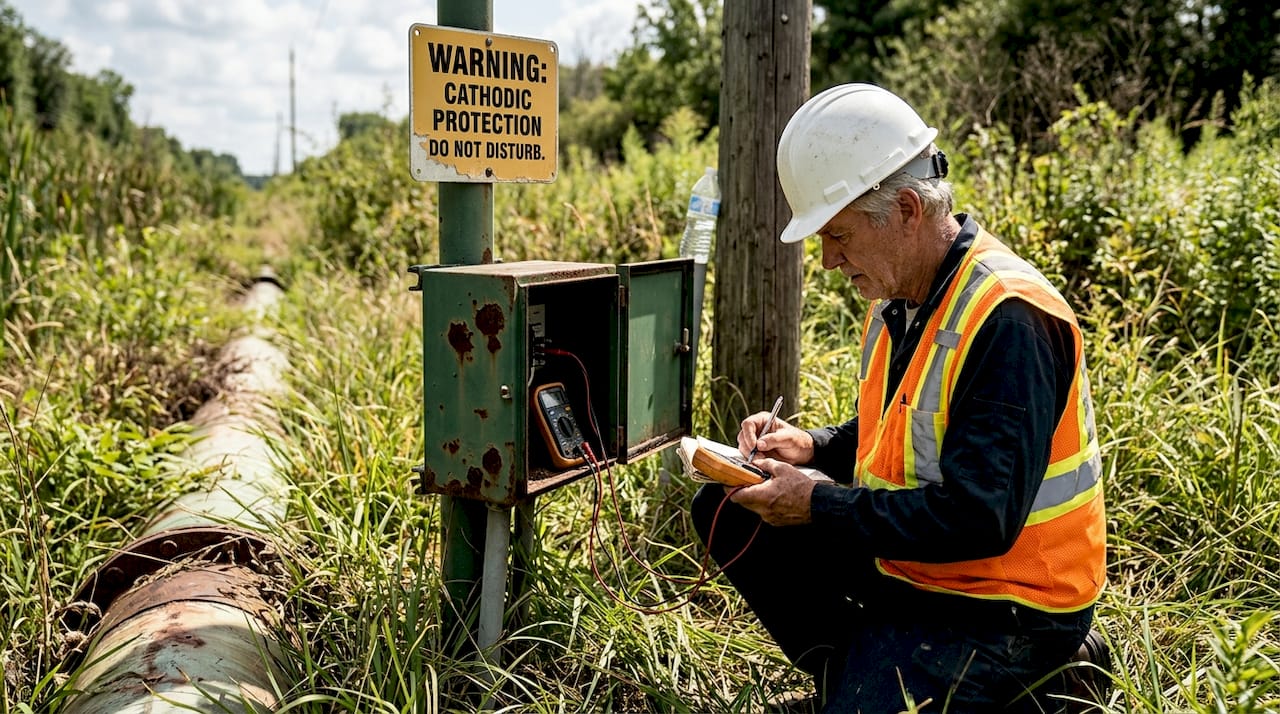
- Cathodic protection: electrical current that counteracts electrochemical corrosion in buried metal pipe
- Protective coatings: barrier systems applied internally or externally to prevent rust and chemical attack
- Smart pigging (in-line inspection): instrumented tools run through live pipelines to detect wall-loss, cracks, and geometry anomalies
- Hydrostatic testing: pressurizing pipe segments to verify structural integrity before or after service changes
- Regular mechanical pigging: clears debris and deposits that accelerate internal corrosion
Core integrity methods include smart pigging, coatings, cathodic protection, and hydrostatic testing as an integrated system, not isolated fixes. Exploring the full range of protective coating options helps operators match coating chemistry to service conditions, whether the pipe carries potable water, wastewater, or industrial process fluid. The benefits of asset coating extend to water tanks and other infrastructure assets beyond pipelines.
Florida adds a unique wrinkle: heavy seasonal rainfall and high groundwater drive inflow and infiltration (I&I) into sewer systems, overloading treatment plants and triggering regulatory notices. Emerald Coast Utilities Authority used flow monitoring to pinpoint I&I sources without costly smoke testing, saving both time and disruption to residents.
| Strategy | Primary purpose | Key strength | Recommended frequency |
|---|---|---|---|
| Cathodic protection | Corrosion prevention | Continuous passive defense | Annual survey |
| Internal coatings | Chemical and abrasion barrier | Long service life | At installation or renewal |
| Smart pigging | Defect detection | High-resolution wall data | Every 2 to 5 years |
| Flow monitoring | I&I detection | Non-invasive, real-time data | Continuous or seasonal |
| Hydrostatic testing | Pressure integrity check | Regulatory compliance proof | After major repairs |
Pro Tip: Pair flow monitoring data with your asset management system. When sensors flag a spike after a rain event, your team can dispatch crews to the right location within hours rather than spending weeks on smoke testing grids.
Trenchless technologies and renewal options for aging pipelines
Some pipelines are past the point where protection strategies alone will carry them forward. When condition assessments reveal severe structural loss or widespread cracking, renewal becomes the only responsible path. Fortunately, modern trenchless methods make that renewal far less painful than traditional open-cut replacement.
Two methods dominate the pressurized pipeline renewal market:
- CIPP (cured-in-place pipe): a resin-saturated liner is inserted into the existing pipe and cured in place, creating a smooth new pipe within the old host
- CFRP (carbon fiber-reinforced polymer): high-strength carbon fiber wrap applied internally to restore structural capacity without significant reduction in flow area
Both methods are recognized by the AWWA trenchless framework as preferred approaches for aging pipelines in congested urban settings. Florida utilities have used them under major intersections and across environmentally sensitive corridors where open excavation would trigger permitting delays and traffic chaos.
Scenarios where trenchless renewal wins:
- Urban rights-of-way with heavy traffic or buried utilities
- Environmentally sensitive areas (wetlands, protected habitat buffers)
- Pipes with structurally sound host walls but deteriorated linings
- Situations requiring minimal service interruption
Open-cut replacement still makes sense when pipes have collapsed, shifted significantly, or when the surrounding infrastructure needs reconstruction anyway.
| Factor | Open-cut replacement | Trenchless renewal |
|---|---|---|
| Cost | High (excavation, restoration) | Lower (minimal surface work) |
| Disruption | Major (road closures, detours) | Minor (small access points) |
| Longevity | Full design life of new pipe | 50+ years with quality liner |
| Compliance fit | Standard | Meets AWWA and ASTM standards |
| Best use case | Collapsed or misaligned pipe | Structurally sound host pipe |
Understanding protective coatings in infrastructure helps operators see how coatings and trenchless liners work as complementary tools. The water sector resilience framing from AWWA argues that moving beyond pure replacement thinking saves municipalities billions across asset classes.
Monitoring, compliance, and the role of technology
Protecting a pipeline is not a one-time event. Ongoing monitoring ties your field data to regulatory requirements, keeping you ahead of both failures and enforcement actions.
Ongoing monitoring duties for Florida pipeline operators:
- Deploy flow sensors at key nodes to catch sudden volume changes that signal breaks or I&I
- Maintain level sensors at pump stations and wet wells for real-time overflow risk assessment
- Operate continuous or scheduled leak detection systems on high-consequence segments
- Submit annual integrity reports per applicable PHMSA rules and Florida-specific requirements
- Document operator qualification records for all personnel working on regulated pipelines
Florida Rule 25-12.005 mandates annual reporting and operator qualification aligned with federal 49 CFR Parts 191 and 192, updated in October 2023. Missing a filing cycle is not just a procedural oversight. It opens your organization to fines and, more critically, triggers closer regulatory scrutiny on your entire program.
Technology is rapidly changing what continuous monitoring looks like. Fiber-optic sensing threads installed alongside pipelines can detect pressure anomalies, ground movement, and third-party intrusions across miles of corridor simultaneously. Unified fiber-optic monitoring reduces false alarms compared to separate intrusion and leak detection systems, making your control room data more actionable.
The American Society of Civil Engineers estimates the US faces a $2 trillion infrastructure investment gap, and Florida’s rapid population growth means that gap widens faster here than in most states.
AI-assisted analytics layered on top of sensor networks can now predict failure probability by pipe segment, letting operators prioritize capital spending where failure consequence and likelihood intersect. Check how corrosion protection for water facilities fits into an integrated monitoring strategy, since coating degradation is often the earliest detectable signal of coming structural problems. You can also reference real-world Florida flow monitoring examples to benchmark your own monitoring deployment.
Why strategic investment—not just repairs—defines pipeline longevity
Here is an uncomfortable truth most operators already sense but rarely say out loud: patching pipes as they fail is one of the most expensive strategies available. Every emergency repair costs two to four times what a planned intervention costs. Add regulatory scrutiny, public relations fallout, and service disruptions, and the reactive model is a losing proposition financially and operationally.
The smarter path is treating pipeline protection as a capital program, not a maintenance line item. Tampa’s PIPES initiative cut breakage rates and enabled better rate planning precisely because it committed to long-term renewal on a predictable schedule rather than chasing failures. That kind of programmatic discipline lets finance teams model costs accurately and gives operators a clear mandate for each budget cycle.
We see this pattern repeatedly in Central Florida. The operators who invest in condition assessments, apply asset protection coatings at the right intervals, and build renewal schedules around data rather than emergencies end up spending less over a ten-year horizon than those who defer and react. The short-term savings from skipping an inspection or delaying a coating project almost always evaporate the first time a main fails under a busy road. Strategic investment is not just better engineering. It is better financial management.
Expert support for pipeline protection and asset longevity
Pipeline protection works best when surface preparation and coating application are done right the first time. A compromised surface prep means coatings fail early, inspections miss concealed corrosion, and your program loses credibility with regulators.

Southern Sandblasting & Painting LLC brings 20-plus years of specialized experience in surface preparation and industrial-grade protective coatings to municipal and commercial pipeline projects across Central Florida. Our team understands local regulatory requirements, site conditions, and the coating systems that perform in Florida’s corrosive environment. Whether you need sandblasting to remove existing coating failure, lining application on a water main, or protective treatment on a new installation, our industrial coatings expertise keeps your assets compliant and your operations running. Explore our full range of sandblasting and painting services to find the right solution for your next pipeline project.
Frequently asked questions
How often should pipelines be inspected to ensure safety and compliance?
In-line inspections are typically scheduled every 2 to 5 years, while cathodic protection systems require annual surveys and regulatory filings to maintain compliance.
Are trenchless renewal methods more cost-effective than traditional pipe replacement?
In congested urban corridors, CIPP and CFRP significantly reduce both direct costs and traffic disruption compared to open-cut replacement, making them the preferred choice for most Florida urban projects.
What regulations govern pipeline safety in Florida?
Florida updated pipeline safety rules in October 2023 to align with federal 49 CFR Part 192, requiring annual reporting, operator qualification records, and documented safety condition monitoring.
How does flow monitoring help control inflow and infiltration (I&I)?
Flow sensors detect post-rain volume spikes that pinpoint lateral breaks and groundwater entry, allowing targeted repairs without the cost and disruption of smoke testing campaigns.
Why invest in long-term pipeline protection programs?
Programmatic investments like Tampa’s PIPES initiative reduce breakage rates, eliminate costly emergency repairs, and give finance teams a reliable basis for capital planning across multi-year budget cycles.
Recommended
- Protective Coatings for Pipelines: Ensuring Safety and Longevity
- Infrastructure painting: why asset longevity depends on it
- Role of Coatings in Longevity – Extending Asset Lifespans
- What Is Protective Coating and Why Asset Longevity Depends On It
- Commercial plumbing maintenance tips for Texas 2026
- Sandblasting Contractor Baldwin Park FL
- Sandblasting Services Oviedo FL


