
TL;DR:
- Many clean-looking surfaces harbor microscopic contaminants that threaten infrastructure, safety, and compliance.
- Effective surface cleaning requires matching techniques to specific contaminants and asset types, with proper documentation and verification.
Many facility managers underestimate just how much is hiding on surfaces they consider clean. A 2025 review confirms that even seemingly clean surfaces can harbor hundreds of bacterial colonies per square centimeter, posing compounding risks for compliance, asset integrity, and public safety. For municipal and industrial managers across Central Florida, the stakes go well beyond appearances. Surface cleaning is foundational to regulatory standing, long-term infrastructure performance, and the protection of public health. This guide breaks down the science, the regulatory realities, and the practical decision-making that separates reactive maintenance from a defensible, forward-looking program.
Table of Contents
- The hidden risks: What surface contaminants really mean
- How cleaning supports compliance and risk control in Florida
- Choosing cleaning methods: Matching techniques to objectives
- Performance in practice: Evaluating results and overcoming variables
- Hard-won lessons: What most compliance guides miss about effective surface cleaning
- Explore proven solutions for compliant, durable results
- Frequently asked questions
Key Takeaways
| Point | Details |
|---|---|
| Invisible risks matter | Contaminants can threaten safety, durability, and compliance even when surfaces look clean. |
| Regulations drive action | Florida mandates thorough and documented surface cleaning to meet compliance and minimize liability. |
| Method choice is crucial | Selecting the right cleaning method requires understanding your contaminants, assets, and objectives. |
| Measure performance | Effective cleaning plans use clear targets and validation steps to ensure results. |
| Documentation is key | Accurate records of cleaning actions support inspections, audits, and regulatory peace of mind. |
The hidden risks: What surface contaminants really mean
Surface contamination is not limited to the visible grime you can wipe away with a rag. The real threat sits at the microscopic level, where biological, chemical, and particulate contamination quietly erodes assets and creates compliance exposure for facilities across Florida.
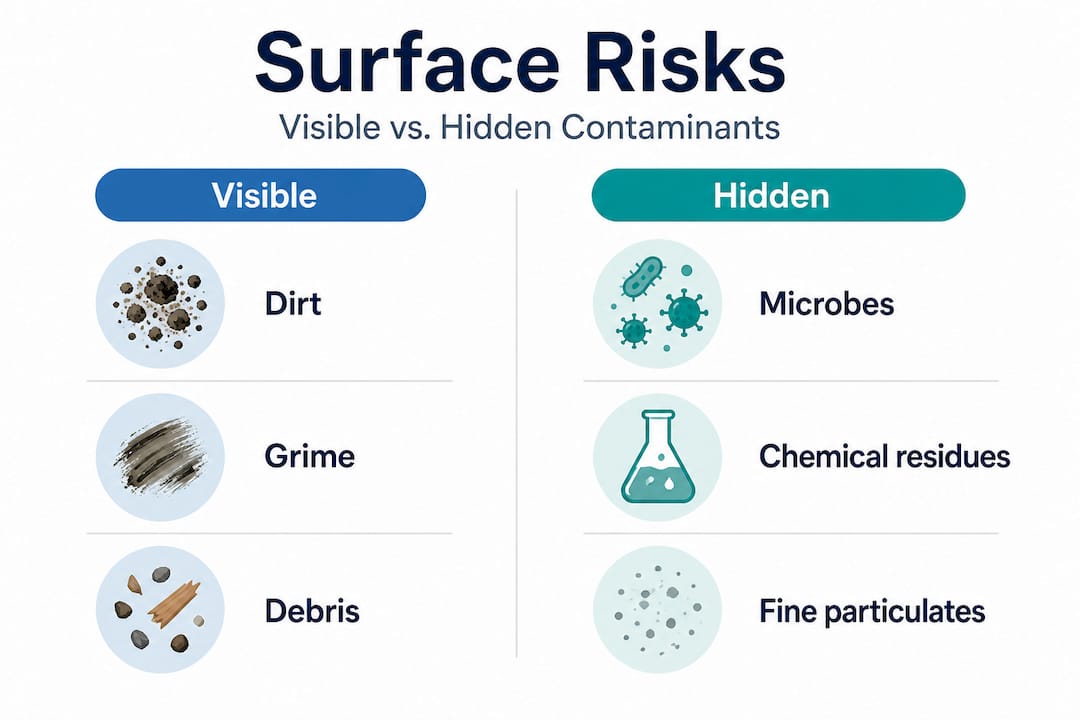
Biological contaminants include bacteria, mold spores, and biofilm. These organisms thrive in Florida’s humid subtropical climate, accelerating corrosion on metal infrastructure, degrading coatings, and raising infection risk in shared spaces. Chemical contaminants include residual oils, cleaning agents, fuel byproducts, and industrial process chemicals that, when left on surfaces, can compromise downstream coatings or react unpredictably with new applications. Particulate contamination covers dust, silt, metal filings, and airborne debris that embed into surface pores, weakening adhesion and shortening the service life of any protective treatment applied afterward.
The measurement standard used in industrial and public health settings is CFU/cm2, which stands for colony-forming units per square centimeter. It is simply a count of how many viable microbial clusters exist on a defined surface area. The numbers can surprise even experienced managers.
“High-touch surfaces can accumulate from a few to several hundred CFU/cm2 of bacterial contamination, underscoring the importance of regular cleaning to minimize risk in managed settings.”
Understanding why surface prep matters is not just a coating consideration. It is a safety and liability issue. When biological contamination is paired with surface degradation, the result is infrastructure that fails faster, costs more to remediate, and puts the facility manager in a difficult position during audits or inspections.
Key contaminant categories to monitor across your facilities:
- Mold and biofilm on concrete, pipe exteriors, and wall cavities
- Rust and oxidation byproducts on ferrous metal components
- Chemical residues from process fluids, lubricants, or cleaning agents
- Particulate buildup (silica dust, silt, carbon deposits) on paved and structural surfaces
- Organic debris including algae, moss, and biological growth common in Florida’s wet season
Each of these categories carries its own set of compliance triggers, asset-damage mechanisms, and remediation requirements. Treating them as a single cleaning problem leads to under-engineered solutions and repeated failures.
How cleaning supports compliance and risk control in Florida
Understanding the hidden risks highlights why regulatory compliance is non-negotiable, especially in Florida’s tightly regulated environment. State and local regulatory bodies do not treat surface cleaning as optional housekeeping. They treat it as a documented risk control activity with traceable outcomes.
Florida’s regulatory framework for industrial and municipal facilities draws heavily from the Florida Pesticide Discharge Management Program and the Florida Administrative Code. According to UF/IFAS on Florida’s FPDPCA, these frameworks require robust cleaning and documentation processes as part of broader environmental compliance obligations. Facilities that lack proper records face enforcement exposure, even when the physical cleaning itself has been performed.
Here is a practical five-step process for maintaining compliant surface cleaning operations in Florida:
- Assess contamination risk by asset type, use frequency, and environmental exposure. Outdoor infrastructure near waterways or storm drains carries heightened regulatory scrutiny.
- Establish a documented cleaning schedule aligned with Florida Administrative Code requirements and your facility’s specific permit conditions.
- Select cleaning methods appropriate to the contaminant type, surface material, and required cleanliness standard. This is where many programs fall short.
- Document every cleaning event including date, method used, personnel, and any anomalies or visible contamination found. This record is your audit defense.
- Respond to contamination events promptly and in writing, capturing the nature of the event, corrective action taken, and follow-up verification.
Understanding contamination standards in Florida will help you map these steps to the specific standards your assets fall under. Reviewing the Florida contractor prep guide can also clarify what documentation contractors working on your behalf must provide to keep your compliance record intact.
Pro Tip: Use an industrial compliance checklist during your routine audits to ensure that cleaning records, method logs, and response documentation are complete and organized before any regulatory inspection occurs.
The financial exposure from inadequate cleaning protocols is real. Fines for environmental violations in Florida can escalate quickly, especially when documentation gaps make it impossible to demonstrate that a reasonable cleaning standard was maintained. Compliance is not just about doing the work. It is about proving that you did it.
Choosing cleaning methods: Matching techniques to objectives
With regulatory and risk drivers clear, selecting the right cleaning method becomes the next challenge. There is no universal approach. The method that works on a painted steel water tank is not the same one that works on a concrete pump station floor or an aluminum aircraft hangar panel.
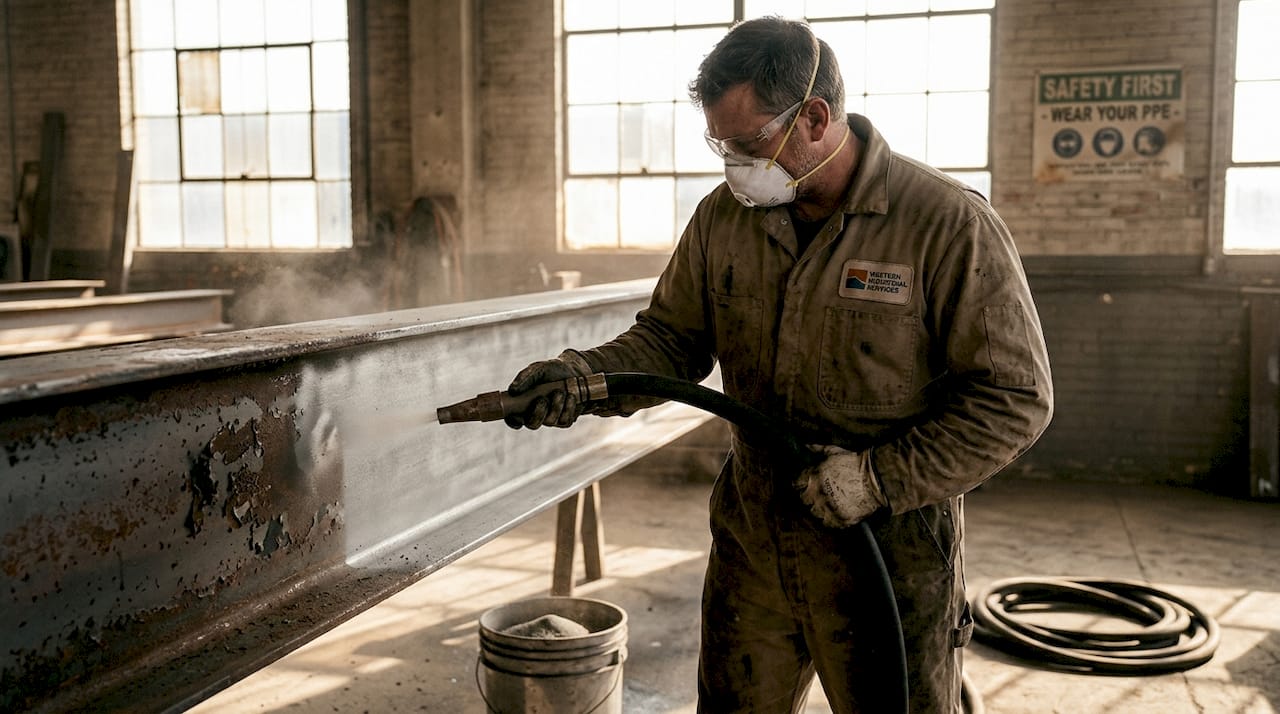
Mechanical cleaning uses physical force through abrasive blasting, wire brushing, high-pressure water, or grinding. It is highly effective for heavy rust, mill scale, old coatings, and embedded particulates. The trade-off is that it can be aggressive, potentially damaging softer substrates or leaving surface profiles that require follow-up treatment before coating application.
Chemical cleaning uses solvents, degreasers, acids, or alkaline solutions to dissolve or lift contaminants. It excels at oil, grease, and chemical residues. However, it introduces its own residue risk. Incomplete rinsing leaves chemical films that can interfere with coating adhesion or create environmental discharge concerns.
Advanced methods such as ultrasonic cleaning, plasma treatment, and laser ablation are gaining traction in specialized industrial settings. These are especially valuable for precision components or geometrically complex assets where mechanical methods cannot reach. According to research on machined metal cleaning, the effectiveness of cleaning depends directly on contaminant type and asset geometry, and residual agents can impair downstream coatings and quality outcomes.
| Cleaning method | Best for | Key limitations | Relative cost |
|---|---|---|---|
| Abrasive blasting | Heavy rust, old coatings, structural steel | Aggressive, generates waste, requires containment | Medium to high |
| High-pressure water | Concrete, biological growth, loose debris | May not remove chemical residues | Low to medium |
| Solvent/chemical cleaning | Oils, greases, processing residues | Residue risk, environmental disposal requirements | Medium |
| Ultrasonic cleaning | Precision parts, complex geometry | Not practical for large structural surfaces | High |
| Laser ablation | Sensitive substrates, historic materials | High equipment cost, slow for large areas | Very high |
Learning surface prep best practices will help you match method to outcome with confidence. Protecting asset longevity with prep is the standard that serious facility managers hold their contractors to, regardless of which method is used.
For references on steel surface care, well-documented best practices exist that can serve as a baseline for your internal specifications.
Pro Tip: After any chemical cleaning step, a thorough rinse and surface verification are required before applying any coating or disinfectant. Residual cleaning agents are one of the most common causes of premature coating failure, and they are almost entirely preventable with proper process controls.
Performance in practice: Evaluating results and overcoming variables
Having chosen methods, it is critical to verify that investments yield the intended performance in the real world. Many programs specify a method and then assume the outcome. Real quality management requires measurable targets and structured verification.
Central Florida’s environment adds complexity. Humidity, seasonal rainfall, high ambient temperatures, and the presence of coastal salt air in certain zones all affect how quickly surfaces re-contaminate and how effective different cleaning methods remain over time. What works perfectly in January may need adjustment by June when humidity and biological growth rates spike.
According to the 2025 California DOT review on street sweeping practices, cleaning effectiveness is highly variable and outcomes depend on technology, frequency, and local environmental conditions. Managers should set measurable targets. This principle applies equally to industrial surface cleaning, where particulate load, silt content, and pollutant concentration provide objective performance benchmarks.
The Washington State Stormwater Center reinforces this with guidance emphasizing that facilities should evaluate cleaning performance using defined metrics and validated sampling protocols based on specific goals.
| Cleaning variable | Impact on performance | Recommended response |
|---|---|---|
| High ambient humidity | Accelerates biological re-growth post-cleaning | Increase cleaning frequency during wet season |
| Heavy rainfall events | Re-deposits silt and organic debris rapidly | Add post-storm inspection and spot cleaning protocol |
| High silt load (unpaved areas) | Reduces effective life of each cleaning cycle | Adjust frequency and use mechanical methods first |
| Temperature extremes | Affects chemical reaction rates during cleaning | Adjust dwell times and select temperature-stable products |
Key steps to validate contractor performance and your own cleaning program results:
- Establish pre-cleaning baseline measurements using visual rating scales, CFU counts, or particulate concentration data depending on asset type.
- Require post-cleaning verification reports from contractors that include inspection results and photographic documentation.
- Schedule re-inspection at defined intervals (30, 60, 90 days) to measure re-contamination rates and adjust frequency accordingly.
- Compare results against measurable targets you set in advance, not just against “looks clean.”
- Track cleaning records over time to identify seasonal patterns, problem areas, and assets that need more aggressive treatment.
Following key surface prep tips designed for Florida’s infrastructure environment will give your team a reliable foundation for this kind of systematic evaluation.
Hard-won lessons: What most compliance guides miss about effective surface cleaning
Stepping back, practical experience in Central Florida’s industrial and municipal sector reveals what checklists and standards consistently miss. Most compliance frameworks were written to set a minimum floor, not to optimize outcomes for a specific climate, asset portfolio, or regulatory environment. Following them literally is necessary but not sufficient.
The most overlooked gap is the assumption that a cleaning program is a fixed document. Florida’s infrastructure ages, funding cycles change, seasonal patterns shift, and the labor and equipment landscape evolves year to year. A program that earned high marks during an audit in one year may be technically compliant but practically inadequate eighteen months later due to changes in asset use, increased traffic loads, or new regulatory interpretations.
We have seen facilities with spotless documentation and genuinely inadequate cleaning outcomes because the program was never revisited after the initial audit passed. Documentation becomes a liability when it describes a program that no longer reflects reality on the ground.
The other consistent failure is treating surface cleaning as separate from surface protection. For lasting industrial prep, cleaning is the first act in a sequence that leads to coating, protection, and extended service life. When the cleaning step is weak, every downstream investment performs below its potential.
There is a principle that guides experienced compliance officers and facility managers in this space: “You can outsource a sweep, but never outsource your compliance risk.” When a contractor misses a step or skips documentation, the facility manager owns the consequences. That is not a reason to avoid contractors. It is a reason to build oversight into every contract and every inspection cycle.
Pro Tip: Tie your cleaning metrics directly to compliance requirements and projected asset service life. If you cannot explain why your cleaning frequency was chosen in terms of regulatory thresholds and asset performance data, it is time to rebuild the program from evidence up.
Explore proven solutions for compliant, durable results
Southern Sandblasting & Painting LLC has spent over 20 years delivering surface preparation and protection solutions for Central Florida’s most demanding infrastructure projects, from municipal water tanks and city streets to airports and industrial facilities.
Whether your priority is regulatory compliance, extended asset lifespan, or preparation for a new coating system, our team brings the local knowledge, certified processes, and documented workflows to support your program at every stage. Our industrial coatings for Florida infrastructure are engineered to perform in the region’s unique climate conditions. Explore our Orlando sandblasting services to see how professional surface preparation sets the standard for durability. When you are ready to match method to outcome, our surface prep for durability resources put proven best practices in your hands.
Frequently asked questions
What’s the difference between cleaning, sanitizing, and disinfecting surfaces?
Cleaning removes dirt and residues; sanitizing lowers germ levels to safe thresholds; disinfecting kills most pathogens on contact. Each serves a distinct risk control role and the right choice depends on asset type and regulatory requirement.
How often should municipal street surfaces be cleaned for compliance?
Cleaning frequency should be based on local silt loads, traffic intensity, and specific regulatory conditions. Research shows that schedules ranging from weekly to multiple times per week produce the best pollutant removal outcomes for high-use infrastructure.
Is documentation of cleaning steps required for environmental compliance in Florida?
Yes. Florida regulations require documented cleaning and response actions as part of risk management and environmental protection frameworks, and these records are essential during regulatory audits.
Do different assets need different cleaning methods?
Absolutely. Cleaning effectiveness varies based on asset material, surface geometry, and the specific contaminant present, which is why a one-size approach consistently underperforms against purpose-matched methods.
What are the consequences of skipping regular surface cleaning?
Skipping cleaning creates regulatory penalty exposure, accelerates asset deterioration, reduces the performance of protective coatings, and increases health and safety risks. Florida’s compliance framework treats cleaning lapses as serious violations with traceable consequences for facility managers.
Recommended
- Surface Treatment Process for Durable Infrastructure Results
- Surface Preparation Standards 2025: Raising Compliance in Florida
- Surface Preparation Workflow for Industrial Projects
- Surface Treatment Process 2025: Achieve Lasting Protection
- Commercial Mattress Maintenance for Hotels & Airbnb | Minneapolis–St. Paul
- Guide d’entretien expert : préservez vos textiles haut de gamme – CXL by Christian Lacroix Maison
- Sandblasting Contractor Baldwin Park FL
- Sandblasting Services Oviedo FL


