
TL;DR:
- Proper surface preparation is essential to prevent coating failures, especially in Florida’s humid environment.
- Achieving the correct cleanliness grade and controlling salt levels are critical steps for coating longevity.
- Certified inspectors and adherence to standards like SSPC-SP10 ensure durable, compliant coatings in challenging conditions.
Over 80% of coating failures trace directly back to inadequate surface preparation, not the coating product itself. For facility managers and contractors running large-scale operations across Central Florida, that statistic carries real financial weight. A failed coating on a water tank, pipeline, or municipal structure means early recoating, extended downtime, and budget overruns that compound fast. Florida’s intense humidity and salt-laden air create conditions that punish shortcuts harder than almost any other region in the country. This guide walks you through the standards, tools, process steps, and verification methods that separate a coating system that lasts from one that fails within two years.
Table of Contents
- Understand surface preparation basics and standards
- Essential tools, equipment, and materials for surface preparation
- Step-by-step: How to prepare surfaces for coatings
- Verification, troubleshooting, and common pitfalls in surface preparation
- A professional perspective: Why Central Florida surface prep is different
- Get professional sandblasting and surface preparation in Central Florida
- Frequently asked questions
Key Takeaways
| Point | Details |
|---|---|
| Poor prep causes failures | Most coating failures are the result of inadequate surface prep, so following standards is essential. |
| Use the right tools | Choose tools and abrasives to match your facility, material, and environmental needs with attention to dust and cleanliness. |
| Verify every step | Always check for moisture, salts, and flash rust before coating to avoid avoidable and costly defects. |
| Humidity means urgency | In Central Florida, apply primer immediately after prep to beat flash rust and ensure long-term protection. |
Understand surface preparation basics and standards
The role of surface preparation in any industrial coating project is straightforward: if the substrate (the base material being coated) is contaminated, rough in the wrong way, or holds moisture, the coating will not bond correctly. No matter how advanced your topcoat chemistry is, it cannot compensate for what is underneath it. Most coating failures trace back to poor surface preparation, which is why following recognized standards is not optional on serious infrastructure work.
Two organizations set the dominant standards in this field. SSPC (Society for Protective Coatings) and AMPP (Association for Materials Protection and Performance) publish the cleaning grades that specify exactly how clean a steel or concrete surface must be before coating. These grades are not suggestions. Specifying the wrong grade or failing to achieve it voids most coating warranties and creates liability exposure for contractors.
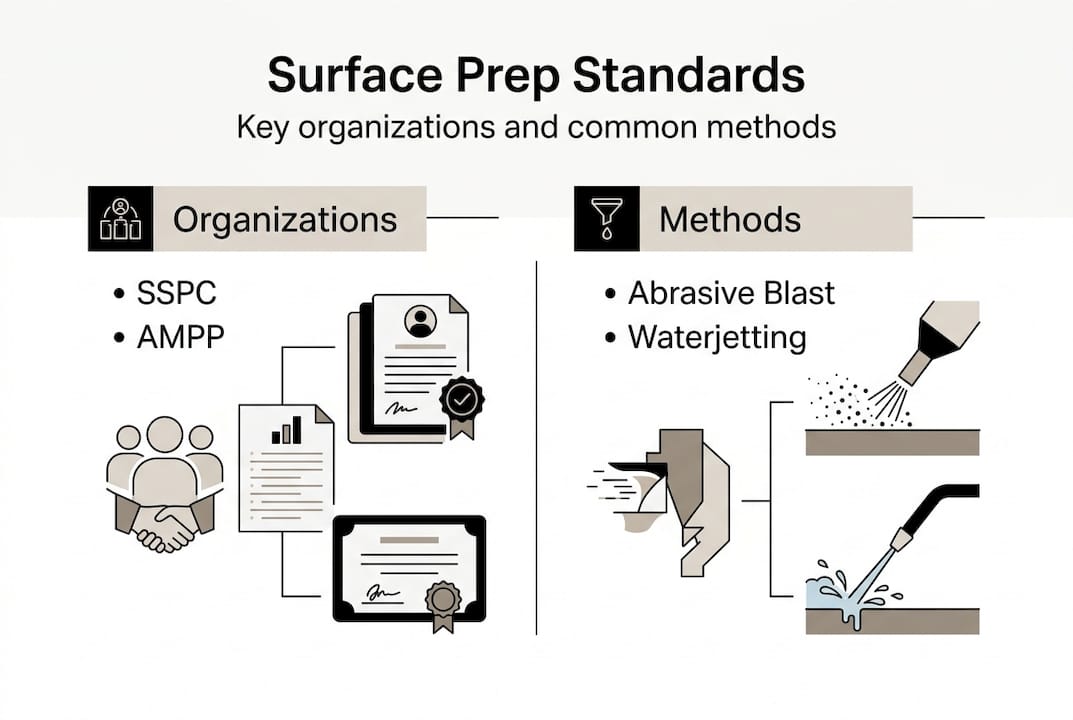
Here is a quick reference for the three grades most relevant to industrial steel work in Florida:
| Standard | Name | Description | Typical use case |
|---|---|---|---|
| SP6 | Commercial blast | Removes visible rust, mill scale, and coatings; some staining allowed | Mild service environments, interior steel |
| SP10 | Near-white blast | Removes 95% of all contaminants; light discoloration only | Corrosive environments, water tanks, bridges |
| SP5 | White metal blast | 100% clean; no visible rust, scale, or coatings | Immersion service, severe corrosion exposure |
For Central Florida infrastructure, SP10 is the baseline for most exterior steel exposed to humidity and salt air. SP5 is required for immersion zones such as the inside of water storage tanks.
Beyond visual cleanliness, soluble salt contamination is a hidden threat. Salt levels above 3 to 5 micrograms per square centimeter (µg/cm²) cause osmotic blistering under the coating film, often within months. Florida’s coastal and near-coastal environments deposit salt on surfaces constantly, which means salt testing is not a formality here. It is a critical quality gate.
Following surface prep best practices also means accounting for the time window between prep completion and primer application. In Florida’s humidity, that window is short. Delay primer application and you lose the clean surface you just paid to achieve.
“Proper surface preparation is not a line item to negotiate down. It is the foundation that determines whether every dollar spent on coating materials and labor holds its value.”
Essential tools, equipment, and materials for surface preparation
With standards in mind, having the right tools at your disposal is the first real-world step toward successful prep. The wrong equipment does not just slow you down. It can damage the substrate, create a surface profile that is too deep or too shallow, and introduce new contaminants.
Mandatory PPE and safety equipment:
- Supplied air respirators or NIOSH-approved blast hoods
- Full-body protective coveralls rated for abrasive exposure
- Steel-toed, slip-resistant footwear
- Hearing protection rated for sustained noise above 85 dB
- Safety glasses and face shields for secondary personnel
- Grounding equipment to prevent static discharge during blasting
Containment is equally critical, especially in active industrial facilities. Abrasive dust and spent media must be captured and disposed of properly to meet EPA and OSHA requirements. Shrouded blast heads and vacuum recovery systems are standard on enclosed or occupied sites.
Here is a practical comparison of the three main surface preparation methods:
| Method | Speed | Cleanliness level | Dust/debris | Best for |
|---|---|---|---|---|
| Abrasive blasting | Fast | SP6 to SP5 | High dust | Open sites, heavy rust removal |
| Waterjetting | Moderate | WJ1 to WJ4 | Low dust, high water | Sensitive environments, flash rust control |
| Hand/power tools | Slow | SP2 to SP3 | Low | Spot repairs, inaccessible areas |
Abrasive blasting is fastest but creates significant dust, while waterjetting is cleaner but slower. Project conditions, not preference, should drive that choice.
Measuring tools are just as important as the blasting equipment itself. Salt meters (Bresle patch or equivalent), surface profile gauges (Testex tape or digital profilometers), and moisture meters must be on every job site. These are not optional instruments. They produce the documented evidence that prep was done correctly.
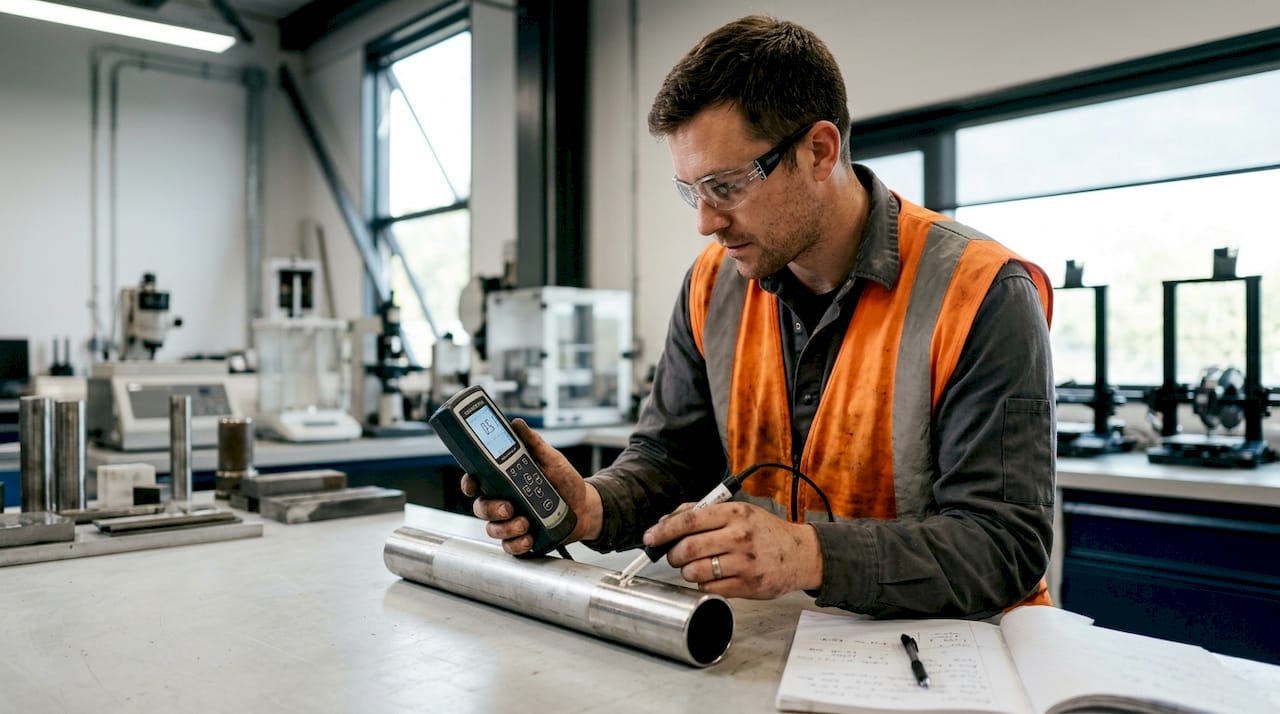
Pro Tip: Match your abrasive type to both the target surface profile and the coating system you are applying. Steel grit creates an angular profile ideal for epoxy coatings. Steel shot produces a rounded profile better suited for certain primers. Using the wrong abrasive creates an anchor pattern that the coating cannot fill properly, which leads to early adhesion failure.
For a deeper look at abrasive blasting techniques matched to specific infrastructure types, the differences in approach between a bridge deck and a water tower are significant and worth understanding before mobilizing equipment.
Step-by-step: How to prepare surfaces for coatings
With the right tools in hand, here is the proven process Central Florida contractors rely on for optimal surface prep and coating longevity. This sequence applies to large-scale steel infrastructure, though the core logic holds for concrete and other substrates as well.
- Initial assessment: Document existing coating condition, substrate type, corrosion level, and any environmental constraints. Identify areas with active corrosion, cracks, or previous coating failures.
- Containment setup: Install tarps, shrouding, or blast enclosures. Protect adjacent equipment, drains, and surfaces from abrasive media and dust.
- Solvent cleaning (SP1): Remove oil, grease, and chemical contamination with approved solvents before any mechanical prep. Blasting over oil embeds it into the profile.
- Abrasive blasting or waterjetting: Achieve the specified cleanliness grade. Verify profile depth with a surface profile gauge immediately after blasting.
- Salt testing: Use a Bresle patch or equivalent to confirm soluble salt levels are below 3 to 5 µg/cm². If levels exceed this threshold, wash the surface and retest.
- Moisture check: Confirm surface temperature is at least 3°F above the dew point before priming. Moisture meters and a sling psychrometer or digital hygrometer give you the data you need.
- Dust removal: Blow down or vacuum all blast media, dust, and debris. Any residue left on the surface contaminates the primer bond.
- Immediate primer application: Apply primer within two hours of completing prep in Central Florida conditions. Proper prep can extend coating life two to five times, but only if primer goes on before flash rust forms.
Flash rust is the most common point of failure in Florida projects. Steel oxidizes within minutes in high humidity. Waiting even three or four hours after blasting can produce visible rust bloom that requires re-blasting. Plan your crew and materials so primer application follows blasting without any gap.
Pro Tip: Schedule surface prep during the lowest humidity window of the day, typically early morning before temperatures climb. In summer months, that window may be only two to three hours long. Build your workflow around it.
For detailed guidance on the next phase, applying protective coatings and following coating application steps correctly builds directly on the prep work covered here.
Verification, troubleshooting, and common pitfalls in surface preparation
The job is not finished until you have verified that preparation meets both inspection and performance standards. Here is how to check your work and avoid costly errors before the coating goes on.
Final verification checklist:
- Visual inspection against the specified SSPC/AMPP standard (use photographic reference cards)
- Surface profile measurement within specified range for the coating system
- Salt contamination test: confirm below 3 to 5 µg/cm²
- Moisture and dew point check: surface temperature at least 3°F above dew point
- Dust tape test: press clear tape to surface and confirm minimal pickup
- Document all readings with date, time, and inspector signature
The most common mistakes on industrial prep jobs follow a predictable pattern. Edges and welds are the most frequently skipped areas because they are harder to blast effectively. Abrasive media bounces off sharp edges rather than cutting into them, leaving inadequately prepared metal that fails first. Corners, bolt holes, and weld seams require hand tool touch-up after blasting.
“Skipping the flash rust window is not a minor shortcut. It erases every hour of prep work and every dollar of abrasive cost in a matter of minutes. In Central Florida’s summer humidity, that window closes faster than most contractors expect.”
Flash rust, soluble salts above threshold, and hidden moisture are the three leading causes of early coating failure, even when contractors believe they followed the standard correctly.
For troubleshooting common defects: blistering almost always points to salt contamination or moisture under the film. Early rust bleed-through indicates flash rust was present at primer application. Adhesion failure on edges points to inadequate prep on those specific zones. Each of these defects requires stripping back to bare metal and starting over, which is why catching them before coating is so much cheaper.
Certified inspectors with NACE (now AMPP) CIP credentials provide documented quality assurance that protects both the contractor and the facility owner. For guidance on how to inspect surface preparation and maintain coating adhesion over time, having that third-party verification is increasingly required on municipal and government contracts.
A professional perspective: Why Central Florida surface prep is different
Having seen the technical steps, here is a reality check from professionals working daily in Central Florida’s unique environment. The standards described above exist everywhere. The execution challenge here is different in kind, not just degree.
Florida’s relative humidity routinely exceeds 80% during working hours from May through October. That is not a background condition. It is an active threat to every hour of prep work your crew completes. We have seen surfaces flash rust within 20 minutes of blasting on a humid afternoon. Contractors who learned their trade in drier climates consistently underestimate this.
Facilities that run 24/7, including water treatment plants, airports, and industrial manufacturing sites, face additional contamination risks from ongoing operations. Oil mist, chemical vapors, and airborne particulates settle on prepped surfaces while crews are still working. That requires tighter containment and faster primer cycles than most project schedules account for.
Florida infrastructure experiences rapid coating degradation without rigorous standards and inspections, and the cost of cutting corners on prep is always paid eventually, usually at two to three times the original savings. SSPC-QP and AMPP C7 certified contractors should be your baseline requirement, not a premium option. For a detailed breakdown of what that looks like in practice, the expert Florida surface prep guide covers contractor qualification criteria specific to this region.
Get professional sandblasting and surface preparation in Central Florida
If you are managing infrastructure assets in Central Florida and need surface preparation done to specification, the stakes are too high for guesswork. Certified local expertise means faster mobilization, compliance with Florida-specific environmental regulations, and coating systems that hold up against the region’s humidity and salt exposure.
Southern Sandblasting & Painting LLC has delivered Orlando sandblasting services for water tanks, pipelines, municipal structures, and industrial facilities for over 20 years. Our full range of sandblasting and painting services is built around the compliance and performance standards your projects demand. For industrial coatings for Florida infrastructure that are engineered to last, contact our team to schedule a site assessment and project consultation.
Frequently asked questions
What is the most common mistake in surface preparation?
Failing to apply primer immediately after blasting is the single most damaging mistake, particularly in humid climates. Flash rust control requires priming within two hours of prep completion in Central Florida conditions.
How do I test if a surface is clean enough for coating?
Run a Bresle patch salt test and confirm levels are below 3 to 5 µg/cm², then follow with a visual inspection against the specified SSPC standard and a dew point check before applying any primer.
What standard should I specify for industrial steel surfaces in Florida?
SP10 near-white blast is the standard for most exterior steel in corrosive Florida environments, while SP6 commercial blast may be acceptable for interior or low-exposure applications where budget is a constraint.
Why is surface prep more demanding in Central Florida?
High relative humidity accelerates flash rust formation and salt deposition, which means prep reduces maintenance costs by over 50% only when executed with tighter timing and more rigorous inspection than drier regions require.
Recommended
- Surface Treatment Process 2025: Achieve Lasting Protection
- Coating Application Step by Step for Lasting Protection
- How to Apply Protective Coatings for Lasting Asset Durability
- Theme Park Surface Treatment Guide for Long-Lasting Results
- Industrial Painting Services in Orlando, FL
- Sandblasting Services in Orlando, FL


