
Florida’s intense humidity, relentless UV radiation, and corrosive salt air create a perfect storm for painted industrial surfaces. These environmental factors accelerate coating degradation, driving up maintenance costs and shortening asset lifespans. This guide walks you through proven inspection, cleaning, repair, and scheduling strategies tailored specifically for Florida’s demanding climate to help you preserve your infrastructure investments.
Table of Contents
- Understanding Florida’s Climate Challenges For Painted Surfaces
- Prerequisites: Tools, Knowledge, And Conditions Before Maintenance
- Step 1: Conducting A Thorough Surface Inspection
- Step 2: Cleaning Painted Surfaces Properly
- Step 3: Repairing And Spot Treating Damage
- Step 4: Planning Maintenance Schedule And Monitoring Performance
- Common Pitfalls And Troubleshooting
- Expected Results And Lifespan Extensions
- Explore Professional Sandblasting And Painting Services In Florida
Key takeaways
| Point | Details |
|---|---|
| Florida’s climate accelerates failure | High humidity, UV, and salt air degrade coatings faster than inland environments. |
| Low-pressure cleaning extends life | Routine washing every 6 to 12 months prevents buildup without damaging protective layers. |
| Early rust treatment saves money | Addressing corrosion within 30 days prevents costly full repaints and structural damage. |
| Sandblasting improves adhesion | Proper surface prep before repainting boosts new coating bond strength by 40%. |
| Scheduled inspections optimize performance | Regular monitoring and maintenance intervals maximize coating longevity and budget predictability. |
Understanding Florida’s climate challenges for painted surfaces
Florida’s environment presents unique obstacles for maintaining painted infrastructure. Recognizing these factors helps you develop targeted maintenance strategies that actually work.
Humidity levels consistently hover around 70%, creating moisture-related problems like blistering and adhesion loss. Water vapor penetrates coating layers, weakening bonds between paint and substrate.
Intense UV exposure breaks down paint polymers at the molecular level. This degradation causes visible chalking, color fading, and surface brittleness that compromise protective capabilities.
Coastal proximity introduces salt-laden air that accelerates metal corrosion beneath coatings. Even facilities miles inland face this challenge as prevailing winds carry salt particles across the state.
Frequent rainfall traps airborne contaminants against painted surfaces. These pollutants react chemically with coating materials, causing premature breakdown and reducing service life.
Understanding these environmental stressors guides effective maintenance planning. Different types of industrial coatings Florida facilities use require tailored approaches based on exposure severity and asset criticality.
Common Florida-specific paint degradation factors:
- Humidity-driven moisture intrusion causing coating delamination
- UV radiation breaking polymer chains and reducing elasticity
- Salt air penetration accelerating substrate corrosion
- Thermal cycling from temperature swings stressing coating systems
- Biological growth on surfaces retaining moisture against coatings
Prerequisites: tools, knowledge, and conditions before maintenance
Successful surface maintenance starts with proper preparation. Having the right equipment and optimal conditions prevents damage and ensures repairs actually last.
Essential inspection equipment:
- Adhesion testing gauges measuring coating bond strength
- Digital coating thickness meters tracking protective layer depth
- Visual inspection tools including magnification devices and lighting
- Moisture meters detecting trapped water beneath coatings
Cleaning tools and materials:
- Low-pressure washers calibrated below 2000 psi
- Biodegradable detergents formulated for industrial coatings
- Soft-bristle brushes for manual spot cleaning
- Water collection systems for environmental compliance
Safety gear protects workers during maintenance operations. Respirators filter airborne particles during sandblasting. Chemical-resistant gloves prevent skin contact with cleaning agents. Protective clothing shields against coating debris. Eye protection guards against splashes and particulates. Following industrial painting safety protocols keeps teams healthy and productive.
Weather conditions dramatically impact maintenance effectiveness. Dry weather with humidity below 50% provides optimal conditions for cleaning and coating application. Temperatures between 50°F and 90°F ensure proper curing. Calm days with wind speeds under 10 mph prevent airborne contamination.
| Weather Factor | Ideal Range | Impact on Maintenance |
|---|---|---|
| Humidity | Below 50% | Prevents moisture entrapment during coating application |
| Temperature | 50-90°F | Ensures proper coating cure rates |
| Wind Speed | Under 10 mph | Reduces airborne debris contamination |
| Precipitation | None for 24 hours | Allows complete surface drying and coating adhesion |
Planning maintenance during ideal weather windows maximizes coating performance and reduces rework. Understanding industrial coatings importance Florida facilities face helps justify scheduling flexibility around weather patterns.
Pro Tip: Check 7-day forecasts before scheduling maintenance work. A sudden afternoon thunderstorm can ruin hours of surface prep and waste coating materials.
Step 1: Conducting a thorough surface inspection
Systematic inspections catch problems early when repairs are still manageable. Skip this step and minor issues become major expenses.
Visual examination reveals obvious coating failures. Look for cracking patterns indicating stress or age. Blistering signals moisture trapped beneath coatings. Rust spots show corrosion breaking through protective layers. Peeling paint exposes vulnerable substrate to accelerated damage.
Adhesion testing measures coating bond strength objectively. Pull-off gauges quantify how well paint sticks to surfaces. Annual testing establishes performance trends over time. Declining adhesion values warn of impending failure before visible symptoms appear.
Documentation turns observations into actionable data. Photograph all defects with location markers. Record coating thickness measurements in maintenance logs. Note environmental exposure differences across asset surfaces. Map high-wear areas requiring more frequent attention.
Early detection enables cost-effective spot treatments. Addressing small rust patches prevents widespread corrosion. Sealing minor cracks stops moisture intrusion. Touching up worn areas maintains continuous protection.
Combining visual and instrument-based inspections provides comprehensive assessment. Your eyes catch obvious problems while tools measure hidden degradation. Regular regular coating inspections Florida assets need should happen quarterly in harsh environments and semi-annually in milder conditions.
Critical inspection checkpoints:
- Leading edges and corners where coating wears fastest
- Horizontal surfaces collecting water and debris
- Welds and joints prone to coating stress cracks
- Areas with direct salt air or chemical exposure
- Previously repaired sections showing premature failure
The role of coating inspectors includes translating inspection findings into prioritized maintenance actions. Their expertise helps allocate repair budgets where they deliver maximum asset protection.
Step 2: Cleaning painted surfaces properly
Gentle but effective cleaning removes contaminants without damaging protective coatings. Aggressive methods strip away the very protection you’re trying to preserve.
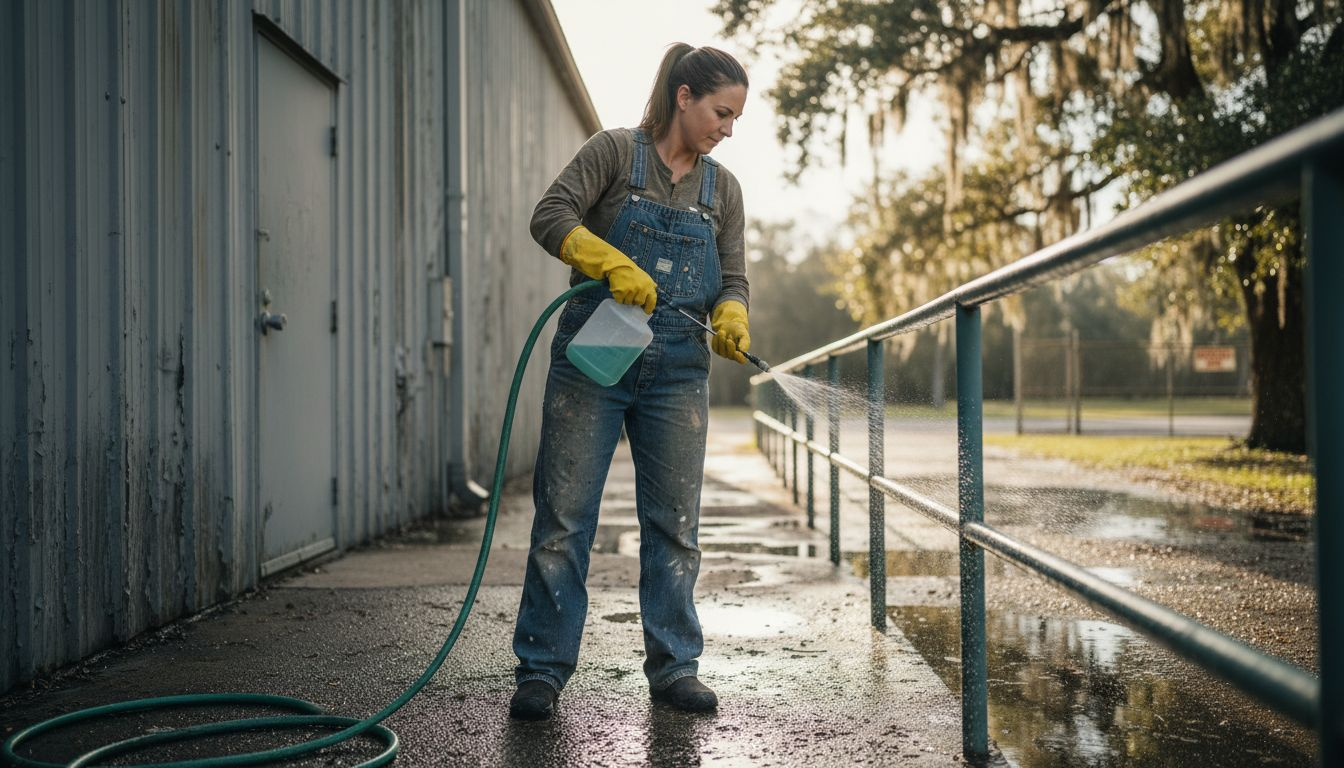
Low-pressure washing under 2000 psi safely removes surface deposits. Higher pressures erode coating surfaces and drive water beneath paint layers. Adjust nozzle distance to balance cleaning power with coating preservation.
Biodegradable detergents break down salt deposits and organic growth without attacking paint chemistry. Harsh chemicals can react with coating polymers, causing softening or discoloration. Test cleaning solutions on inconspicuous areas first.
Routine washing every 6 to 12 months controls salt buildup and UV damage. Consistency matters more than intensity. Regular light cleaning outperforms occasional aggressive scrubbing.
Avoid steel wire brushes and abrasive pads that scratch coating surfaces. These micro-scratches trap moisture and accelerate degradation. Soft-bristle brushes provide mechanical cleaning without surface damage.
Proper cleaning sequence:
- Pre-rinse surfaces to remove loose debris
- Apply biodegradable detergent and allow dwell time
- Gently scrub problem areas with soft brushes
- Rinse thoroughly from top to bottom
- Inspect cleaned surfaces for newly visible damage
Cleaning frequency directly impacts coating lifespan. Facilities removing contaminants biannually see coating life extended by approximately 30% compared to those cleaning sporadically. This maintenance pays for itself through deferred repainting costs.
Following industrial painting best practices during cleaning operations protects your investment. Small procedural improvements compound into major lifespan gains over asset lifecycles.
Pro Tip: Schedule cleaning after seasonal pollen drops and before hurricane season. This removes corrosive deposits before summer heat accelerates their damage.
Step 3: Repairing and spot treating damage
Timely repairs stop small problems from becoming budget-busting failures. Every day you delay addressing corrosion multiplies future repair costs.
Rust spot treatment protocol:
- Isolate affected areas and establish safety perimeters
- Remove all corrosion products using appropriate methods
- Clean substrate to white metal specification
- Apply compatible primer within surface preparation window
- Topcoat with matching industrial-grade paint system
Treat rust spots within 30 days of detection to prevent corrosion spread. Active corrosion grows exponentially once started. Early intervention contains damage and preserves surrounding coating integrity.
Sandblasting removes all corrosion and old coatings thoroughly. This aggressive surface prep creates the anchor profile needed for maximum coating adhesion. Proper preparation improves new coat adhesion by 40% compared to inadequate cleaning methods.
Compatible repair coatings match existing system chemistry and performance characteristics. Mismatched materials create weak interfaces prone to premature failure. Consult coating manufacturers for approved repair products.
Worker safety during sandblasting requires strict protocols. Abrasive media generates harmful dust requiring respiratory protection. Noise levels demand hearing protection. Flying debris necessitates eye shields and protective clothing. Following surface prep best practices protects both workers and coating quality.
Critical repair considerations:
- Feather edges of existing coating for smooth transitions
- Match color and gloss of surrounding areas for aesthetics
- Allow proper cure time before returning asset to service
- Document repairs for maintenance history tracking
- Monitor repaired areas during subsequent inspections
Professional sandblasting services Orlando providers offer ensures thorough corrosion removal and proper surface preparation. Their specialized equipment and expertise deliver results impossible with basic hand tools.
Step 4: Planning maintenance schedule and monitoring performance
Systematic scheduling transforms reactive firefighting into proactive asset management. Predictable maintenance intervals optimize both coating performance and budget allocation.
Schedule comprehensive maintenance every 3 to 5 years based on inspection findings. Environmental exposure severity guides interval selection. Harsh coastal locations need more frequent attention than protected inland sites.
Coating thickness gauges track protective layer depth objectively. Measuring remaining coating thickness predicts when repainting becomes necessary. Document measurements in maintenance databases for trend analysis.
Adhesion testing quantifies coating bond strength changes over time. Declining adhesion values signal approaching end of service life. This data supports evidence-based repainting decisions rather than guesswork.
| Monitoring Method | Frequency | Purpose |
|---|---|---|
| Visual inspection | Quarterly | Detect obvious coating failures and damage |
| Adhesion testing | Annually | Measure coating bond strength trends |
| Thickness gauging | Annually | Track protective layer erosion rates |
| Environmental assessment | Ongoing | Adjust schedules based on exposure changes |
Adjust maintenance frequency considering asset condition and exposure. Critical infrastructure requires more aggressive monitoring than non-essential structures. Facilities with demonstrated coating durability can extend intervals safely.
Detailed records anticipate future repainting needs and budget requirements. Tracking coating performance across similar assets identifies patterns. This intelligence improves specifications for future coating selections.
Ensure ongoing compliance with OSHA and local regulations during all maintenance activities. Safety standards protect workers while environmental rules safeguard surrounding communities. Partnering with contractors experienced in painting safety protocols Florida ensures regulatory compliance.
Maintenance scheduling best practices:
- Align deep maintenance with planned asset outages
- Budget for inspections and repairs separately from full repaints
- Train staff on documentation standards and procedures
- Review schedules annually adjusting for performance data
- Coordinate with industrial painting compliance Florida requirements
Common pitfalls and troubleshooting
Avoiding frequent mistakes protects coating investments and prevents premature failures. Learning from others’ errors saves both money and frustration.
High-pressure washing exceeding 2000 psi damages protective coatings irreparably. Water jets blast away surface layers you’re trying to preserve. The short-term visual improvement creates long-term degradation problems.
Delaying rust spot treatment allows corrosion to spread exponentially. What starts as a quarter-sized patch becomes a square-foot problem within months. Prompt action contains damage when repairs are still manageable.
Skipping safety protocols during sandblasting and painting risks worker health and project compliance. Respiratory hazards from dust and fumes cause serious long-term health effects. Proper PPE use protects teams and prevents regulatory violations.
Poor weather planning undermines coating effectiveness regardless of material quality. Applying coatings in rain or extreme humidity guarantees premature failure. Patience waiting for ideal conditions pays dividends in coating performance.
Operator training reduces common errors:
- Proper equipment settings and operation techniques
- Recognition of coating failure modes and causes
- Documentation standards for maintenance records
- Safety protocol compliance and emergency procedures
- Material selection and compatibility verification
Following proven industrial painting best practices systematically eliminates these avoidable problems. Standardized procedures ensure consistent quality regardless of which team member performs the work.
Pro Tip: Create laminated quick-reference cards with pressure washer settings, acceptable weather ranges, and safety checklist items. Keep these at equipment storage locations for easy reference.
“The most expensive coating failure is the one you could have prevented with a $50 repair last year. Early detection and prompt action separate efficient facility managers from those constantly fighting budget fires.”
Expected results and lifespan extensions
Diligent maintenance delivers measurable returns on investment through extended asset life and reduced emergency repairs. Understanding realistic outcomes helps justify program costs.
Regular maintenance extends painted surface lifespan from 7 to 12 years in Florida’s harsh environment. This 70% increase defers major repainting capital expenses significantly. Consistent care compounds benefits over multiple coating cycles.
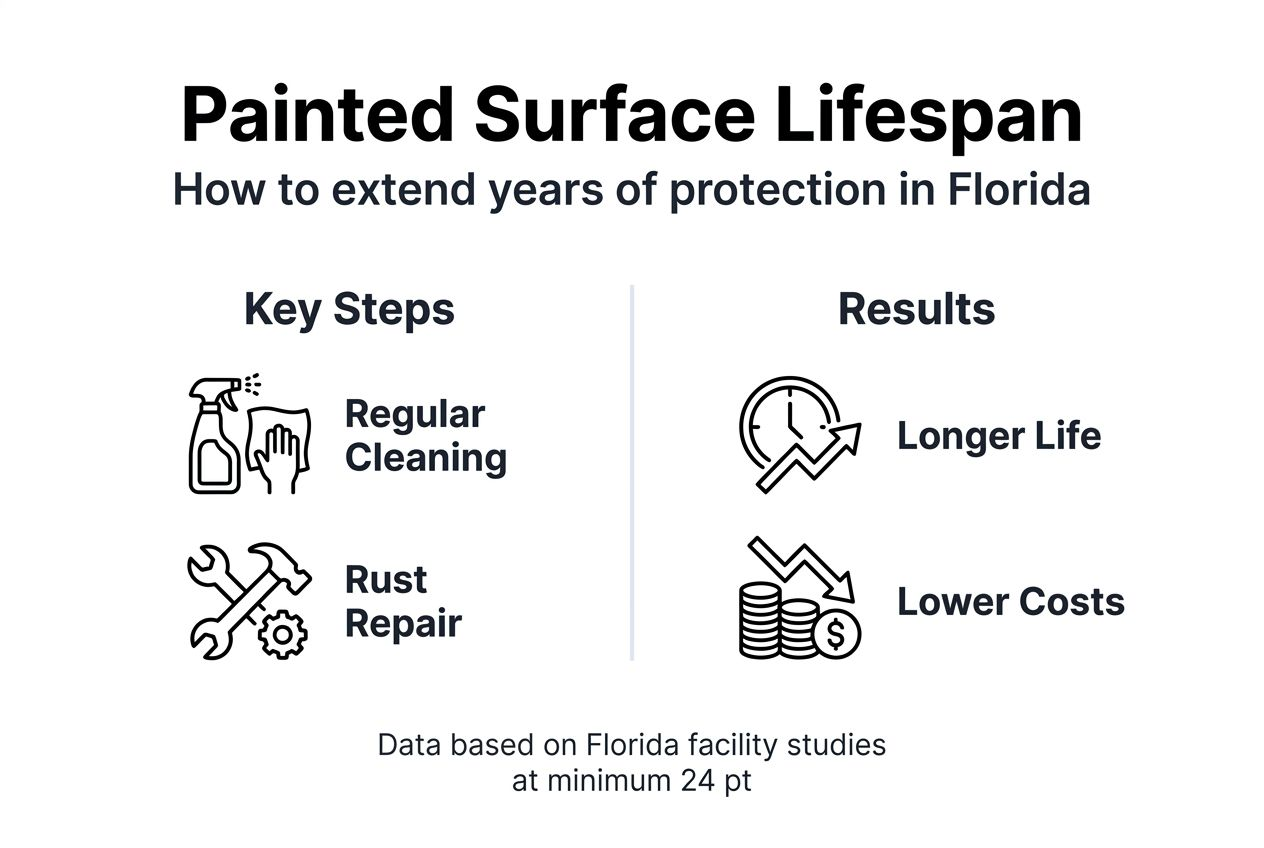
Timely rust repairs reduce full repaint costs by up to 30% through damage containment. Spot treatments cost a fraction of wholesale repainting. Early intervention preserves substrate integrity requiring less aggressive surface prep later.
Consistent adhesion and thickness monitoring ensures coating integrity throughout service life. Data-driven maintenance decisions replace guesswork with evidence. Objective measurements justify maintenance spending to budget stakeholders.
Quantifiable maintenance benefits:
- 30% coating life extension through biannual cleaning
- 40% improved adhesion from proper surface preparation
- 30% cost reduction addressing rust spots versus full repaint
- 50% reduction in emergency repairs through scheduled inspections
- Predictable budget requirements replacing crisis spending
Proper safety practices reduce health risks and operational downtime. Protected workers stay productive and healthy. Compliance prevents regulatory fines and project shutdowns.
Predictable maintenance scheduling optimizes budgets and asset availability. Planned outages for coating work minimize operational disruption. Long-term maintenance calendars support capital planning accuracy.
Understanding industrial coatings benefits Florida infrastructure receives justifies consistent maintenance investment. Protected assets deliver reliable service while neglected ones generate escalating repair costs and unexpected failures.
Explore professional sandblasting and painting services in Florida
Maintaining painted industrial surfaces demands specialized expertise and equipment many facilities lack in-house. Professional contractors bring efficiency and quality that maximize coating performance.
Professional Sandblasting Services Orlando facilities trust removes corrosion and old coatings thoroughly. Industrial-grade equipment achieves surface preparation standards impossible with basic tools. Proper prep creates the foundation for long-lasting coating adhesion.
Expert painting services ensure optimal coating application and durability. Experienced crews understand Florida’s climate challenges and select appropriate materials. Proper application technique maximizes coating performance and service life.
Specialized industrial coatings types Florida conditions require withstand environmental extremes. Professional contractors access high-performance coating systems unavailable through retail channels. Material selection expertise matches coatings to specific exposure conditions.
Partnering with experienced contractors streamlines maintenance workflows and ensures compliance. Professional sandblasting and painting services Orlando provides handle permitting, safety protocols, and quality documentation. Their systematic approach delivers consistent results across multiple maintenance cycles.
FAQ
What is the ideal frequency for cleaning painted industrial surfaces in Florida?
Cleaning every 6 to 12 months effectively controls salt deposits and UV-related deterioration in Florida’s climate. Consistency matters more than cleaning intensity. Facilities maintaining regular schedules see approximately 30% longer coating life compared to those cleaning sporadically. Adjust frequency based on coastal proximity and visible contamination buildup. Following industrial painting best practices guides appropriate scheduling.
How soon should rust spots be treated after detection?
Rust spots require treatment within 30 days of detection to prevent corrosion spread and escalating damage. Active corrosion grows exponentially once oxygen and moisture reach bare metal. Delays transform manageable spot repairs into expensive section replacements. Early intervention preserves surrounding coating integrity and substrate condition. Proper surface prep best practices ensure repairs last as long as original coatings.
What safety precautions are essential during sandblasting and repainting?
Respirators filter harmful dust and coating vapors during surface preparation and painting operations. Chemical-resistant gloves prevent skin contact with solvents and coating materials. Protective clothing shields against abrasive media and coating splashes. Eye protection guards against flying debris and chemical splashes. Following OSHA-compliant industrial painting safety protocols protects worker health and ensures regulatory compliance. Proper PPE use prevents respiratory illness, skin conditions, and eye injuries.
How can facility managers optimize maintenance schedules for painted surfaces?
Use inspection findings and environmental exposure data to establish evidence-based maintenance intervals rather than arbitrary schedules. Track coating thickness and adhesion measurements over time to predict repainting needs accurately. Maintain detailed logs documenting repairs, conditions, and performance to identify patterns. Align deep maintenance with planned asset outages to minimize operational disruption. Regular regular coating inspections Florida facilities perform generate the data needed for optimization. Adjust schedules as assets age and exposure conditions change.


