
Water tank coating types: 40% longer lifespan in Florida
Choosing the right coating for municipal water tanks in Florida means balancing safety, durability, and compliance against intense sun and humidity. The wrong choice accelerates degradation, shortens asset life, and drives up maintenance costs. This guide clarifies coating types including epoxy, polyurethane, polysiloxane, and zinc-rich primers, explaining their strengths, limitations, and best-fit uses. You’ll learn selection criteria, performance comparisons, and practical recommendations to protect your infrastructure investment.
Table of Contents
- Selection Criteria For Water Tank Coatings
- Epoxy Coatings
- Polyurethane Coatings
- Polysiloxane Topcoats
- Zinc-Rich Primers
- Surface Preparation And Application Best Practices
- Comparative Coating Performance
- Situational Recommendations For Florida Municipal Water Tanks
- Protect Your Water Tanks With Expert Sandblasting And Coating Services
Key takeaways
| Point | Details |
|---|---|
| Regulatory compliance | NSF/ANSI 61 compliance for potable water safety is mandatory to prevent contamination. |
| Coating selection | Epoxy excels indoors; polyurethane and polysiloxane suit Florida exteriors due to UV resistance. |
| Lifecycle benefits | Polysiloxane topcoats extend lifespan and reduce maintenance by 30 to 40%. |
| Corrosion protection | Zinc-rich primers provide vital base-layer defense on steel substrates. |
| Surface preparation | Professional sandblasting to SSPC-SP10 standard boosts coating longevity by 25 to 30%. |
Selection criteria for water tank coatings
You need clear criteria to navigate coating choices for municipal water tanks. Start with regulatory safety. NSF/ANSI 61 compliance for potable water safety is non-negotiable for drinking water tanks, ensuring coatings don’t leach harmful substances. Next, evaluate corrosion resistance because Florida’s humidity accelerates rust and substrate failure.
UV resistance is critical. In Florida’s humid and UV-intense environment, coatings with high UV resistance like polysiloxane and polyurethane are preferred over conventional epoxy to prevent premature degradation. Without UV stability, coatings chalk, lose gloss, and fail early. Consider these factors when comparing options:
- Regulatory compliance with safety standards
- Corrosion resistance for steel protection
- UV resistance to withstand intense sunlight
- Maintenance frequency and lifecycle costs
- Surface preparation quality for adhesion
Total cost of ownership matters as much as upfront price. Coatings requiring frequent reapplication increase labor, downtime, and long-term expenses. Surface preparation quality directly impacts adhesion and durability. Proper sandblasting removes rust, mill scale, and contaminants, setting the foundation for coating performance.
Epoxy coatings
Epoxy coatings deliver excellent adhesion to steel and strong chemical resistance, making them ideal for internal potable water linings. They bond tightly to prepared surfaces and withstand exposure to water and chemicals inside tanks. However, epoxy coatings have strong adhesion and chemical resistance but exhibit low UV stability, requiring a topcoat for outdoor exposure and lasting typically 15 to 25 years indoors.
Outdoors, epoxy chalks and loses gloss without a protective topcoat due to poor UV resistance. You’ll see surface degradation within a few years if used on exterior tanks in Florida’s sunlight. Epoxy also responds poorly to temperature cycling, performing best in stable indoor environments. Key characteristics include:
- Strong adhesion and chemical resistance
- Low UV resistance requiring topcoat outdoors
- Indoor service life of 15 to 25 years
- Sensitive to temperature fluctuations
- Best for sheltered or internal applications
Pro Tip: Always apply an approved UV-stable topcoat over epoxy for outdoor use to extend lifespan and prevent premature failure.
When you use epoxy coatings for internal linings, you benefit from proven performance in controlled environments. Epoxy remains a reliable choice for interior tank protection where UV exposure is minimal.
Polyurethane coatings
Polyurethane coatings excel in UV resistance and gloss retention, making them the preferred choice for exterior water tanks exposed to Florida’s intense sunlight. Polyurethane coatings offer excellent UV stability, flexibility, and impact resistance, making them ideal for exterior water tanks exposed to Florida’s sunlight and mechanical abrasion. They maintain appearance and protection far better than epoxy outdoors.
Flexibility is another advantage. Polyurethane resists cracking from tank expansion and contraction due to temperature changes and structural movement. This flexibility extends coating life by preventing stress cracks that lead to corrosion. Typical outdoor service life ranges from 10 to 20 years depending on exposure and maintenance. Consider these benefits:
- Excellent UV resistance and gloss retention
- Flexibility prevents cracking from expansion
- Good abrasion and impact resistance
- Outdoor service life of 10 to 20 years
- Suitable for harsh weather exposure
Pro Tip: Regular inspection helps catch minor abrasion damage before corrosion sets in, preserving tank integrity.
When you specify polyurethane exterior coatings, you get proven outdoor performance. This coating type balances durability, weather resistance, and cost for municipal water tanks.
Polysiloxane topcoats
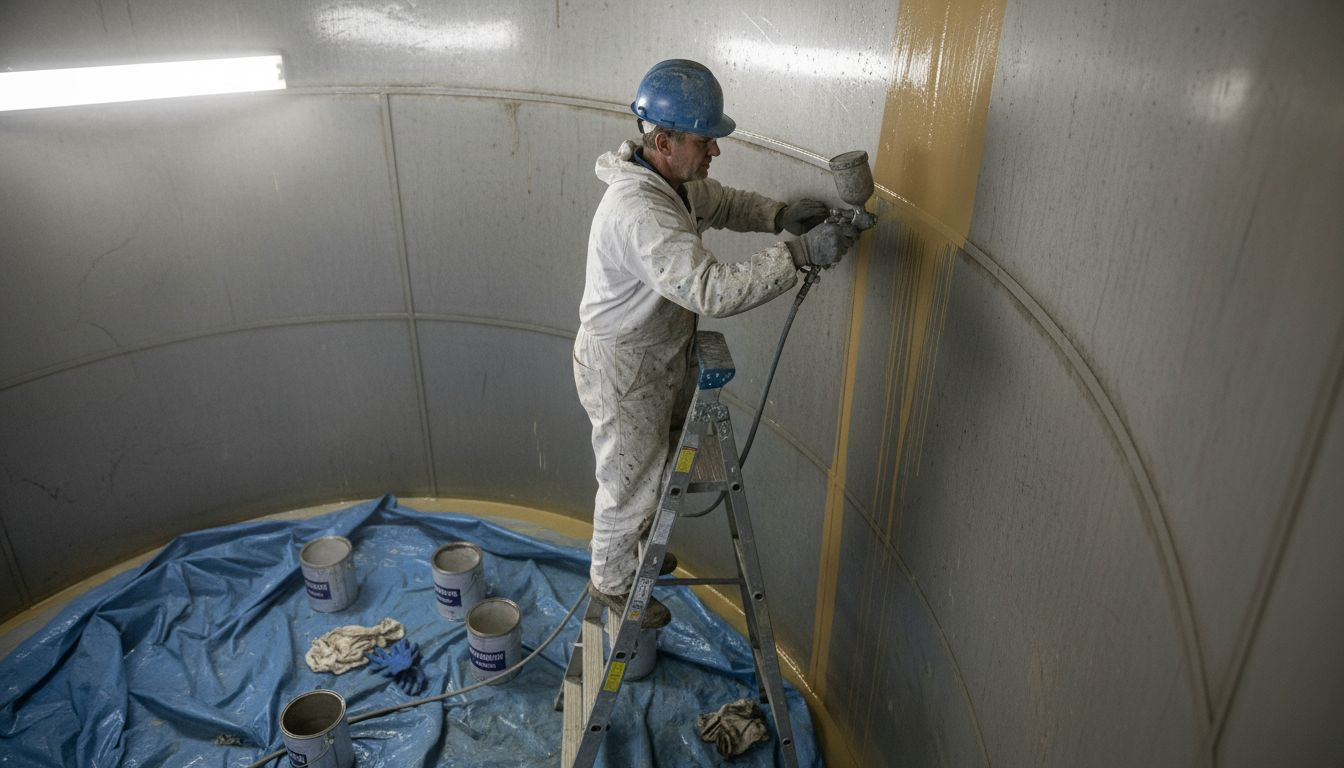
Polysiloxane topcoats represent the leading edge in water tank protection, combining the best features of epoxy and polyurethane. Polysiloxane topcoats combine epoxy durability with polyurethane UV resistance, offering quick curing, low maintenance, and extended gloss and color retention under intense sunlight. They cure quickly and contain low volatile organic compound (VOC) levels, aiding regulatory compliance.
Performance data is impressive. Polysiloxane topcoats outperform traditional polyurethane coatings in UV stability and gloss retention by up to 40% after 5 years, and reduce maintenance costs by up to 40% in harsh outdoor exposure. They maintain 85% gloss retention after five years and resist algae growth even under Florida sun. Maintenance becomes simpler, requiring only water rinses instead of harsh cleaners.
Recoating intervals extend significantly, reducing lifecycle labor and costs substantially. Key advantages include:
- Combined epoxy and polyurethane benefits
- Quick curing with low VOC content
- 85% gloss retention after 5 years
- Superior resistance to algae growth
- 30 to 40% extended maintenance intervals
- Reduced long-term labor and material costs
Pro Tip: Select polysiloxane coating advantages to optimize long-term durability and minimize maintenance downtime for outdoor tanks.
This coating technology delivers the longest service life and lowest total cost of ownership for Florida water tanks exposed to harsh conditions.
Zinc-rich primers
Zinc-rich primers provide foundational corrosion protection as base coats beneath topcoat systems. Zinc-rich primers provide sacrificial corrosion protection by actively preventing electrochemical reactions but require proper surface preparation and are usually used as primers beneath topcoats. These primers contain 80 to 95% zinc dust acting as sacrificial anodes to prevent steel corrosion.
When corrosion starts, zinc corrodes instead of steel, protecting the substrate. This sacrificial protection extends overall coating system durability in Florida’s corrosive environment. Zinc-rich primers require near-white metal surface cleanliness (SSPC-SP10) for optimal adhesion and performance. Without proper surface prep, primers fail to bond correctly. Key characteristics include:
- Contains 80 to 95% zinc dust
- Sacrificial anode corrosion protection
- Applied as base coat beneath topcoats
- Requires SSPC-SP10 surface preparation
- Essential for multi-layer coating systems
Many managers overlook this crucial component, but zinc-rich primer corrosion protection forms the foundation of durable coating systems on steel water tanks. Always include zinc-rich primers in your specification for maximum protection.
Surface preparation and application best practices
Proper surface preparation determines coating success more than any other factor. Surface preparation through professional sandblasting is critical for coating adhesion and longevity, removing all rust, mill scale, and contaminants to SSPC-SP10/NACE No.2 cleanliness standards. This near-white metal standard removes rust, mill scale, and contaminants that prevent adhesion. Sandblasting improves adhesion by 25 to 30%, directly impacting coating life and corrosion protection.
Skipping professional prep leads to premature coating failure, corrosion breakthrough, and costly reapplication. Environmental control during application matters too. Temperature, humidity, and surface conditions must meet coating manufacturer specifications for proper cure and performance. Follow these best practices:
- Blast to SSPC-SP10 near-white metal cleanliness
- Remove all dust and debris before coating
- Apply coatings within specified temperature and humidity ranges
- Follow manufacturer dry film thickness recommendations
- Allow proper cure time between coats
- Inspect for holidays, thin spots, and defects
Pro Tip: Never skip surface preparation SSPC-SP10 standards to avoid premature failures and costly reapplications.
Proper sequencing and quality control at every step maximize coating system performance. Work with experienced contractors who understand Florida conditions and follow industry standards rigorously.
Comparative coating performance
Understanding how coatings compare across key performance metrics helps you select the best fit for your water tanks. This table summarizes critical factors:
| Coating Type | UV Resistance | Corrosion Protection | Typical Lifespan | Maintenance | Relative Cost |
|---|---|---|---|---|---|
| Epoxy | Low (needs topcoat) | Excellent | 15-25 years (indoor) | Moderate | Low to Moderate |
| Polyurethane | Excellent | Good | 10-20 years (outdoor) | Moderate | Moderate |
| Polysiloxane | Superior | Excellent | 20-30 years (outdoor) | Low | Moderate to High |
| Zinc-Rich Primer | N/A (base coat) | Excellent (sacrificial) | Depends on topcoat | Low | Low to Moderate |
Polysiloxane topcoats outperform traditional polyurethane coatings in UV stability and gloss retention by up to 40% after 5 years in harsh outdoor exposure. This performance advantage translates to reduced maintenance costs of 30 to 40% over the coating’s lifespan. Quick evaluation points:
- Epoxy: Best for internal tanks, excellent chemical resistance, poor UV stability
- Polyurethane: Good for exterior tanks, strong UV resistance, moderate flexibility
- Polysiloxane: Superior for UV-exposed tanks, extended maintenance intervals, highest durability
- Zinc-Rich Primer: Essential base layer, sacrificial corrosion protection, requires topcoat
When you review coating types comparison and benefits, consider your specific tank environment, maintenance budget, and required service life. The right choice balances upfront investment with long-term performance.
Situational recommendations for Florida municipal water tanks
Your coating choice depends on tank location, use case, and maintenance priorities. Internal tanks or sheltered environments avoiding direct sunlight perform best with epoxy coatings. You get excellent chemical resistance and adhesion at moderate cost. For interior linings where UV isn’t a concern, epoxy delivers proven 15 to 25-year service life.
Exterior tanks requiring good abrasion and UV resistance at moderate cost suit polyurethane coatings well. If you need balance between performance and budget for outdoor tanks, polyurethane offers 10 to 20-year service life with solid weather protection. UV-exposed tanks where long-term durability and low maintenance are priorities benefit most from polysiloxane topcoats. The extended maintenance intervals and superior gloss retention justify the higher initial investment.
Apply zinc-rich primers on all steel tanks beneath topcoats for added corrosion protection. This sacrificial layer prevents substrate corrosion even if topcoats are damaged. Key recommendations:
- Internal tanks or sheltered areas: Epoxy coatings
- Exterior tanks with moderate exposure: Polyurethane coatings
- High UV exposure requiring minimal maintenance: Polysiloxane topcoats
- All steel substrates: Zinc-rich primers as base coat
- Every application: Thorough surface preparation to SSPC-SP10
Factor in thorough surface preparation and environmental exposure for optimal coating performance. Review situational coating recommendations with your contractor to match coating systems to your specific tanks and budget.
Protect your water tanks with expert sandblasting and coating services
You’ve learned how coating selection, surface preparation, and application quality determine water tank lifespan. Implementing these solutions requires experienced contractors who understand Florida conditions and industry standards.
Southern Sandblasting & Painting offers professional sandblasting in Orlando to achieve SSPC-SP10 surface preparation needed for durable coatings. Our 20+ years of experience includes expert surface preparation services and tailored coating solutions for Florida municipal water tanks. We ensure NSF/ANSI 61 compliance and apply the right coating systems to extend your asset lifespan while reducing maintenance costs. Partner with trusted contractors to maximize your water tank’s performance and minimize total cost of ownership.
FAQ
Which water tank coating types are safe for potable water systems?
Only coatings certified to NSF/ANSI 61 potable water safety standards are tested and approved for drinking water tank use. These certifications ensure coatings don’t leach harmful substances into water supplies. Always verify current certification before specifying coatings for potable water tanks.
How does Florida’s climate affect water tank coating choices?
High UV exposure causes chalking and gloss loss in coatings lacking UV stability like epoxy outdoors. Florida climate impact on coatings includes accelerated corrosion from humidity, requiring coatings with strong corrosion resistance and proper surface preparation. Polyurethane and polysiloxane perform best in Florida’s harsh conditions.
What maintenance can extend my water tank coating lifespan?
Routine inspections catch early damage like chips or cracks to repair before corrosion spreads. Regular cleaning, especially for polysiloxane topcoats, reduces dirt and algae buildup that can trap moisture. Plan water tank coating maintenance tips and recoating intervals per manufacturer recommendations and Florida exposure levels.
Why is surface preparation so important for coating performance?
Surface preparation to SSPC-SP10 standard removes contaminants that prevent coating adhesion, improving bond strength by 25 to 30%. Without proper sandblasting, coatings fail prematurely regardless of type or quality. Professional surface prep is the foundation of coating system durability and cost-effectiveness.


