
Managing the upkeep of water treatment infrastructure in Central Florida means facing tough decisions about protecting surfaces from corrosion and environmental stress. For facility managers, getting industrial painting right is much more than appearance. It is about compliance, safety, and avoiding premature failures of critical assets. This guide highlights strategic surface preparation and rigorous painting standards to help you maintain reliability and meet industry regulations with confidence.
Table of Contents
- Step 1: Assess And Prepare Surfaces Thoroughly
- Step 2: Select Compliant Coatings And Equipment
- Step 3: Implement Controlled Application Methods
- Step 4: Monitor And Maintain Quality Standards
- Step 5: Verify Coating Integrity And Compliance
Quick Summary
| Key Insight | Explanation |
|---|---|
| 1. Proper Surface Assessment is Crucial | Thoroughly inspect and prepare surfaces to enhance paint adhesion and prevent premature failures. |
| 2. Select Compliant Materials | Choose industrial coatings that meet performance standards and environmental conditions for durability. |
| 3. Control Application Techniques | Implement precise application methods for uniform coverage and optimal coating performance. |
| 4. Monitor Quality Standards | Establish rigorous quality control protocols to ensure compliance and prevent issues throughout the project. |
| 5. Verify Coating Integrity | Conduct comprehensive evaluations to confirm adherence to specifications and maintain project quality. |
Step 1: Assess and Prepare Surfaces Thoroughly
Successfully painting industrial surfaces requires meticulous surface assessment and preparation. Your goal is creating a clean, properly profiled surface that ensures optimal paint adhesion and long-term durability for critical infrastructure projects.
Preparing surfaces involves several strategic steps that demand precision and attention to detail. Start by thoroughly inspecting the surface condition, looking for existing contaminants like oil, grease, rust, and non-adhering materials that could compromise coating performance. The critical surface cleaning standards outlined by industrial specifications require comprehensive removal of these impediments.
Your surface preparation workflow should include:
- Mechanical cleaning techniques like sandblasting or power tool preparation
- Chemical degreasing to eliminate surface contaminants
- Removing loose rust, mill scale, and previous coating remnants
- Establishing the appropriate surface profile for paint adhesion
Communication between project stakeholders is crucial during this phase. Coordinate with fabricators, painters, and coating specialists to determine the most appropriate preparation method based on your specific surface condition and environmental requirements.
Proper surface preparation is the foundation of a successful industrial painting project – shortcuts will lead to premature coating failure.
Pro tip: Always conduct a small test patch to verify your surface preparation technique achieves the required cleanliness and profile before committing to the full project.
Step 2: Select Compliant Coatings and Equipment
Selecting the right industrial coatings and equipment requires careful consideration of performance standards, environmental conditions, and regulatory requirements. Your primary objective is choosing materials that will provide long-lasting protection and meet stringent industry specifications.
Begin by reviewing critical coating standards and specifications that govern industrial painting projects. These standards outline essential criteria for material selection, including chemical resistance, durability, application methods, and environmental compatibility.
Key considerations for coating and equipment selection include:
- Compatibility with substrate material
- Expected environmental exposure conditions
- Temperature and chemical resistance requirements
- Specific performance standards for your industry
- Long-term maintenance and recoating strategies
Evaluating coating performance demands a comprehensive approach. Examine technical data sheets, review manufacturer specifications, and consult industry experts to ensure your selected materials meet all project requirements. Pay close attention to application parameters such as recommended film thickness, curing conditions, and environmental limitations.
Not all coatings are created equal – selecting the wrong material can compromise your entire infrastructure project.
Pro tip: Request material samples and conduct small-scale testing before committing to a full-scale application to verify coating performance and compatibility.
Step 3: Implement Controlled Application Methods
Controlling the industrial painting application process is critical for achieving consistent, high-quality coating performance across your infrastructure project. Your primary goal is to execute precise application techniques that ensure uniform coverage and maximum coating durability.
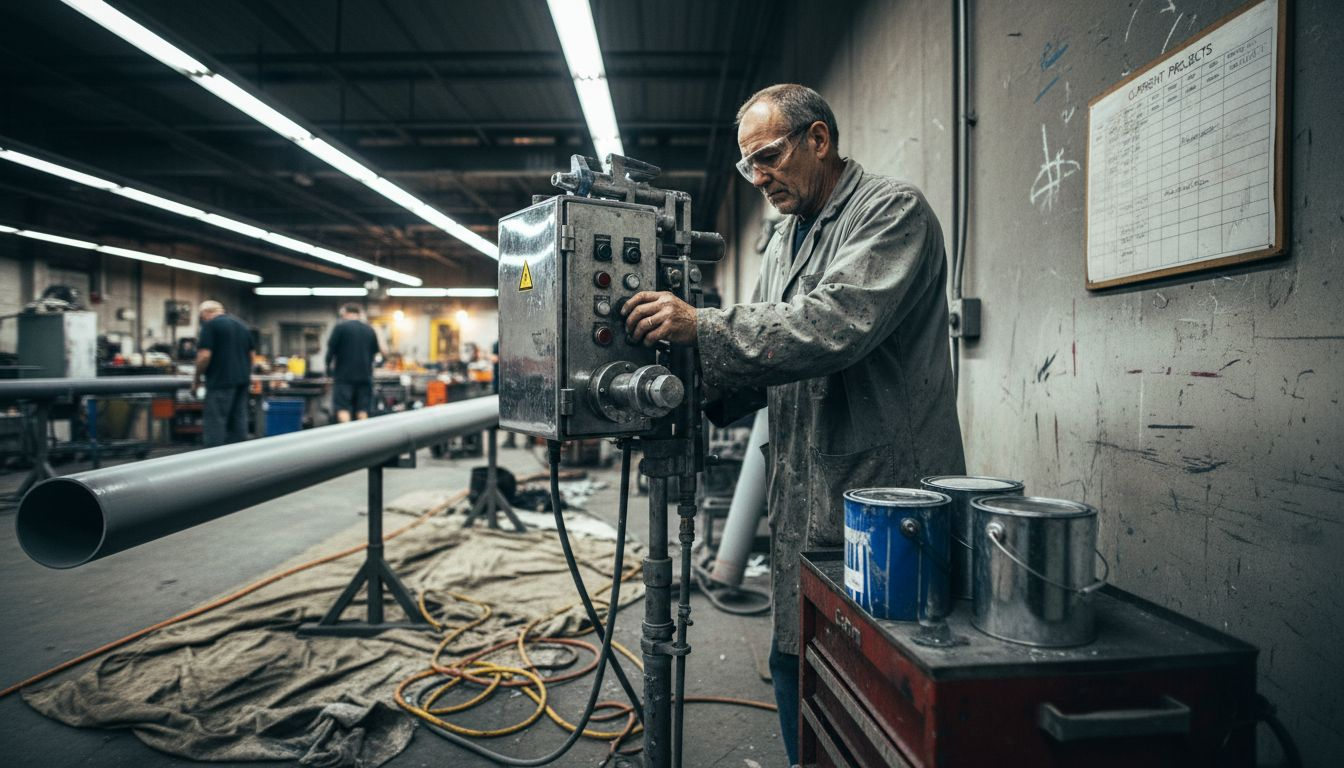
Implement systematic painting application protocols that account for environmental variables and specific project requirements. Understanding the nuanced interactions between coating materials, application equipment, and environmental conditions will directly impact your project’s long-term success.
Key application method considerations include:
- Selecting appropriate application tools (spray equipment, rollers, brushes)
- Monitoring environmental conditions like temperature and humidity
- Maintaining consistent coating thickness
- Controlling surface preparation and application environment
- Verifying equipment calibration and maintenance
Spray application techniques require particular attention. Professional industrial painters must maintain precise equipment settings, control spray distance, and ensure overlapping coverage to prevent inconsistent film thickness. Equipment preparation is equally crucial – thoroughly clean and calibrate spray equipment before each use to avoid contamination and uneven coating.
Precision in application methods separates professional industrial coating from amateur attempts.
Pro tip: Create a detailed application log documenting environmental conditions, equipment settings, and coating performance to track and improve your painting processes.
Step 4: Monitor and Maintain Quality Standards
Ensuring consistent quality throughout your industrial painting project requires a systematic and comprehensive approach to quality control. Your objective is to implement rigorous monitoring processes that validate coating performance and compliance with industry specifications.
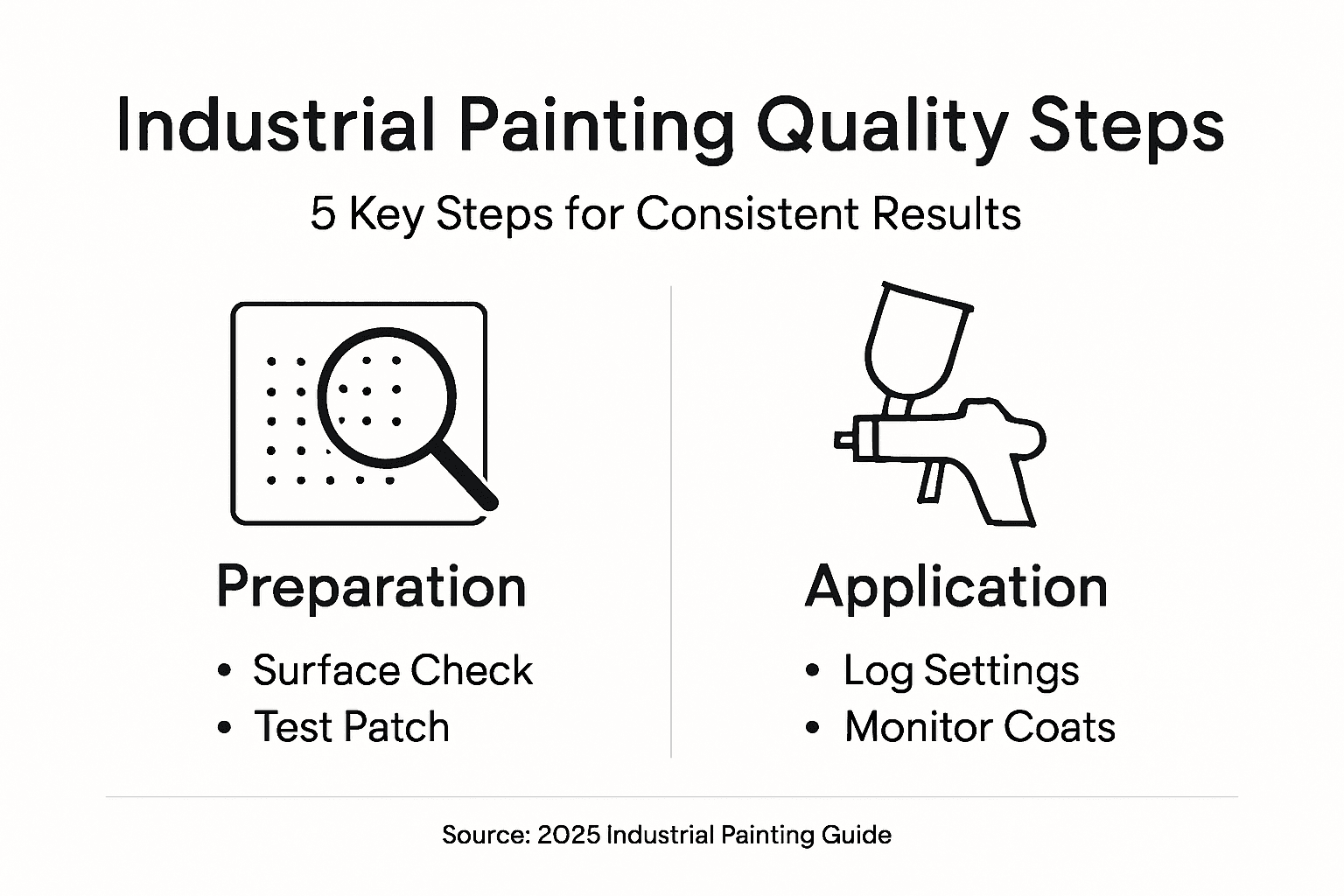
Develop comprehensive quality control protocols that cover every phase of your painting project. These protocols should include detailed inspection procedures before, during, and after coating application to identify and address potential issues proactively.
Key quality monitoring strategies include:
- Conducting initial material and surface inspections
- Performing regular in-progress quality assessments
- Documenting environmental conditions during application
- Measuring coating thickness and uniformity
- Executing final comprehensive performance evaluations
Quality documentation plays a critical role in maintaining standards. Develop a robust tracking system that records every aspect of the painting process, from surface preparation to final inspection. Independent verification adds an extra layer of accountability, allowing third-party experts to validate your quality control efforts.
Quality is not an act, but a continuous process of measurement and improvement.
Pro tip: Create digital inspection checklists with photographic evidence to build a comprehensive record of your project’s quality control process.
Step 5: Verify Coating Integrity and Compliance
Verifying coating integrity is the critical final phase that determines the long-term success of your industrial painting project. Your objective is to conduct comprehensive evaluations that confirm the coating meets all performance specifications and industry standards.
Utilize advanced coating inspection techniques that systematically assess surface quality, thickness, and potential defects. These non-destructive evaluation methods provide a detailed understanding of coating performance and potential risk areas.
Key verification strategies include:
- Measuring precise coating thickness using digital gauges
- Conducting adhesion and pull-off tests
- Performing visual and instrumental surface inspections
- Evaluating environmental resistance characteristics
- Documenting comprehensive inspection results
Non-destructive testing methods play a crucial role in maintaining coating integrity. Professional inspectors use specialized equipment to detect potential weaknesses without damaging the coating surface. Systematic documentation ensures you can track coating performance over time and provide evidence of compliance with industry standards.
A thorough inspection today prevents costly repairs and failures tomorrow.
Pro tip: Invest in digital inspection tools that provide real-time data and generate automated compliance reports for easier quality management.
This table compares popular coating inspection methods and their practical advantages:
| Inspection Method | What It Detects | Practical Advantage |
|---|---|---|
| Digital Thickness Gauge | Coating thickness errors | Fast, accurate, non-destructive |
| Adhesion/Pull-off Test | Bonding strength issues | Reveals potential coating failures |
| Visual Surface Inspection | Surface flaws and defects | Quick detection of visible problems |
| Environmental Resistance | Durability in conditions | Confirms suitability for exposure |
Here’s a summary showing how each step adds strategic value to an industrial painting project:
| Project Step | Main Objective | Key Value to Project |
|---|---|---|
| Surface Assessment & Preparation | Optimize adhesion and durability | Prevents premature failures |
| Coating & Equipment Selection | Choose materials meeting standards | Ensures long-term protection |
| Controlled Application Methods | Achieve uniform, high-quality finish | Promotes consistent results |
| Quality Monitoring & Maintenance | Systematically verify each phase | Proactively prevents rework |
| Integrity Verification & Compliance | Confirm final specification adherence | Demonstrates regulatory compliance |
Elevate Your Industrial Painting Projects with Proven Expertise
Achieving flawless surface preparation and durable coating application is vital to prevent premature failures and costly rework. If you are seeking to overcome challenges such as ensuring optimal adhesion, selecting compliant coatings, and maintaining strict quality control, Southern Sandblasting & Painting LLC is your trusted partner. With over 20 years of experience in Central Florida, we specialize in thorough sandblasting & painting services designed to extend the lifespan of critical infrastructure.
Don’t leave your industrial painting project to chance. Harness our deep knowledge of controlled application methods, regulatory compliance, and advanced coating integrity verification. Visit Industrial Painting to explore how our skilled team can deliver tailored solutions. Start today by connecting with us at Southern Sandblasting & Painting LLC and secure a resilient finish for your facility.
Frequently Asked Questions
What are the key steps for successful industrial surface preparation?
To ensure optimal paint adhesion and durability, start with a thorough inspection of the surface condition. Follow with mechanical cleaning, chemical degreasing, and establishing the right surface profile to prepare the surface effectively.
How can I select the right industrial coatings for my project?
Review essential performance standards that apply to your specific industry. Choose coatings based on compatibility with substrate materials, exposure conditions, and chemical resistance to ensure long-lasting protection.
What techniques should I use for the controlled application of coatings?
Utilize systematic application protocols designed to maintain consistent coverage and thickness. Monitor environmental conditions carefully and regularly calibrate your application equipment to achieve high-quality results.
What quality control measures should I implement during an industrial painting project?
Establish comprehensive monitoring protocols that include both in-progress assessments and final evaluations. Conduct regular thickness measurements, document environmental conditions, and ensure that you verify compliance with industry standards.
How do I verify the integrity of the coating after application?
Perform thorough inspections using non-destructive testing methods to assess coating thickness, adhesion, and overall surface quality. Document all findings to maintain a clear record of compliance with specifications and to identify any potential issues.
Recommended
- Industrial Painting Trends 2025: Impact on Facility Longevity
- Industrial Painting Process—Ensuring Asset Longevity
- Industrial-Grade Paint: Lasting Protection for Infrastructure
- 7 Top Industrial Painting Methods for Long-Lasting Results
- Sandblasting Contractor Baldwin Park FL
- Sandblasting Services Oviedo FL


