
Facility managers across Central Florida know the pressure of keeping municipal facilities durable and compliant as regulations shift. Industrial painting is rapidly moving beyond basic surface coverage into a technology-driven field, where advanced automation and sustainable coatings are setting the standard for 2025. This article spotlights how smart solutions and new coatings can help extend asset lifespans, reduce regulatory headaches, and support resilient community infrastructure.
Table of Contents
- Defining Industrial Painting for 2025
- Eco-Friendly and VOC-Free Coatings Rise
- Automation and Smart Technologies in Application
- Compliance, Safety, and Regulatory Changes
- Asset Longevity Strategies for Municipal Facilities
- Cost, Workforce, and Market Implications
Key Takeaways
| Point | Details |
|---|---|
| Technological Evolution | Industrial painting is evolving through innovations like automation and smart technologies, enhancing precision and efficiency. |
| Sustainability Focus | The shift towards eco-friendly and zero-VOC coatings is driven by regulatory demands and a commitment to environmental responsibility. |
| Compliance and Safety | Navigating complex regulatory requirements is essential for facility managers, necessitating advanced documentation and proactive safety measures. |
| Strategic Asset Management | Developing comprehensive asset longevity strategies is crucial for maintaining municipal infrastructure performance and reducing long-term costs. |
Defining Industrial Painting for 2025
Industrial painting in 2025 represents a sophisticated technological ecosystem focused on protecting critical infrastructure through advanced surface treatment methodologies. The sector is experiencing unprecedented transformation, driven by technological innovation and sustainability demands. Modern industrial painting transcends traditional coating applications, emerging as a complex discipline integrating automation, precision engineering, and environmental considerations.
The landscape of industrial painting is fundamentally shifting, with key developments centered around technological integration and efficiency improvements. Industrial painting technology is undergoing significant transformation through several critical innovations:
- Advanced automation systems replacing manual techniques
- Digital monitoring and quality control technologies
- Enhanced sustainable coating formulations
- Precision application methods reducing material waste
- Integrated sensors for real-time performance tracking
Technological advancements are reshaping industrial painting’s core capabilities, enabling more sophisticated approaches to surface protection. Facility managers now have access to painting solutions that provide unprecedented longevity, durability, and performance metrics. These emerging technologies allow for more precise, efficient, and environmentally responsible coating applications across diverse industrial infrastructure.
The evolution of industrial painting reflects broader industrial trends toward smart, sustainable infrastructure maintenance. By integrating cutting-edge technologies with traditional protective coating principles, the sector is developing more intelligent, adaptive surface treatment strategies that can significantly extend asset lifespans and reduce long-term maintenance costs.
Here’s a comparison of modern industrial painting technologies and their organizational impact:
| Technology | Key Benefit | Impact on Operations |
|---|---|---|
| Automation | Streamlines procedures | Reduces manual labor, increases consistency |
| Digital Monitoring | Real-time quality insights | Enhances diagnostics, improves reliability |
| Sustainable Coatings | Eco-conscious protection | Minimizes emissions, boosts compliance |
| Integrated Sensors | Performance tracking | Enables predictive maintenance, reduces downtime |
Pro tip: Invest in comprehensive training programs that help your technical teams understand emerging industrial painting technologies and their strategic implementation.
Eco-Friendly and VOC-Free Coatings Rise
The industrial painting landscape is experiencing a transformative shift toward environmentally conscious solutions, driven by stringent regulatory requirements and increasing sustainability demands. Volatile organic compound (VOC) reduction has become a critical focus for facility managers seeking to minimize environmental impact while maintaining superior protective performance.
EPA regulations are mandating lower VOC limits for industrial coatings, compelling manufacturers to develop innovative eco-friendly alternatives. These emerging coating technologies offer remarkable benefits:
- Zero emissions during application
- Comparable durability to traditional coatings
- Improved indoor air quality
- Reduced environmental contamination
- Enhanced worker safety
Powder coatings have emerged as a particularly promising solution, providing zero-VOC protection with exceptional performance characteristics. These advanced coating systems deliver superior corrosion resistance, overspray recovery capabilities, and remarkable durability across diverse industrial applications.
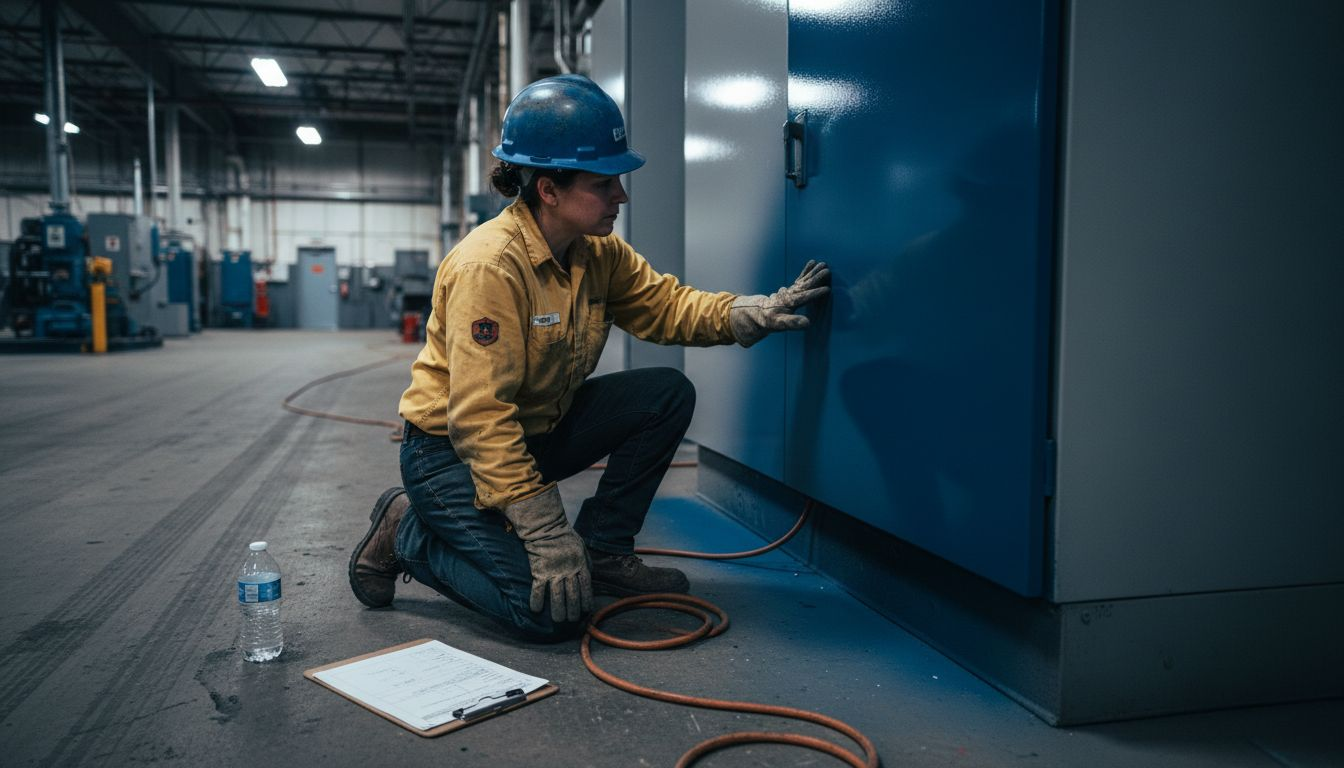
The transition to eco-friendly coatings represents more than a regulatory compliance strategy—it’s a fundamental reimagining of surface protection technologies. By integrating sustainable materials and advanced chemical engineering, manufacturers are creating coating solutions that meet increasingly sophisticated environmental and performance standards.
Pro tip: Conduct comprehensive performance testing when transitioning to zero-VOC coatings to ensure compatibility with your specific industrial infrastructure requirements.
Automation and Smart Technologies in Application
The industrial painting sector is experiencing a revolutionary transformation through advanced automation and smart technologies that are redefining precision, efficiency, and safety. Robotic painting systems are rapidly replacing traditional manual application methods, introducing unprecedented levels of consistency and performance across complex industrial surfaces.
Robotic automation enhances precision and efficiency by integrating sophisticated technologies that address long-standing industry challenges. These cutting-edge systems offer remarkable capabilities:
- 3D surface scanning for complex geometries
- Trajectory optimization algorithms
- Real-time coating thickness monitoring
- Automated material waste reduction
- Precise application on challenging surfaces
Smart manufacturing technologies are transforming industrial painting from a labor-intensive process to an intelligent, data-driven operation. The integration of Internet of Things (IoT) sensors and artificial intelligence enables unprecedented process optimization, allowing facility managers to monitor coating applications with extraordinary granularity.
Smart manufacturing technologies improve industrial operations by providing real-time insights and predictive maintenance capabilities. These innovations represent a fundamental shift in how industrial painting processes are conceived, executed, and managed, positioning the industry at the forefront of technological innovation.
Pro tip: Invest in cross-training your technical team to understand both traditional painting techniques and emerging automated technologies to maximize operational flexibility.
Compliance, Safety, and Regulatory Changes
Industrial painting operations are navigating an increasingly complex landscape of regulatory requirements that demand unprecedented levels of precision, documentation, and environmental responsibility. Regulatory compliance has evolved from a background administrative task to a critical strategic consideration for facility managers and industrial painting professionals.
EPA VOC regulations are transforming industrial painting practices with stringent new standards that directly impact product selection and application processes. Key compliance requirements include:
- Strict emissions limitations
- Mandatory low-VOC product usage
- Comprehensive record-keeping protocols
- Routine environmental testing
- Significant financial penalties for violations
Workplace safety standards are simultaneously undergoing dramatic transformations, introducing more sophisticated frameworks that address emerging technological and environmental challenges. Evolving safety regulations require comprehensive risk assessments that go beyond traditional compliance checklists, demanding proactive and adaptive approaches to industrial workplace protection.
The intersection of environmental regulations and safety standards is creating a new paradigm for industrial painting operations. Facility managers must now integrate advanced technologies, maintain meticulous documentation, and develop robust training programs that ensure both regulatory compliance and worker protection in an increasingly complex industrial landscape.
Pro tip: Develop a comprehensive compliance management system that integrates real-time tracking of regulatory changes, documentation requirements, and safety protocols.
Asset Longevity Strategies for Municipal Facilities
Municipal infrastructure represents a complex ecosystem of critical assets that demand sophisticated, proactive management strategies to ensure long-term performance and community resilience. Strategic asset management has evolved from reactive maintenance to a comprehensive approach integrating advanced technologies, predictive analysis, and sustainable preservation techniques.
Strategic asset management frameworks help optimize urban infrastructure by implementing systematic approaches to preservation and maintenance. Key strategic components include:
- Comprehensive condition assessments
- Risk-based prioritization protocols
- Data-driven maintenance scheduling
- Budget allocation optimization
- Predictive performance modeling
Federal infrastructure investments are creating unprecedented opportunities for municipal facilities to modernize and extend asset lifespans. Municipal facility managers prioritize infrastructure longevity through integrated strategies that balance technological innovation, financial constraints, and community needs.
Successful asset longevity requires a holistic approach that combines advanced coating technologies, proactive maintenance protocols, and strategic resource allocation. Facility managers must develop adaptive frameworks that integrate real-time monitoring, predictive maintenance, and sustainable material selection to maximize infrastructure performance and minimize long-term replacement costs.
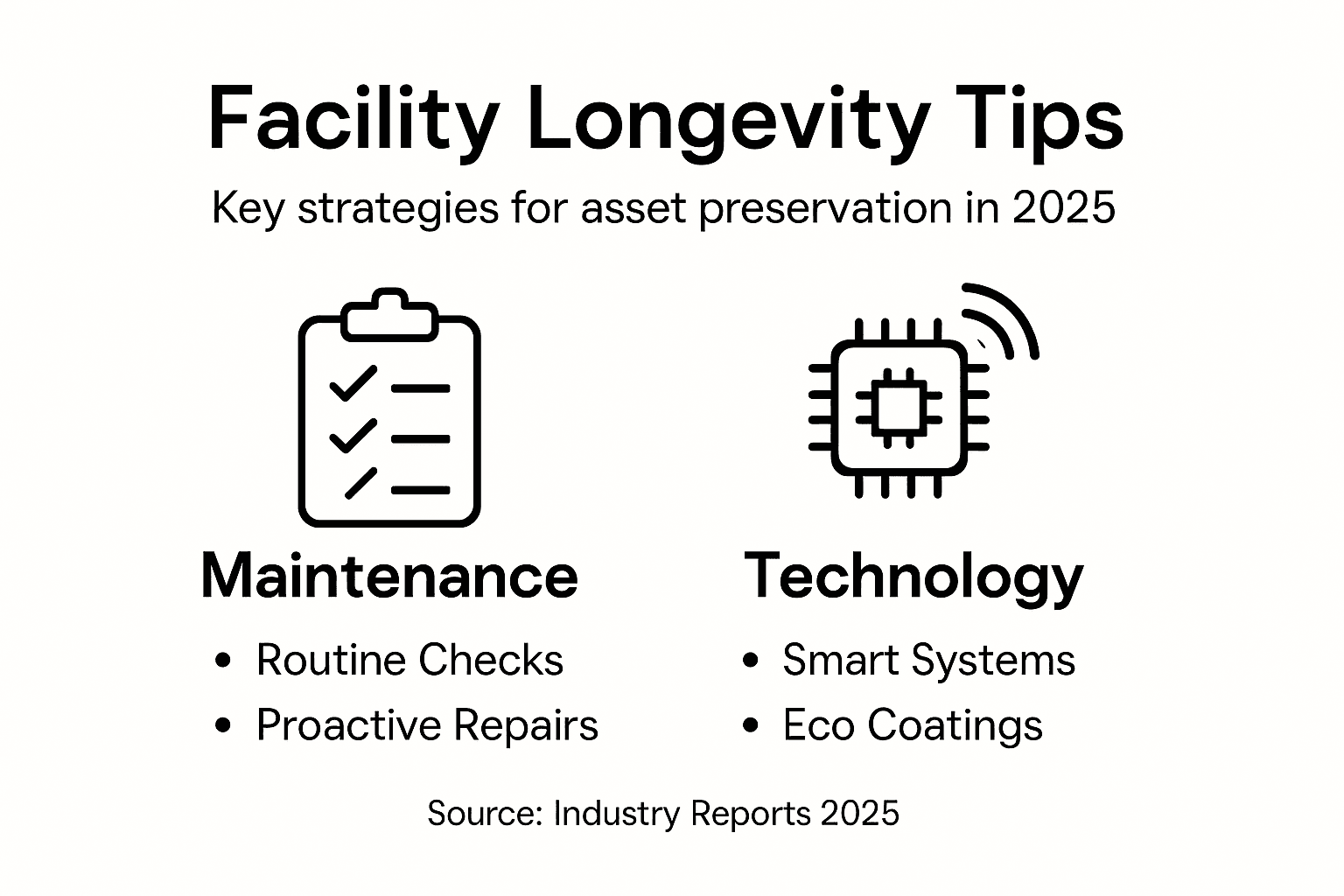
The following table summarizes asset longevity strategies for municipal facilities:
| Strategy | Purpose | Result |
|---|---|---|
| Condition Assessment | Identify asset weaknesses | Targets repairs to extend life |
| Data-Driven Scheduling | Optimize maintenance timing | Reduces disruption, saves budget |
| Predictive Modeling | Forecast performance needs | Prevents failures, increases reliability |
| Material Selection | Choose durable coatings | Improves resilience, reduces replacements |
Pro tip: Develop a comprehensive digital asset management system that tracks maintenance history, predicts future performance, and enables data-driven decision-making for infrastructure preservation.
Cost, Workforce, and Market Implications
The industrial painting sector is experiencing profound transformations driven by economic uncertainties, technological disruptions, and evolving workforce dynamics. Market complexity has increased exponentially, challenging traditional business models and requiring sophisticated strategic adaptations from industry participants.
The U.S. industrial painting market faces moderate growth challenges with several critical market considerations:
- Fluctuating raw material costs
- Global economic uncertainties
- Supply chain disruptions
- Regulatory compliance expenses
- Technology investment requirements
Workforce dynamics are simultaneously undergoing significant restructuring. Painting and coating worker employment shows slow growth trends reflecting broader industrial transformations, with median wages around $47,390 annually and increasing emphasis on technological proficiency.
The intersection of technological innovation, economic constraints, and workforce evolution demands a strategic reimagining of industrial painting business models. Companies must develop adaptive approaches that balance technological investments, workforce training, and market responsiveness to maintain competitive positioning in an increasingly complex industrial landscape.
Pro tip: Develop a comprehensive workforce development strategy that integrates continuous technological training and skills adaptation to maintain organizational resilience.
Extend the Life of Your Facility with Proven Industrial Painting Solutions
The challenge of maintaining asset longevity while navigating evolving industrial painting trends requires expert surface preparation and advanced coating applications. Facility managers face increasing demands such as compliance with low-VOC regulations, precision application, and sustainable practices to protect critical infrastructure from premature wear and costly repairs. At Southern Sandblasting & Painting LLC, we understand these pain points and offer tailored industrial painting services that incorporate expert sandblasting and protective coatings engineered to enhance durability and comply with the latest industry standards.
Industrial Painting and Sandblasting & Painting form the cornerstone of our comprehensive approach to asset preservation.
Take the next step to future-proof your municipal or commercial assets with Southern Sandblasting & Painting LLC. With over 20 years of proven expertise in Central Florida, we deliver high-quality, durable coatings that extend facility lifespans while meeting rigorous regulatory and safety requirements. Visit us today at https://southernsandblastingandpainting.com to request a consultation and secure expert solutions that protect your investments now and for years to come.
Frequently Asked Questions
What is modern industrial painting in 2025?
Modern industrial painting in 2025 involves sophisticated technologies aimed at protecting infrastructure through advanced surface treatment methods, integrating automation, precision engineering, and sustainability.
How do eco-friendly coatings contribute to facility longevity?
Eco-friendly coatings, particularly zero-VOC options like powder coatings, provide long-lasting protection while improving indoor air quality and reducing environmental contamination, thereby extending asset lifespans.
What role does automation play in industrial painting?
Automation enhances precision, efficiency, and consistency in industrial painting by utilizing robotic systems that optimize application processes and decrease material waste, significantly improving overall operational capabilities.
Why is regulatory compliance important in industrial painting?
Regulatory compliance ensures that industrial painting operations adhere to environmental standards, such as low-VOC usage, which is crucial for minimizing ecological impact and avoiding financial penalties, thus contributing to the long-term success of facility management.
Recommended
- Protective Coating Trends 2025: Innovations for Infrastructure
- Role of Coatings in Longevity – Extending Asset Lifespans
- 7 Key Protective Coating Advantages for Facility Managers
- Industrial-Grade Paint: Lasting Protection for Infrastructure
- 7 Key Benefits of PVC Cladding for Facility Managers
- Sandblasting Contractor Baldwin Park FL
- Sandblasting Services Oviedo FL


