
Selecting the right painting process for Florida’s infrastructure protects your assets from costly failures and regulatory risks. Neglecting proper surface preparation and coating application can trigger fines exceeding $50,000 daily and force operational shutdowns. A comprehensive checklist ensures every critical step is met, delivering durable coatings that extend asset lifespans while maintaining compliance with OSHA, EPA, and Florida DOT standards. This guide provides infrastructure managers with actionable frameworks to prevent premature failures and optimize budgets.
Table of Contents
- 1. Understand Key Criteria For Infrastructure Painting Projects
- 2. Follow Proven Surface Preparation Methods For Maximum Coating Life
- 3. Select Appropriate Coatings And Application Techniques
- 4. Monitor And Inspect Coatings To Prevent Failures And Maintain Compliance
- 5. Head-To-Head Checklist Comparison And Situational Recommendations
Key takeaways
| Point | Details |
|---|---|
| Checklist ensures compliance | Following proper protocols prevents costly OSHA and EPA violations that can exceed $50,000 per day. |
| Surface prep is critical | Proper preparation prevents 80% of coating failures and reduces long-term maintenance expenses. |
| Use recognized standards | AMPP and SSPC standards provide proven frameworks for surface preparation and coating application. |
| Regular inspection matters | Monitoring coating integrity catches problems early before repairs become expensive emergencies. |
| Right methods protect budgets | Selecting appropriate techniques and coatings safeguards public assets and controls project costs. |
1. Understand key criteria for infrastructure painting projects
Before initiating any painting project, you must evaluate essential criteria that determine success. Industrial painting is crucial for infrastructure protection, worker safety, and compliance. Ignoring these foundational elements leads to budget overruns and safety violations.
Start by understanding OSHA and EPA regulations governing your project. These agencies enforce strict requirements for worker protection, hazardous material handling, and environmental safety. Violations trigger fines that can cripple project budgets and damage public trust.
Assess your infrastructure type, age, and environmental exposure next. A coastal water tank faces different corrosion challenges than an inland bridge. Florida’s humidity, salt air, and intense UV radiation accelerate coating degradation, requiring specialized protection systems.
Evaluate worker safety protocols and hazardous material procedures thoroughly. Your team must handle abrasive materials, chemical coatings, and waste disposal according to strict guidelines. Proper training and equipment prevent injuries and regulatory penalties.
Plan for surface preparation standards that optimize coating lifespan. Surface prep determines how well coatings bond and resist environmental damage. Cutting corners here guarantees premature failures.
Confirm design specifications including structural clearances and access requirements. Florida DOT mandates specific dimensions for pedestrian bridges, shared use paths, and vehicular structures. These specifications affect equipment selection and application methods.
Key criteria checklist:
- Regulatory compliance requirements for OSHA, EPA, and local authorities
- Infrastructure material type, condition, and exposure environment
- Worker safety protocols and hazardous waste handling procedures
- Surface preparation standards per compliance guidelines
- Design specifications impacting access and application methods
2. Follow proven surface preparation methods for maximum coating life
Surface preparation forms the foundation of coating performance. Inadequate preparation causes 80% of coating failures, multiplying maintenance costs over the asset’s life. You cannot achieve durable protection without proper surface prep.
Remove all contaminants including rust, mill scale, oils, grease, and failed coatings. These materials prevent new coatings from bonding properly. Even invisible contamination like soluble salts causes blistering and delamination.
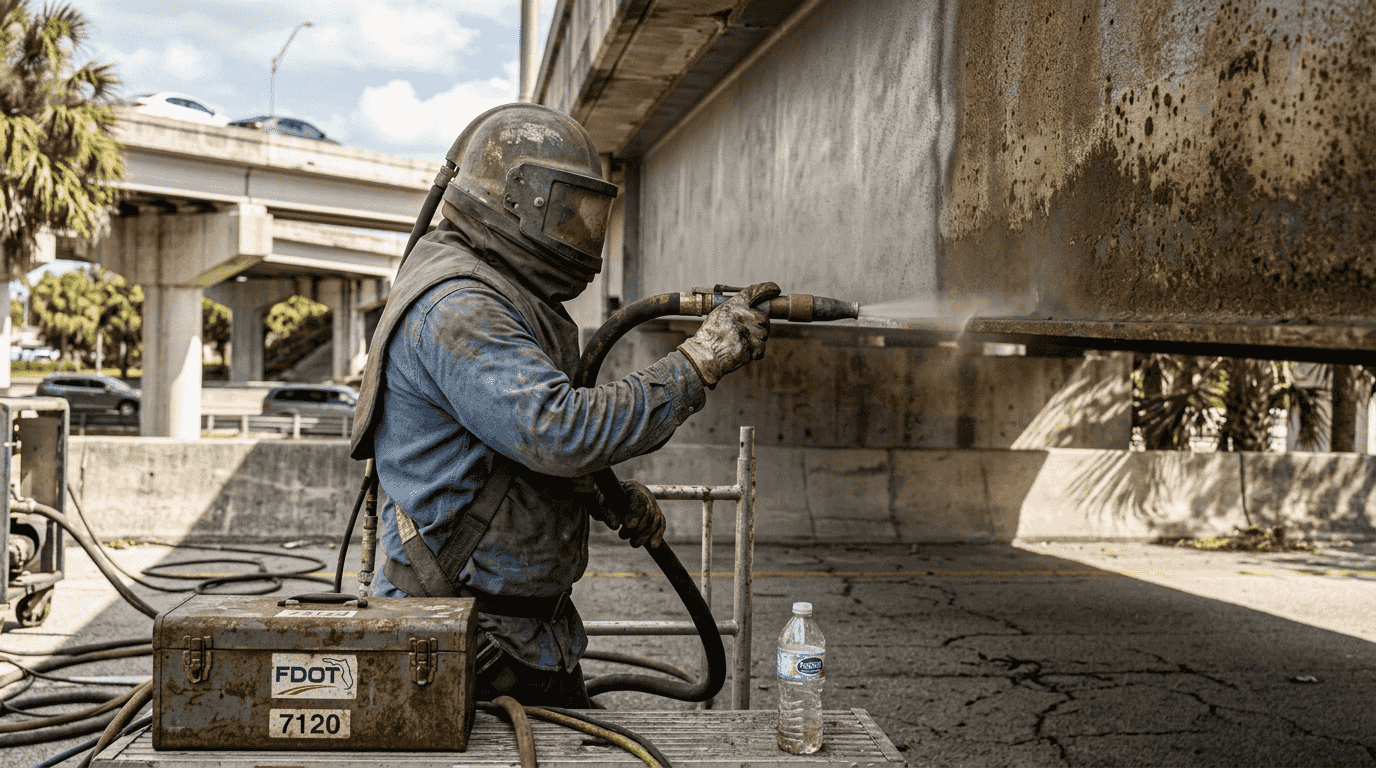
Use abrasive blasting to achieve the required surface profile and cleanliness. SSPC and AMPP standards define specific cleanliness levels from SP-1 (solvent cleaning) to SP-10 (near-white blast). Most infrastructure projects require SP-6 or higher for adequate coating adhesion.
Verify environmental conditions before application. Temperature must stay between 40°F and 100°F, with substrate temperature at least 5°F above dew point. High humidity prevents proper curing and traps moisture under coatings.
Inspect surface roughness and cleanliness using standardized methods. Profile depth gauges measure anchor pattern, while dust tape tests verify cleanliness. These simple checks prevent costly failures.
Confirm surface dryness and salt contamination limits. Chloride testing identifies soluble salts that cause premature coating failure. Many Florida projects require levels below 7 micrograms per square centimeter.
Pro Tip: Schedule surface prep and coating application during Florida’s dry season (November through April) to minimize humidity challenges and optimize curing conditions.
Critical surface prep best practices:
- Complete contaminant removal using mechanical or chemical methods
- Abrasive blasting to achieve specified profile depth and cleanliness
- Environmental monitoring for temperature, humidity, and dew point
- Surface inspection using gauges, tape tests, and visual standards
- Salt contamination testing on coastal infrastructure projects
- Documentation of all prep work and environmental conditions
Follow industrial coating application steps immediately after surface preparation. Delays allow flash rusting and recontamination, wasting your prep investment.
3. Select appropriate coatings and application techniques
Once surface prep is complete, choosing the right coating system becomes critical. Florida’s harsh environment demands coatings engineered for humidity, salt exposure, and UV radiation. Generic products fail quickly.
Choose coatings specifically resistant to your infrastructure’s exposure conditions. Coastal structures need high salt resistance, while inland assets prioritize UV stability. Florida’s year-round heat accelerates chemical degradation in unsuitable products.
Match coating systems to substrate material and required service life. Steel structures typically use epoxy primers with polyurethane or siloxane topcoats. Concrete demands different chemistry for proper adhesion and protection.
Follow manufacturer specifications for application thickness and drying times exactly. Applying coatings too thick causes sagging and solvent entrapment. Too thin leaves inadequate protection. Each coat requires proper flash-off time before recoating.
Use appropriate application tools based on project size and access. Airless spray delivers productivity on large open surfaces. Brush and roller work better for complex geometries and touch-up. Your industrial painting OSHA EPA regulations guide equipment selection.
Implement multi-coat systems when specifications require extra corrosion protection. Typical systems include zinc-rich primer, epoxy intermediate, and polyurethane finish. Each layer serves a specific protective function.
Steps to select your coating system:
- Evaluate environmental conditions including humidity, temperature extremes, and chemical exposure
- Determine substrate type, condition, and required surface preparation level
- Choose compatible coating chemistry from approved manufacturer lists
- Confirm application method suitability for project access and schedule
- Verify regulatory compliance and VOC limits for your jurisdiction
Pro Tip: Request third-party performance data for coatings claiming Florida suitability. Independent salt spray and weathering test results reveal true durability better than marketing claims.
Explore types of industrial coatings suitable for Florida infrastructure. Compare industrial coating solutions to identify systems matching your performance and budget requirements.
4. Monitor and inspect coatings to prevent failures and maintain compliance
Applying coatings correctly is only half the battle. Regular monitoring and inspection protect your investment and maintain regulatory compliance. Early detection prevents minor issues from becoming expensive emergencies.
Conduct visual and instrumented inspections systematically. Visual checks identify obvious problems like cracking, blistering, and discoloration. Instruments measure coating thickness, adhesion, and holiday detection accurately.
Document every inspection finding with photos, measurements, and repair recommendations. This documentation demonstrates due diligence to regulators and helps budget future maintenance. Tracking degradation patterns optimizes recoating schedules.
Use standardized checklists covering all failure modes. Check for adhesion loss, chemical attack, mechanical damage, and environmental degradation. Consistent inspection protocols ensure nothing gets missed.
Train staff to recognize early warning signs of coating system problems. Chalking, fading, and minor blistering signal degradation before catastrophic failure occurs. Catching problems early saves massive repair costs.
Enforce compliance auditing to avoid penalties. OSHA fines exceed $16,000 per violation while EPA penalties reach $50,000 daily for hazardous waste mismanagement. Regular audits identify gaps before regulators do.
Inspection frequency guidelines:
- High exposure assets (coastal, chemical): Quarterly visual, annual instrumented
- Moderate exposure (inland, atmospheric): Semi-annual visual, biennial instrumented
- Protected assets (covered, climate controlled): Annual visual, triennial instrumented
- Post-damage events (storms, accidents): Immediate comprehensive inspection
| Inspection Type | Tools Required | Frequency | Key Metrics |
|---|---|---|---|
| Visual | Eyes, camera, checklist | Monthly to quarterly | Cracking, blistering, rust, color change |
| Thickness | Dry film thickness gauge | After application, annually | Mil thickness per specification |
| Adhesion | Pull-off tester, knife | After curing, biennially | PSI bond strength, delamination |
| Holiday | Wet sponge or spark tester | Post-application | Coating continuity, pinholes |
Implement coating inspections as part of your asset management program. Understanding the role of coatings in longevity helps justify inspection budgets to stakeholders.
5. Head-to-head checklist comparison and situational recommendations
Different infrastructure types require tailored checklist approaches. This comparison helps you adapt protocols to specific Florida public works scenarios while maintaining compliance and protection standards.
| Checklist Component | Pedestrian Bridge | Water Tank | Highway Structure | Shared Use Path |
|---|---|---|---|---|
| Surface Preparation | SP-6 commercial blast | SP-10 near-white blast | SP-6 to SP-10 depending on exposure | SP-3 power tool cleaning acceptable |
| Coating System | 3-coat epoxy/polyurethane | 3-coat high-build epoxy | Zinc-rich primer + epoxy + urethane | 2-coat acrylic or latex |
| Inspection Frequency | Semi-annual visual | Quarterly visual, annual instrumented | Annual comprehensive | Annual visual |
| Compliance Focus | FDOT clearances, ADA access | Potable water approvals, EPA | FDOT standards, traffic control | ADA width, FDOT ramp grades |
| Budget Consideration | Moderate | High (specialized coatings) | High (access equipment) | Low to moderate |
Florida DOT sets minimum bridge widths and ramp grades that directly impact painting logistics. Pedestrian bridges require 10-foot minimum clear width with 5% maximum ramp slopes. These constraints affect scaffolding placement and equipment access.
Shared use paths demand 12-foot minimum width on bridges, creating different surface area calculations and coating volumes. Understanding these requirements during planning prevents costly mid-project changes.
Pro Tip: Budget-constrained projects can phase coating work by prioritizing high-exposure areas first. Apply premium systems to splash zones and marine environments while using standard systems on protected components. This approach extends overall asset life without exceeding tight budgets.
Tailor your surface preparation checklist to project specifics. Coastal infrastructure always requires more aggressive prep and higher-performance coatings than inland assets. Salt contamination testing becomes mandatory within five miles of coastline.
Review your checklist annually as regulations evolve and Florida climate challenges intensify. New coating technologies and updated standards provide opportunities to improve protection while controlling costs.
Discover expert sandblasting and painting services in Florida
Implementing a comprehensive infrastructure painting checklist requires specialized expertise and equipment. Southern Sandblasting & Painting delivers complete solutions for Florida’s most demanding public works projects.

Our sandblasting services achieve optimal surface preparation meeting SSPC and AMPP standards. We handle projects from small pedestrian bridges to major water infrastructure, ensuring proper profile and cleanliness for maximum coating adhesion.
Trusted industrial painting services adhere strictly to Florida regulations and manufacturer specifications. Our 20+ years of experience helps you avoid costly violations while protecting critical assets.
Comprehensive sandblasting and painting solutions streamline your projects from planning through final inspection. Partner with professionals who understand Florida’s unique challenges and deliver results that extend infrastructure lifespans while controlling maintenance budgets.
FAQ
What essential steps must be included in an infrastructure painting checklist?
Your checklist must cover surface cleaning to remove contaminants, profile creation through abrasive blasting, coating selection based on exposure conditions, proper application techniques, and thorough inspection protocols. Compliance verification ensures regulatory requirements are met throughout the project.
How can surface preparation impact coating longevity on bridges and structures?
Proper surface prep prevents premature coating failures that cause 80% of maintenance problems and dramatically increase lifecycle costs. Inadequate preparation allows moisture and contaminants to attack the bond between coating and substrate, cutting protection life in half or worse. Quality surface treatment processes deliver decade-long protection instead of years.
What Florida regulations affect infrastructure painting projects?
OSHA and EPA regulations impose strict safety protocols and environmental controls on industrial painting operations. Florida DOT mandates specific bridge clearances and ramp slopes affecting project logistics and equipment access. Meeting compliance standards avoids fines exceeding $50,000 daily and prevents operational shutdowns.
How often should Florida infrastructure coatings be inspected?
High-exposure coastal assets require quarterly visual inspections and annual instrumented testing. Moderate-exposure inland infrastructure needs semi-annual visual checks with biennial detailed inspections. Adjust frequency based on asset criticality, environmental conditions, and coating system performance history to catch problems before they become expensive emergencies.


