
TL;DR:
- Selecting the appropriate blasting method depends on material type, goal, safety, environment, and regulations.
- Abrasive blasting is versatile for surface prep, while rock blasting employs explosives for excavation.
- Blending techniques during a project enhances safety, efficiency, and surface outcomes.
Choosing the wrong blasting technique for an infrastructure project doesn’t just slow things down. It can compromise worker safety, trigger regulatory violations, damage the surfaces you’re trying to restore, and blow your budget in ways that are hard to recover from. For facility managers and procurement officers handling municipal bridges, pipelines, water tanks, or industrial facilities in Central Florida, the selection process carries real weight. This guide walks through the leading blasting methods, the criteria that should drive your decision, and practical recommendations for the most common scenarios you’ll encounter in the field.
Table of Contents
- Key criteria for selecting blasting techniques
- Abrasive blasting: Versatility for surface preparation
- Rock drilling and blasting: Controlled fragmentation
- Wet blasting and specialty methods: Dust and contamination control
- How to match technique to project: Practical recommendations
- Why blending techniques is often the best solution
- Expert blasting solutions for Central Florida infrastructure
- Frequently asked questions
Key Takeaways
| Point | Details |
|---|---|
| Choose based on material | Every blasting technique works best with specific surface types and project goals. |
| Control for safety and environment | Methods like stemming, blasting mats, and wet blasting minimize dust and hazards. |
| Blending methods is smarter | Combining techniques often leads to safer, more efficient infrastructure maintenance. |
| Consult experts for cost-efficiency | Experienced contractors help you avoid mistakes and ensure compliance with local regulations. |
Key criteria for selecting blasting techniques
Before you specify a blasting method for your next project, you need to evaluate several non-negotiable factors. Skipping this step is how projects run over budget or create compliance problems.
The most critical variables to assess include:
- Material type: Steel structures, concrete surfaces, painted substrates, and natural rock each respond differently to blasting. What works on a rusted steel pipeline will damage a historic concrete facade.
- Project goal: Are you removing an old coating, prepping a surface for a new protective layer, cleaning off biological growth, or fragmenting rock for excavation? The goal determines the method.
- Safety constraints: Dust generation, flying debris, noise levels, and proximity to occupied areas are all real risks. Every method has a different safety profile.
- Environmental compliance: Central Florida projects often require compliance with EPA and OSHA standards for containment of lead-based paint, silica dust, and other contaminants.
- Budget and equipment availability: Some specialty methods require equipment that adds mobilization cost. Matching your budget to your method matters.
- Local regulatory constraints: Florida DEP requirements and county-level permit conditions can restrict certain methods near water bodies, residential zones, or active transportation corridors.
Using a structured blasting method selection guide early in your planning phase keeps costly method changes from happening mid-project. Understanding abrasive blasting explained at a technical level also helps you ask the right questions when vetting contractors.
Pro Tip: Never finalize a blasting specification without a site visit from the contractor. Surface conditions, access limitations, and nearby utilities can completely change the recommended approach.
For rock-related work, controlled fragmentation optimizes downstream processing and uses stemming and blasting mats for flyrock control. That principle of controlled, measured force applies across all blasting types, not just rock excavation.
Abrasive blasting: Versatility for surface preparation
Abrasive blasting is the backbone of industrial surface preparation. It works by propelling abrasive media at high velocity using pressurized air, stripping away rust, old coatings, mill scale, and contaminants to create a clean, profiled surface ready for protective coatings.
The most common media types and their uses:
- Silica sand (now largely replaced): Previously the industry standard, largely phased out due to silicosis risk from crystalline silica exposure.
- Steel grit and steel shot: Ideal for heavy rust removal on structural steel, bridges, and tanks. Aggressive cut, reusable, cost-effective at scale.
- Glass beads: A gentler option for lighter cleaning or when surface profile requirements are tighter. Common in food-processing and pharmaceutical facility maintenance.
- Coal slag and copper slag: Widely used alternatives that balance cut rate with reduced silica content.
- Aluminum oxide: High hardness, aggressive profile creation, used where steel grit isn’t practical.
The abrasive blasting process follows a clear sequence: surface inspection and preparation, containment setup, media selection, blasting to the specified surface profile (usually measured in mils or by SSPC/NACE standards), inspection, and final cleanup.
“Infrastructure surface preparation using abrasive methods requires precise media selection and containment. The blast profile you create directly determines how well your protective coating bonds and how long it lasts.”
For municipal facilities in Central Florida, abrasive blasting is the go-to for water tank rehabilitation, bridge deck coating removal, and graffiti cleaning on concrete. Reviewing sandblasting safety essentials before any project helps ensure your contractor has proper PPE protocols in place. You can also reference the abrasive blasting infrastructure standards to confirm the right profile requirements for your coating system.
Note that rock drilling and blasting involves a fundamentally different mechanism, using detonated explosives rather than pressurized air, which matters when your project crosses from surface prep into ground-level excavation.
Pro Tip: Always specify the target surface profile (Sa 2.5 or Sa 3) in your procurement documents. Without it, contractors may deliver inconsistent results that cause premature coating failures.
Rock drilling and blasting: Controlled fragmentation
When your infrastructure project requires moving or reshaping rock, whether for a utility corridor, road cut, or tunnel section, abrasive blasting is the wrong tool. Rock drilling and blasting is a specialized discipline that involves drilling boreholes into the rock mass, loading them with explosives such as ANFO (ammonium nitrate fuel oil), and detonating in a controlled sequence to fragment the rock efficiently.
The key components of a safe, effective rock blast include:
- Borehole design: Diameter, depth, and spacing are engineered based on rock type and fragmentation size needed.
- Explosive selection: ANFO is common for dry conditions; emulsion explosives are used where water is present in the borehole.
- Stemming: Inert material packed into the borehole above the explosive charge. Stemming contains the explosion energy inside the rock, improving fragmentation and reducing flyrock.
- Initiation systems: Electronic detonators allow precise timing sequences that direct energy and minimize vibration to nearby structures.
- Blasting mats: Heavy rubber or wire mats placed over the blast area to physically contain flyrock.
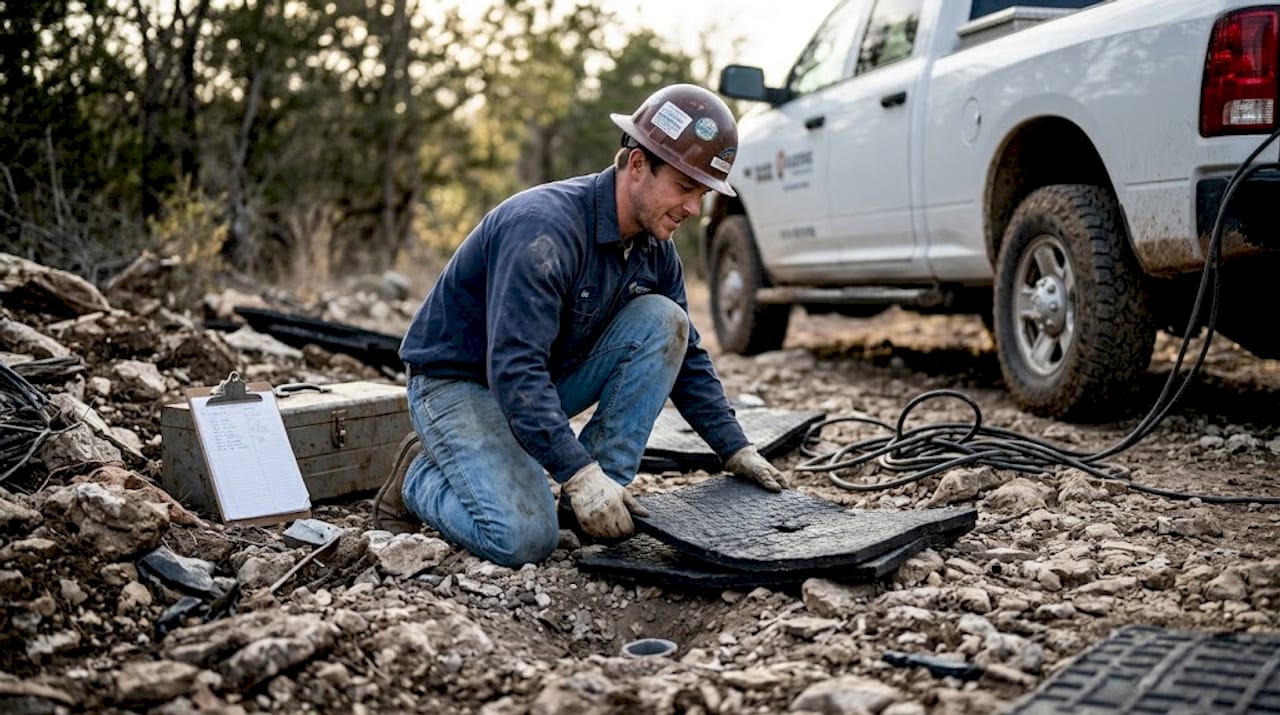
Controlled fragmentation optimizes downstream processing and uses stemming and blasting mats for flyrock control, which is particularly relevant for Central Florida infrastructure work near active roadways or utility lines.
| Scenario | Method | Estimated cost range | Key risk |
|---|---|---|---|
| Utility corridor rock cut | ANFO with electronic detonators | $18–$35 per cubic yard | Vibration to nearby utilities |
| Road widening cut | Presplit + ANFO | $22–$40 per cubic yard | Flyrock near traffic |
| Tunnel entry excavation | Controlled burn cuts | $40–$70 per cubic yard | Over-break into adjacent formation |
| Emergency storm drain clearing | Hydraulic breaking (no explosives) | $50–$90 per cubic yard | Slow rate, higher labor |
For a deeper look at blasting terms clarified, the terminology around borehole patterns and charge ratios can help you evaluate contractor proposals with more confidence.
Wet blasting and specialty methods: Dust and contamination control
Dry abrasive blasting is highly effective, but it generates substantial airborne dust. In environments where that dust contains lead paint, asbestos residue, or other regulated contaminants, you need a different approach. Wet blasting and specialty methods address this problem directly.
Wet blasting mixes abrasive media with water before it contacts the surface. The water suppresses dust at the point of generation rather than relying solely on containment. This is a major advantage in occupied or semi-enclosed spaces.
Vapor blasting (also called vapor honing) uses very fine media mixed with pressurized steam or water vapor. It’s gentler on surfaces, produces almost no dust, and is well-suited for sensitive substrates including historic stonework and aluminum.
Sponge blasting uses sponge-like media that encapsulates dust and debris on contact. It dramatically reduces airborne contamination and cleanup time. It’s particularly effective for lead paint removal inside enclosed structures.
Key scenarios where specialty methods outperform dry blasting:
- Interior blasting inside water treatment facilities or occupied buildings
- Lead paint removal from bridges over waterways (a common Central Florida requirement)
- Historic preservation work where surface integrity must be protected
- Tight regulatory environments where airborne emissions are closely monitored
| Factor | Dry abrasive blasting | Wet/specialty blasting |
|---|---|---|
| Dust generation | High | Very low |
| Surface profile quality | Excellent | Good to excellent |
| Cost per square foot | Lower | Higher |
| Contamination containment | Requires full shrouding | Built-in suppression |
| Best use case | Open sites, heavy corrosion | Sensitive or enclosed sites |
Controlled methods such as stemming and blasting mats can minimize environmental impact, and that same principle applies here. Wet and specialty blasting are your engineered controls when the environment demands it. For regulatory guidance, safe sandblasting practices outlines what Florida agencies typically require for contamination control.
How to match technique to project: Practical recommendations
Here’s where criteria and technique options come together. Use this framework to match your specific project conditions to the right method.
- Coating removal on structural steel (bridges, tanks, pylons): Use dry abrasive blasting with steel grit to Sa 2.5 standard. It’s fast, produces a strong surface profile, and is cost-effective at scale. Add full shroud containment if over water.
- Bridge deck restoration with lead paint present: Wet blasting or sponge blasting is the right call. The contamination control built into the method reduces your regulatory burden and liability.
- Tunnel or road cut excavation through limestone or rock: Rock drilling and blasting with ANFO and electronic detonators gives you the fragmentation control you need. Use presplit blasting at the perimeter to protect final wall integrity.
- Graffiti removal from concrete in public spaces: Abrasive blasting with softer media (glass beads or fine coal slag) removes the paint without scarring the underlying concrete. Wet blasting works well here too if the site is enclosed or near traffic.
- Emergency infrastructure repair requiring rapid surface prep: Dry abrasive blasting is typically the fastest option. Pre-position containment and have a vacuum recovery system ready to minimize downtime.
Controlled fragmentation and the selection of proper blasting methods are essential for efficiency and safety, regardless of scale. This is especially true when your project timeline doesn’t allow for rework.
Pro Tip: Always get a spec-level review from your contractor before procurement. A good sandblasting guide for managers can also help you build stronger bid requirements that prevent scope disputes later.
Cost and speed will always factor into your decision, but the wrong method creates far more expense through rework, regulatory penalties, and delayed project handoffs than any upfront savings justify.
Why blending techniques is often the best solution
Most published guides treat blasting method selection as a simple checklist. In reality, the best outcomes on large infrastructure projects come from knowing when to switch methods mid-project or layer them strategically.
Consider a water tank rehabilitation where the exterior steel has heavy corrosion but the interior has lead-based paint near the access hatches. Dry steel grit blasting handles the exterior efficiently. But switching to sponge blasting for the interior lead sections controls contamination and keeps the job compliant without slowing the entire project down.
That kind of adaptive thinking is what separates contractors with real field experience from those who default to the same method regardless of conditions. Facility managers who push for that flexibility in their contractor conversations tend to avoid the costly pitfalls of rigid specifications.
We’ve seen firsthand that the projects which stay on schedule and within budget are almost always the ones where the blasting method is re-evaluated at each project phase, not locked in at the start. Blending methods also opens the door to better coating failure prevention, because the surface prep is matched precisely to each substrate condition rather than averaged across the whole project.
Expert blasting solutions for Central Florida infrastructure
With 20+ years of experience serving municipal agencies, industrial facilities, and specialty projects across Central Florida, Southern Sandblasting & Painting LLC brings the technical depth and field-tested judgment that complex blasting work demands.
Our team works directly with facility managers and procurement officers to evaluate project conditions and recommend the right blasting method or combination of methods for your specific site. From Orlando sandblasting services to full-scale protective coating systems, we cover the full project lifecycle. Explore our industrial coating options or contact us directly to schedule a site consultation and get a custom quote tailored to your infrastructure needs.
Frequently asked questions
What blasting technique is best for removing old industrial coatings?
Abrasive blasting is the most reliable choice for removing old industrial coatings because it delivers a consistent surface profile and adapts well to steel, concrete, and mixed substrates. The choice of media determines how aggressively the coating is stripped.
How do wet and dry blasting compare for dust control?
Wet blasting suppresses dust at the point of impact rather than relying on external containment, making it far more effective for contamination-sensitive environments. Controlled methods like wet blasting are often required when regulated substances such as lead paint are present.
Is rock blasting safe for nearby structures and utilities?
Yes, with proper engineering and the use of stemming and blasting mats for flyrock control, rock blasting can be performed safely near active utilities and structures. Electronic detonator timing sequences further reduce vibration risk.
Can multiple blasting techniques be used on one project?
Absolutely. Many large infrastructure projects use proper blasting methods in combination, adapting the technique to each phase or substrate. Blending methods improves both safety and surface quality across varied site conditions.


