
TL;DR:
- Surface contaminants, often invisible, critically affect coating lifespan and asset protection.
- Florida’s climate accelerates contamination buildup, leading to early coating failures if not properly managed.
- Proper detection and removal of contaminants are essential for durable, long-lasting protective coatings.
Surface preparation is not simply cleaning a surface before paint goes on. It is the single most consequential variable determining whether a protective coating lasts five years or twenty-five. For municipal infrastructure managers and facility operators across Florida, invisible contaminants hiding on steel bridges, concrete water tanks, and pipeline systems represent a multimillion-dollar liability that most standard inspection checklists completely miss. This guide breaks down the primary contaminant categories, explains exactly how they destroy coating performance, and delivers proven detection and removal strategies built for Florida’s demanding climate.
Table of Contents
- What are surface contaminants? The unseen risk
- How contaminants undermine coating performance
- How to identify and assess surface contaminants
- Best practices for contaminant removal in Florida environments
- Our take: Why real surface cleaning is your best investment
- Need expert help with surface contaminants in Florida?
- Frequently asked questions
Key Takeaways
| Point | Details |
|---|---|
| Contaminants are costly | Hidden surface contaminants are among the main reasons for premature coating and asset failures in Florida. |
| Detection is critical | Visual checks are not enough; professional methods can catch invisible risks before they cause damage. |
| Best practices save money | Combining stringent cleaning protocols with precise inspection prevents expensive repairs and downtime. |
| Local expertise matters | Florida’s humidity and salt exposure require specialized knowledge for successful contaminant removal. |
What are surface contaminants? The unseen risk
A surface contaminant is any substance or particle present on a substrate that interferes with adhesion, coating durability, or structural safety. That definition sounds straightforward until you realize most contaminants are invisible to the naked eye. You can run your hand across a steel beam and feel nothing wrong, yet chloride salts, oils, and biological matter may already be compromising the surface at a microscopic level.
Invisible surface contaminants can severely impact asset protection long before a coating ever fails visibly. By the time blistering or peeling appears, the bonding failure has already been in progress for months.
Contaminants fall into several major categories that every infrastructure manager should know:
- Dust and particulates: Airborne debris that settles on cleaned surfaces, creating a barrier layer between the substrate and primer
- Oils and grease: Equipment lubricants, diesel exhaust residue, and hydraulic fluid that prevent any coating from bonding properly
- Soluble salts: Chlorides and sulfates, especially prevalent in Florida’s coastal zones, that draw moisture beneath coatings and accelerate corrosion
- Rust and mill scale: Iron oxide layers and manufacturing residue that trap moisture and create unstable bonding surfaces
- Organic matter: Mold, algae, and biological growth that Florida’s high humidity actively encourages year-round
- Old or failed coatings: Residual paint layers that may be delaminating and will carry any new coating down with them
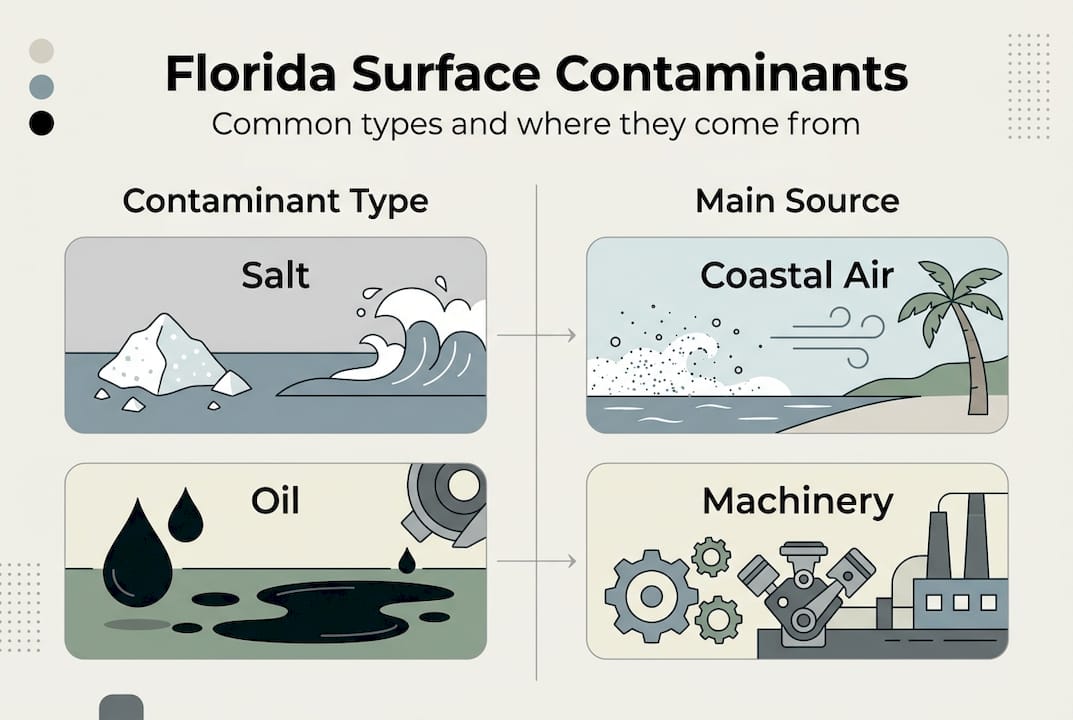
Florida’s climate creates a uniquely aggressive contamination environment. Coastal salt spray deposits chlorides dozens of miles inland. Humidity above 85% is routine, fueling organic growth on virtually every outdoor surface. Summer heat accelerates chemical reactions that drive contaminants deeper into porous substrates like concrete.
| Contaminant type | Primary source | Florida risk level |
|---|---|---|
| Soluble salts | Coastal air, road salt | Very high |
| Oils and grease | Equipment, traffic | High |
| Organic matter | Humidity, standing water | Very high |
| Dust and particulates | Construction, wind | Moderate |
| Rust and mill scale | Aging infrastructure | High |
Reviewing your facility surface prep workflow with contaminant categories in mind is the first step toward preventing costly rework on any major project.
How contaminants undermine coating performance
Understanding the types of contaminants is only half the picture. The more critical knowledge is how each one triggers specific, predictable failure modes in protective coatings applied to Florida’s infrastructure assets.
Salt contamination is the most destructive force in Florida’s coastal and near-coastal environments. Chloride ions are hygroscopic, meaning they actively pull moisture from the surrounding air. When chlorides are trapped beneath a coating, they create osmotic pressure that literally pushes the coating off the substrate from the inside out. The result is blistering and flaking that can appear within months of application on a bridge or water treatment facility.
“Coating failures in infrastructure are commonly traced to inadequate cleaning and residual surface contamination.” This pattern repeats across Florida municipal projects where coating prep best practices were not strictly followed before application.
Oils and grease are equally destructive, though they work differently. These substances create a physical barrier that prevents any primer or topcoat from making direct contact with the substrate. No matter how advanced the coating system, it cannot bond to a surface covered in even a thin film of petroleum residue. The result is premature peeling, often within the first year of service.
Rust and old coatings trap moisture at the interface between the substrate and new coating. Even when old paint looks stable, delaminating layers create voids where water accumulates, driving corrosion forward beneath the new system.
The numbers behind these failures are sobering. Up to 80% of failures in protective coatings are traced directly to improper surface preparation, not material defects or weather alone.
Here is how specific contaminants map to failure modes:
| Contaminant | Primary failure mode | Timeline to visible failure |
|---|---|---|
| Chloride salts | Blistering, osmotic delamination | 3 to 12 months |
| Oils and grease | Peeling, adhesion loss | 6 to 18 months |
| Rust and mill scale | Undercutting corrosion | 12 to 24 months |
| Organic matter | Coating lifting, staining | 6 to 12 months |
For Florida bridge coatings specifically, invisible chloride levels that exceed 3 micrograms per square centimeter are enough to trigger osmotic blistering. A thorough review of your coating adhesion guide will show that chloride thresholds are a non-negotiable standard on any coastal or near-coastal project.
How to identify and assess surface contaminants
Knowing the threat is not enough. You need a structured, repeatable process for detecting and measuring contamination before any coating work begins.
Visual inspection is the starting point, not the finish line. Experienced inspectors can spot heavy rust, obvious oil staining, and biological growth. But the contaminants most likely to cause coating failure, particularly soluble salts and thin oil films, are completely invisible. Relying on visual checks alone is one of the most common and costly mistakes on large-scale municipal projects.
Here is a practical detection sequence used on Florida infrastructure projects:
- Visual inspection: Identify visible rust, scale, old coatings, and obvious contamination zones
- Water break test: Apply clean water to the surface. If it beads or breaks into droplets rather than sheeting uniformly, oils or grease are present
- Wipe test: Use a clean white cloth across the surface to detect dust, loose particles, and light oil films
- Tape test: Press adhesive tape firmly to the surface and peel it back to check for loose particles and delaminating material
- Chloride meter testing: Use a portable Bresle patch or equivalent instrument to measure soluble salt levels in micrograms per square centimeter
- UV lamp inspection: Illuminate the surface with ultraviolet light to reveal oil contamination invisible under normal lighting
- Documentation: Record contamination type, location, and measured levels against project compliance thresholds
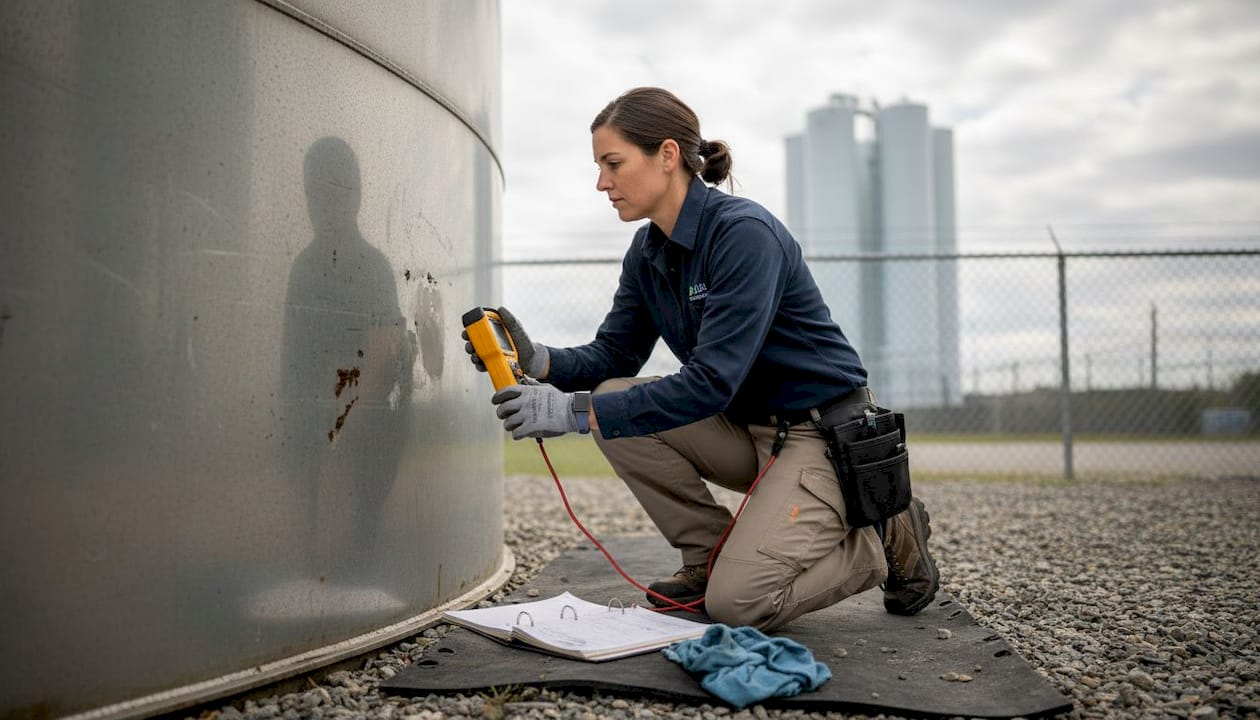
Portable preparation tools for infrastructure have made field-level chloride and oil detection practical on any job site. These instruments remove guesswork and create a defensible record for compliance purposes.
Proper surface assessment is the first line of defense for long-term durability on any critical asset. Without documented baseline measurements, you have no way to verify that cleaning actually worked.
Pro Tip: Always re-inspect surfaces within 30 minutes of cleaning completion. In Florida’s humidity, new contamination, particularly salt deposition and organic matter, can form rapidly on freshly cleaned substrates before coating application begins.
Best practices for contaminant removal in Florida environments
With contamination identified and documented, the next step is decisive removal using methods matched to both the contaminant type and the substrate material.
Effective contaminant removal is a critical variable in achieving long-lasting protection on major Florida projects. Choosing the wrong method wastes time and can actually drive contaminants deeper into porous materials.
Mechanical removal methods, including abrasive blasting, power tool cleaning, and grinding, are the standard for steel substrates. They physically strip rust, mill scale, old coatings, and embedded particulates to achieve the anchor profile required for coating adhesion. Chemical removal methods, including solvent washing, detergent cleaning, and acid etching, are better suited for oil and grease removal, concrete surfaces, and situations where abrasive blasting is not practical.
Key removal practices for Florida conditions:
- Control ambient conditions: Never apply cleaning or coating processes when relative humidity exceeds 85% or surface temperature is within 5 degrees Fahrenheit of the dew point
- Sequence the work correctly: Always degrease before abrasive blasting. Blasting over oil contamination embeds it further into the substrate profile
- Match abrasive to substrate: Steel bridges require different abrasive media than concrete water tanks or composite materials used in modern infrastructure
- Address salt contamination specifically: High-pressure fresh water washing before abrasive blasting is often necessary in coastal Florida settings to reduce chloride levels below threshold
- Protect cleaned surfaces immediately: In Florida’s environment, bare steel can begin flash rusting within hours of abrasive blasting if not primed quickly
For concrete substrates common in municipal facilities, detergent washing followed by pressure washing and surface profiling through shot blasting or scarification achieves the open pore structure needed for penetrating coatings. Reviewing available surface prep solutions helps match method to material and project scope.
Pro Tip: Schedule your post-cleaning inspection for immediately after the cleaning crew finishes, not the following morning. Fast-forming contaminants in Florida’s climate can undo hours of preparation work in a single humid overnight period.
Our take: Why real surface cleaning is your best investment
After more than 20 years working on Florida’s bridges, water tanks, airports, and city infrastructure, we have seen a consistent pattern. When a coating system fails early, the investigation almost always points back to cleaning, not the coating material, not the weather, and not the applicator’s technique.
Most failures blamed on “bad paint” or “extreme weather” are actually cleaning failures. The hidden cost of surface contamination is entirely avoidable with strict protocols and experienced oversight. We have watched municipalities spend three times their original coating budget on emergency repairs that thorough cleaning would have prevented.
Florida’s climate does not forgive shortcuts. Salt, humidity, and heat magnify every contamination risk to a degree that inland projects simply do not face. What might be a minor oversight on a project in a dry climate becomes a structural liability here.
The reframe we offer every infrastructure manager we work with is this: surface preparation is not a line item to compress when budgets tighten. It is risk management for public assets. Treating it as a strategic investment, rather than a procedural checklist, is the difference between a coating that lasts 20 years and one that fails in 24 months. Consult our sandblasting guide for facilities for a deeper look at how proper preparation protocols protect your long-term capital investment.
Need expert help with surface contaminants in Florida?
Surface contaminants are a direct threat to the longevity of your infrastructure and the public investment behind it. Getting removal right requires more than equipment. It requires experience, strict protocols, and deep knowledge of Florida’s specific environmental challenges.
Southern Sandblasting & Painting LLC has spent over 20 years protecting Florida’s critical facilities, from municipal water systems to coastal bridges and public structures. Our teams apply proven industrial coatings for Florida infrastructure using strict contamination control protocols at every stage. Whether you need a site assessment, a project quote, or a full-scale Orlando sandblasting services engagement, we are ready to protect your assets. Explore our full range of sandblasting and painting solutions and connect with our team today.
Frequently asked questions
What are the most common surface contaminants in Florida’s infrastructure projects?
The most common contaminants include salt deposits, oils, dust, humidity-related organic matter, and rust, all intensified by Florida’s unique climate conditions that accelerate contamination rates compared to drier regions.
How do surface contaminants impact facility coating performance?
Surface contaminants prevent proper adhesion, leading to blistering, peeling, and accelerated corrosion. Up to 80% of coating failures are directly linked to inadequate surface preparation rather than coating material defects.
What are the best methods for checking for surface contaminants before painting?
The most reliable approach combines visual inspection, wipe and tape tests, water break tests for oils, and portable chloride meters for salt contamination measurement before any coating begins.
Are different removal methods recommended for various surface materials?
Yes. Mechanical abrasive blasting works best for steel, while chemical detergent methods suit concrete and organic contaminants better. Method selection should match both the contaminant type and the specific substrate material being prepared.
Recommended
- Why paint water tanks? Protecting Florida infrastructure
- Why Industrial Coatings Matter for Florida Infrastructure
- Types of Industrial Coatings for Florida Infrastructure
- What is corrosion control: essential guide for Florida facility managers
- Travertine Decor Maintenance Workflow for Lasting Luxury – Marmorique


