

TL;DR:
- Surface defects often signal active deterioration mechanisms, not just cosmetic issues.
- Accurate, measurable inspection criteria prevent costly misdiagnoses and recurring repairs.
- Mechanism-based analysis and standardized ratings improve long-term infrastructure asset management.
Surface defects on industrial infrastructure look like simple wear, but most facility managers and municipal leaders deal with something far more costly: a misdiagnosis. A patch of rust or a crack in concrete pavement is rarely just cosmetic. It is almost always a signal of an active mechanism, whether it is electrochemical corrosion eating through steel, alkali-silica reaction destabilizing concrete, or poor drainage accelerating pavement distress. Treating the symptom without understanding the cause leads to recurring repairs and inflated maintenance budgets. This article gives you a clear, practical framework for detecting, evaluating, and addressing surface defects in industrial and municipal infrastructure across Central Florida.
Table of Contents
- What are industrial surface defects and why do they matter?
- Frameworks for evaluating painted steel and concrete defects
- Recognizing pavement surface distress and underlying drivers
- Official inspection resources and practical maintenance strategies
- Why measurable criteria and mechanism-based analysis matter for Central Florida
- Connect with Florida experts for surface assessment and asset protection
- Frequently asked questions
Key Takeaways
| Point | Details |
|---|---|
| Defects often indicate deeper issues | Surface defects usually signal hidden mechanisms, not just superficial damage. |
| Use measurable standards | ASTM quantification methods support consistent diagnosis and maintenance decisions. |
| Routine inspection is critical | Official guidelines and regular workflows help prevent recurring infrastructure failures. |
| Mechanism-driven analysis is essential | Identifying root causes prevents costly repair cycles and boosts asset longevity. |
What are industrial surface defects and why do they matter?
Surface defects in industrial contexts are any deviation from the intended condition of a material’s surface that affects its performance, durability, or ability to bond with a protective coating. They occur across three primary material categories that facility managers and municipal leaders deal with regularly: steel structures, concrete surfaces, and concrete pavement. Each category has its own set of defect types, and each defect type connects to a specific underlying mechanism. Knowing the difference between a local defect and a systemic one is the starting point for every good maintenance decision.
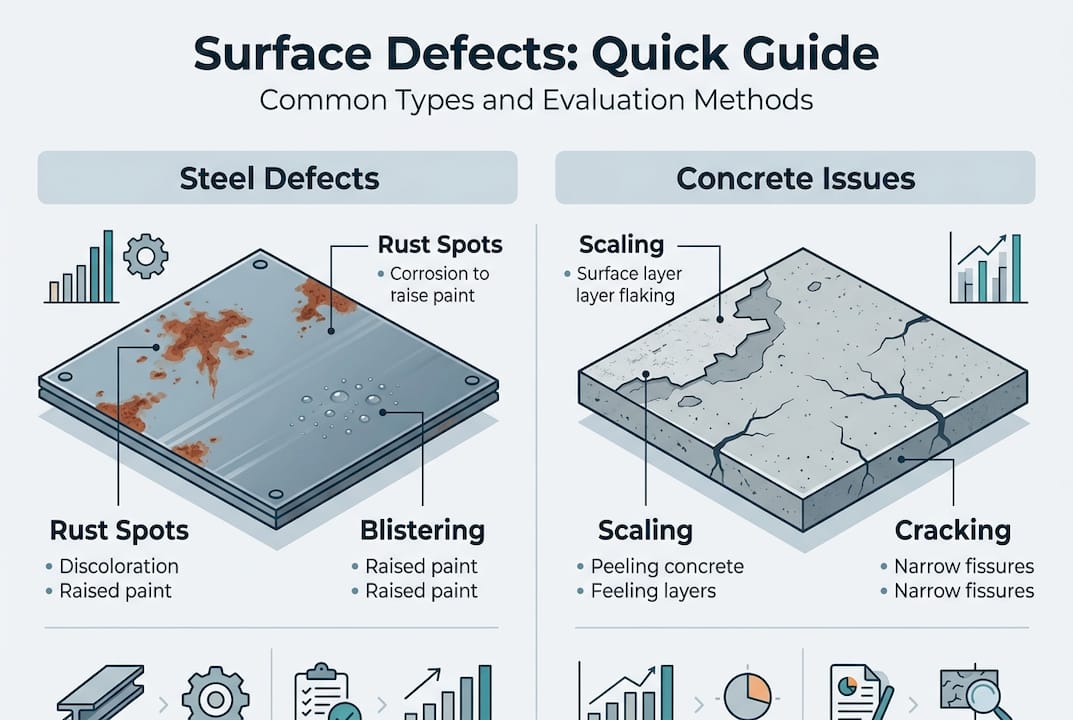
On steel structures, the most common defect is surface rust. But rust is not a single problem. It ranges from minor surface oxidation to deep pitting corrosion that compromises structural integrity. Beyond rust, steel surfaces can develop coating failures such as blistering, peeling, and cracking in the existing paint layer. These failures are often entry points for moisture and contaminants that accelerate corrosion underneath the visible surface. The surface treatment process used on a structure determines how well any new coating will perform and how long it will last.
On concrete, common defects include:
- Scaling: Loss of the upper surface layer, typically the top 3 to 12 millimeters, exposing aggregate beneath
- Popouts: Small conical fragments that break off the surface due to reactive aggregate particles
- Crazing and map cracking: Fine, shallow surface cracks forming irregular patterns
- Delamination: Separation of the surface layer from the substrate, often without visible cracking initially
- Carbonation and discoloration: Surface chemistry changes that affect bonding and future coating adhesion
Concrete pavement surface distress types relevant to infrastructure maintenance include scaling, popouts, blowups, faulting, pumping, polished aggregate, and various cracking and surface deteriorations. Each one carries a different cause profile and a different remediation path.
“The single most expensive maintenance mistake in industrial facilities is treating a defect’s appearance rather than its cause. Eliminating a visible rust patch without removing the underlying contamination or moisture source means the rust returns in months, not years.”
Understanding ASTM concrete profiling methods is essential for determining whether a concrete surface can reliably accept a new coating or overlay. Surface roughness directly affects mechanical bonding, and a visually clean surface can still fail under a new coating if the profile is inadequate. Misidentifying a localized defect as systemic, or vice versa, leads to either over-engineering the repair or under-treating the actual problem. Both outcomes cost more in the long run than an accurate diagnosis upfront.
Frameworks for evaluating painted steel and concrete defects
Industry standards exist precisely because subjective descriptions like “some rust” or “minor cracking” produce inconsistent results across contractors, agencies, and inspection cycles. For facility managers and municipal leaders managing infrastructure assets over long periods, measurable criteria are not optional. They are the foundation of effective procurement, quality control, and long-term planning.
For painted steel structures, ASTM D610 provides a zero-to-ten rust rating scale based on the percentage of visible surface rust. A rating of ten means no rust is visible. A rating of zero means 100% of the surface is rusted. The scale also classifies rust distribution as spot, general, pinpoint, or hybrid, which helps determine whether spot repairs are sufficient or whether full recoating is necessary. This is not just a theoretical framework. It directly informs when removing rust before painting is the correct first step versus when more aggressive surface preparation or structural assessment is warranted.
For concrete, surface profile (also called CSP, or concrete surface profile) determines whether a substrate is mechanically prepared to bond with a new coating or overlay. Smooth surfaces require a different preparation method than those with heavy laitance or existing coatings. The coating adhesion guide for durable facility surfaces outlines why this matters so much. ASTM’s methods focused on measuring and replicating concrete surface profiles affect coating or overlayment bonding, making profile measurement a critical quality checkpoint before any application work begins.
Here is a comparison of the two main evaluation workflows:
| Evaluation factor | Steel (ASTM D610) | Concrete (ASTM profile methods) |
|---|---|---|
| What is measured | Percentage of visible rust | Surface roughness and profile depth |
| Scale used | 0 to 10 numeric rating | CSP 1 through CSP 10 |
| Rust or profile distribution | Spot, general, pinpoint, hybrid | Uniform, localized, contaminated |
| Repair decision driver | Rust grade below threshold triggers action | Profile below spec triggers re-preparation |
| Primary risk if skipped | Coating delamination, accelerated corrosion | Overlay bond failure, early delamination |
Facilities working in coastal or high-humidity environments face accelerated defect development. Comparing marine coatings performance data with standard industrial coatings highlights the importance of environment-specific system selection.
Key steps for a consistent steel and concrete defect evaluation workflow:
- Use standardized rating tools and photo references for each ASTM method
- Assign the same evaluator where possible, or calibrate multiple evaluators against reference panels
- Document ratings in writing with photographic evidence at each inspection cycle
- Establish threshold values before inspection begins so decisions are objective, not reactive
- Record environmental conditions (humidity, temperature, substrate moisture) at time of inspection
Pro Tip: Create a simple shared defect log accessible to both your facility team and your coating contractor. When everyone is working from the same documented baseline, disputes about scope and responsibility drop dramatically, and re-inspection cycles move faster.
Recognizing pavement surface distress and underlying drivers
Pavement is where surface defects most frequently fool even experienced managers. A crack in a concrete slab looks like a structural problem. In many cases it is actually a finishing defect, a drainage problem, or the result of reactive aggregate chemistry that began years before the crack appeared. Understanding what you are actually seeing prevents over-specification of repairs and wasted budget.

The following table summarizes the most critical pavement surface distress types, their visible symptoms, and the underlying drivers that determine the correct remediation approach:
| Distress type | Visible symptom | Underlying driver |
|---|---|---|
| Scaling | Flaking or peeling of upper surface layer | Over-finishing, bleed water trapping, deicing salts |
| Popouts | Small conical pits 25 to 100mm in diameter | Reactive aggregate particles (chert, shale, clay) |
| Blowup | Sudden upward slab buckling | Thermal expansion with inadequate joint spacing |
| Faulting | Vertical step at transverse joints | Pumping, erosion of base, poor load transfer |
| Pumping | Subbase material ejected under load | Water infiltration, fine-grained base material |
| Polished aggregate | Smooth, slick surface texture | Traffic wear, hard-aggregate loss, inadequate skid resistance |
| Transverse cracking | Cracks across the slab width | Thermal contraction, poor joint timing, shrinkage |
Concrete pavement surface distress types and their associated causes are used to select the appropriate maintenance or preservation response. Skipping the cause identification step and going directly to patching produces a repair that typically fails within one to three seasonal cycles.
Here is a numbered process for distinguishing symptoms from root causes on pavement:
- Map the defect location. Note whether cracking or distress is concentrated at joints, edges, mid-panel, or in a pattern across a larger area. Location tells you a lot about the mechanism.
- Check drainage around and beneath the affected area. Faulting, pumping, and scaling are all heavily influenced by water presence. Poor drainage is an underlying driver in many pavement failures.
- Review construction and finishing records. Early-age surface defects like scaling and crazing are often tied to poor weather conditions during placement or premature finishing over bleed water.
- Assess load transfer at joints. Use a straightedge to measure vertical differential between slabs at joints. Significant faulting indicates base erosion or failed load transfer devices.
- Evaluate recurrence history. If the same repair location has been patched more than once, the root cause has not been addressed. Recurring defects are diagnostic evidence, not just maintenance nuisance.
Pro Tip: In Central Florida, water infiltration into pavement subbase is a year-round concern, not just a seasonal one. Heavy summer rains combined with aging joints that no longer seal effectively create continuous pump and erode cycles beneath slabs. If you see faulting at joints, inspect the joint seals first before assuming structural failure.
Connecting pavement defect analysis to reliable surface prep practices ensures that any overlay or patch treatment bonds correctly to the underlying substrate, rather than replicating the failure pattern of previous repairs.
Official inspection resources and practical maintenance strategies
Knowing what defects look like and why they occur is valuable, but knowing where to find authoritative frameworks for systematic inspection is what separates reactive maintenance from proactive asset management. Florida facility managers and municipal leaders have access to well-developed resources that can be integrated into routine workflows without significant effort.
FDOT bridge inspection resources include field guides, maintenance manuals, and coding procedures for bridge management systems. These resources apply directly to any infrastructure element with exposed steel, concrete decks, girders, or pavement surfaces at bridge approaches. Even for facilities managers who do not manage bridges directly, these protocols provide an excellent model for systematic inspection and documentation.
An effective routine inspection and remedial workflow built around these resources should include:
- Schedule fixed inspection intervals. Annual full inspections with quarterly visual walkdowns catch developing defects before they become structural concerns.
- Use standardized condition ratings. Adopt or adapt the rating systems from FDOT and ASTM standards for consistency across inspection cycles.
- Document everything photographically. Defect location, extent, ASTM ratings, and environmental conditions at time of inspection create a defensible record for budget requests and contractor oversight.
- Identify root causes before specifying repairs. Match each defect to its underlying driver before issuing a scope of work to any contractor.
- Coordinate between agencies and contractors early. Communication gaps between municipal engineers, maintenance crews, and coating contractors are a primary source of rework.
- Establish pass/fail criteria for surface preparation. Specify ASTM rust grades and surface profile ranges in your contracts so acceptance decisions are objective and consistent.
Research from infrastructure maintenance programs consistently shows that a significant portion of detectable defects are identified during inspection but not fully resolved due to incomplete root cause analysis or inadequate surface preparation before repair application. Closing this gap is where periodic inspection best practices provide direct value.
The industrial surface inspection guide developed for Florida conditions covers field-level protocols that complement FDOT resources. Pairing that with rigorous contamination standards for Florida infrastructure ensures that inspection findings translate into repair specifications with clear, enforceable criteria. Documentation practices matter just as much as the inspection itself. A finding without a written rating and a photo is a finding that will be disputed six months later when it recurs.
Why measurable criteria and mechanism-based analysis matter for Central Florida
Here is the honest perspective that most inspection guides leave out: subjective defect descriptions fail municipal and facility managers every time, and they fail hardest in Florida.
Central Florida’s combination of year-round humidity, frequent heavy rainfall, chloride-laden coastal air in some zones, and high traffic loading on infrastructure creates an environment where surface defects escalate faster than the national average would suggest. A rust rating that is acceptable in a dry inland climate is an active liability in Orlando.
The managers and leaders who maintain assets well over time share one habit: they replace subjective language with measurable criteria in every inspection protocol, every contract, and every internal report. They do not accept “some surface rust” as a condition description. They insist on an ASTM D610 rating. They do not accept “good bond” as a surface prep result. They specify a concrete surface profile range. This approach protects their budgets because it removes interpretation from acceptance decisions.
Mechanism-based analysis adds the second layer. Knowing that a defect on a painted steel tank is pinpoint rust distributed across a large area tells you the coating system is failing from the inside out, likely due to osmotic blistering, not surface abrasion. That distinction changes the entire remediation approach and prevents a repeat failure. Prioritizing painting for asset longevity means building this kind of diagnostic rigor into every phase of the maintenance cycle, not just when failure becomes visible.
Connect with Florida experts for surface assessment and asset protection
Accurate defect identification is the foundation of every successful remediation project. But translating that identification into a durable repair requires experienced surface preparation and coating application executed to measurable standards.

Southern Sandblasting & Painting LLC brings more than 20 years of field experience across Central Florida’s most demanding industrial and municipal infrastructure environments. From water tanks and airport facilities to city pavement and pipeline systems, our team understands how Florida’s environment accelerates surface defect development and how to stop it. Explore our resources on industrial coatings for Florida infrastructure or learn more about our professional sandblasting services in Orlando to see how we support your asset protection goals at every stage.
Frequently asked questions
What is the ASTM D610 scale used for in industrial surface inspection?
The ASTM D610 scale quantifies rusting in painted steel infrastructure, rating visible rust from zero to ten for consistent evaluation and maintenance planning. It also classifies rust distribution as spot, general, pinpoint, or hybrid to guide repair or full recoating decisions.
Which surface defects in concrete pavement require urgent attention?
Scaling, popouts, faulting, blowups, and pumping are urgent concrete surface defects due to their links with durability mechanisms and risk of deeper structural failures. Scaling deterioration of the upper surface is linked to finishing practices, bleed water trapping, deicing salts, and freeze-thaw cycling.
How does FDOT recommend integrating surface defect inspection into maintenance workflows?
FDOT bridge inspection resources include field guides, bridge management system coding procedures, and maintenance manuals that standardize defect reporting and support ongoing asset management in Florida infrastructure projects.
Why is measuring concrete surface profile critical before applying coatings?
Measuring concrete surface profile ensures proper coating or overlay bonding, preventing premature failure and enabling reliable pass/fail decisions. ASTM D7682 enables onsite profile measurement using replica putty to compare against coating preparation specifications quantifiably.


