
Florida’s harsh climate wreaks havoc on industrial surfaces, accelerating corrosion and coating failures that drain budgets. Neglecting surface maintenance leads to a 35% increase in repair costs within 5 years, yet most facility managers lack systematic strategies to combat this. This guide reveals proven maintenance techniques that extend surface life, ensure compliance, and deliver measurable cost savings for municipal and commercial facilities across Florida.
Table of Contents
- Introduction To Industrial Surface Maintenance
- Prerequisites: What You Need Before Starting
- Step 1: Surface Preparation Techniques
- Step 2: Industrial Coating Selection And Application
- Step 3: Maintenance Scheduling And Routine Inspections
- Common Mistakes And Troubleshooting
- Expected Results, Outcomes, And Cost Considerations
- Discover Professional Sandblasting And Coating Services
- Frequently Asked Questions
Key Takeaways
| Point | Details |
|---|---|
| Surface preparation extends coating life | Proper prep boosts coating lifespan by up to 40% through improved adhesion. |
| Climate-matched coatings are essential | Selecting coatings tailored to Florida’s humidity prevents premature failures. |
| Regular inspections prevent failures | Routine checks reduce unexpected surface failures by 30%. |
| Safety compliance protects workers | Following OSHA protocols ensures worker safety and regulatory adherence. |
| Proactive maintenance cuts costs | Systematic care reduces repair expenses by at least 35% over five years. |
Introduction to Industrial Surface Maintenance
Industrial surface maintenance is not optional in Florida. The combination of intense UV exposure, high humidity, salt spray from coastal environments, and frequent severe weather creates the perfect storm for accelerated surface degradation. Florida’s humid and coastal climate significantly accelerates surface degradation leading to increased operational risks, making proactive care essential for asset longevity.
When surfaces fail, the consequences extend far beyond aesthetics. Corrosion compromises structural integrity, creating safety hazards that expose facilities to liability. Coating failures allow moisture intrusion, which accelerates underlying material degradation. Non-compliant surfaces can trigger regulatory penalties and costly shutdowns during inspections.
Yet systematic maintenance transforms these risks into manageable operational tasks. Regular care preserves asset value by preventing minor issues from escalating into expensive emergency repairs. Facilities that implement structured maintenance programs report fewer unplanned shutdowns, extended equipment lifespans, and predictable budget requirements.
Effective maintenance strategies must account for local conditions:
- High humidity levels that slow coating cure times and promote corrosion
- Salt air exposure in coastal facilities requiring specialized protective systems
- Temperature fluctuations affecting coating application windows
- UV intensity degrading certain coating types faster than in northern climates
- Hurricane season demands that create maintenance timing constraints
Understanding these Florida-specific factors enables you to tailor maintenance approaches that maximize protection while optimizing resource allocation. The strategies outlined here address real-world conditions that facility managers face daily, offering practical solutions backed by industry research and field-proven techniques.
Prerequisites: What You Need Before Starting
Successful surface maintenance requires proper preparation, safety equipment, and technical knowledge before any work begins. Rushing into maintenance without adequate preparation increases failure risks and exposes workers to hazards. Start by assembling the right tools and resources.
Essential equipment for surface assessment and preparation includes:
- Digital moisture meters to detect trapped moisture before coating
- Surface profile gauges measuring anchor patterns for coating adhesion
- Environmental data loggers tracking temperature and humidity during application
- High-pressure washing systems removing loose material and contaminants
- Industrial vacuum equipment containing dust and debris during abrasive work
Safety must be your top priority. Proper PPE use and ventilation during maintenance ensure 100% compliance with OSHA regulations and worker safety. Required personal protective equipment varies by task but typically includes respiratory protection rated for particulates and coating fumes, chemical-resistant gloves protecting against solvents and coatings, impact-resistant eye protection with side shields, and hearing protection during powered equipment operation.
You need working knowledge of relevant standards and regulations. Familiarize yourself with OSHA PPE guidelines governing worker protection during industrial maintenance. Understand EPA regulations regarding waste disposal and VOC emissions from coatings. Review safety protocols for industrial painting specific to your facility type.
Florida’s weather patterns significantly impact maintenance timing. Plan work during optimal conditions:
| Weather Factor | Ideal Range | Impact if Exceeded |
|---|---|---|
| Temperature | 50-90°F | Poor coating cure, adhesion failures |
| Humidity | Below 85% | Moisture entrapment, blistering |
| Dew Point | Surface temp 5°F above dew point | Condensation under coating film |
| Wind Speed | Below 15 mph | Contamination, overspray issues |
Pro Tip: Schedule major surface work during Florida’s dry season from November through April when humidity levels are lowest and temperature ranges stay consistent for optimal coating performance.
Select coatings before starting preparation work. Your choice influences prep requirements and application procedures. Match coating systems to specific exposure conditions your facility faces, considering chemical resistance needs, expected service temperature ranges, required lifespan and maintenance intervals, and compatibility with existing coating systems if applicable.
Step 1: Surface Preparation Techniques
Surface preparation determines coating success more than any other factor. Thorough surface preparation improves coating adhesion and durability by up to 40%, making this step worth your careful attention and investment. Poor preparation guarantees premature coating failure regardless of product quality.
Sandblasting remains the gold standard for industrial surface preparation in Florida facilities. This abrasive process mechanically removes rust, failed coatings, mill scale, and contaminants while creating the anchor profile needed for coating adhesion. The process exposes clean substrate and establishes surface roughness that mechanical bonding requires.
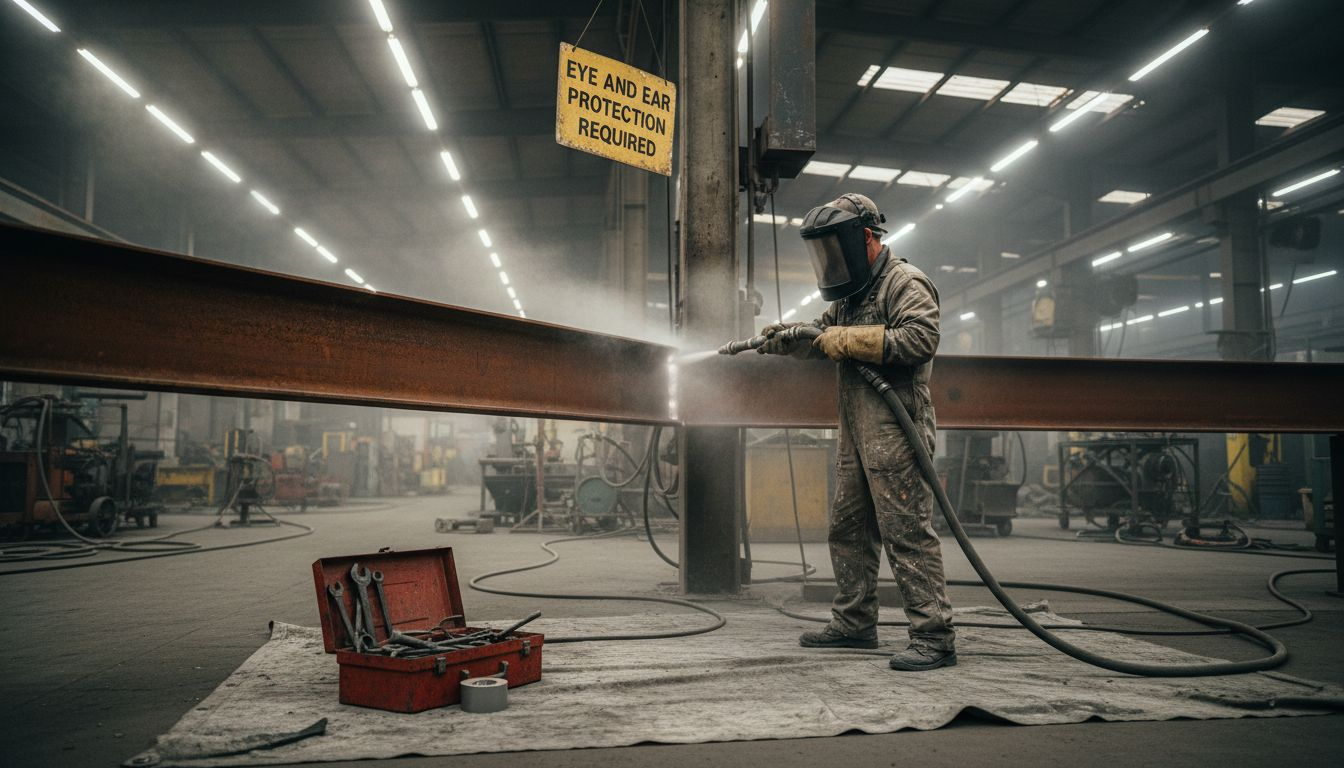
Proper sandblasting technique requires controlling several variables. Abrasive selection impacts profile depth and cleanliness, with options ranging from aggressive steel grit to gentler materials for softer substrates. Blast pressure affects removal efficiency and surface profile. Distance and angle of the nozzle determine coverage uniformity. Your surface preparation workflow should specify these parameters for consistent results.
Cleaning protocols vary by material and contamination type. Steel surfaces need complete rust and scale removal down to white metal for critical applications or commercial blast for general industrial use. Concrete requires profile creation through abrasive blasting or mechanical scarification. Previously coated surfaces need assessment to determine if existing coatings can remain or require complete removal.
Florida’s humidity creates unique challenges during preparation. Moisture interferes with abrasive blasting efficiency, requiring dehumidification in enclosed spaces. Flash rust forms rapidly on newly blasted steel when relative humidity exceeds 40%, necessitating immediate coating application or temporary rust inhibitors. Your surface preparation standards in Florida should address these local conditions.
Inspection confirms preparation quality before coating. Visual assessment verifies complete contaminant removal and uniform appearance. Profile measurement ensures adequate anchor pattern depth, typically 1.5 to 3.0 mils for most industrial coatings. Cleanliness testing with tape confirms absence of residual dust and particles.
Compare preparation methods for your specific needs:
| Method | Best For | Advantages | Limitations |
|---|---|---|---|
| Abrasive Blasting | Heavy rust, thick coatings | Fast, creates ideal profile | Generates dust, requires containment |
| Water Jetting | Salt-contaminated surfaces | No abrasive disposal, minimal dust | No profile creation, slower |
| Chemical Stripping | Complex geometries | Reaches tight spaces | Hazardous waste, limited to coatings |
| Power Tool Cleaning | Small repairs, touch-ups | Portable, low cost | Inadequate for large areas |
Pro Tip: Always verify surface temperature stays at least 5°F above dew point during and after preparation to prevent moisture condensation that causes coating adhesion failures in Florida’s humid environment.
The preparation phase sets the foundation for everything that follows. Shortcuts here multiply costs later through premature coating breakdown and required rework. Follow NACE surface preparation guidelines for specifications matching your service conditions. Quality preparation pays dividends through extended coating life and reduced maintenance frequency, directly impacting your facility’s bottom line and operational reliability.
Step 2: Industrial Coating Selection and Application
Selecting the right coating system protects your investment in surface preparation. Epoxy and polyurethane coatings offer up to 15 years of lifecycle extension compared to lesser coatings, making material selection a critical decision with long-term financial implications. Wrong choices lead to premature failures that waste preparation efforts and materials.
Industrial coatings differ substantially in performance characteristics. Epoxy coatings provide excellent adhesion, chemical resistance, and abrasion protection, making them ideal for floors, tanks, and equipment exposed to harsh chemicals. Polyurethane topcoats deliver superior UV resistance and color retention for exterior applications where appearance matters. Specialized zinc-rich primers offer galvanic protection for steel in corrosive environments.
Your facility’s specific exposure drives coating selection. Consider what the surface contacts during normal operations, including chemicals, temperatures, physical wear, and moisture levels. Understand the importance of industrial coatings for your particular infrastructure type.
Environmental conditions during application determine success. Most industrial coatings require substrate temperatures between 50°F and 90°F with relative humidity below 85%. Application in conditions outside these ranges causes poor curing, reduced adhesion, blistering, and shortened service life. Florida’s climate means you must carefully time application work and sometimes provide environmental controls.
Follow proper application techniques:
- Apply coatings at manufacturer-specified thickness using calibrated equipment
- Maintain wet edge to avoid lap marks and uneven coverage
- Allow adequate cure time between coats based on temperature and humidity
- Protect freshly applied coatings from moisture, dust, and damage during cure
- Document batch numbers and application conditions for quality records
Common application errors severely reduce coating lifespan. Insufficient film thickness leaves substrate vulnerable to corrosion and wear. Excessive thickness causes cracking and poor intercoat adhesion. Contamination between coats prevents proper bonding. Inadequate cure time before recoating traps solvents that compromise film integrity.
Pro Tip: Use a wet film thickness gauge during application to verify you are achieving specified coating thickness, preventing costly failures from inadequate coverage or excessive material waste from over application.
Safety during coating application requires strict protocols. Ensure adequate ventilation to control exposure to coating fumes and maintain air quality below permissible exposure limits. Workers need respiratory protection appropriate for the coating chemistry and application method. Ignition sources must be eliminated when using flammable coatings. Reference your industrial coating application guide for detailed procedures.
Quality control during application catches issues before they become failures. Inspect for holidays (missed spots) using holiday detection equipment on critical areas. Verify uniform appearance and proper coverage. Measure dry film thickness after curing to confirm specification compliance. Understanding coating inspection importance ensures long-term performance.
Step 3: Maintenance Scheduling and Routine Inspections
Establishing a systematic inspection schedule prevents small issues from becoming catastrophic failures. Regular inspections and timely maintenance reduce unexpected surface failures by 30%, translating directly to lower emergency repair costs and fewer operational disruptions. Reactive maintenance costs substantially more than planned preventive care.
Recommended inspection frequency depends on exposure severity. Facilities in aggressive coastal environments need biannual inspections minimum. Inland locations with moderate exposure can extend to annual inspections. Critical infrastructure supporting safety or environmental containment warrants quarterly checks. High-value assets justify more frequent monitoring to maximize service life.
Develop a systematic inspection process:
- Visual examination noting coating condition, color changes, chalking, or gloss loss indicating weathering
- Physical testing checking for coating adhesion using tape tests on suspect areas
- Detailed documentation with photos, measurements, and condition ratings for trend analysis
- Prioritization of findings based on severity and risk to operations
- Action planning specifying repair timing, methods, and resource requirements
Monitor key degradation indicators during inspections. Chalking and fading signal UV damage requiring topcoat refresh. Blistering indicates moisture intrusion or inadequate surface preparation. Cracking and checking show coating brittleness or excessive film thickness. Rust bleeding through coating reveals adhesion loss or coating breakdown. Delamination demonstrates coating system incompatibility or contamination issues.
Timely touch-ups prevent minor coating damage from spreading. Small holidays and mechanical damage expose substrate to corrosion that spreads under surrounding coating. Addressing these promptly through spot repairs maintains overall system integrity. Delay allows corrosion to undercut intact coating, exponentially increasing repair scope and cost.
Maintain detailed records for each inspected asset. Track inspection dates, findings, repairs performed, and coating condition over time. This data enables predictive maintenance planning and budget forecasting. Historical records help identify problematic areas needing more frequent attention or upgraded coating systems. Documentation also demonstrates due diligence for compliance and liability purposes.
Pro Tip: Schedule inspections during Florida’s dry season when you can immediately address any identified issues without weather delays, ensuring quick turnaround on repairs before the humid summer months accelerate any coating degradation.
Proactive scheduling delivers multiple benefits. Budgeting becomes predictable when you plan maintenance based on inspection data rather than reacting to emergencies. Operations can schedule downtime during convenient periods rather than unplanned shutdowns. Material procurement happens at favorable pricing through advance planning. Resource allocation improves through workload leveling across the maintenance calendar.
Link inspection findings to your maintenance database. Track coating age, exposure conditions, and performance trends. Use this intelligence to refine coating selection for future projects. Share lessons learned across your facility portfolio to optimize maintenance strategies systematically.
Common Mistakes and Troubleshooting
Even experienced facility managers make preventable errors that compromise surface maintenance outcomes. Recognizing these common pitfalls helps you avoid expensive failures and rework.
Inadequate surface cleaning before coating ranks as the most frequent failure cause. Residual oils, salts, dust, or contaminants prevent coating adhesion regardless of product quality. The coating appears fine initially but delaminates prematurely as contamination undermines bonding. Always verify cleanliness through testing before applying any coating system.
Ignoring weather conditions during application guarantees problems. Applying coatings when surface temperature approaches dew point causes moisture condensation under the coating film, creating blisters and adhesion loss. High humidity slows solvent evaporation, trapping volatiles that weaken the cured film. Extreme temperatures outside product specifications prevent proper curing. Monitor conditions continuously and stop work when parameters drift out of range.
Incorrect coating thickness creates multiple failure modes. Insufficient thickness leaves substrate vulnerable, provides inadequate barrier protection, and fails to meet specification requirements. Excessive thickness causes internal stresses leading to cracking, poor intercoat adhesion between layers, and extended cure times increasing contamination risk. Calibrate equipment and verify thickness during application.
Troubleshoot common coating failures:
- Blistering indicates moisture or contamination trapped under coating; remedy through complete removal, thorough drying, proper surface prep, and recoating
- Adhesion loss results from inadequate prep or contamination; fix by removing failed coating, improving prep quality, and reapplying
- Premature chalking signals incorrect coating selection or UV exposure exceeding product capabilities; address through topcoat replacement with UV-resistant system
- Cracking and checking indicate coating brittleness or thermal stress; resolve by removing and replacing with flexible system rated for temperature cycling
Skipping routine inspections allows minor issues to escalate into major failures. Small coating damage spreads rapidly in Florida’s aggressive environment. What begins as a minor holiday becomes extensive corrosion requiring complete recoating. Regular inspections catch problems early when repairs are simple and inexpensive. Review your surface preparation mistakes to avoid repeating errors.
Pro Tip: When coating failures occur, always investigate root causes rather than simply recoating. Understanding why the original coating failed prevents repeating the same mistakes and guides selection of appropriate remedial measures.
Documentation failures undermine maintenance programs. Without records of coating types, application dates, and inspection findings, you cannot make informed decisions about maintenance timing or coating selection. Implement systematic record keeping from project start, capturing all relevant data for future reference.
Expected Results, Outcomes, and Cost Considerations
Understanding realistic expectations for surface maintenance projects helps you plan resources and measure success. Project timelines vary based on scope, surface conditions, and weather cooperation. Small maintenance projects addressing localized coating failures typically complete within 7 to 10 days. Comprehensive facility-wide programs involving multiple structures may extend to 30 days or more. Plan for weather delays during Florida’s summer months.
Properly maintained surfaces deliver measurable performance improvements. Coating lifespan extends from the typical 5 to 7 years of neglected surfaces to 15 years or more with systematic care. Corrosion rates drop by up to 85% when protective coatings remain intact and functional. Structural integrity preservation reduces safety incidents and liability exposure.
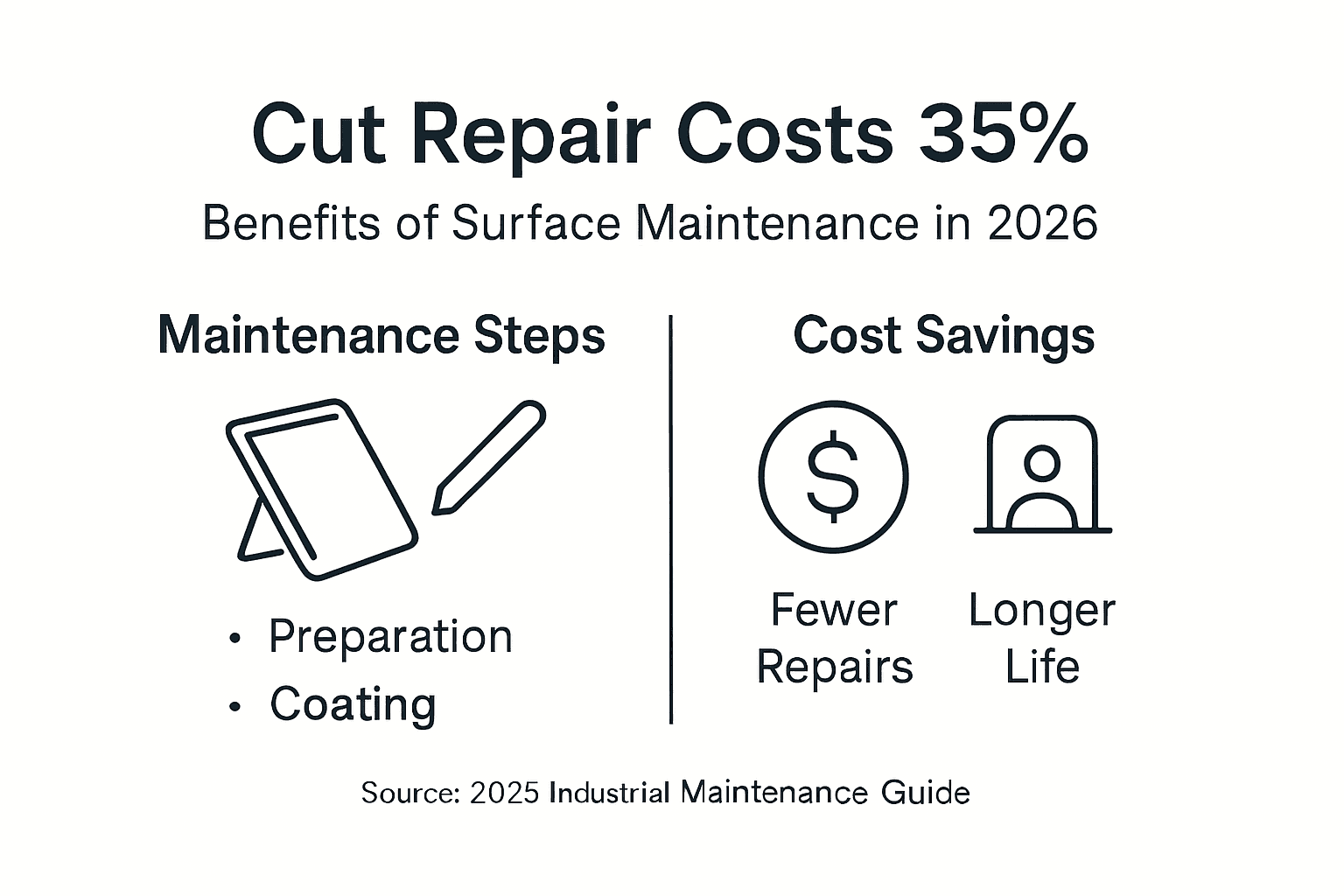
Financial benefits justify maintenance investments:
| Outcome | Measurement | Timeframe |
|---|---|---|
| Repair cost reduction | 35% or more savings | 5 years |
| Coating lifecycle extension | 8 to 15 additional years | Per application |
| Emergency failure reduction | 30% fewer unplanned events | Annual |
| Asset value preservation | Maintained book value | Ongoing |
| Operational uptime improvement | 15% fewer disruptions | Annual |
Calculate return on investment by comparing systematic maintenance costs against reactive repair expenses. Emergency repairs cost three to five times more than planned maintenance due to rush material procurement, premium labor rates, operational downtime impacts, and extensive damage requiring larger repair scope. Proactive care delivers positive ROI within the first maintenance cycle.
Operational efficiency improvements extend beyond direct cost savings. Fewer unplanned shutdowns mean consistent production and service delivery. Extended asset lifespans defer capital replacement costs. Improved safety reduces workers’ compensation expenses and liability. Regulatory compliance avoids penalties and maintains operating permits.
Quality maintenance programs require upfront investment but pay back through reduced total cost of ownership. Budget for regular inspections, planned recoating, and proper surface preparation. While initial costs may seem high, the alternative of deferred maintenance leads to accelerated degradation, emergency repairs, and premature asset replacement costing far more over time.
Discover Professional Sandblasting and Coating Services
Implementing the strategies outlined here requires expertise, specialized equipment, and attention to detail that many facilities lack in-house. Professional service providers deliver consistent results while you focus on core operations. Southern Sandblasting & Painting brings over 20 years of experience maintaining industrial surfaces across Central Florida’s challenging environment.
Our Orlando sandblasting services remove corrosion, failed coatings, and contaminants using proven techniques optimized for Florida conditions. We offer comprehensive industrial coatings options including epoxy, polyurethane, and specialized protective systems matched to your exposure conditions. Our team follows surface preparation best practices ensuring optimal coating adhesion and longevity. We develop customized maintenance plans extending asset life while controlling costs. Municipal and commercial facilities across Central Florida trust our expertise for critical infrastructure protection and regulatory compliance.
Frequently Asked Questions
How often should I inspect industrial surfaces in Florida facilities?
Coastal facilities need biannual inspections minimum due to aggressive salt air exposure, while inland locations can extend to annual checks. Critical infrastructure supporting safety or environmental containment warrants quarterly inspections to catch issues early.
What coatings resist Florida’s coastal humidity best?
Epoxy coatings with polyurethane topcoats provide excellent moisture barrier properties and UV resistance for coastal environments. Zinc-rich primers add galvanic protection for steel substrates exposed to salt air.
What safety requirements apply during industrial surface maintenance?
OSHA mandates respiratory protection, eye protection, chemical-resistant gloves, and hearing protection during maintenance activities. Adequate ventilation is required to control exposure to coating fumes and abrasive dust.
What signs indicate surfaces need immediate maintenance attention?
Rust bleeding through coating, blistering or delamination, extensive chalking or color fading, and visible substrate exposure all signal urgent need for maintenance to prevent accelerated degradation and structural compromise.
What factors affect industrial surface maintenance project costs?
Surface area and accessibility, existing coating condition requiring removal, substrate material and preparation requirements, coating system specification and performance level, and project timing relative to weather conditions all significantly impact total project costs.
Recommended
- Surface Treatment Process 2025: Achieve Lasting Protection
- Industrial Painting Trends 2025: Impact on Facility Longevity
- Protective Coating Trends 2025: Innovations for Infrastructure
- Surface Preparation Workflow for Industrial Projects
- Sandblasting Contractor Baldwin Park FL
- Sandblasting Services Oviedo FL


