
TL;DR:
- Shot blasting is a high-velocity abrasive process used to clean, texture, and strengthen metal and concrete surfaces for industrial applications. It recycles abrasive media within closed-loop systems, producing less dust and higher efficiency than sandblasting. The process improves coating adhesion, extends fatigue life, and is essential across industries like aerospace, construction, and automotive maintenance.
Shot blasting is defined as a high-velocity abrasive surface treatment that simultaneously cleans, textures, and mechanically strengthens metal and concrete surfaces for industrial use. Unlike simple washing or chemical stripping, shot blasting propels abrasive media such as steel shot, steel grit, or aluminum oxide at surfaces using centrifugal wheels or compressed air, removing rust, scale, and old coatings while conditioning the substrate at a microscopic level. Industries from aerospace and automotive manufacturing to construction and municipal infrastructure rely on this process as the foundation for durable protective coatings. Understanding what is shot blasting, and how it differs from related methods, is the starting point for any serious surface preparation decision.
How does the shot blasting process work?
Shot blasting works by accelerating abrasive media to high velocity and directing it at a target surface, where the impact removes contaminants and creates a controlled surface profile. Two primary acceleration methods exist: centrifugal wheel systems and compressed air systems. Centrifugal wheel machines use a spinning impeller to throw media at speeds up to 280 feet per second, making them the standard for high-volume production environments. Compressed air systems, often called blast pots, give operators more directional control and suit complex geometries or field applications.
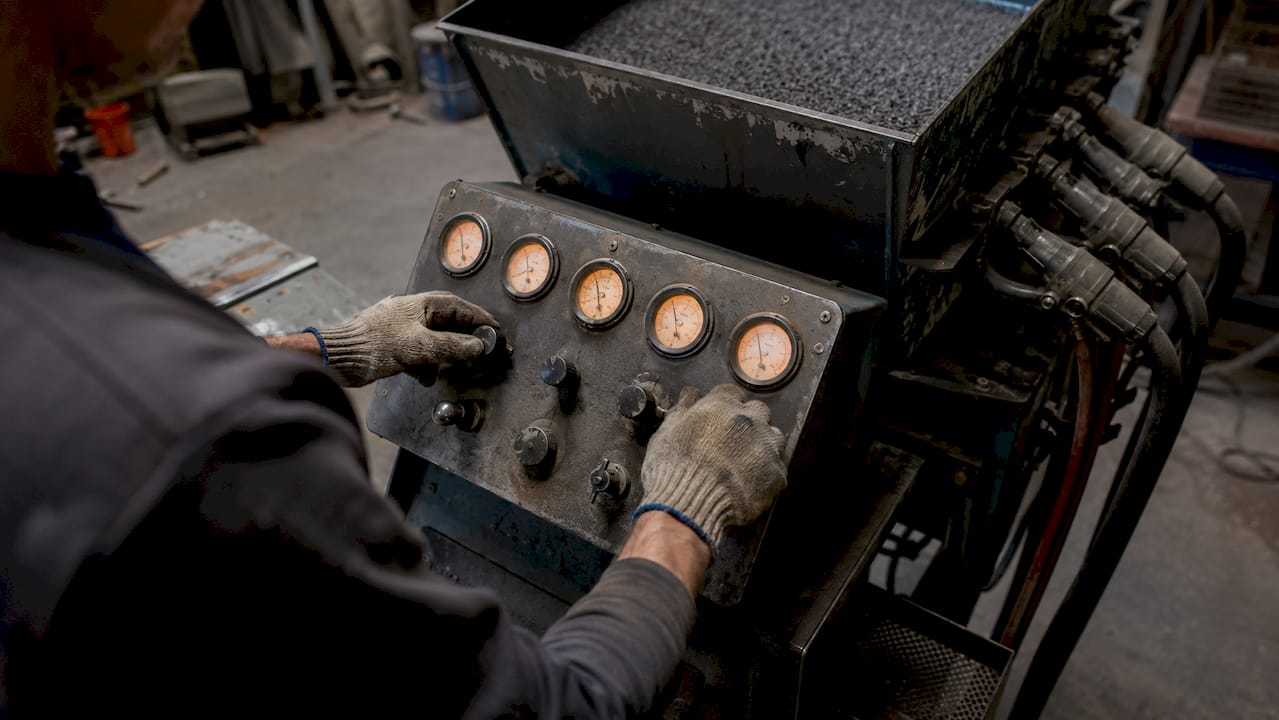
The shot blasting process follows four repeating steps: propulsion, impact, recovery, and recycling. After media strikes the surface, it falls to a collection hopper at the base of the machine. From there, an elevator carries it back to a closed-loop recycling system that minimizes waste and eliminates the hazardous dust disposal problems associated with sandblasting. An air-wash separator removes broken shot fragments, dust, and surface debris before the cleaned media re-enters the blast wheel. This closed-loop recovery preserves media shape and quality, which directly controls the consistency of the surface profile produced.
Shot blasting vs sandblasting: key operational differences
Shot blasting and sandblasting both use abrasive impact to clean surfaces, but they differ in media type, containment, and dust generation. Sandblasting typically uses silica sand or similar media in open-air or enclosed cabinets, producing significant airborne dust that requires respiratory protection and careful waste disposal. Shot blasting uses metallic or engineered media in a contained machine environment, generating far less airborne particulate. For large-scale industrial projects, shot blasting delivers higher throughput, better dust control, and lower media cost per cycle because the abrasive is reused repeatedly. For detailed project comparisons, the role of blasting equipment in industrial settings explains how equipment selection drives these outcomes.
Pro Tip: Always calibrate media size and hardness to the base material before starting a production run. Running media that is too hard on thin-gauge steel will warp the part; media that is too soft will fail to achieve the required surface anchor profile.
What are the benefits and applications of shot blasting?
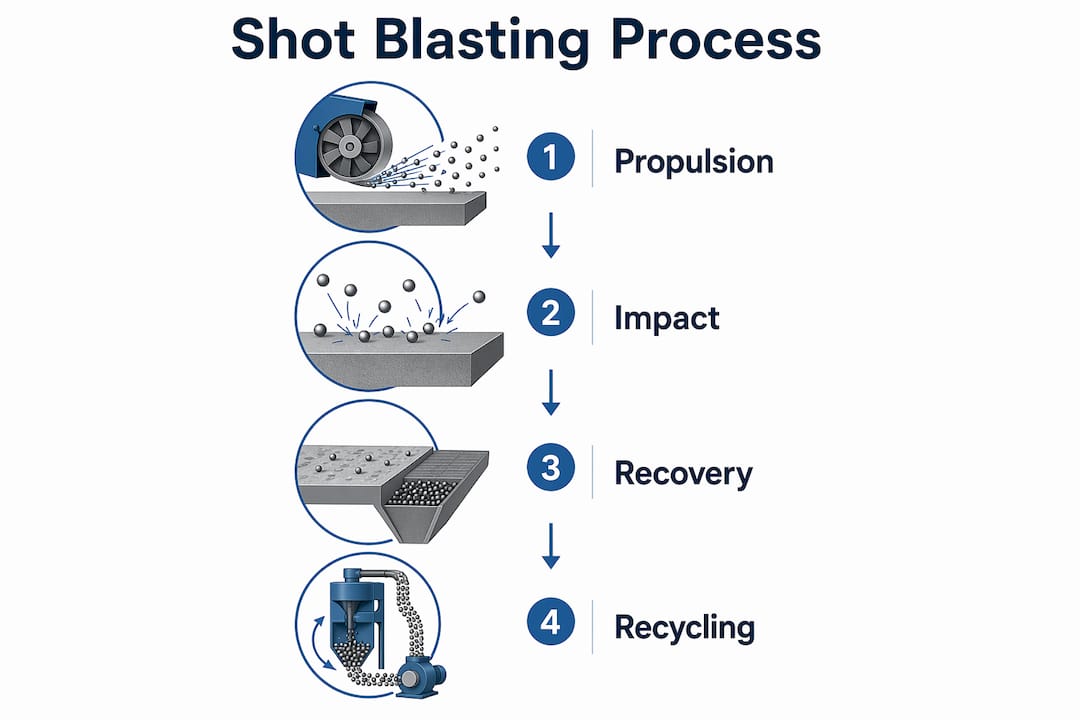
Shot blasting delivers two categories of benefit that most surface preparation methods cannot match together: mechanical cleaning and structural strengthening. Steel shot peening increases fatigue life of critical metal components by 200% to 1,000%, depending on part geometry and load conditions. That range reflects the compressive residual stress introduced into the surface layer during impact, which resists crack initiation under cyclic loading. For components like turbine blades, automotive springs, and landing gear, this is not a secondary benefit. It is the primary reason the process is specified.
Beyond strengthening, shot blasting creates a surface anchor profile that dramatically improves coating adhesion. A mechanically profiled surface gives paint, epoxy, or galvanizing a physical grip that a chemically cleaned surface alone cannot provide. The result is longer coating life, fewer reapplication cycles, and lower long-term maintenance costs.
Industries and applications where shot blasting is standard
Shot blasting appears across a wide range of industrial sectors:
- Steel manufacturing: Structural steel beams and plates are shot blasted before fabrication to remove mill scale and prepare surfaces for welding or coating.
- Aerospace: Turbine blades, airframe components, and landing gear undergo shot peening to extend fatigue life under extreme stress cycles.
- Automotive: Suspension springs, crankshafts, and transmission gears are peened to prevent stress fractures in high-load environments.
- Construction: Concrete floors are shot blasted to open the surface profile before epoxy or polyurethane coatings are applied. This is the standard prep method for warehouse floors, parking decks, and bridge decks.
- Galvanizing preparation: Steel fabrications are shot blasted immediately before hot-dip galvanizing to remove all oxides and achieve the surface cleanliness required for zinc adhesion.
Automated shot blasting systems process parts 5 to 10 times faster than manual cleaning methods. That throughput advantage makes automated lines the default choice for any production environment where volume and consistency both matter. For real-world examples of how surface preparation extends asset life, the sandblasting projects for asset longevity page covers documented outcomes across construction and infrastructure work.
How to choose and maintain blasting media for optimal results
The correct abrasive media is the single most important variable in shot blasting process design. Media choice determines surface profile depth, the degree of compressive stress induced, and how quickly the substrate is cleaned. The four most common media types each serve a distinct purpose:
| Media type | Profile produced | Best use case |
|---|---|---|
| Steel shot (round) | Smooth, peened finish | Fatigue life improvement, pre-paint prep |
| Steel grit (angular) | Aggressive anchor profile | Heavy coating adhesion, rust removal |
| Aluminum oxide | Medium angular profile | Non-ferrous metals, aerospace components |
| Carbon grit | Moderate profile | Concrete surface preparation |
Steel shot produces a dimpled, compressive surface ideal for peening applications. Steel grit cuts a sharper, more angular profile that maximizes mechanical adhesion for heavy coatings. Aluminum oxide is the media of choice when ferrous contamination of the substrate is unacceptable, as in aerospace aluminum or titanium components. Carbon grit handles concrete without introducing metallic contamination that could interfere with floor coating chemistry.
Incorrect media hardness can damage surfaces or fail to induce the beneficial compressive stresses that make shot blasting valuable. Media hardness must be calibrated to the yield strength of the material being processed. Running Rockwell C 60 grit against a soft aluminum casting will cause surface damage; running soft shot against hardened steel will produce no peening benefit at all.
Maintenance of the closed-loop system is equally critical. Air-wash separators must be inspected and cleared regularly to prevent broken media fragments from re-entering the blast stream. Broken shot produces irregular impact patterns and inconsistent surface profiles. For a full breakdown of blasting media types and their surface preparation outcomes, that resource covers selection criteria for both concrete and metal substrates.
Pro Tip: Weigh your media charge at the start and end of each shift. A significant weight drop indicates excessive media breakdown, which signals either incorrect hardness selection or a separator malfunction that is allowing fines back into the blast wheel.
What are the limitations and pretreatment requirements for shot blasting?
Shot blasting is not a standalone solution. It is one step in a surface preparation workflow, and skipping the steps before it will cause the entire process to fail. Shot blasting does not remove heavy oils, and failure to degrease before blasting embeds surface oils into the substrate profile. Once oils are driven into the anchor pattern, no coating system will bond correctly. The result is adhesion failure, blistering, and premature corrosion under the coating.
The pretreatment requirements before shot blasting include:
- Chemical degreasing: Remove all oils, greases, and cutting fluids with an approved solvent or alkaline cleaner before any abrasive work begins.
- Surface inspection: Identify and document existing corrosion, weld spatter, or surface defects that may require grinding before blasting.
- Moisture control: Blasting wet or damp surfaces drives moisture into the profile and accelerates flash rusting before coating application.
- Masking: Protect threaded holes, bearing surfaces, and precision machined areas that cannot tolerate abrasive impact.
Beyond pretreatment, shot blasting carries operational limitations that facility managers need to account for. The initial equipment cost for a centrifugal wheel blast machine is significant, placing it out of reach for low-volume or one-off applications. Large or immovable structures, such as in-place bridge sections or installed storage tanks, cannot be fed through a machine. These situations require portable blast equipment or alternative surface preparation methods. The environmental and operational constraints of shot blasting also differ from chemical methods. Shot blasting generates solid waste in the form of spent media and removed scale, which must be collected and disposed of according to local regulations. For projects where coating failures in construction are a documented risk, integrating proper pretreatment with mechanical blasting is the only reliable path to a durable result.
Key takeaways
Shot blasting delivers both surface cleaning and mechanical strengthening in a single process, making it the most efficient surface preparation method for industrial coating and fatigue-critical applications.
| Point | Details |
|---|---|
| Dual function process | Shot blasting cleans surfaces and introduces compressive stress that extends component fatigue life. |
| Media selection is critical | Steel shot, steel grit, aluminum oxide, and carbon grit each produce different profiles for different applications. |
| Degreasing must come first | Oils embedded during blasting cause coating adhesion failure; chemical degreasing is non-negotiable before blasting. |
| Closed-loop systems reduce waste | Abrasive recycling cuts media cost and eliminates hazardous dust disposal compared to open sandblasting. |
| Automation multiplies throughput | Automated systems process parts 5 to 10 times faster than manual cleaning, making them standard for production environments. |
What I have learned from watching shot blasting done right and wrong
The mechanical strengthening benefit of shot blasting is the most underused argument for specifying it over cheaper alternatives. Most facility managers approve shot blasting because it cleans. The fatigue life improvement of 200% to 1,000% is the reason aerospace and automotive engineers specify it, and that argument belongs in every conversation about infrastructure maintenance and asset longevity.
The most avoidable failures I see in industrial settings come down to two things: wrong media and skipped degreasing. Operators assume that if the surface looks clean, it is ready to blast. Oils are invisible at the scale that matters. Combining shot blasting with chemical pretreatments is not optional on any project where coating performance is the measure of success.
Automation is powerful, but it does not replace judgment. The best shot blasting operations I have observed pair automated throughput with hands-on quality checks at the exit of the blast machine. A trained eye catching a missed spot or a surface defect before coating saves far more time and money than any automated sensor currently on the market.
— Southernsandblastingandpainting
How Southernsandblastingandpainting supports your surface preparation needs
Southern Sandblasting and Painting brings over 20 years of industrial surface preparation experience to commercial, municipal, and government projects across Central Florida. The team works with advanced blasting equipment calibrated to the specific requirements of each substrate, whether that is structural steel for a water tank, concrete for an airport facility, or pipeline sections for city infrastructure.
If you are planning a project where surface preparation quality determines coating life, the sandblasting equipment guide covers the equipment and methods Southernsandblastingandpainting uses to protect assets for the long term. For project-specific surface preparation workflows, the surface prep best practices resource details the full sequence from degreasing through final coating application. Contact Southernsandblastingandpainting to discuss your project requirements directly with an experienced team.
FAQ
What is shot blasting used for in industry?
Shot blasting is used to clean rust, mill scale, and old coatings from metal surfaces and to profile concrete floors before protective coatings are applied. It also strengthens metal components through compressive residual stress, making it standard in aerospace, automotive, and structural steel manufacturing.
What materials can be shot blasted?
Steel, cast iron, aluminum, concrete, and certain composites can all be shot blasted using the appropriate media type. Media selection must match the hardness and geometry of the material to avoid surface damage.
How does shot blasting differ from sandblasting?
Shot blasting uses metallic or engineered abrasive media in a closed-loop machine that recycles media and controls dust, while sandblasting typically uses expendable media in open or semi-open systems with higher dust generation. Shot blasting is faster, more consistent, and better suited to high-volume production environments.
Does shot blasting replace chemical cleaning?
Shot blasting does not replace chemical degreasing. Oils and greases must be removed with a solvent or alkaline cleaner before blasting begins, because surface oils embed into the blasted profile and cause coating adhesion failure if left in place.
What safety measures apply to shot blasting operations?
Operators must wear appropriate personal protective equipment including eye protection, hearing protection, and respiratory protection rated for the specific media and dust levels present. Enclosed blast machines reduce airborne exposure significantly compared to open blasting, but inspection of containment integrity and dust collection systems is required before each production run.


