
Many facility managers believe coating failures happen because they chose the wrong product, when the real culprit is often poor surface preparation or misunderstood adhesion principles. Coatings that peel, blister, or corrode prematurely cost organizations thousands in repairs and downtime. This guide breaks down the science of coating adhesion and the practical steps you need to protect your assets for decades, not just years. You’ll learn how coatings bond to surfaces, why preparation matters more than product selection, and which methods deliver the best results for Central Florida’s demanding environments.
Table of Contents
- Fundamentals Of Coating Adhesion: How Coatings Bond To Surfaces
- Why Surface Preparation Is Pivotal For Strong Coating Adhesion
- Comparing Surface Preparation Methods: Hydroblasting Vs Traditional Abrasives
- Environmental And Application Factors Influencing Coating Adhesion Success
- Reliable Coating And Surface Preparation Services In Central Florida
- What Is Coating Adhesion And Why Is It Important?
- How Does Surface Preparation Affect Coating Adhesion?
- What Are The Advantages Of Hydroblasting Over Traditional Abrasives?
- Can Environmental Factors Really Impact Coating Adhesion?
Key takeaways
| Point | Details |
|---|---|
| Adhesion mechanisms | Coating adhesion relies on mechanical interlocking, chemical bonding, and surface energy interactions that determine long-term performance. |
| Surface preparation priority | Proper contaminant removal and profile creation are more critical than coating selection for preventing failures. |
| Method selection matters | Hydroblasting and abrasive blasting each offer distinct advantages depending on substrate type and environmental constraints. |
| Environmental control | Temperature, humidity, and application conditions directly affect curing and bond strength. |
| Common failure causes | Inadequate preparation, surface contamination, and improper mixing account for most coating adhesion problems. |
Fundamentals of coating adhesion: how coatings bond to surfaces
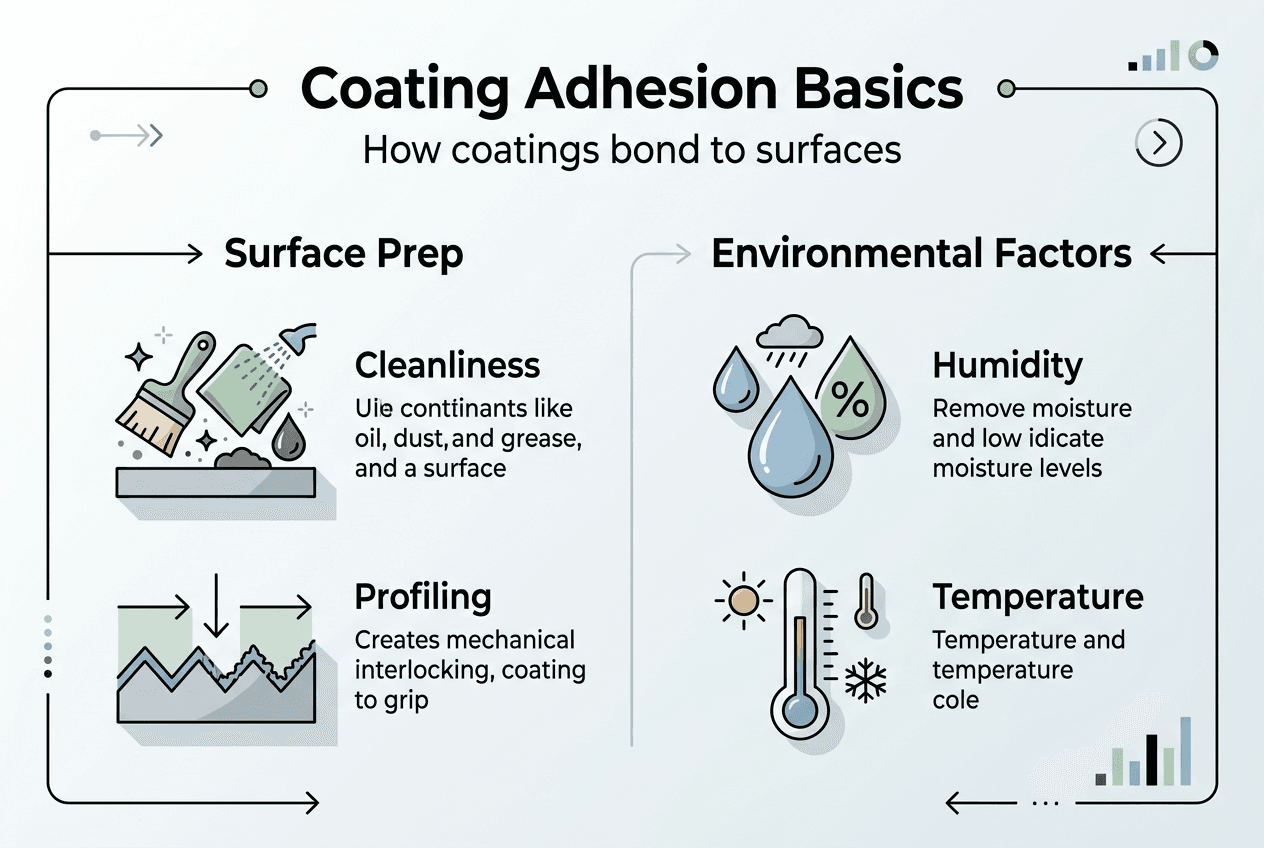
Understanding how coatings actually stick to surfaces helps you make better decisions about surface preparation and application methods. Coating adhesion relies on mechanical interlocking, chemical bonding, and surface energy interactions that work together to create a durable bond. Each mechanism plays a specific role in keeping your protective systems intact under stress.
Mechanical interlocking occurs when liquid coating flows into microscopic peaks and valleys on the surface, then hardens to create a physical grip. Think of it like tiny anchors embedded in the substrate. The rougher the profile, the more surface area available for the coating to grab. This is why surface prep best practices emphasize creating the right texture before application.
Chemical bonding happens when molecules in the coating form actual chemical links with atoms on the substrate surface. These bonds are stronger than mechanical grip alone. Epoxy coatings excel at chemical bonding with steel because their molecular structure reacts with iron oxides. Some primers are specifically formulated to enhance this chemical attraction between dissimilar materials.
Surface energy determines how well liquid coating wets and spreads across a substrate. High surface energy materials like clean metal allow coatings to flow smoothly and make intimate contact. Contaminants like oil reduce surface energy, causing coatings to bead up instead of spreading evenly. This is why even invisible contamination ruins adhesion.
ASTM test methods measure adhesion strength to verify coating performance:
- Pull-off testing applies perpendicular force until the coating detaches, measuring bond strength in PSI
- Cross-cut testing scores a grid pattern and applies tape to assess adhesion quality through visual inspection
- Knife adhesion testing uses a blade to lift coating edges and evaluate bond integrity
- Scrape adhesion testing drags a weighted tool across the surface to determine resistance to mechanical removal
“Proper adhesion testing before and after application identifies weak bonds early, preventing catastrophic failures that compromise asset protection and safety.”
The strongest coating systems use all three adhesion mechanisms simultaneously. Mechanical grip provides immediate holding power, chemical bonds add molecular-level strength, and proper surface energy ensures complete contact. When facility managers skip surface preparation, they eliminate mechanical interlocking and reduce surface energy, leaving only weak chemical bonds that fail under stress.
Why surface preparation is pivotal for strong coating adhesion
Surface preparation is critical for coating adhesion and includes contaminant removal and surface profiling that enable every adhesion mechanism to function properly. Even premium coatings fail when applied over dirty or smooth surfaces. The prep work you do before opening a paint can matters more than the coating brand you select.
Contaminant removal eliminates substances that block coating contact with the substrate. Oil and grease create invisible barriers that prevent wetting. Rust and mill scale are loose materials that detach under stress, taking the coating with them. Old coatings may look intact but hide weak bonds underneath. Soluble salts absorb moisture and cause blistering from within. Every contaminant must go before you apply new protection.
Surface profiling creates the texture needed for mechanical interlocking. Smooth surfaces offer minimal grip, while properly roughened substrates provide thousands of anchor points per square inch. The profile depth must match coating thickness. Too shallow and the coating can’t grip effectively. Too deep and you create voids that trap air and moisture. Most industrial coatings require a 2 to 3 mil profile for optimal adhesion.
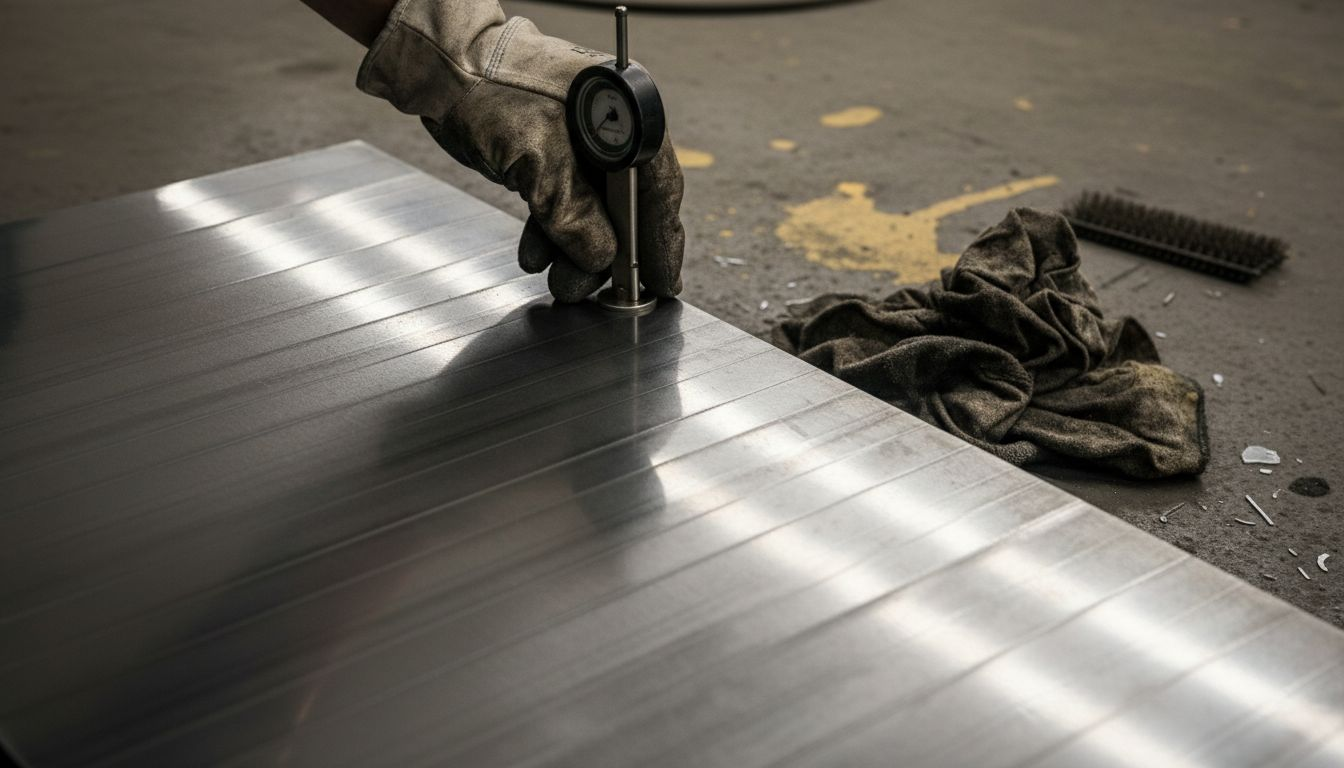
NACE SP0178 provides guidance on weld surface preparation that applies broadly to industrial coating projects. The standard emphasizes removing weld spatter, grinding smooth transitions, and achieving uniform cleanliness across all surfaces. Following these protocols ensures consistent adhesion regardless of substrate variations.
Keeping substrates clean and dry between preparation and coating prevents recontamination. Humidity condenses on cold metal. Dust settles on horizontal surfaces. Handling leaves fingerprint oils. The role of surface preparation extends beyond the blasting phase to include protection of prepared surfaces until coating application.
Pro Tip: Conduct surface cleanliness testing with solvent wipes and adhesive tape before coating to verify preparation quality and catch contamination that visual inspection misses.
Common preparation pitfalls that destroy adhesion include:
- Applying coatings over flash rust that forms between blasting and painting
- Ignoring soluble salt contamination in coastal or industrial environments
- Using inadequate cleaning methods that leave invisible oil films
- Blasting in high humidity that causes immediate surface oxidation
- Failing to remove all loose mill scale and rust from pitted areas
The connection between why prep surfaces before painting and long-term coating performance is direct and measurable. Facilities that invest in thorough preparation see coating systems last 20 to 30 years. Those that cut corners face failures within 3 to 5 years. The labor cost of proper prep is always less than the total cost of premature recoating.
Comparing surface preparation methods: hydroblasting vs traditional abrasives
Choosing between hydroblasting and traditional abrasive blasting affects adhesion quality, environmental impact, and project costs. Each technology offers distinct advantages for different substrates and situations. Understanding these differences helps you specify the right method for your facility’s needs.
Hydroblasting uses water under high pressure to clean surfaces without damaging them. Standard hydroblasting operates at 10,000 to 40,000 PSI for general cleaning and coating removal. Ultra-high pressure systems exceed 55,000 PSI for specialized applications like concrete scarification. The water jet removes contaminants through impact force and flushing action.
Traditional abrasive methods use granular materials like steel grit or aluminum oxide propelled at high velocity to erode surfaces. Common abrasive media include:
- Steel grit for aggressive profiling of structural steel
- Aluminum oxide for precise control and reusable media
- Garnet for lower dust and reduced substrate damage
- Recycled glass for environmentally sensitive projects
- Coal slag for economical large-scale blasting
Hydroblasting preserves substrate integrity by avoiding the mechanical erosion that abrasives cause. Thin-walled tanks and pipes benefit from water cleaning that removes coatings without thinning metal. The process eliminates embedded abrasive particles that can cause coating failures. Water also flushes away all contaminants instead of leaving residue on the surface.
Abrasive blasting produces the tactile surface profile that many coating systems require for optimal mechanical interlocking. The impact of hard particles creates angular peaks that provide superior grip compared to the smoother finish from water cleaning. Epoxy and polyurethane coatings specifically need this aggressive texture to achieve rated adhesion strength.
| Factor | Hydroblasting | Abrasive Blasting |
|---|---|---|
| Profile depth | Shallow, smooth texture | Deep, angular texture |
| Substrate impact | Minimal material removal | Measurable erosion |
| Dust generation | None | Significant without containment |
| Media disposal | Water treatment required | Spent media and contaminants |
| Surface cleanliness | Excellent contaminant removal | Can embed particles |
| Equipment cost | Higher initial investment | Lower entry cost |
Environmental considerations differ substantially between methods. Hydroblasting consumes large water volumes that require collection and treatment before discharge. Wastewater contains dissolved contaminants and coating particles. Abrasive blasting generates airborne dust that needs containment and creates solid waste combining spent media with removed coatings. Neither method is universally cleaner, the better choice depends on your facility’s waste management capabilities.
Pro Tip: Combine methods strategically by using abrasive blasting for initial profiling and hydroblasting for final cleaning to achieve both optimal texture and surface cleanliness.
The surface preparation workflow industrial projects typically specifies method selection based on substrate condition, coating requirements, and environmental constraints. New steel often receives abrasive blasting for profile creation. Maintenance recoating may use hydroblasting to preserve remaining substrate thickness. Contaminated surfaces benefit from water’s superior flushing action.
Environmental and application factors influencing coating adhesion success
Even perfect surface preparation fails to deliver lasting adhesion when environmental conditions or application procedures fall outside specification. Temperature, humidity, and proper mixing affect how coatings cure and bond. Controlling these variables separates successful projects from expensive failures.
Temperature affects coating viscosity, curing speed, and film formation. Most industrial coatings specify application between 50°F and 90°F. Cold temperatures slow curing and can prevent proper crosslinking. Hot conditions cause rapid solvent evaporation that traps bubbles and creates poor flow. Substrate temperature matters as much as air temperature because it directly affects how coating wets the surface.
Humidity influences surface moisture and coating cure rates. High humidity causes condensation on cold substrates that blocks adhesion. The dew point must be at least 5°F below substrate temperature to prevent moisture formation. Extremely low humidity accelerates solvent loss and can cause surface skinning before proper wetting occurs. Weather conditions coatings impact becomes especially critical in Central Florida’s variable climate.
Common application pitfalls that compromise adhesion include:
- Incorrect mixing ratios that prevent proper curing and reduce bond strength
- Applying coatings over surfaces contaminated after preparation
- Ignoring manufacturer specifications for temperature and humidity ranges
- Using expired materials with degraded adhesion promoters
- Applying excessive film thickness that creates internal stress and poor adhesion
- Insufficient surface wetting time before coating sets
The misconception that thicker coatings always provide better protection causes numerous adhesion failures. Excessive film build creates internal stresses as the coating cures and shrinks. These stresses can exceed bond strength and cause delamination. Each coating system has an optimal thickness range that balances protection with adhesion. Following how to apply protective coatings guidelines prevents over-application problems.
“Surface contamination remains the leading cause of coating failure despite advances in coating technology, because even invisible contaminants completely block adhesion mechanisms.”
Proper application conditions require active monitoring and documentation. Measure and record substrate temperature, air temperature, relative humidity, and dew point before and during coating application. Stop work when conditions move outside specification. This discipline prevents applying coatings that look acceptable initially but fail prematurely because curing occurred under poor conditions.
Mixing errors destroy adhesion even when all other factors are controlled. Two-component coatings require precise ratio mixing to achieve full cure. Incorrect proportions leave unreacted components that never harden properly. Inadequate mixing creates zones of different composition that cure inconsistently. Using calibrated equipment and following exact procedures ensures uniform coating properties.
Induction time allows mixed coatings to begin reacting before application. Skipping this step applies coating before chemical processes activate adhesion promoters. The coating may appear to perform initially but lacks the molecular bonds needed for long-term durability. Respecting specified induction and pot life times ensures you apply coating at peak reactivity.
Reliable coating and surface preparation services in Central Florida
Achieving the coating adhesion and durability your facility needs requires expertise in surface preparation methods, environmental controls, and application techniques. Southern Sandblasting & Painting brings over 20 years of specialized experience to commercial and municipal projects across Central Florida.
Our sandblasting services in Orlando deliver the precise surface profiles that industrial coatings require for optimal adhesion. We match preparation methods to your substrate type and coating specifications, whether that means abrasive blasting for aggressive texture or specialized techniques for sensitive surfaces. Every project receives the thorough preparation that prevents premature coating failure.
Comprehensive sandblasting and painting services cover everything from initial surface evaluation through final coating application and inspection. We control environmental conditions, follow manufacturer specifications exactly, and document every step to ensure your coating system performs as designed. Our team understands the unique challenges Central Florida’s climate presents and adjusts procedures accordingly.
Facility managers trust us because we implement proven surface prep best practices that maximize coating adhesion and asset protection. Contact us to discuss your surface preparation and coating needs.
What is coating adhesion and why is it important?
Coating adhesion is the bond strength between a protective coating and the underlying substrate surface. Strong adhesion prevents coatings from peeling, blistering, or delaminating under stress. Without proper adhesion, even the most advanced coating formulations fail to protect assets from corrosion and degradation. Facility managers depend on reliable adhesion to extend infrastructure lifespan and avoid costly premature recoating.
How does surface preparation affect coating adhesion?
Proper surface preparation removes contaminants and creates the profile texture that enables mechanical and chemical bonding. Clean surfaces allow coatings to wet properly and make intimate molecular contact. The roughness profile provides anchor points for mechanical interlocking. Skipping or rushing preparation eliminates these adhesion mechanisms and guarantees coating failure regardless of product quality.
What are the advantages of hydroblasting over traditional abrasives?
Hydroblasting cleans surfaces without leaving abrasive residue or generating airborne dust that contaminates prepared areas. The water jet effectively removes contaminants while preserving substrate thickness on thin-walled structures. It works well for delicate surfaces where abrasive impact would cause damage. The process is environmentally friendlier in situations where dust control is difficult. However, hydroblasting may not create the aggressive profile some coatings need, making it important to match the surface preparation workflow to coating requirements.
Can environmental factors really impact coating adhesion?
Yes, improper temperature or humidity during application disrupts the curing process and weakens molecular bonds. Coating applied when substrate temperature is below the dew point traps moisture that blocks adhesion. Extreme temperatures affect viscosity and curing speed, preventing proper film formation. These weather conditions cause coating failures even when surface preparation was perfect. Controlling application environment is just as critical as preparation quality for achieving lasting adhesion.


