

TL;DR:
- Lead paint removal involves permanently eliminating lead hazards in properties, especially those built before 1978, through specialized, regulated methods. Proper certification, containment, and clearance procedures are essential to prevent hazardous dust contamination and ensure safety. Alternatives like encapsulation or enclosure are viable for stable surfaces but require ongoing inspection and are not permanent fixes.
Lead paint removal is the process of permanently eliminating lead-based paint hazards from residential and commercial properties using specialized methods governed by strict EPA safety and regulatory standards. Any paint containing lead at or above 1.0 mg/cm² or 0.5 percent by weight is legally classified as lead-based paint, and removing it incorrectly creates hazardous dust that contaminates surfaces for years. Homes built before 1978 are the most common sites for lead paint hazards, and property managers or homeowners who ignore the problem face serious health consequences and significant legal liability. This guide explains what lead paint removal entails, which methods work best, what the law requires, and how to budget for a safe, compliant project in 2026.
What is lead paint removal and why does it matter?
Lead paint removal, formally called lead paint abatement, is the permanent elimination of lead-based paint hazards through physical removal, enclosure, or encapsulation under controlled conditions. The industry term “abatement” carries a specific legal meaning under 40 CFR Part 745, Subpart L, which distinguishes it from routine renovation work. That distinction matters because improper DIY removal often creates hazardous lead dust contamination that is extremely difficult to remediate after the fact.
Lead is a neurotoxin with no safe exposure level for children under six. Adults face risks including high blood pressure, kidney damage, and reproductive harm from chronic exposure. Property managers overseeing pre-1978 buildings carry a legal duty to disclose known lead hazards and address deteriorating paint before it becomes airborne. Understanding the difference between abatement and a standard renovation is the first step toward doing something about it.
What are the common lead paint removal methods?
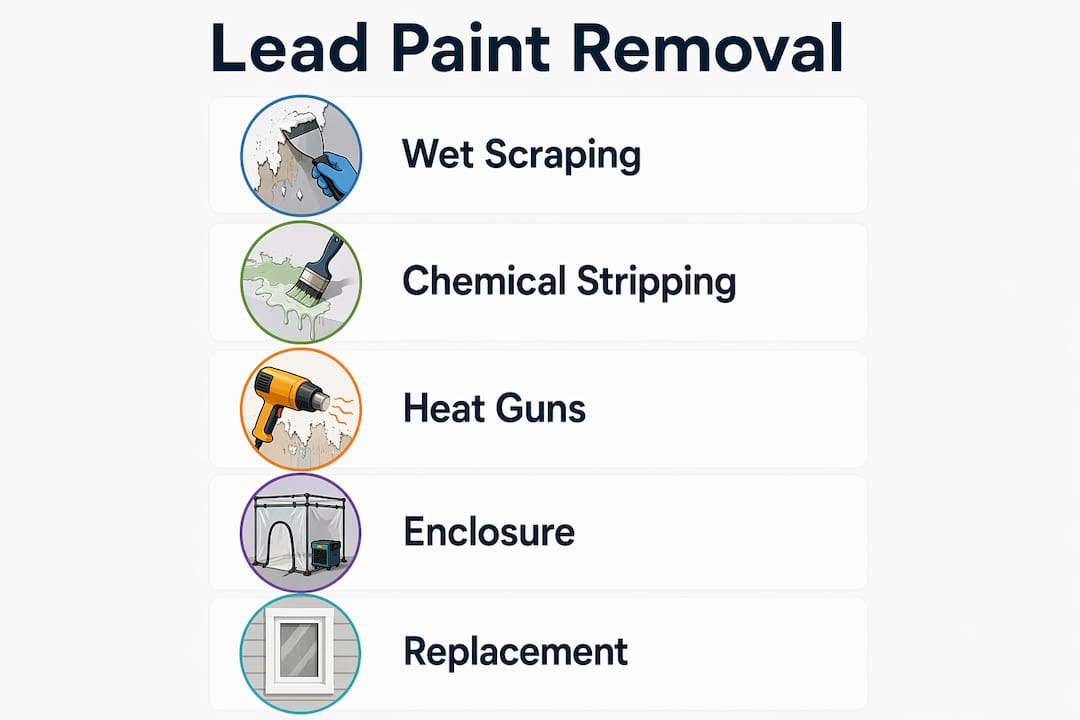
Lead paint removal methods include wet hand scraping, chemical stripping, low-temperature heat guns, enclosure, and full surface replacement. Each method carries different cost, permanence, and risk profiles. Choosing the right one depends on the condition of the paint, the surface type, and how the space will be used after the work is complete.
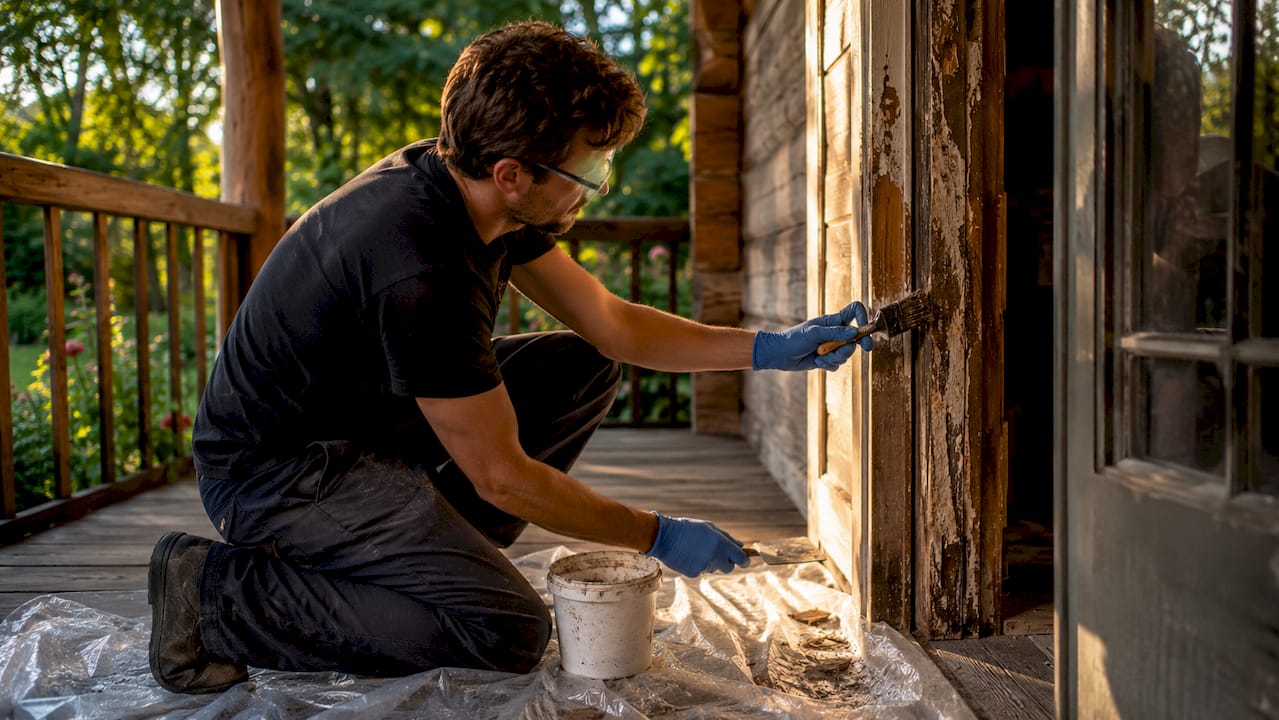
Wet hand scraping keeps dust suppressed by misting the surface with water before scraping. It works well on flat surfaces like window sills and door frames, and it pairs with HEPA vacuum collection to capture particles. Chemical strippers formulated without methylene chloride dissolve the paint film without generating dust, making them a safer option for detailed woodwork. Heat guns can soften paint for removal, but they must stay below 1,100°F to avoid vaporizing lead, and many jurisdictions restrict their use on lead-painted surfaces entirely.
Enclosure and replacement are the most thorough options. Enclosure covers the painted surface with new drywall, plywood, or rigid paneling, sealing the hazard permanently without disturbing the paint. Full surface replacement removes the substrate entirely, which eliminates the hazard at the source but costs the most. For surfaces in good condition, encapsulation with a specialized bonding compound can seal lead paint without physical removal, though it requires ongoing maintenance.
| Method | Avg. cost per sq ft | Permanence | Invasiveness |
|---|---|---|---|
| Wet scraping | $8–$17 | Permanent | Moderate |
| Chemical stripping | $8–$17 | Permanent | Moderate |
| Encapsulation | $4–$8 | Temporary | Low |
| Enclosure | Varies by material | Permanent | High |
| Surface replacement | Highest | Permanent | Very high |
What safety precautions and regulations govern lead paint removal?
The EPA’s Renovation, Repair, and Painting (RRP) Rule and the separate abatement program under 40 CFR Part 745 set the legal framework for all lead paint work in the United States. These are not the same standard. RRP-certified contractors are authorized only for renovation work that disturbs lead paint incidentally. Full abatement requires a higher-level EPA certification that covers permanent hazard elimination. Hiring an RRP contractor for a full abatement project exposes you to legal liability and leaves the hazard unresolved.
Key regulatory requirements include:
- Containment: Plastic sheeting must seal all doors, vents, and HVAC returns in the work area to prevent dust migration.
- Negative air pressure: Exhaust fans with HEPA filters maintain lower air pressure inside the work zone so dust flows inward, not outward.
- HEPA vacuuming: Standard shop vacuums spread lead dust. Only HEPA-filtered vacuums rated for lead capture are permitted.
- Wet methods: All scraping and sanding must use wet techniques or local exhaust ventilation to suppress airborne particles.
- Waste disposal: Lead paint debris is classified as hazardous waste in most states and requires licensed disposal.
Abatement professionals must apply for EPA certification within 30 days of completing their training and recertify every three years. Violations of EPA lead paint rules carry penalties up to $37,500 per day per violation. That figure is not a worst-case scenario. It is the statutory maximum that regulators apply to willful or repeat violations, and it applies to property owners who hire uncertified contractors just as it applies to the contractors themselves.
Pro Tip: Before hiring any contractor for lead paint work, ask specifically whether they hold EPA abatement certification under 40 CFR Part 745, Subpart L. An RRP certificate alone is not sufficient for full removal projects. Request the certificate number and verify it on the EPA’s online database.
How to prepare for and execute lead paint removal safely
Preparation determines whether a lead paint removal project succeeds or creates a larger contamination problem. Follow these steps before any work begins:
- Test before you act. Use an EPA-recognized lead test kit or hire a certified lead inspector to confirm the presence and location of lead paint. Testing costs far less than remediating a contaminated work area after the fact.
- Notify occupants. Federal law requires contractors to provide the EPA’s “Renovate Right” pamphlet to residents before work begins in pre-1978 housing. Property managers must document this disclosure.
- Seal the work area. Cover floors and furniture with 6-mil polyethylene sheeting. Tape plastic over all HVAC vents, electrical outlets, and doorways not used for access.
- Control HVAC systems. Shut down forced-air systems in the work zone entirely. Running them during removal spreads lead dust through ductwork to every room in the building.
- Establish a decontamination station. Workers must change protective clothing and HEPA-vacuum themselves before leaving the work area to avoid tracking dust into clean zones.
After removal, a three-stage cleaning process is required: HEPA vacuum all surfaces, wet-mop with a phosphate solution, then HEPA vacuum again followed by a wipe test. This sequence is not optional. Clearance verification using scientific wipe tests confirms that lead dust levels meet safe thresholds before occupants return. Skipping verification is one of the most common and costly mistakes property owners make.
Pro Tip: Request a written clearance report from your abatement contractor after every project. This document protects you legally, satisfies insurance requirements, and provides proof of compliance if you sell the property.
For additional context on surface prep compliance during hazardous coating removal, the protocols used in industrial settings translate directly to residential abatement work.
What does lead paint removal cost?
Professional removal costs between $8 and $17 per square foot on average as of 2026. That range reflects the method used, the condition of the painted surface, and the complexity of the containment setup required. A 1,500-square-foot home with lead paint on trim, windows, and doors could generate a total project cost between $12,000 and $25,000 or more depending on scope.
| Approach | Cost range | Best for |
|---|---|---|
| Full abatement (scraping/stripping) | $8–$17/sq ft | Deteriorating or disturbed paint |
| Encapsulation | $4–$8/sq ft | Intact, stable paint surfaces |
| Enclosure | Varies by material | Large flat surfaces like walls |
| Surface replacement | Highest cost | Severely damaged substrates |
Encapsulation at $4–$8 per square foot looks attractive on a budget, but it requires periodic inspection and reapplication. If the encapsulant fails and the paint beneath deteriorates, you face the original hazard plus the cost of removing the failed coating layer. Full removal costs more upfront and eliminates that ongoing liability. Property managers with multiple units should factor in the cumulative cost of maintaining encapsulated surfaces across a building over a ten-year horizon before choosing the cheaper option.
Insurance and liability also enter the calculation. Many commercial property insurers now require documentation of lead hazard assessments and abatement records for pre-1978 buildings. Properties without that documentation face higher premiums or coverage exclusions. The cost of professional abatement often pays for itself through reduced insurance exposure and avoided penalty risk.
What alternatives to removal exist and when are they appropriate?
Total removal is not always the right answer. Encapsulation and enclosure provide effective hazard control when lead paint is intact, firmly adhered, and located on surfaces that will not be disturbed by normal use or future renovation.
Encapsulation works by applying a specialized bonding compound over the lead paint surface, sealing it from contact and preventing dust generation. It suits large flat areas like interior walls where the paint shows no peeling, chipping, or moisture damage. Enclosure installs new rigid material over the painted surface, physically separating occupants from the hazard without disturbing the paint at all. Both methods are recognized by the EPA as legitimate hazard controls under specific conditions.
These alternatives carry real limitations:
- Neither method is permanent. Both require regular inspection, typically annually, to confirm the barrier remains intact.
- Any future renovation that disturbs the encapsulated or enclosed surface triggers full abatement requirements.
- Encapsulation is not appropriate for surfaces subject to friction or impact, such as window channels, door edges, or stair treads, because normal wear breaks down the coating.
- Property disclosure requirements still apply. Sellers and landlords must disclose known lead hazards regardless of whether they have been encapsulated or enclosed.
For properties where removal is not feasible in the short term, encapsulation or enclosure combined with a documented inspection schedule is a defensible compliance strategy. It is not a permanent fix, and treating it as one creates future liability.
Key takeaways
Lead paint removal requires certified professionals, method-specific safety protocols, and post-removal clearance verification to permanently eliminate hazardous lead-based paint from any property.
| Point | Details |
|---|---|
| Abatement vs. RRP | Full abatement requires EPA certification under 40 CFR Part 745, not just an RRP certificate. |
| Cost range | Professional removal runs $8–$17 per square foot; encapsulation costs $4–$8 but is not permanent. |
| Containment first | Dust migration is the primary hazard. Sealing work areas and using HEPA vacuums prevents cross-contamination. |
| Clearance verification | A three-stage cleaning and wipe test is required after removal before occupants can return. |
| Alternatives have limits | Encapsulation and enclosure work for intact paint but require annual inspection and trigger abatement if disturbed. |
Why most lead paint problems start with the wrong contractor
The single most common mistake I see property owners make is hiring an RRP-certified renovator for a job that legally requires a certified abatement contractor. These are not interchangeable credentials, and the confusion is understandable because both involve lead paint and both require EPA training. But the regulatory distinction is clear: RRP covers incidental disturbance during renovation, while abatement covers permanent hazard elimination. Hiring the wrong one does not just leave the hazard in place. It exposes you to penalty liability as the property owner.
The second mistake is treating containment as optional or approximate. Dust migration is the hidden hazard in every lead paint removal project. Without proper negative air pressure, sealed HVAC systems, and HEPA vacuuming at every stage, lead dust travels through a building and settles into carpet fibers, HVAC ductwork, and soft furnishings where it persists for years. I have seen properties where a single poorly contained removal project contaminated three floors of a building. The remediation cost exceeded the original removal budget several times over.
Clearance verification gets skipped more often than any other step. Contractors finish the physical work, clean up visually, and declare the job done. Without wipe tests and a written clearance report, you have no proof the hazard is actually gone. That gap matters when you sell the property, file an insurance claim, or face a regulatory inspection. Insist on a written clearance report every time, and keep it with your property records permanently.
The painting safety practices that govern industrial coating work apply directly here. Containment, verification, and certified execution are not bureaucratic requirements. They are the difference between a solved problem and a liability that compounds over time.
— Southernsandblastingandpainting
How Southernsandblastingandpainting supports safe surface preparation
When lead paint removal is complete, the surface still needs professional preparation before any new protective coating can be applied. Southernsandblastingandpainting brings 20+ years of industrial surface preparation experience to exactly this stage of the process, serving commercial facilities, municipal infrastructure, and large-scale property projects across Central Florida.

The team at Southern Sandblasting and Painting uses containment-first protocols and industrial-grade equipment to prepare surfaces after hazardous coating removal, delivering the clean, profiled substrate that protective coatings require to bond and last. Whether your project involves water tanks, pipelines, or commercial building exteriors, their sandblasting services in Orlando cover the full scope of surface prep work. Explore their sandblasting equipment guide to understand the tools and methods that protect assets after lead paint abatement is complete.
FAQ
What is the difference between lead paint removal and abatement?
Lead paint removal is the general term for eliminating lead-based paint hazards. Abatement is the formal regulatory term under EPA 40 CFR Part 745, Subpart L, referring to permanent hazard elimination performed by certified professionals.
Can I remove lead paint myself?
DIY lead paint removal is legal in owner-occupied single-family homes in most states, but improper removal creates hazardous dust contamination that is difficult and expensive to remediate. Professional abatement is strongly recommended for any surface larger than a few square feet.
How much does professional lead paint removal cost?
Professional lead paint abatement costs between $8 and $17 per square foot on average as of 2026, with total project costs depending on the size of the affected area, the method used, and the complexity of the required containment setup.
How do I know if my home has lead paint?
Any home built before 1978 may contain lead paint. A certified lead inspector or risk assessor can perform a lead hazard assessment using XRF testing or paint chip sampling to confirm the presence and concentration of lead in your paint.
Is encapsulation a permanent solution for lead paint?
Encapsulation is not permanent. It seals intact lead paint with a bonding compound but requires annual inspection and reapplication when the coating shows wear. Any future renovation that disturbs the surface triggers full abatement requirements.


