
TL;DR:
- Safety in sandblasting prevents health risks, regulatory penalties, and project delays.
- Proper PPE, ventilation, and abrasive choices are crucial for operational safety.
- Investing in safer materials like garnet reduces long-term costs and health hazards.
Sandblasting is one of the most effective surface preparation methods available, but it carries real risks that are easy to underestimate until something goes wrong. Many facility managers focus on cost and turnaround time, only to discover that a single safety lapse can trigger OSHA fines, worker illness, project shutdowns, and costly rework. For municipal and commercial facilities across Florida, where humidity, aging infrastructure, and strict regulatory oversight intersect, getting safety right from the start is not optional. This guide walks you through the evidence-based practices, equipment standards, and compliance frameworks that protect your workers, your assets, and your project timelines.
Table of Contents
- Why safety matters in sandblasting operations
- Core safety measures: People-first practices and procedures
- Choosing safe abrasives: Comparing options and impacts
- Compliance, training, and ongoing safety monitoring
- Safety is more than compliance: Lessons from the field
- Get compliant, safe sandblasting for your Florida facility
- Frequently asked questions
Key Takeaways
| Point | Details |
|---|---|
| Ventilation and PPE are critical | Proper airflow and the right personal protective equipment prevent major health and safety incidents. |
| Safer abrasive choices matter | Alternatives to silica sand protect both workers and budgets by reducing toxicity and increasing reusability. |
| Continuous training and monitoring required | Regular education, inspections, and air testing are needed for lasting compliance and project success. |
| Safety is a long-term investment | Prioritizing safety can reduce downtime, fines, and insurance costs while protecting your facility’s reputation. |
Why safety matters in sandblasting operations
Sandblasting forces abrasive material at high velocity against a surface to strip rust, paint, and contaminants. The process works fast and works well, but it generates hazardous byproducts that can cause serious harm if left unmanaged. Airborne particulates are the most immediate threat. Fine dust particles penetrate deep into lung tissue, and silica sand can cause irreversible lung disease, which is why safer alternatives are now widely recommended across the industry.
Beyond respiratory risks, sandblasting operations expose workers to intense noise levels, chemical residues from stripped coatings, and physical hazards from pressurized equipment. Each of these hazards carries its own regulatory framework under OSHA and the EPA. For Florida municipalities and commercial facilities, non-compliance means more than fines. It means project delays, potential litigation, and reputational damage that can affect future contracts.
“Ventilation systems, HEPA filtration, and supplied-air respirators protect against hazardous dust generated during abrasive blasting operations.”
The financial cost of neglecting safety is significant. A single worker injury or illness can result in lost labor, medical costs, and OSHA penalties that far exceed what a proper safety program would have cost. Project shutdowns triggered by safety violations can cascade into contract penalties and delayed asset delivery. Investing in surface prep best practices from day one prevents these outcomes.
Safety also has a direct operational benefit. When workers trust their environment, productivity improves. When documentation is clean, audits go smoothly. Facilities that maintain strong safety records often see lower insurance premiums and stronger vendor relationships. For municipal projects especially, a proven safety track record can be a deciding factor in contract awards.
Key risks to track in any sandblasting operation include:
- Airborne silica and toxic dust from stripped coatings and abrasive materials
- Noise-induced hearing loss from prolonged exposure to high-pressure blasting equipment
- Chemical exposure from lead-based paints, coatings, and surface contaminants
- Regulatory penalties under OSHA 29 CFR 1910.94 and EPA environmental standards
- Project cost overruns caused by safety-related shutdowns or rework
Understanding how to prevent coating failures and maintaining environmental protection in sandblasting are both critical parts of a complete safety strategy. Now that you know why safety can’t be left to chance, let’s break down what safeguarding a sandblasting operation really involves.
Core safety measures: People-first practices and procedures
Understanding these risks means you need robust systems. Here’s how to make safety practical and visible on every project.
Every safe sandblasting operation starts with the right Personal Protective Equipment (PPE). This is non-negotiable. Workers need blast suits that resist abrasion, Type CE supplied-air respirators with an assigned protection factor (APF) between 25 and 1000, heavy-duty gloves, blast helmets with integrated eye protection, and calibrated hearing protection. Skimping on any one of these creates a gap that regulators and insurers will notice.
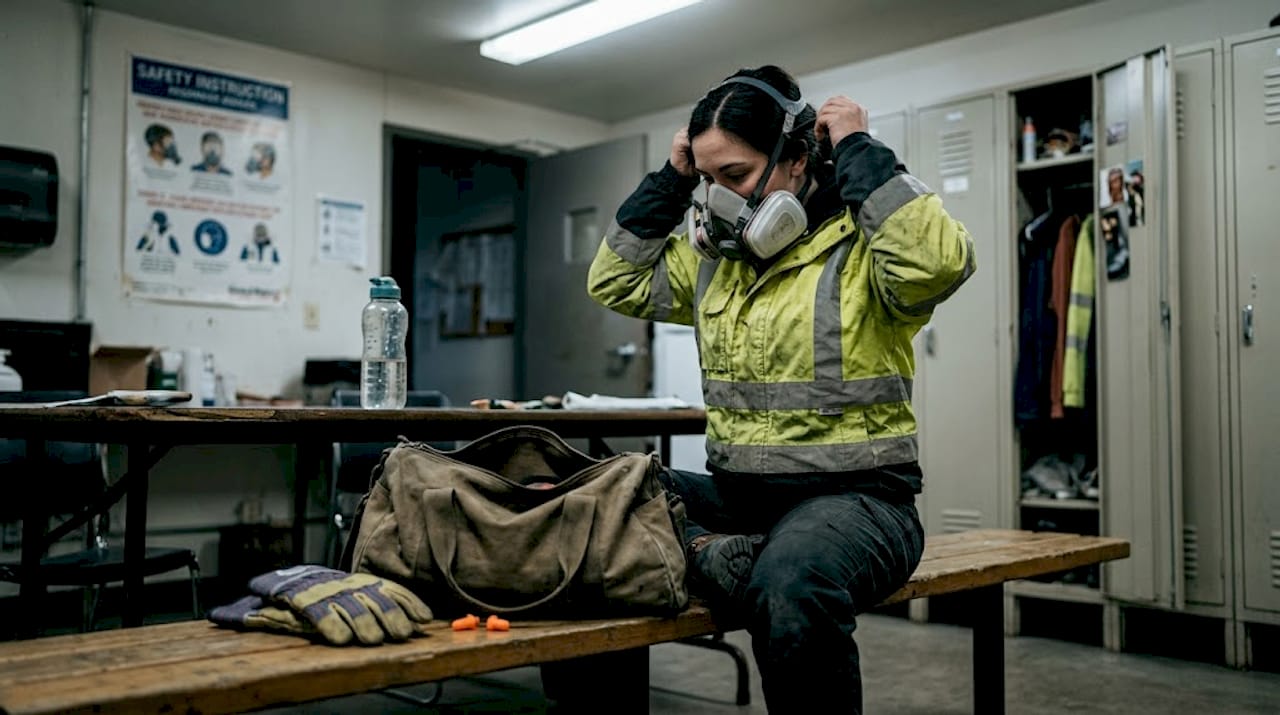
Ventilation is the second critical layer. Ventilation must provide at least 500 feet per minute at cabinet openings to effectively capture and remove airborne dust. For outdoor or large-scale municipal projects, this means positioning industrial fans and dust collection systems strategically to maintain airflow across the work zone. HEPA filtration units capture fine particles before they migrate to adjacent areas or public spaces.
Pro Tip: Before any blasting begins, conduct a site walk to map airflow patterns. Florida’s coastal winds can shift dust unpredictably, so position containment barriers and ventilation equipment based on the actual wind direction that day, not a general assumption.
Here is a practical checklist for setting up a compliant sandblasting operation:
- Confirm all workers have fitted and inspected PPE before entering the blast zone
- Test ventilation airflow to verify the 500 feet per minute minimum is met
- Inspect all blast hoses, nozzles, and pressure fittings for wear or damage
- Verify HEPA dust collection units are operational and filters are clean
- Brief all crew on emergency stop procedures and communication signals
- Establish a perimeter with signage to restrict unauthorized access
Refer to the sandblasting workflow steps and painting safety tips for additional procedural guidance tailored to Florida facility conditions.
| Safety element | Minimum standard | Florida-specific consideration |
|---|---|---|
| Respirator type | Type CE supplied-air | Mandatory for enclosed or semi-enclosed spaces |
| Ventilation airflow | 500 ft/min at openings | Adjust for coastal wind and humidity |
| Hearing protection | NRR 25+ rated | Required for continuous blasting above 85 dB |
| Dust collection | HEPA filtration | Critical near water bodies or public areas |
| Blast suit | Abrasion-resistant full-body | Essential for high-pressure nozzle work |
For a complete overview of how these steps fit into a larger project, the sandblasting project guide covers scope planning, crew sizing, and inspection milestones.
Choosing safe abrasives: Comparing options and impacts
Of course, even the best process fails if unsafe materials are used. Here’s how abrasive choice drives safety, compliance, and outcomes.
The abrasive you choose affects worker health, environmental compliance, disposal costs, and overall project efficiency. Silica sand has historically been the default choice because it is cheap and widely available. But silica sand abrasives can result in lung overload and fibrosis at even moderate dust exposures, making it a liability for any responsible facility manager.
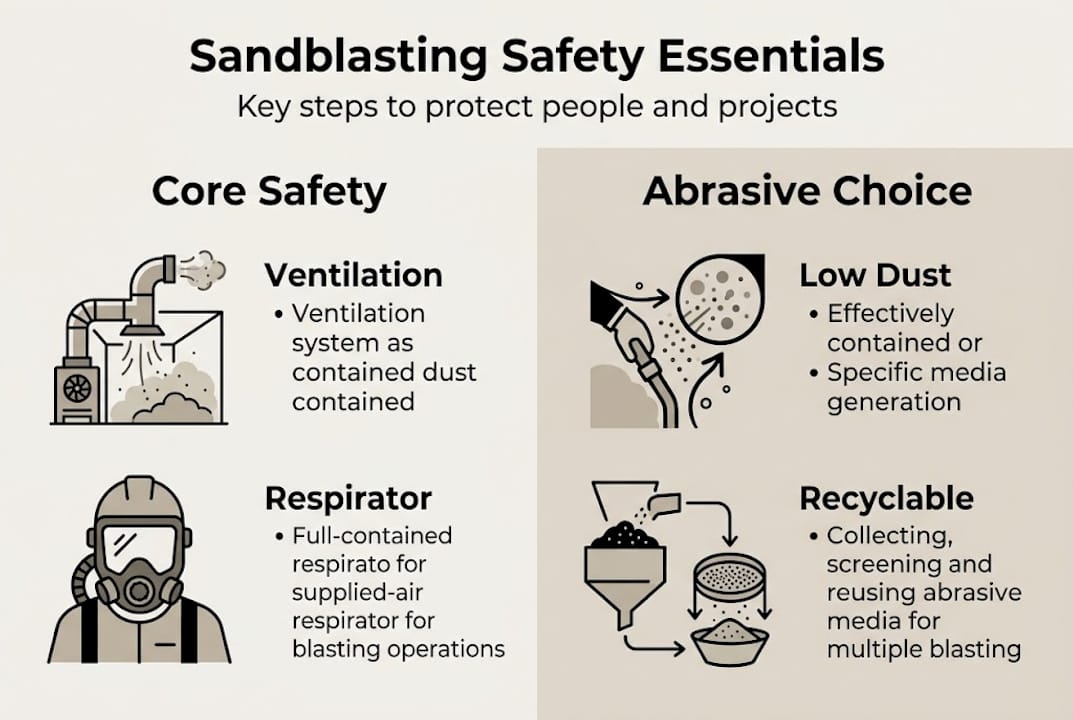
Garnet, crushed glass, and specular hematite are now the preferred alternatives. Garnet is particularly popular for infrastructure projects because it is hard, fast-cutting, and can be recycled multiple times before disposal. Steel grit is another strong option for large-scale jobs, offering excellent surface profile consistency and high recyclability. These materials cost more per bag, but their reuse potential and lower regulatory burden make them more economical over a full project lifecycle.
Pro Tip: When evaluating abrasive costs, calculate total cost per square foot rather than cost per bag. A recyclable abrasive used 10 times costs a fraction of single-use silica sand once labor, disposal, and compliance overhead are factored in.
Key factors to weigh when selecting an abrasive:
- Toxicity profile: Does the material generate respirable crystalline silica or heavy metal dust?
- Recyclability: Can it be collected, cleaned, and reused on-site to reduce disposal volume?
- Surface profile: Does it achieve the required anchor pattern for the coating system being applied?
- Disposal classification: Is the spent abrasive classified as hazardous waste under Florida DEP rules?
- Availability: Can you source it reliably in Central Florida without supply chain delays?
| Abrasive type | Health risk | Recyclable | Relative cost | Compliance burden |
|---|---|---|---|---|
| Silica sand | High (silicosis risk) | No | Low upfront | High |
| Garnet | Low | Yes (multiple uses) | Moderate | Low |
| Crushed glass | Low to moderate | Limited | Low to moderate | Low |
| Steel grit | Low | Yes (high cycle) | Higher upfront | Low |
| Specular hematite | Low | Yes | Moderate | Low |
For guidance on matching abrasive type to project conditions, review choosing sandblasting methods and abrasive techniques. You can also explore real-world sandblasting examples to see how abrasive selection affects long-term asset performance.
Compliance, training, and ongoing safety monitoring
Once safe materials and practices are in place, how do you make safety stick for every job and every crew?
Compliance is not a one-time event. It is a continuous process that requires structured training, documentation, and regular audits. OSHA requires that workers exposed to abrasive blasting hazards receive training on the specific risks they face, the PPE they are required to use, and the emergency procedures relevant to their work environment. That training must be documented and refreshed regularly, not just completed once at onboarding.
Documentation is your protection during audits and incident investigations. Every project should generate records of air quality testing results, equipment inspection logs, PPE issuance and fit-test records, and any near-miss or incident reports. For municipal contracts, these records are often required as part of project closeout.
Regular equipment and air quality checks are essential parts of a compliant safety program and should be conducted before and during every blasting operation.
Key elements of a long-term safety monitoring program include:
- Pre-shift equipment inspections covering blast hoses, nozzles, pressure gauges, and respirator function
- Air quality sampling at the start of each project and after any change in conditions or materials
- PPE compliance audits conducted by a site supervisor at least once per shift
- Incident tracking using a simple log that captures near-misses, not just recordable injuries
- Quarterly safety reviews to assess trends and update procedures based on field findings
For municipal facility managers, the manager sandblasting responsibilities resource outlines how to structure oversight roles and assign accountability across your team.
Building a culture of safety means making it easy for workers to flag concerns without fear of retaliation. Facilities that treat safety reports as valuable data rather than complaints see faster hazard identification and fewer serious incidents. That is not just good ethics. It is smart operations.
Safety is more than compliance: Lessons from the field
After 20-plus years working on infrastructure across Central Florida, we have seen a consistent pattern. The facilities that treat safety as a minimum compliance threshold tend to experience the most disruptions. They pass inspections on paper but struggle when conditions change, crews rotate, or a new coating system introduces unfamiliar hazards.
The facilities that perform best treat safety as an operational advantage. They invest in training beyond what OSHA requires, choose abrasives based on total project impact rather than unit cost, and build inspection habits into daily routines rather than scheduling them for audit season. Their crews work faster because they trust their equipment and their environment.
The real-world payoff is measurable. Lower incident rates reduce insurance premiums. Clean compliance records strengthen contract bids. Worker retention improves when people feel protected. These outcomes are not soft benefits. They directly affect your bottom line and your facility’s reputation with city procurement offices and commercial clients.
Reviewing real-life safety outcomes from comparable infrastructure projects can help you benchmark your current program and identify gaps worth closing before your next project kicks off.
Get compliant, safe sandblasting for your Florida facility
Knowing what safe sandblasting looks like is the first step. Finding a contractor who consistently delivers it is the next one.

Southern Sandblasting & Painting LLC brings over 20 years of experience to municipal and commercial infrastructure projects across Florida. Our crews follow documented safety protocols on every job, from PPE verification and air quality testing to abrasive selection and containment setup. We understand Florida’s regulatory environment and the specific challenges that come with high humidity, coastal conditions, and aging public assets. Whether you need a safety-focused assessment or a full project quote, our Orlando sandblasting services and full-service sandblasting and painting are built to meet your compliance requirements and protect your facility’s long-term value.
Frequently asked questions
What are the most important safety measures in sandblasting?
Ventilation, HEPA filtration, and supplied-air respirators are the three pillars of worker protection in sandblasting operations. Consistent training and equipment inspection complete the safety foundation.
Why is silica sand dangerous in sandblasting?
Silica sand causes lung overload and fibrosis at certain exposure levels, making it a serious occupational health hazard that many safety guidelines now restrict or discourage entirely.
What alternatives to silica sand are safer for sandblasting?
Garnet, crushed glass, and specular hematite offer lower toxicity profiles and can be reused multiple times. NTP studies show alternatives to silica sand are significantly less toxic and reduce long-term compliance costs.
How often should air and equipment be checked for sandblasting safety?
Equipment inspections and air monitoring should happen before every project and at regular intervals during operation, especially when materials or site conditions change.
Does investing in safer abrasives increase project costs?
Safer abrasives typically cost more per unit but reduce total project costs through reusability and lower disposal and compliance overhead. Alternatives to silica sand can be reused many times, making them more economical over a full project lifecycle.


