
TL;DR:
- Infrastructure managers face a costly crisis as aging coatings lead to corrosion and extensive repairs. Proper surface preparation, coating selection, and maintenance planning are essential to prolong asset life and optimize funds. Proactive, well-executed painting programs with strategic documentation and funding support significantly reduce long-term infrastructure failure risks.
Every infrastructure manager faces the same slow-moving crisis: protective coatings age, corrosion spreads, and deferred maintenance turns a $20,000 painting job into a $200,000 structural repair. This painting infrastructure guide addresses that gap directly. With only 39% of city managers rating water infrastructure as satisfactory in 2026, the consequences of neglected maintenance are no longer abstract. This guide walks you through every phase of the infrastructure painting process, from pre-project assessment and surface preparation to coating selection, execution, and long-term maintenance planning.
Table of Contents
- Key takeaways
- The painting infrastructure guide: what to assess before you start
- Step-by-step execution of the infrastructure painting process
- Common challenges and how to troubleshoot them
- Verification, maintenance scheduling, and long-term protection
- My take: what 20 years of infrastructure painting actually teaches you
- Ready to protect your infrastructure?
- FAQ
Key takeaways
| Point | Details |
|---|---|
| Surface prep determines success | Skipping SSPC-SP 10 near-white blast cleaning is the leading cause of premature coating failure. |
| Coating selection is asset-specific | Industrial formulations prioritize chemical resistance and structural protection, not aesthetics. |
| Environmental conditions matter | Temperature, humidity, and dew point directly affect cure times and coating adhesion quality. |
| Maintenance planning pays off | Strategic coating selection can reduce corrosion costs by 15% to 35%. |
| Funding exists for municipalities | Government grant programs can cover up to 80% of painting and maintenance costs for eligible projects. |
The painting infrastructure guide: what to assess before you start
Before a single coat of paint touches steel, concrete, or cast iron, you need a clear picture of what you are working with. Skipping this phase is where most project failures begin.
Condition and material assessment should be your starting point. Walk the asset and document active rust, previous coating failures, surface contamination, and structural damage. Identify the substrate: carbon steel behaves differently than galvanized steel, aluminum, or cast iron. Each requires a different primer and coating system. Mixing up your approach here costs far more than getting it right upfront.
Here is what to confirm before mobilizing equipment:
- Current coating condition (intact, peeling, chalking, or blistered)
- Substrate type and any known hazardous materials such as lead-based paint or PCBs
- Environmental constraints at the site, including wind exposure, humidity, and seasonal temperatures
- Access limitations that affect equipment selection
- Applicable standards: SSPC, NACE, or OSHA requirements for your asset type
- Local permit requirements and inspection scheduling
Paint and coating selection is where industrial and commercial painting diverge sharply. Industrial formulations are engineered for structural protection, chemical resistance, and longevity under stress. Commercial coatings prioritize appearance. For bridges, water tanks, pipelines, or airport infrastructure, you need products rated for the specific exposure environment: immersed service, atmospheric corrosion, chemical splash, or UV degradation.
| Coating Type | Best Use Case | Key Property |
|---|---|---|
| Epoxy | Water tanks, pipelines | Excellent chemical resistance |
| Polyurethane | Bridges, exposed structures | UV resistance and flexibility |
| Zinc-rich primer | Steel structures | Cathodic corrosion protection |
| Alkyd | Low-exposure mild steel | Cost-effective for dry environments |
| Linseed oil | Cast iron heritage assets | Penetrating adhesion, slow cure |
Environmental conditions are non-negotiable. You cannot apply most industrial coatings when the surface temperature is within 5°F of the dew point, when relative humidity exceeds 85%, or outside the manufacturer’s temperature window. Scheduling painting around weather windows in Florida means paying close attention to afternoon humidity and seasonal rain patterns.
Pro Tip: Get permits and utility notifications in place at least three weeks before your planned start date. Municipal projects with traffic impact often require public notice periods that, if missed, will push your entire schedule back.
Step-by-step execution of the infrastructure painting process
This is where the guide to painting infrastructure gets technical. Execution quality is everything, and every step below exists because skipping it has caused real project failures.
Surface preparation
Surface preparation per SSPC-SP 10 near-white blast cleaning is the single most critical determinant of how long your coating will last. Abrasive blasting removes mill scale, rust, old coatings, and surface contamination while also creating an anchor profile that helps the primer bond to the substrate.
Follow this sequence:
- Degrease the surface with an approved solvent or detergent wash to remove oils, grease, and biological growth
- Blast to the required SSPC standard; SSPC-SP 10 is the minimum for most industrial and infrastructure surface prep applications
- Remove spent abrasive and dust immediately; contaminants left on the blasted surface can destroy adhesion
- Verify the anchor profile with a surface profile gauge before priming
- Apply primer within the recoat window specified by the manufacturer, typically within 4 to 8 hours on bare blasted steel
For bridge repaints involving legacy coatings with lead or PCBs, heat induction removal offers a cleaner alternative to blasting. The Kanmon Bridge project in Japan used this method to safely strip hazardous coatings while minimizing environmental contamination and waste disposal costs. It is more expensive upfront but can be the right call when containment requirements make abrasive blasting logistically difficult or cost-prohibitive.
Primer and coating application
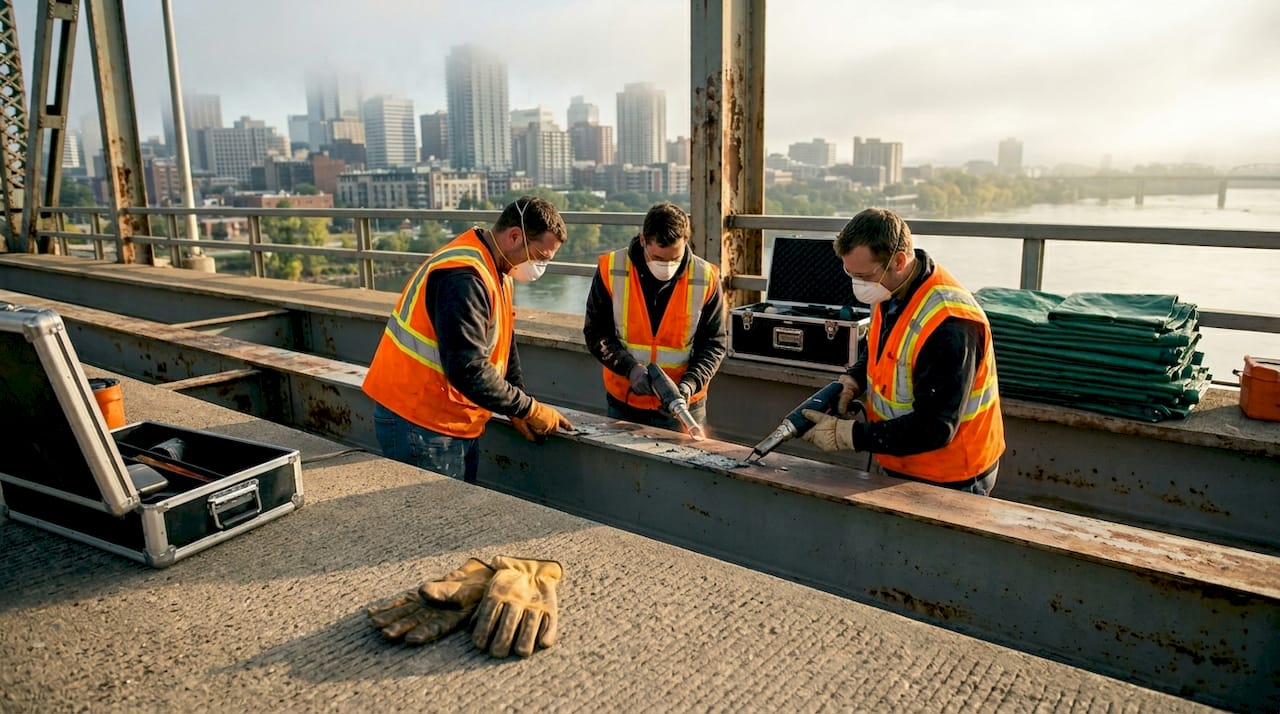
With a clean, profiled surface ready, primer goes down first. Zinc-rich primers provide cathodic protection on bare steel and are the standard choice for most structural applications. Apply to the correct dry film thickness (DFT), measured with a wet film gauge during application and a DFT gauge after cure.
A few application rules that matter in practice:
- Apply coatings only when surface and ambient conditions meet manufacturer specs
- Never thin coatings beyond the stated allowance; it compromises film build and performance
- Stripe coat all edges, welds, bolts, and corners before the full coat to prevent thin spots
- Build the full system in layers: primer, intermediate, topcoat; each layer has a minimum and maximum recoat window
Pro Tip: For cast iron assets like historic bridges or ornamental fencing, linseed oil paint requires multiple thin coats with 48 to 72 hours of cure time between each. Rushing this schedule causes wrinkling and adhesion failure that requires complete re-work.
Larger projects take time. Bridge repaints on interstate structures like I-72 routinely span two to three months including traffic management logistics. Set realistic timelines with your stakeholders before mobilization, not after delays start.
Common challenges and how to troubleshoot them
Even well-planned infrastructure painting projects run into problems. Knowing what to watch for keeps small issues from becoming costly rework.
Adhesion failure is the most common and expensive outcome of inadequate surface prep. If you see coating peeling within the first year of application, the root cause is almost always either insufficient blast profile, contamination left on the surface, or primer applied outside the recoat window. Document your pre-blast and post-blast readings; this data is your defense if a contractor dispute arises.
Environmental disruptions catch project teams off guard more often than they should. A coating applied at acceptable morning humidity may blush or fail to cure properly if afternoon conditions shift. Establish a site weather monitoring protocol and stop work when conditions go out of spec. The cost of a work stoppage is far less than the cost of removing and reapplying a full coating system.
“Municipal painting projects require proactive resident communication. Failure to warn the public about fresh paint leads to vehicle damage, complaints, and project delays that reflect poorly on the responsible agency.” Source: road marking and municipal painting communication guidance
For road marking specifically, proper surface cleaning and paint temperature control are non-negotiable for visibility and longevity. Applying road marking paint to a dirty or wet surface is one of the most common causes of marking failure within the first season.
Additional challenges to plan for:
- Hazardous waste containment and disposal when removing legacy coatings containing lead
- Worker protection protocols including respirators, PPE, and air monitoring during abrasive blasting
- Coordination with utilities and adjacent property owners in dense municipal environments
- Traffic control planning for road surfaces, bridges, and other public-facing assets
Pro Tip: Build a formal stakeholder communication plan into every municipal project scope. Assign someone specifically to handle resident notifications, signage, and social media updates for road and bridge projects. It reduces complaints and protects the project schedule.
Verification, maintenance scheduling, and long-term protection
Painting the asset is not the finish line. Verification and ongoing maintenance determine whether your investment holds up for 10 years or needs recoating in three.
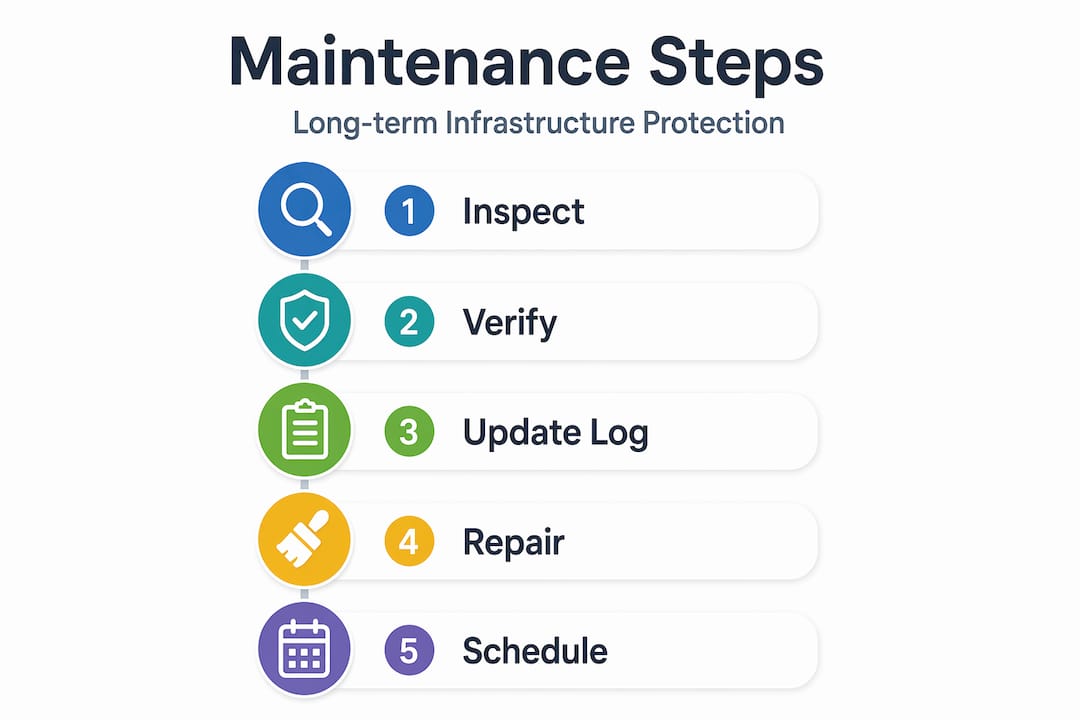
Post-application inspection starts with DFT verification across the entire coated area. Check holiday detection on immersion service coatings like water tank linings. Review adhesion with pull-off tests where required. Document everything, including photographic evidence of surface prep stages, coating application conditions, and DFT readings.
| Maintenance Milestone | Recommended Action | Frequency |
|---|---|---|
| Annual visual inspection | Check for blistering, chalking, and rust creep | Every 12 months |
| Touch-up program | Spot blast and recoat damaged areas | As needed, minimum every 3 years |
| Full system recoat | Complete surface prep and reapplication | Every 10 to 15 years depending on exposure |
| Documentation review | Update maintenance logs and regulatory reports | Annually |
Strategic coating selection and infrastructure asset longevity go hand in hand. Anti-corrosion coatings, when properly selected and maintained, reduce corrosion damage costs by 15% to 35%. That is a measurable return that shows up in your capital budget projections.
Maintenance planning should also account for funding opportunities. Government grants such as NYS ZEV and similar municipal assistance programs can cover 80% or more of painting and maintenance costs for qualifying infrastructure. Work with your grants administrator to identify applicable programs before finalizing your project budget.
Pro Tip: Keep a digital maintenance log with GPS-tagged photos for each asset. When funding applications require documentation of maintenance history, you will already have the evidence organized and ready to submit.
My take: what 20 years of infrastructure painting actually teaches you
I have watched infrastructure managers treat painting as the last line item to fund and the first to cut. That decision almost always comes back expensive. What I have learned is that coating systems are not a cosmetic upgrade. They are the primary barrier between your asset and the environment trying to destroy it.
The most common mistake I see is treating surface preparation as a negotiable line item rather than a fixed technical requirement. Industrial-grade coatings applied over inadequate surface prep will fail. Every time. The coating does not save a bad surface. It just delays and amplifies the eventual failure.
What actually works is treating the painting cycle as part of a long-term asset management program, not a reactive repair trigger. The organizations I have seen get the most out of their coating investments are the ones that schedule, fund, and document maintenance proactively. They do not wait for visible rust. They do not defer when budgets tighten. They understand that a $30,000 coating today prevents a $300,000 structural intervention in five years.
The future of this field is moving toward smarter coating materials, better environmental controls, and more rigorous documentation requirements tied to federal and state funding compliance. Managers who build those practices into their programs now will be positioned better for both asset performance and grant eligibility.
— Southernsandblastingandpainting
Ready to protect your infrastructure?
When your project scope demands more than general maintenance painting, you need a contractor who understands industrial coating systems from the substrate up.
Southern Sandblasting and Painting brings over 20 years of specialized experience in surface preparation, abrasive blasting, and industrial painting services across Central Florida. Whether you manage water tanks, bridges, pipelines, or municipal facilities, the team delivers coating systems built for performance and compliance. Explore the detailed coating application steps used on large-scale projects, or review surface prep best practices before your next project kickoff. Contact Southernsandblastingandpainting for a project assessment and to explore available municipal infrastructure coating options and funding support.
FAQ
What is the most important step in painting infrastructure?
Surface preparation is the single most critical factor in coating success. Inadequate blasting or cleaning before primer application is the primary cause of premature coating failure on industrial and municipal infrastructure.
How long does an infrastructure painting project take?
Project duration depends on asset size and complexity. Standard facility painting takes one to three weeks, while large bridge projects typically span two to three months including traffic management and containment.
What coatings work best for water infrastructure?
Epoxy-based coatings are standard for water tanks and pipelines due to their chemical resistance and performance in immersion service. They require thorough surface prep and strict application conditions for full effectiveness.
Can municipalities get funding for infrastructure painting?
Yes. Government grant programs can cover up to 80% of eligible painting and maintenance costs for municipal infrastructure projects. Consult your grants administrator and review available state and federal programs before finalizing your budget.
How often should painted infrastructure be inspected?
Annual visual inspections are the minimum standard. Full coating assessments and touch-up programs should occur at least every three years, with complete system recoats scheduled every 10 to 15 years depending on exposure conditions.
Recommended
- Complete Guide to Asset Protection Coatings for Infrastructure
- Why paint infrastructure: extend asset life and cut costs
- Industrial Painting Process—Ensuring Asset Longevity
- 9 examples of protective paints for long-lasting infrastructure
- Sandblasting Contractor Baldwin Park FL
- Sandblasting Services Oviedo FL


