
TL;DR:
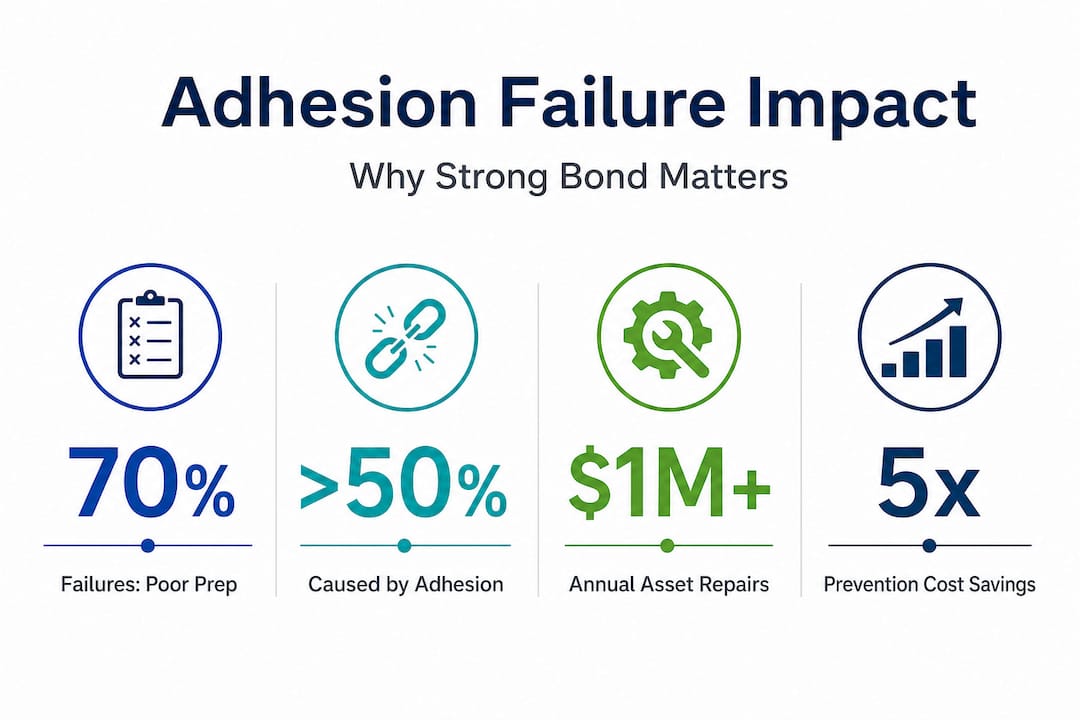
- Over 50% of coating failures stem from poor paint adhesion, leading to premature asset deterioration in Florida’s climate. Proper surface preparation, adherence to SSPC/NACE standards, and selecting durable coatings are critical to ensure long-lasting protection against humidity, UV, and moisture intrusion. Implementing expert-approved practices significantly reduces lifecycle costs and enhances infrastructure longevity in challenging environments.
More than 50% of coating failures trace back to one root cause: poor paint adhesion. For municipal infrastructure managers and commercial property owners in Central Florida, that number isn’t just a statistic. It represents water towers that rust ahead of schedule, bridge decks that require emergency repaints, and facility budgets that take hits they shouldn’t. This guide covers what paint adhesion is, why it matters in Florida’s aggressive climate, how to measure it, which coatings perform best, and what practical steps you can take right now to protect your most critical assets for the long term.
Table of Contents
- The role of paint adhesion in asset protection
- How paint adhesion works: Science and standards
- Comparing coatings: Adhesion performance and lifecycle
- Best practices for ensuring strong adhesion
- A fresh perspective: The cost of ignoring adhesion realities
- Leverage expert solutions for lasting paint adhesion
- Frequently asked questions
Key Takeaways
| Point | Details |
|---|---|
| Adhesion failure dominates losses | Most protective coating problems stem from poor paint adhesion, not material flaws. |
| Surface prep is essential | Abrasive blasting and compliance with SP10/CSP standards are non-negotiable for lasting adhesion. |
| Florida needs UV/moisture resilience | Elastomeric, UV-stable coatings and moisture mitigation are vital for Central Florida assets. |
| Testing saves money | Regular ASTM adhesion tests prevent expensive asset failures and repaint cycles. |
| Expert help maximizes outcomes | Specialized sandblasting and painting teams ensure standards, durability, and peace of mind. |
The role of paint adhesion in asset protection
Paint adhesion is the force that keeps a coating bonded to its substrate. Without it, even the most expensive coating system becomes nothing more than a decorative layer that peels, blisters, and flakes under the stresses your assets face every single day.
Protective coatings form a durable barrier against corrosion, moisture, UV radiation, and mechanical stress for infrastructure like bridges, water tanks, and large commercial buildings. That barrier only functions if the coating actually stays attached to the surface beneath it. The moment adhesion breaks down, moisture and oxygen reach the substrate and corrosion begins accelerating immediately.
In Central Florida, the combination of high humidity, intense UV exposure, frequent rain events, and occasional flooding creates a relentless assault on exterior surfaces. A coating that might last 15 years in a dry northern climate could fail in 5 years here if adhesion wasn’t established correctly from day one. That’s not an exaggeration. The high moisture content in Florida air infiltrates even microscopic adhesion gaps and works its way under the coating film, forming the perfect environment for blistering and delamination.
Here’s what poor paint adhesion actually costs managers in practice:
- Emergency repaints that weren’t budgeted for, often at premium rates because of urgency
- Accelerated corrosion on steel structures like bridges, pipelines, and water tanks
- Regulatory compliance issues that create durability and compliance risks for municipalities and commercial operators alike
- Shortened asset lifecycles that require full replacement years before the expected service date
- Safety hazards from structural degradation of load-bearing components
“Adhesion failure is not a cosmetic issue. It is a structural risk that compounds over time. Every month a failing coating goes unaddressed, the repair cost grows exponentially while the asset condition deteriorates further.”
The economics are straightforward. Investing in proper adhesion upfront costs a fraction of what reactive repairs and early replacements demand over a 20 to 30-year asset lifecycle.
How paint adhesion works: Science and standards
Adhesion operates through several mechanisms working simultaneously. Understanding these mechanisms helps you ask the right questions of your coating contractors and specify the right preparation standards before work begins.
Paint adhesion forms through chemical bonds such as covalent bonds, hydrogen bonds, and van der Waals forces, along with mechanical interlocking where the coating physically keys into surface profile, and diffusion where coating molecules penetrate the substrate surface layer. Most real-world adhesion involves all three mechanisms at once, with mechanical interlocking carrying the heaviest load on industrial substrates like steel and concrete.
This is why surface preparation is so fundamental. You can’t create mechanical interlocking on a smooth, contaminated, or oxidized surface. SSPC/NACE surface prep standards like SP10 near-white blast cleaning are designed precisely to create the surface profile and cleanliness that allow all three adhesion mechanisms to work at full effectiveness. The data is unambiguous: poor surface preparation causes 70% of coating failures in the field.
Here’s a practical breakdown of what standard preparation levels deliver:
| Prep standard | Description | Best application |
|---|---|---|
| SP6 Commercial blast | Removes loose rust and scale | Lower-exposure environments |
| SP10 Near-white blast | Removes all but trace contamination | Bridges, tanks, infrastructure |
| SP5 White metal blast | Complete surface cleanliness | Immersion and severe exposure |
| CSP 1-3 (concrete) | Light to medium surface profile | Floors, light coatings |
| CSP 6-10 (concrete) | Deep mechanical profile | Heavy-duty industrial coatings |
The numbers matter. ASTM adhesion pull-off tests measure coating bond strength in megapascals (MPa). Anything below 1.5 MPa signals a problem. Anything above 2.0 MPa indicates a well-bonded, reliable system ready to perform under Florida’s demanding conditions. Understanding the surface prep importance is where managers go from passive observers to informed decision-makers on their projects.
To achieve those numbers consistently, here’s the preparation sequence that works:
- Remove all visible contamination including grease, oil, chemical residue, and biological growth
- Conduct salt contamination testing to ensure levels fall below 3 to 20 µg/cm² depending on the environment
- Perform abrasive blasting to the specified SSPC standard for the substrate and exposure class
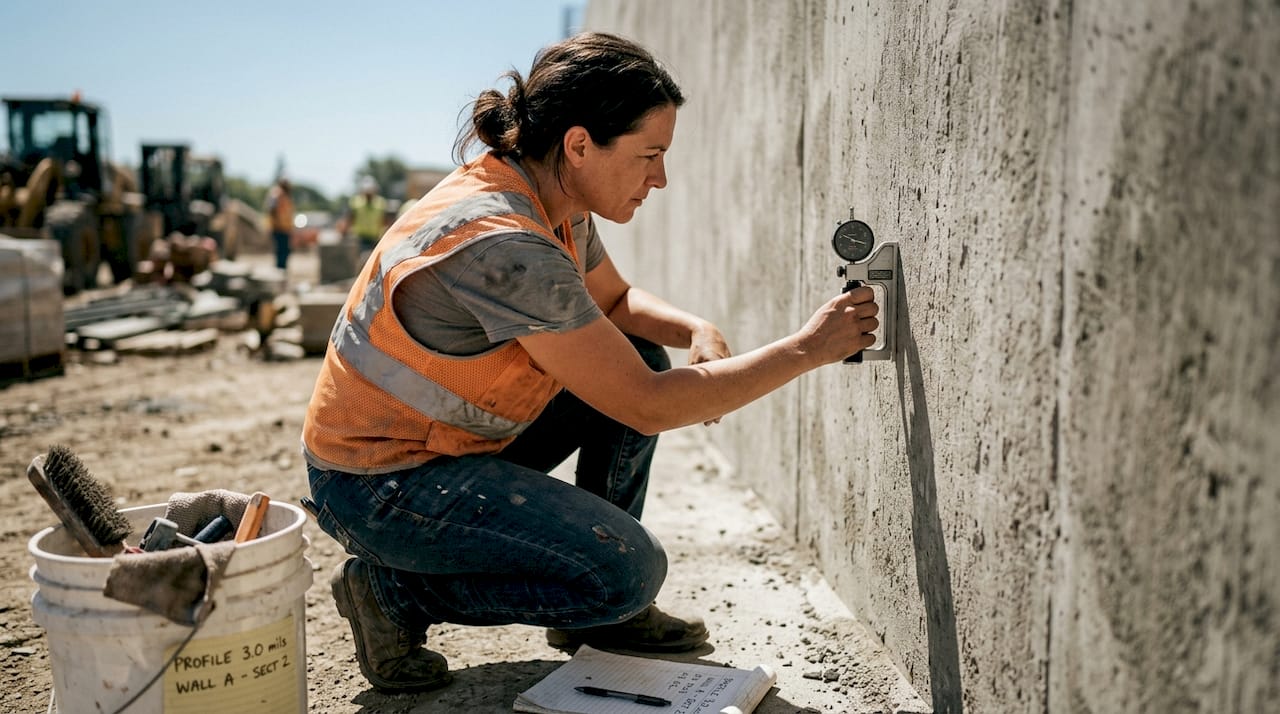
- Verify surface roughness using a profilometer, targeting the anchor profile specified by the coating manufacturer
- Apply the primer coat within the recoat window before oxidation begins, typically within 4 hours in humid Florida conditions
Pro Tip: In Central Florida’s humid climate, monitor the dew point before blasting and priming. If the substrate temperature is within 5 degrees Fahrenheit of the dew point, moisture will condense on the freshly blasted surface and destroy your adhesion before the primer even hits the steel. This simple check prevents a lot of costly failures.
Understanding these mechanisms also informs decisions about newer technologies. Laser texturing, for instance, creates an extremely precise surface profile that maximizes mechanical interlocking, though it remains geometry-dependent and works better on flat panels than on complex structural shapes. For most municipal infrastructure, abrasive blasting to SP10 remains the most practical and cost-effective path to strong coating standards compliance.
Comparing coatings: Adhesion performance and lifecycle
Not all coating systems perform equally when adhesion is tested under Florida conditions. The substrate, the exposure environment, and the expected service life all determine which system gives you the best return on investment.
| Coating type | Adhesion strength | UV resistance | Moisture tolerance | Typical lifespan (FL) |
|---|---|---|---|---|
| Epoxy (solvent-based) | Very high (>3.0 MPa) | Low (needs topcoat) | Excellent | 15-25 years |
| Elastomeric acrylic | High (>2.0 MPa) | Excellent | Very good | 10-20 years |
| UV-stable polyurethane | High (>2.5 MPa) | Excellent | Good | 12-20 years |
| Waterborne low-VOC | Moderate (1.5-2.5 MPa) | Good | Moderate | 8-15 years |
| Alkyd oil-based | Moderate (1.5-2.0 MPa) | Poor | Poor | 5-10 years |
Florida infrastructure managers should specify elastomeric and UV-stable coatings for maximum durability, targeting adhesion test values over 2.0 MPa. Epoxy systems remain the workhorse for steel structures, tanks, and pipelines, delivering exceptional adhesion and corrosion resistance when properly applied over an SP10-blasted surface. The critical detail is that most epoxy systems chalk and break down under UV, so a UV-stable topcoat is non-negotiable for exposed structures.
Waterborne low-VOC coatings reduce volatile organic compound emissions and make regulatory compliance easier, but they carry higher lifecycle costs compared to solvent-based epoxy systems in aggressive environments like Florida’s coastal and subtropical zones. They have their place on interior surfaces or in projects where environmental regulations restrict solvent use, but relying on them for exterior steel in harsh exposure conditions often leads to earlier maintenance cycles.
Here are the key factors to weigh when selecting a coating system:
- Substrate type (steel, concrete, aluminum, galvanized)
- Exposure class (atmospheric, immersion, buried, chemical)
- Expected service interval and how that aligns with maintenance budgets
- Regulatory requirements for VOC limits and environmental compliance
- Compatibility with existing coatings if overcoating rather than full removal
Pro Tip: Always request the coating manufacturer’s technical data sheet and confirm the minimum surface preparation requirement before specifying a system. Some coatings are rated for SP6 in mild environments but require SP10 in splash zones, high humidity, or immersion service. Applying a high-performance coating over the wrong prep standard is one of the most expensive mistakes in industrial coating work. Check coatings for weather durability before finalizing any system specification for Florida assets.
For managers making long-term capital planning decisions, exploring durable facility coatings options specific to your facility type and exposure conditions will help you build realistic replacement cycles into your maintenance budget.
Best practices for ensuring strong adhesion
Understanding adhesion theory is useful. Having a step-by-step process you can hand to a project manager or use to evaluate a contractor’s proposal is even more useful. Here’s what strong adhesion practice actually looks like on a real Central Florida infrastructure project.
Previously coated surfaces need ASTM D3359 testing before any overcoating work begins. This cross-cut tape test tells you whether the existing coating is still bonded well enough to serve as a primer for a new system or whether it needs to be removed entirely. Skipping this test is a gamble that often results in the new coating pulling the old, failed coating off the substrate within a single season.
Florida presents a specific challenge that many coating specs written elsewhere simply don’t account for: moisture trapped in or under substrates. Water infiltrates porous concrete, sits in crevices on structural steel, and migrates through the substrate itself in high-humidity conditions. If you apply a coating over a substrate with elevated moisture content, that moisture will try to escape through the coating film, creating blisters and delamination from the inside out. Fix moisture sources before you paint. This is not optional.
Follow this step-by-step checklist for every significant coating project:
- Inspect and document the current substrate condition with photos and written notes
- Test existing coatings using ASTM D3359 if overcoating is being considered
- Identify and repair moisture intrusion sources before any surface preparation begins
- Select the correct prep standard, CSP 1-10 for concrete substrates and SP10 or higher for steel in aggressive exposure environments
- Conduct salt contamination testing and confirm levels are within acceptable limits (typically 3 to 20 µg/cm² depending on the project specification)
- Perform abrasive blasting using appropriate media and equipment to achieve the required surface profile
- Verify surface profile with a profilometer or Testex tape and document the reading
- Apply primer within the allowed window before flash rust can form on steel surfaces
- Conduct ASTM D4541 pull-off testing after curing to verify adhesion meets project minimums
“Surface preparation is the single most controllable variable in a coating project. Equipment, materials, and application skill all matter, but nothing determines final performance more than what was done to the surface before the first coat was applied.”
For concrete specifically, surface preparation best practices and surface preparation tips vary depending on whether you’re dealing with new concrete, aged concrete, or previously coated concrete. New concrete needs a minimum 28-day cure and pH testing before coating. Aged concrete often needs shot blasting to remove carbonation and surface contamination.
Pro Tip: Request that your contractor document surface profile readings, salt contamination test results, and application conditions (temperature, humidity, dew point) in a project log for every day of application. This documentation becomes your warranty protection and your audit trail if failures occur down the line.
A fresh perspective: The cost of ignoring adhesion realities
Here’s something most managers only discover after their first major coating failure: the real cost of poor adhesion isn’t the repaint. It’s everything that happens in between.
Adhesion failure is the primary coating failure mode, accounting for more than half of all coating failures, and it doesn’t announce itself until visible damage is already widespread. By the time you see blistering, peeling, or rust bleeding through on a water tower or bridge structure, the substrate has already been under attack for months or years.
We’ve seen this pattern repeatedly across Central Florida municipal and commercial projects. A facility gets painted to the lowest bid. The contractor skips adequate blasting because the spec wasn’t tight enough to enforce it, or the inspection wasn’t thorough enough to catch it. Three years later, the facility manager is looking at a coating that should have lasted 15 years, now peeling off structural steel that has surface corrosion spreading under the coating film. The full removal and recoat now costs three to four times what proper preparation would have added to the original project.
The role of surface preparation in asset longevity isn’t just technical guidance. It’s financial protection for multimillion-dollar infrastructure budgets. ASTM and SSPC standards aren’t bureaucratic requirements written to slow down projects. They are the documented, tested boundaries between coatings that last and coatings that fail.
The biggest misconception we encounter is that Florida’s climate is manageable if you just use a “good paint.” It isn’t. The humidity here is relentless. The UV index regularly sits at 11 or higher in summer months. A coating system that worked in another state, applied without adjusting the prep standards and application conditions to Florida’s reality, will fail faster here. Ignoring the Florida-specific factors in adhesion preparation doesn’t just double the risk. In our experience, it doubles or triples the lifecycle cost of the asset.
Leverage expert solutions for lasting paint adhesion
Putting these best practices into action requires more than a checklist. It requires the right equipment, verified personnel training, and local knowledge of how Central Florida’s climate behaves across different project types and substrates.
Southern Sandblasting & Painting LLC brings 20 years of specialized experience in surface preparation and industrial coating application to municipal and commercial infrastructure projects across Central Florida. From the sandblasting equipment and blast standards needed for steel structures to industrial coatings for Florida infrastructure projects including water tanks, airports, and city facilities, our team works within SSPC, NACE, and ASTM compliance frameworks on every project. If you’re planning a major repaint, evaluating an existing coating system, or building your next maintenance cycle, explore our surface prep best practices resources and reach out to discuss your specific assets and requirements.
Frequently asked questions
What causes most paint adhesion failures?
Poor surface preparation causes 70% of failures, particularly skipping abrasive blasting, neglecting salt contamination testing, and applying coatings over contaminated or inadequately profiled substrates.
How can I test paint adhesion on existing structures?
Use the ASTM D3359 tape test for qualitative screening or the ASTM D4541 pull-off test for quantitative measurement, targeting adhesion values above 2.0 MPa to confirm the coating meets industry benchmarks.
Which coatings are best for Florida’s climate?
Elastomeric and UV-stable coatings deliver the strongest combination of adhesion and durability in Central Florida’s humid, high-UV environment, with epoxy systems paired with UV-stable topcoats performing best on steel infrastructure.
Does following SSPC or NACE standards guarantee lasting adhesion?
SP10 near-white blast standards and CSP concrete standards maximize adhesion performance, but ongoing inspection schedules and periodic pull-off testing are still necessary to catch early failures before they spread.
How do I prevent paint blistering due to moisture?
Identify and fix moisture sources in the substrate before any surface preparation or coating application, since moisture trapped beneath the coating film causes blistering as it migrates toward the surface, particularly in Florida’s high-humidity conditions.


