

TL;DR:
- Industrial asset preservation involves proactive, data-driven maintenance to maximize asset lifespan, safety, and operational reliability. It is a strategic approach that combines risk-based inspections, fitness evaluations, protective coatings, and AI technology to prevent costly failures and extend asset life. Proper implementation of these strategies significantly reduces unplanned downtime and long-term repair costs.
Industrial asset preservation is defined as the systematic, data-driven process of maintaining physical infrastructure and equipment to maximize operational life, safety, and performance. The industry term for this discipline is Asset Integrity Management (AIM), and understanding asset preservation means recognizing that it goes far beyond scheduled oil changes or annual inspections. Fortune Global 500 companies lose $1.4 trillion annually to unplanned downtime. That figure represents roughly 11% of total revenues, which means industrial asset preservation explained properly is not a maintenance topic. It is a financial strategy. This article covers the core strategies, protective coating systems, AI-driven tools, and practical steps that facility managers and infrastructure specialists need to build a preservation program that holds up.
What is industrial asset preservation, and why does it matter?
Asset preservation is more than scheduled maintenance. It involves fitness-for-service assessments that determine whether an asset can continue operating safely based on its current degradation state, or whether it requires repair or replacement. That distinction separates reactive facilities from high-performing ones.
The four pillars of a formal Asset Integrity Management System (AIMS) are integrity strategy, risk-based inspection (RBI), maintenance execution, and fitness-for-service (FFS) evaluation. AIMS frameworks align to ISO 55001 and integrate API 580 RBI and ASME FFS-1 standards for safety, reliability, and regulatory compliance. These are not optional frameworks for large petrochemical plants. They apply to any facility managing aging infrastructure, from water treatment systems to airport terminals.
The importance of asset preservation becomes concrete when you look at what happens without it. Corrosion, fatigue, and mechanical wear compound quietly until a failure forces an emergency shutdown. At that point, repair costs are exponentially higher than what a structured preservation program would have cost over the same period.
What are the primary asset preservation strategies?
Facility managers who treat preservation as a single activity miss the point. Effective programs layer multiple strategies across the asset lifecycle.
Preventive Maintenance vs. Reactive Maintenance
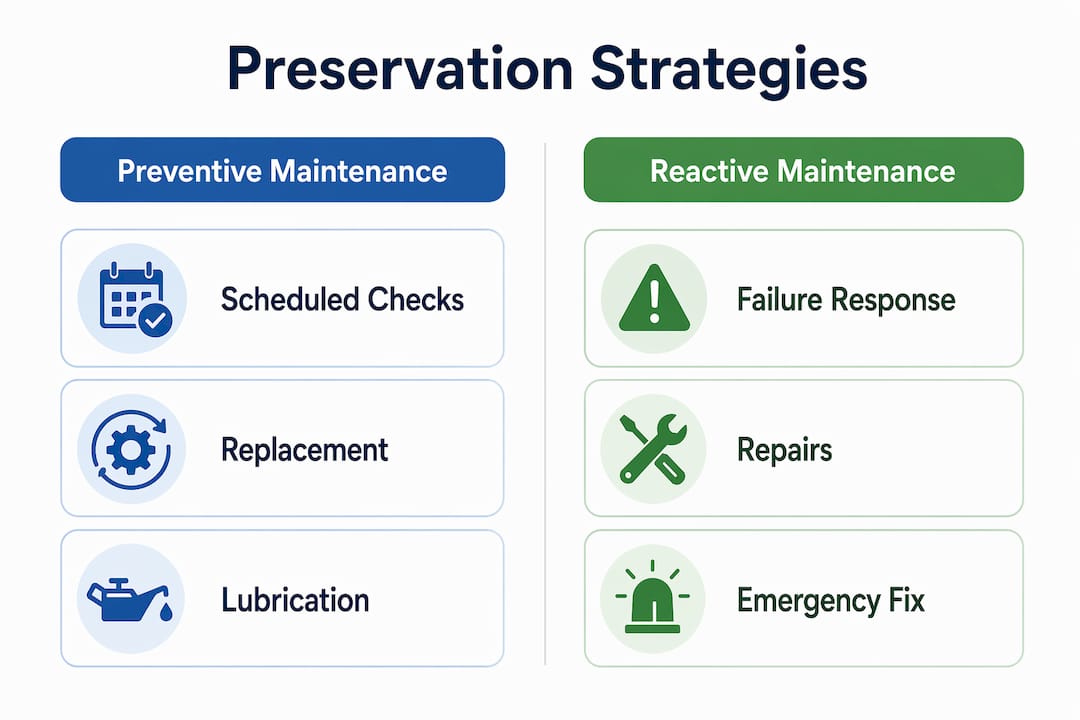
71% of maintenance professionals identify preventive maintenance as their core strategy. Only 35% actually spend the majority of their time doing it. The remaining 65% are firefighting emergencies that a structured integrity program could have prevented. That gap between intention and execution is where most facilities lose money.
Core Asset Preservation Strategies
- Risk-Based Inspection (RBI): Prioritizes inspection resources based on the probability and consequence of failure, using API 580 as the governing standard. This prevents over-inspecting low-risk assets while catching high-risk ones before they fail.
- Fitness-for-Service (FFS) Evaluation: Uses ASME FFS-1 criteria to assess whether a degraded component can remain in service, be repaired, or must be replaced. This avoids premature replacement of assets that still have usable life.
- Life Extension Assessments: Formal engineering reviews that determine whether aging assets can be upgraded or modified to extend their service life beyond the original design period.
- Condition-Based Maintenance (CBM): Replaces calendar-based schedules with maintenance triggered by actual asset condition data, reducing unnecessary interventions and catching real degradation early.
- Spare Parts Preservation: Many facilities store critical spare parts in uncontrolled environments, exposing them to humidity and corrosion. Best practice includes climate-controlled storage or Vapor phase Corrosion Inhibitor (VpCI) packaging for long-term preservation.
Pro Tip: Build a criticality matrix for every asset in your facility. Rank each one by probability of failure and consequence of failure. This single document will tell you exactly where to concentrate your inspection budget and which assets need the most aggressive preservation protocols.
Asset integrity management in extreme environments such as high heat and sand infiltration demonstrates that structured preservation programs protect millions in capital value under conditions that would otherwise accelerate failure dramatically. The same principles apply in Florida’s high-humidity, salt-air coastal environment.
How do protective coatings contribute to asset preservation?
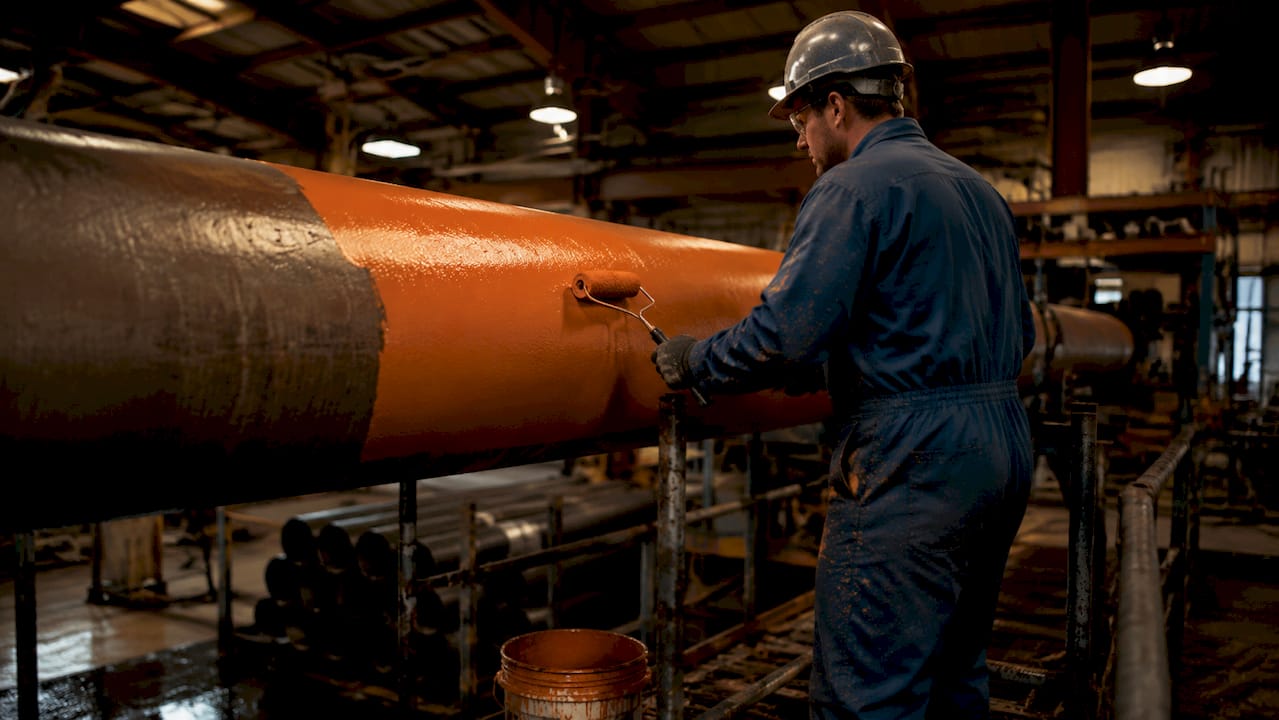
Protective coatings are the first line of defense against corrosion, chemical exposure, and UV degradation for industrial assets. Coating failures are a leading indicator of structural degradation. When surface protection fails, internal corrosion follows, and the repair costs escalate from a coating job to a structural remediation project.
Treating coatings as an engineered system
Facilities that treat protective coatings as a one-time capital expense consistently experience recurring failures. Facilities that treat coatings as recurring, engineered systems avoid those failures. The difference is not the product. It is the program. An engineered coating system includes surface preparation standards, application specifications, inspection protocols, and a scheduled recoating cycle.
Pro Tip: Never specify a coating product without specifying the surface preparation standard alongside it. A premium epoxy coating applied over inadequately prepared steel will fail faster than a mid-grade coating applied over properly blasted metal. Surface prep is not a cost to cut.
Coating performance: one-time application vs. managed system
| Factor | One-Time Application | Managed Coating System |
|---|---|---|
| Inspection frequency | At application only | Scheduled intervals per SSPC/NACE standards |
| Failure response | Reactive repair after visible damage | Proactive touch-up before substrate exposure |
| Cost profile | Low upfront, high long-term | Moderate ongoing, low emergency spend |
| Asset lifespan impact | Shortens service life | Extends service life by years |
| Compliance risk | High after coating degrades | Low with documented maintenance records |
The role of coatings in longevity is not cosmetic. Pitting corrosion that begins at a coating breach can penetrate a steel vessel wall in months under the right conditions. Early surface remediation reduces repair costs that would otherwise grow exponentially as corrosion spreads inward.
What role does AI and advanced technology play in asset preservation today?
AI-powered predictive maintenance is the most significant shift in industrial asset management practices in the past decade. AI-driven asset management can extend asset life by 20–40% compared to traditional calendar-based maintenance programs. That range reflects the difference between facilities that integrate AI with real sensor data and those that use it as a scheduling overlay.
How ai-driven preservation programs work
- Sensor integration: Connected Enterprise Asset Management (EAM) or Computerized Maintenance Management System (CMMS) platforms pull real-time data from vibration sensors, thermal cameras, ultrasonic thickness gauges, and pressure monitors installed on critical assets.
- Condition baseline establishment: The system learns normal operating signatures for each asset. Deviations from baseline trigger alerts before failure thresholds are reached.
- Predictive intervention scheduling: Rather than replacing a bearing every 90 days regardless of condition, the system flags it when vibration data indicates actual wear. Maintenance happens when needed, not when the calendar says so.
- Risk prioritization: AI platforms like the iFactory AI platform rank work orders by asset criticality and failure probability, directing technician time to the highest-risk interventions first.
- Documentation and compliance: Every inspection, repair, and condition reading is logged automatically, creating the audit trail that ISO 55001 and API 580 compliance requires.
Transitioning from calendar-based to condition-based maintenance fails without unified data. Integrating EAM or CMMS platforms with real-time sensor inputs is the technical prerequisite. Without that integration, AI tools produce recommendations based on incomplete information, and the program loses credibility with maintenance teams quickly.
The practical result of a well-implemented AI preservation program is fewer emergency shutdowns, lower parts consumption, and maintenance labor directed at real problems rather than scheduled guesses.
What steps can facility managers take to build a preservation program?
A preservation program does not require a full digital transformation to start delivering results. The following steps apply to facilities at any stage of maturity.
- Conduct an asset criticality assessment. Rank every asset by its consequence of failure and current condition. This tells you where to invest first and which assets can tolerate a longer inspection interval.
- Establish a documentation framework. Every inspection, coating application, repair, and condition reading must be recorded in a centralized system. Paper logs and disconnected spreadsheets create gaps that regulators and auditors will find.
- Specify surface preparation alongside coating selection. Proper coating application starts with surface cleanliness standards. SSPC-SP 6 or SSPC-SP 10 near-white blast cleaning is the baseline for most industrial coating systems in corrosive environments.
- Protect spare parts in storage. Store critical components in climate-controlled environments or use VpCI packaging from manufacturers like Cortec Corporation to prevent corrosion during long storage periods. A corroded spare part fails the moment it is installed.
- Integrate surface protection with integrity management. Coating condition should feed directly into your RBI program. A coating breach on a pressure vessel is not just a maintenance item. It is a risk event that changes the inspection priority of that asset.
- Train preservation advocates on your team. The best program on paper fails if technicians treat it as paperwork. Designate preservation leads who understand why each protocol exists and can coach others on the floor.
Combining cost-effective maintenance solutions with a structured integrity framework is how facilities shift from reactive firefighting to proactive asset stewardship.
Key takeaways
Effective industrial asset preservation requires integrating protective coatings, risk-based inspection, condition-based maintenance, and AI-driven data systems into a single, documented program that addresses asset degradation before it becomes asset failure.
| Point | Details |
|---|---|
| Define preservation formally | Treat asset preservation as Asset Integrity Management, not just scheduled maintenance. |
| Close the preventive maintenance gap | 65% of maintenance teams firefight emergencies that structured programs prevent. |
| Manage coatings as systems | Engineered coating programs with scheduled recoating cycles outperform one-time applications every time. |
| Integrate AI with real sensor data | AI extends asset life by 20–40% only when connected to live condition data from EAM or CMMS platforms. |
| Protect spare parts in storage | Use climate-controlled storage or VpCI packaging to prevent corrosion in critical spare components. |
What 20 years in industrial coatings taught me about preservation
The facilities that call us for emergency coating repairs share one trait: they treated their first coating application as a permanent solution. They budgeted for it once, signed off on it, and moved on. Five or seven years later, they are looking at substrate corrosion that has progressed well past what a recoat would have fixed.
The uncomfortable truth about asset preservation is that most programs fail at the coating layer, not the inspection layer. Facilities invest in sophisticated RBI software and CMMS platforms, then cut the coating maintenance budget because it looks like a discretionary line item. It is not. A coating breach is the earliest visible signal of a degradation process that is already underway internally.
The other thing I see consistently is neglected spare parts. A facility will spend $400,000 on a critical pump and then store the backup impeller in an unheated warehouse next to a leaking roof. When the primary fails and the spare is corroded, the cost of that storage decision becomes very clear very fast.
The shift from reactive to proactive preservation culture does not happen through software purchases. It happens when facility managers start treating surface condition data, spare part storage logs, and coating inspection records as integrity data, not maintenance paperwork. That reframe changes how teams prioritize, how budgets get justified, and how long assets actually last.
— Southernsandblastingandpainting
How Southernsandblastingandpainting supports your preservation program
Surface preparation and protective coatings are the physical foundation of any asset preservation strategy. Southern Sandblasting and Painting has delivered industrial sandblasting and coating services across Central Florida for over 20 years, working on water tanks, pipelines, airport infrastructure, and municipal assets that cannot afford coating failures.
Our team applies industrial-grade coating systems with the surface preparation standards that make them last. From sandblasting equipment and methods that meet SSPC specifications to full industrial painting and coating services for critical infrastructure, we build the coating layer your integrity program depends on. Contact Southernsandblastingandpainting to discuss a surface protection plan matched to your asset criticality priorities and Florida’s specific environmental demands.
FAQ
What is industrial asset preservation?
Industrial asset preservation is the systematic process of maintaining physical infrastructure and equipment to extend operational life, prevent failure, and control long-term costs. The formal industry term is Asset Integrity Management (AIM), which integrates inspection, maintenance, and fitness-for-service evaluation.
How does asset integrity management differ from standard maintenance?
Standard maintenance addresses known problems on a schedule. Asset Integrity Management uses risk-based inspection and fitness-for-service assessments to identify degradation before failure occurs, aligning to standards like ISO 55001 and API 580.
Why are protective coatings critical to asset preservation?
Coating failures are a leading indicator of structural degradation. When surface protection breaks down, corrosion penetrates the substrate, and repair costs grow exponentially compared to the cost of maintaining the coating system.
How much can AI improve asset preservation outcomes?
AI-powered asset management can extend asset life by 20–40% compared to calendar-based maintenance programs, but only when integrated with real-time sensor data from EAM or CMMS platforms.
What is the most overlooked element of industrial asset preservation?
Spare parts storage is consistently overlooked. Storing critical components in uncontrolled environments exposes them to humidity and corrosion, making them unreliable at the moment of need. Climate-controlled storage or VpCI packaging from manufacturers like Cortec Corporation prevents this failure point.


