
TL;DR:
- Facility surfaces in Central Florida face accelerated degradation due to high humidity, frequent rainfall, and intense UV exposure. Regular inspections, drainage maintenance, and timely sealing are essential to prevent costly structural failures along edges, joints, and transitions. Professional surface preparation and protective coatings extend asset life and improve the effectiveness of proactive maintenance programs.
Facility managers in Central Florida know the frustration well: you walk a property after a heavy summer rain and find standing water pooling against your building’s foundation, algae creeping across warehouse floors, and cracks widening along parking lot edges that were sealed just two years ago. Florida’s climate does not forgive neglect. The combination of intense UV exposure, near-daily rainfall, and year-round humidity creates surface degradation conditions unlike almost anywhere else in the country. This guide breaks down exactly what you need to know to protect your commercial and industrial surfaces before minor wear turns into expensive structural failure.
Table of Contents
- Understanding facility surface challenges in Central Florida
- Preparation: Tools and materials for effective surface maintenance
- Step-by-step maintenance workflow for commercial and industrial surfaces
- Common mistakes, troubleshooting, and optimization tips
- Why “edges” and drainage zones are the hidden threat in facility maintenance
- Florida facility maintenance: Next steps and professional support
- Frequently asked questions
Key Takeaways
| Point | Details |
|---|---|
| Inspect edges and joints | Target edges, joints, and drainage zones during inspections because Florida humidity accelerates failure in these areas. |
| Schedule preventative tasks | Set regular timelines for cleaning, crack sealing, and sealcoating to protect facility surfaces from rapid deterioration. |
| Match methods to surfaces | Use cleaning and repair methods specifically suited for each surface type to avoid damaging assets. |
| Prioritize drainage maintenance | Regularly check and remediate drainage around facility surfaces to prevent standing water, algae, and structural failures. |
| Leverage expert support | Engage local professional services for sandblasting and advanced coatings when complex maintenance needs arise. |
Understanding facility surface challenges in Central Florida
Florida’s environment attacks surfaces from multiple angles simultaneously. Humidity levels routinely exceed 80 percent for months at a stretch, creating the perfect breeding ground for algae, mold, and mildew on any exterior or semi-exposed surface. Add frequent rain events, seasonal flooding, and intense UV radiation, and you have a recipe for accelerated material breakdown that simply does not apply in drier climates.
According to Florida-specific surface guidance, high-humidity environments should prioritize cleaning frequency, algae and mold suppression, drainage performance checks, and timely resurfacing across all commercial outdoor surfaces. This is not just about aesthetics. Algae colonization on coated or acrylic surfaces accelerates delamination and creates slip hazards that expose your facility to serious liability.
The most common failure symptoms you should be watching for include:
- Surface cracking and alligatoring on asphalt and sealed concrete, typically accelerated by thermal cycling and moisture intrusion
- Joint failure at expansion joints in concrete slabs and warehouse floors, where water entry causes base layer erosion
- Drainage performance drops, visible as standing water during or after rain events
- Delamination and blistering on coated resinous floors, often triggered by moisture vapor transmission from below
- Algae and biological staining on acrylic surfaces, exterior walls, and painted metal structures
Asphalt surfaces in Florida typically need resurfacing every 8 to 12 years under consistent maintenance, while poorly maintained asphalt can require costly rehabilitation in as few as 5 years. The difference is almost entirely attributable to proactive drainage management and timely sealing. Use a solid facility maintenance checklist to keep every surface type on your property tracked and accounted for.
Preparation: Tools and materials for effective surface maintenance
Knowing the environmental risks, let’s look at what you need to tackle effective maintenance. The right tools and materials are not optional extras; they are the difference between a maintenance program that works and one that gives you a false sense of security.
Here is a comparison of the core maintenance requirements by surface type:
| Surface type | Primary tools | Key consumables | Inspection priority |
|---|---|---|---|
| Asphalt | Crack router, sealcoat sprayer, tamper | Asphalt crack filler, sealcoat emulsion | Cracks, edges, drain areas |
| Concrete (exterior) | Pressure washer, diamond grinder | Joint sealant, concrete sealer | Joints, control cracks |
| Resinous/coated floors | Soft-bristle scrubber, pH-neutral cleaner | Manufacturer-approved floor finish | Coating adhesion, joint condition |
| Painted/coated metal | Sandblasting equipment, spray system | Primer, industrial topcoat | Rust, coating adhesion |
For asphalt specifically, parking lot maintenance guidance confirms that routine preventive tasks must include regular inspections, crack sealing, sealcoating, pothole repair, and drainage management to prevent standing water failures. Skipping any single step in that chain weakens every other step.
For resinous and coated floors inside industrial facilities, your cleaning equipment needs to be gentle by design. Harsh abrasives or high-pressure steam can compromise coating bond layers. Invest in a quality low-pressure scrubber and pH-neutral cleaning agents appropriate for your specific floor system.
Essential consumables to keep on hand:
- Asphalt crack filler (both pour-grade and cold-applied depending on crack width)
- Penetrating concrete sealer for exterior slabs
- Manufacturer-approved floor cleaner for coated warehouse floors
- Algaecide solution for outdoor acrylic and concrete surfaces
- Sandblasting abrasive media for metal surface preparation before recoating
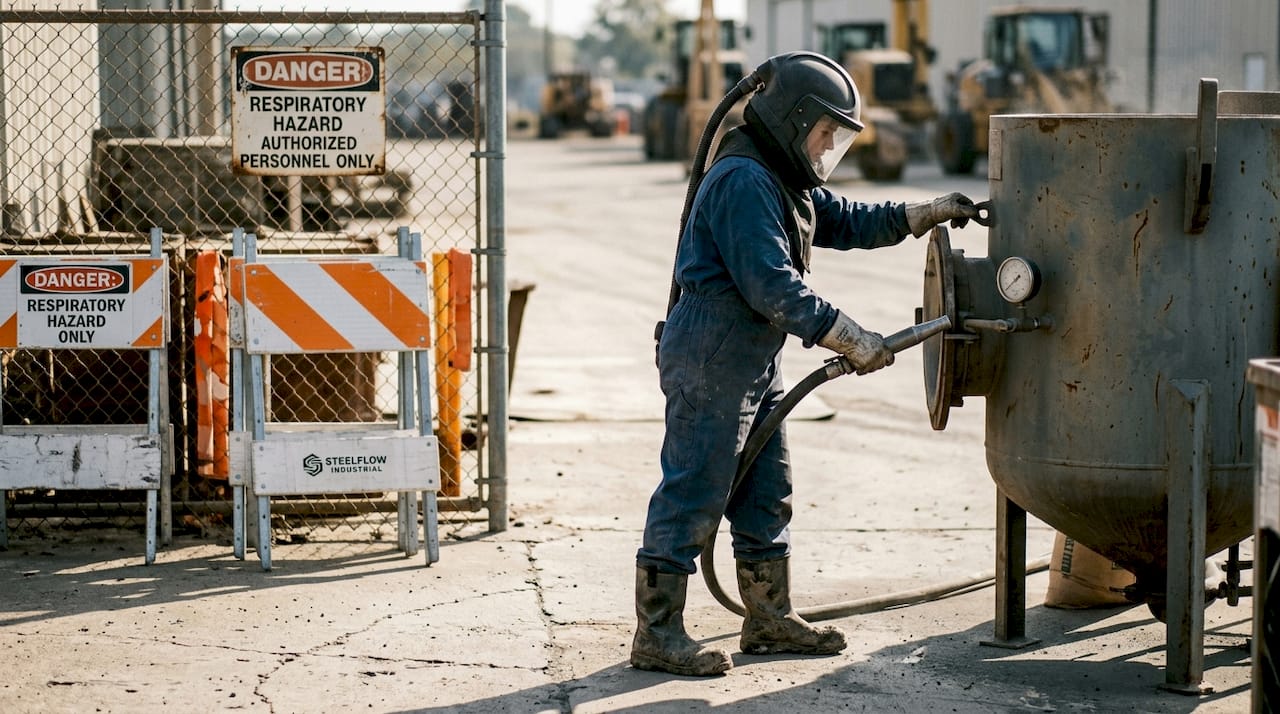
Regarding personal protective equipment for sandblasting and industrial painting operations, this is non-negotiable. Operators require supplied-air respirators, full body coveralls, hearing protection, and impact-resistant eye protection. Following maintenance best practices means building safety compliance into your program from day one, not treating it as an afterthought.
Pro Tip: Before purchasing sealants or coatings, always match the product to the existing surface system. Applying a water-based sealant over a solvent-based primer layer, or using an incompatible cleaning agent on a resinous floor, can cause costly failures within weeks. Check surface preparation tips when selecting materials for complex surfaces.
Step-by-step maintenance workflow for commercial and industrial surfaces
Now you have the right tools and materials. Here is how to maintain different facility surfaces step by step.
-
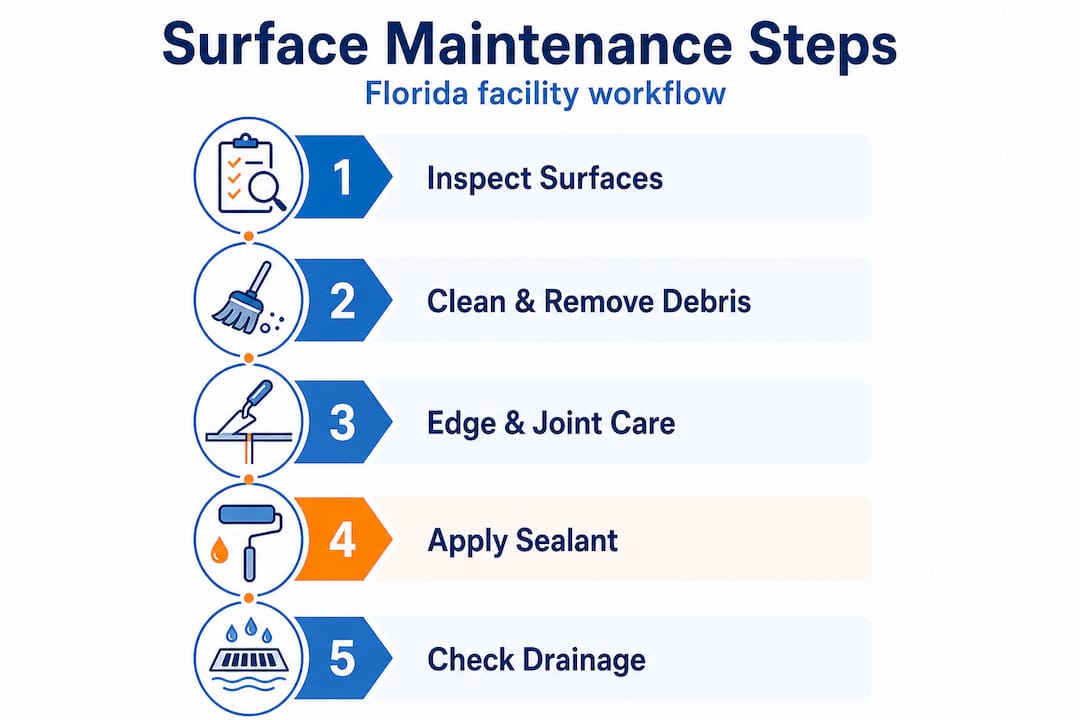
Schedule and document baseline inspections. Before any maintenance begins, walk every surface zone systematically and document findings with photos. Focus explicitly on edges, joints, drainage points, and transitions between different surface types. These zones fail first. Review surface inspection steps to build a structured inspection template.
-
Clear and assess drainage infrastructure. Check all floor drains, curb inlets, and edge channels for blockage. Florida’s debris load from vegetation and storm events is substantial. A blocked drain turns a minor rain event into a standing-water failure scenario within hours.
-
Clean surfaces matched to material type. Pressure wash exterior asphalt, concrete, and acrylic surfaces at appropriate PSI settings. Use pH-neutral cleaners for resinous floors. Apply algaecide where biological growth is present and allow full dwell time before rinsing.
-
Treat cracks and joints before sealing. As asphalt maintenance research confirms, edges and joints are failure accelerators. Rout open any cracks wider than 3/16 inch to create clean edges. Apply bond breaker tape in expansion joints before filling to allow proper movement. Understanding the surface preparation role in crack treatment is critical; poorly prepped cracks will re-fail within one season.
-
Apply sealcoat or protective coating. For asphalt, apply sealcoat by spray or squeegee in two passes. For concrete and metal surfaces, ensure the substrate is completely dry (typically 48 hours after last rain in Florida’s humid conditions) before coating application.
-
Cure and reopen. Allow full cure time before reopening surfaces to traffic. In Florida’s heat and humidity, this may require adjustments to the manufacturer’s recommended cure schedule.
“Inspect drainage zones and edge transitions before every maintenance cycle. What looks like a surface problem is almost always a drainage problem that has been left to grow.”
Here is a practical reference table for maintenance task timing:
| Task | Recommended frequency | Florida adjustment |
|---|---|---|
| Visual inspection | Monthly | Add after every major storm event |
| Drainage clearing | Quarterly | Monthly during rainy season (June through September) |
| Pressure washing | Biannually | Add algaecide treatment quarterly |
| Crack sealing | Annually | Inspect after rainy season for new crack activity |
| Sealcoating (asphalt) | Every 2 to 3 years | Earlier if standing water exposure is frequent |
| Full recoating (metal/industrial) | Every 5 to 7 years | Depends on coating system and exposure |
Pro Tip: Build a separate inspection checklist specifically for surface prep safety tips before any sandblasting or coating work. Florida’s heat creates additional risks for crew safety during outdoor surface work, particularly between June and September.
Common mistakes, troubleshooting, and optimization tips
A solid workflow is great, but avoiding costly mistakes and optimizing your approach are what separate good programs from great ones.
The most damaging mistake facility managers make is focusing on field areas while ignoring edges and joints. Inspections often cover the middle of a parking lot or warehouse floor while missing the perimeter curb transitions, expansion joints, and drain collars where water entry actually begins.
Another frequent error is mismatching cleaning methods to surface systems. Industrial cleaning guidance is clear: for coated resinous floors, abrasives and solvents can destroy coating performance, while for asphalt, sealcoating and crack sealing are preventative tasks rather than structural repairs. Using the wrong intervention at the wrong time actually masks underlying drainage or base-layer problems while allowing them to continue degrading the surface below.
Common mistakes to avoid:
- Delaying crack sealing after the rainy season ends. Water that has entered a crack over summer has already begun undermining the base; waiting until spring doubles the repair scope.
- Using pressure washers at too high a PSI on coated or resinous floors, which can lift coatings and introduce moisture beneath the surface layer.
- Skipping the drainage check before sealcoating asphalt. Sealing over a drainage-compromised surface locks the failure in place.
- Using incompatible sealants in expansion joints designed to flex. Rigid crack fillers in movement joints will crack again within months.
- Reacting to visible damage only. Proactive, scheduled maintenance costs a fraction of reactive structural repair.
The optimization opportunity that most facilities miss is shifting from a reactive to a calendar-based proactive schedule. Review your surface treatment process documentation at least twice a year and align your maintenance calendar with Florida’s two dominant seasons: the dry season (October through May) is your window for coating work, while the rainy season (June through September) is when drainage and crack performance are tested.
Pro Tip: After every major storm event, conduct a 20-minute rapid inspection of all drainage points and edge zones before the next rain cycle arrives. Catching a blocked drain or newly opened crack immediately after a storm is far cheaper than discovering it has been actively failing for two weeks.
Why “edges” and drainage zones are the hidden threat in facility maintenance
After more than 20 years working on industrial and commercial surfaces across Central Florida, one pattern is almost universal: facilities that struggle with recurring surface failures almost always have one thing in common. They inspect the field but ignore the perimeter.
Most maintenance programs are designed around visible, large-area problems because those are the ones management notices first. A large crack in the middle of a parking lot gets flagged immediately. The slow deterioration along curb edges, at drain collars, and within expansion joints often goes unnoticed until it generates a structural failure that costs ten times what early intervention would have.
Research confirms that edges and joints are failure accelerators. The mechanism is simple: water finds the path of least resistance. In asphalt, that path runs along the curb edge, through the saw-cut joint, or around the drain frame. In resinous industrial floors, it follows the expansion joint into the base substrate. In acrylic outdoor surfaces, it works into surface cracks and uses thermal expansion each day to widen them from below.
Florida’s daily rain-to-sun cycle makes this worse than almost any other climate. Water enters an edge joint during a rain event, heats and expands as the surface temperature rises to 130 degrees Fahrenheit or more in afternoon sun, then contracts as temperatures drop at night. Repeat that cycle 200 times a year and you have a powerful mechanical force working against your surface from the inside.
The practical fix is straightforward: redesign your industrial surface inspection template so that edges, joints, and drainage zones are the first items checked, not the last. Treat them as primary, not peripheral. Allocate at least 40 percent of your inspection time to the perimeter and transition zones, and you will catch failures early enough to treat them with a $300 sealant repair rather than a $30,000 repaving job.
Florida facility maintenance: Next steps and professional support
Your maintenance program is only as strong as the quality of surface preparation and protective coatings supporting it.
When surfaces reach the point where cleaning and sealing are no longer enough, professional sandblasting and industrial coating services become the most cost-effective path forward. Southern Sandblasting & Painting LLC brings 20+ years of Central Florida experience to Orlando sandblasting services and complex surface preparation for commercial, municipal, and industrial facilities. From water tanks and airport infrastructure to warehouse floors and city assets, our team applies industrial coatings in Florida that genuinely extend asset life. Explore the full range of facility painting and sandblasting solutions available to your team and take the next step toward a maintenance program that holds up to Florida’s toughest conditions.
Frequently asked questions
How often should facility surfaces be inspected in Central Florida?
You should inspect outdoor asphalt and concrete surfaces at least twice a year, with monthly spot inspections targeting drainage and crack zones due to high humidity. After any major storm, an additional rapid inspection is strongly recommended, as routine preventive tasks like crack sealing and drainage management are most effective when performed immediately after damage occurs.
What is the best method to remove algae from industrial surfaces in Florida?
Routine pressure washing combined with algae suppression treatments works best for managing biological growth on commercial outdoor surfaces. Per Florida facility guidance, high-humidity environments require increased cleaning frequency and dedicated algae and mold suppression as part of every standard maintenance cycle.
What are the warning signs that drainage is failing under facility surfaces?
Recurring standing water, visible algae growth near drains and edges, and increased cracking along perimeter zones all signal active drainage failure. These are confirmed as primary failure accelerators in pavement maintenance, where drainage problems at edges, curbs, and drains are consistently the root cause behind surface deterioration.
How can I avoid damaging resinous or coated floors during cleaning?
Avoid harsh abrasives, solvents, and any cleaning product not specifically rated for your floor system. Incompatible cleaning methods can degrade coating adhesion and performance, turning routine cleaning into an accelerated failure event. Always follow manufacturer recommendations for your specific coating chemistry.
What scheduling strategy works best for sealcoating asphalt surfaces?
Sealcoating on a 2 to 3 year cycle is the standard recommendation, with Florida’s heavy rainfall and UV exposure pushing most facilities toward the shorter end of that range. Per asphalt maintenance scheduling guidance, consistent sealcoating prevents the oxidation and water intrusion that lead to far more expensive structural repairs down the road.
Recommended
- Facility maintenance checklist: Essential steps for Florida managers
- Florida Infrastructure Maintenance Checklist: 5 Key Steps
- Surface Prep Cuts Florida Infrastructure Costs 50%
- How to get reliable surface prep for municipal infrastructure
- Effective lighting maintenance: Enhance energy efficiency and cut costs


