
TL;DR:
- Proper surface preparation, especially sandblasting, is critical for concrete coating longevity in public infrastructure projects. It removes weak layers, enhances bond strength, and prevents premature failure caused by moisture or thermal cycling. Selecting the right method based on project requirements ensures durability, cost savings, and compliance with regulatory standards.
Most facility managers assume that any method of cleaning concrete is roughly equivalent before a coating goes down. That assumption costs municipalities money every year. In Baldwin Park and across Central Florida, the difference between a coating that lasts a decade and one that peels within 18 months often comes down to one decision made before the first drop of paint is applied: how the concrete surface was prepared. Concrete sandblasting is not simply aggressive cleaning. It is a precision process that determines bond strength, coating longevity, and ultimately, whether a public infrastructure investment holds up under Florida’s punishing heat, humidity, and heavy use cycles.
Table of Contents
- Why surface preparation matters for municipal concrete projects
- How concrete sandblasting works: Process and benefits
- Comparing concrete sandblasting to other surface prep methods
- Practical tips for effective sandblasting in Baldwin Park
- A fresh perspective: Why sandblasting is often misunderstood in municipal work
- Professional support for sandblasting and infrastructure projects
- Frequently asked questions
Key Takeaways
| Point | Details |
|---|---|
| Surface prep quality | Thorough surface preparation is vital to infrastructure durability and asset longevity. |
| Sandblasting benefits | Sandblasting effectively removes weak layers and boosts coating adhesion on municipal concrete. |
| Compare prep methods | Not all repairs benefit equally from sandblasting—in some cases, deeper mechanical profiling is needed. |
| Practical best practices | Successful sandblasting projects hinge on matching surface profile to repair chemistry and careful quality checks. |
| Expert support matters | Working with specialists ensures compliance, efficiency, and long-term value for municipal projects. |
Why surface preparation matters for municipal concrete projects
Municipal concrete projects carry a level of public accountability that private jobs simply do not. When a bridge deck coating fails, a parking structure cracks, or a water treatment facility develops surface delamination, the cost falls on taxpayers and the liability falls on the facility manager who signed off on the work. Poor surface preparation is the leading cause of premature coating failure, and in public infrastructure, premature failure is never just an inconvenience.
Here is what actually happens when weak surface layers are left in place before a coating or repair material is applied. The coating bonds to the compromised layer rather than to sound concrete. That weak interface fails under thermal cycling, moisture intrusion, or traffic load, and the coating peels from the inside out. You may not see the failure for months, but the bond was compromised from day one. The cost of concrete repair versus replacement makes it clear: catching surface failures early through proper prep is far cheaper than structural remediation later.
Sandblasting addresses this problem directly by stripping away laitance (the thin, weak layer of cement paste and fines that forms on the surface of cured concrete), contaminants, old coatings, and carbonation layers. Engineering research supports that sandblasting improves bond strength in concrete repair contexts by removing weak surface layers and increasing surface roughness, though effectiveness relative to other surface treatments varies by application detail. The result is a clean, open-pore surface that gives repair mortars and protective coatings a real mechanical grip.
Key steps in a municipal concrete surface prep sequence typically include:
- Visual and structural assessment to identify spalling, delamination, and contamination zones
- Sandblasting or equivalent abrasive prep to remove weak layers and achieve the specified surface profile
- Dust and debris removal using industrial vacuums or compressed air
- Surface profile verification using a profilometer or replica tape to confirm the correct anchor pattern
- Application of primer or bonding agent within the window specified by the coating manufacturer
Skipping or rushing any of these steps is how municipal projects end up with warranty claims, re-dos, and budget overruns. The investment in preventing coating failures at the prep stage is always smaller than the cost of fixing a failed system after the fact.
How concrete sandblasting works: Process and benefits
Sandblasting, in its industrial form, forces abrasive media at high velocity against a concrete surface using compressed air. The impact strips away contaminants, weak material, and old coatings while creating a surface profile, a measurable texture that gives coatings and repair materials something to grip. For municipal-scale work, the process is more controlled and systematic than many facility managers realize.
Here is how a professional sandblasting operation typically unfolds on a municipal concrete project:
- Site preparation and containment setup to protect adjacent surfaces, equipment, and bystanders from abrasive media and dust
- Selection of abrasive media based on the substrate condition, desired surface profile, and downstream coating or repair system
- Blasting in systematic passes to ensure uniform coverage and avoid over-blasting in any single area
- Continuous quality monitoring to confirm the profile is developing correctly and no areas are being missed
- Post-blast cleanup including abrasive recovery and surface inspection before any coating or repair material is applied
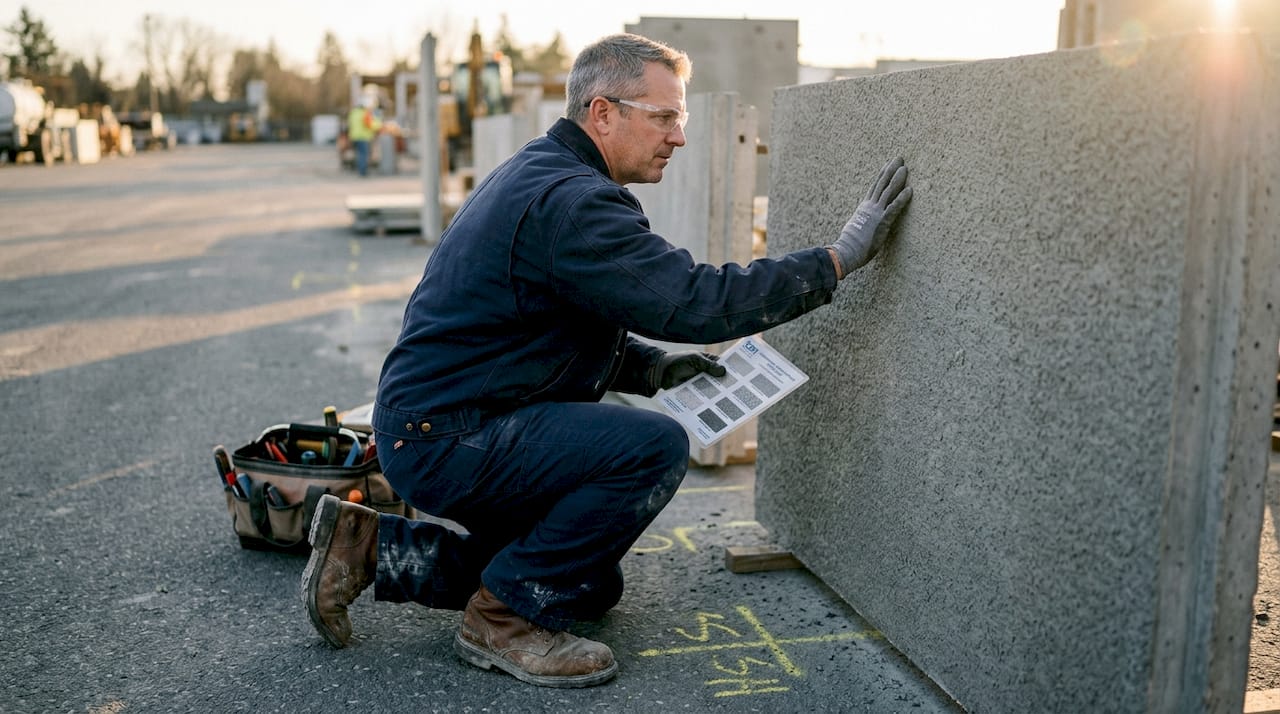
The choice of abrasive media matters significantly. Silica sand is rarely used in professional municipal work due to silicosis risk. Modern operations use steel grit, garnet, crushed glass, or coal slag depending on the profile requirements. Steel grit, for example, delivers a sharp, angular profile ideal for high-build epoxy coatings. Garnet is cleaner and produces less dust, making it preferable near water features or occupied facilities.
Research confirms that sandblasting removes laitance and weak surface layers, improving adhesion, but that the lack of deep mechanical interlock can limit performance in certain structural strengthening applications compared to grooving and abrasion methods. This is a nuance worth understanding before specifying the method. For epoxy overlays and court surfaces, sandblasting typically delivers the right profile without over-aggressively cutting into the substrate.
| Abrasive media | Surface profile | Best use case | Dust level |
|---|---|---|---|
| Steel grit | Medium to coarse | Epoxy coatings, heavy-duty overlays | Moderate |
| Garnet | Fine to medium | Occupied sites, water features | Low |
| Crushed glass | Fine to medium | Decorative coatings, light prep | Low |
| Coal slag | Medium to coarse | Large open-air municipal surfaces | Moderate |
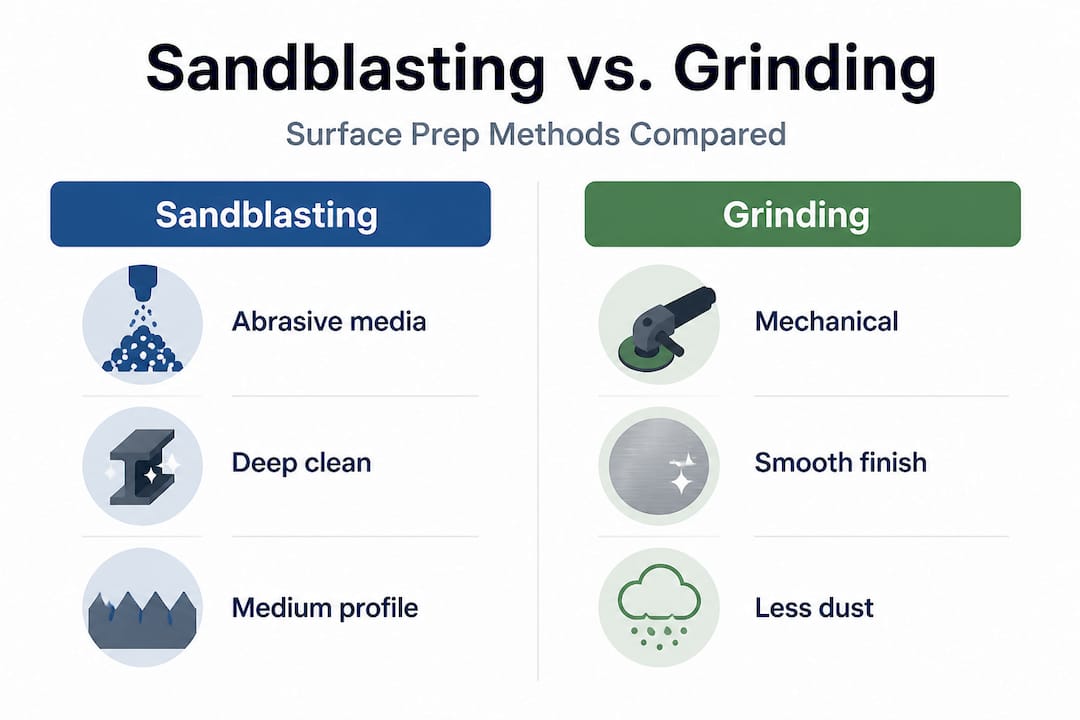
Understanding choosing a sandblasting method for your specific substrate and coating system is the difference between a prep job that sets up the coating for success and one that creates problems down the line.
Pro Tip: Always specify the required surface profile (measured in mils or using ICRI CSP scale) in your project documents before work begins. Confirming the profile after blasting with replica tape takes less than five minutes and eliminates disputes about whether the prep met spec.
For a detailed look at how this fits into a broader workflow, the municipal sandblasting workflow page outlines the sequencing that produces consistent, long-lasting results on public infrastructure.
Comparing concrete sandblasting to other surface prep methods
Sandblasting is not the only tool available for concrete surface preparation, and experienced contractors know when to reach for something different. The three most common methods used in municipal work are sandblasting, mechanical grooving, and abrasive tooling (scarifying or shot blasting). Each has a distinct performance profile.
| Method | Adhesion improvement | Mechanical interlock depth | Best application | Limitations |
|---|---|---|---|---|
| Sandblasting | High | Shallow to moderate | Coatings, overlays, light repair | Limited for structural bonding |
| Mechanical grooving | Moderate | Deep | Structural UHPC repairs, bridge decks | Slower, more equipment-intensive |
| Shot blasting | High | Moderate | Large flat surfaces, parking decks | Less effective on vertical surfaces |
| Scarifying | Moderate | Deep | Removing thick coatings, heavy contamination | Can damage substrate if misused |
For most municipal coating and maintenance projects in Baldwin Park, sandblasting delivers the right combination of speed, surface quality, and cost efficiency. Where the calculus changes is in structural repair applications.
“If the goal is structural strengthening or high-performance bonding, sandblasting alone may enhance adhesion via roughness but may not provide deep mechanical interlock compared with grooving or other keying methods. The contract should align the surface profile and mechanism to the repair chemistry and required bond mode.” Source: Repair of Concrete in Bridges Using UHPC
This is a critical point for municipal decision-makers. If you are applying a standard protective coating to a concrete parking structure or water retention basin, sandblasting is almost certainly the right call. If you are bonding ultra-high performance concrete (UHPC) to a bridge deck for structural load transfer, you need to look at surface profile selection for courts and structural applications more carefully, because the bonding mechanism is fundamentally different.
Key considerations when choosing your surface prep method:
- What is the repair or coating system? Thin coatings need a fine to medium profile. Thick overlays and structural repairs need more aggressive prep.
- What is the bond mode required? Adhesion-based systems (most coatings) work well with sandblasted profiles. Mechanical interlock-based systems (structural UHPC, dowel-bonded repairs) may need grooving.
- What are the site constraints? Vertical surfaces, occupied facilities, and water-adjacent sites all influence which method is practical.
- What does the project specification require? Never let a contractor substitute prep methods without confirming the specification allows it.
A well-documented surface preparation workflow that accounts for these variables will protect both the project outcome and the facility manager’s accountability.
Practical tips for effective sandblasting in Baldwin Park
Baldwin Park presents a specific set of conditions that affect how sandblasting projects should be planned and executed. Central Florida’s climate, with its intense summer heat, high humidity, and frequent afternoon thunderstorms, creates a narrow window for optimal blasting conditions. Concrete surfaces that are too hot or too moist at the time of blasting can affect profile quality and compromise the adhesion of coatings applied shortly after.
Here are field-tested best practices for sandblasting projects in this environment:
- Schedule blasting during cooler morning hours to avoid surface temperatures above 120°F, which can cause flash evaporation of moisture and interfere with coating adhesion
- Monitor surface and dew point temperatures before and during blasting; the surface temperature must be at least 5°F above the dew point to prevent moisture contamination
- Use containment systems that meet Florida DEP (Department of Environmental Protection) requirements for abrasive media and dust control, particularly near stormwater systems
- Coordinate with local traffic and public safety authorities well in advance for any work on public-facing infrastructure in Baldwin Park
- Inspect the blasted surface within the coating manufacturer’s recommended window, typically two to four hours, to prevent flash rusting or recontamination before coating application
Research confirms that sandblasting removes laitance and weak surface layers, which is the primary goal. But achieving that goal in Florida’s climate requires timing and environmental monitoring that many contractors underestimate.
For guidance on keeping workers and the public protected during operations, the sandblasting safety essentials resource covers PPE requirements, respiratory protection, and site perimeter controls in detail. Reviewing successful sandblasting project examples can also help facility managers set realistic expectations for timelines and outcomes.
Pro Tip: After blasting, use ICRI replica tape to verify the surface profile before any coating or repair material goes down. Document the result with photos and tape readings. This takes 10 minutes and gives you defensible quality assurance records if a coating issue arises later.
A fresh perspective: Why sandblasting is often misunderstood in municipal work
After more than 20 years of working on municipal infrastructure across Central Florida, we have seen one pattern repeat itself more than any other: facility managers and contractors default to sandblasting because it is familiar, not because it is the right fit for the job. That habit is understandable. Sandblasting works well in most coating applications, and it is fast. But familiarity is not a specification.
The real risk is not that sandblasting is a bad method. It is that it gets specified for applications where the bonding mechanism demands something different. When a municipality bonds a structural repair material to a bridge deck, the bond mode is not just adhesion. It involves mechanical interlock under shear and tensile loading. Research makes clear that lack of deep mechanical interlock can limit structural strengthening outcomes compared with grooving and abrasion methods. Sandblasting alone will not deliver what the structural engineer specified, even if the surface looks clean and profiled.
The solution is not to abandon sandblasting. It is to stop treating surface preparation as a checkbox and start treating it as a design decision. What repair chemistry are you using? What bond mode does it rely on? What profile does the manufacturer require? These questions should drive the prep method, not the other way around.
We also see the opposite problem: contractors who dismiss sandblasting in favor of mechanical methods for every job, even when a straightforward coating application would be perfectly served by a sandblasted profile. That adds cost and time without adding value.
The industrial sandblasting guide for facility managers is a useful starting point for building a more deliberate, fit-for-purpose approach to surface prep decisions. The goal is matching the method to the project, not defaulting to what was done last time.
Professional support for sandblasting and infrastructure projects
Choosing the right surface prep method for a municipal project is only half the equation. Executing it correctly, on schedule, within regulatory requirements, and with documented quality control, is where specialist experience pays off.
Southern Sandblasting & Painting LLC has delivered professional sandblasting services to municipalities, contractors, and facility managers across Central Florida for over 20 years. Our teams understand Baldwin Park’s regulatory environment, Florida’s climate conditions, and the specific demands of public infrastructure work. We bring the equipment, the expertise, and the documentation to protect both your assets and your accountability. Whether you are planning a coating project, a structural repair, or a full surface prep program, our surface prep best practices and our equipment guide for protected assets are practical starting points. Contact us to discuss your next project.
Frequently asked questions
How does sandblasting improve the adhesion of coatings on concrete?
Sandblasting enhances adhesion by removing weak surface layers and increasing surface roughness, giving coatings a clean, mechanically receptive surface to bond to. The result is a significantly longer-lasting coating system compared to unprepared or lightly cleaned surfaces.
Is sandblasting always the best method for preparing concrete surfaces?
Sandblasting is highly effective for most coating and overlay applications, but it may not achieve the deep mechanical interlock required for structural repairs where shear and tensile bond strength are critical. Methods like grooving are preferable in those higher-demand bonding scenarios.
What safety considerations are important for municipal sandblasting projects?
Proper respiratory protection, full PPE, dust containment systems, and compliance with Florida DEP regulations are non-negotiable on any municipal sandblasting site. Site perimeter controls and coordination with public safety authorities are equally important when work occurs near occupied or public-facing areas.
How do I select the right contractor for concrete sandblasting in Baldwin Park?
Look for contractors with documented experience on municipal infrastructure projects, proper licensing and insurance, familiarity with Florida environmental regulations, and a clear quality assurance process that includes surface profile verification and post-blast documentation.
Recommended
- sandblasting services baldwin park – Resources – Southern Sandblasting & Painting LLC
- Sandblasting & Painting Contractor in Baldwin Park, FL
- Commercial painting in Baldwin Park: durable results
- Sandblasting in construction: 90% of coating failures prevented
- Sandblasting Contractor Baldwin Park FL
- Sandblasting Services Oviedo FL


