
TL;DR:
- Treating commercial painting solely as a cosmetic task leads to costly failures, rework, and operational disruptions. Proper surface preparation, expert process adherence, and thorough safety compliance are essential for long-lasting infrastructure protection. Investing in detailed scope specifications and partnering with certified specialists ensures durability, reduces disputes, and maximizes asset lifespan.
Facility managers and contractors who treat commercial painting as a cosmetic task are setting themselves up for expensive failures. A peeling coating on a water tank, a corroded structural beam at a municipal facility, or a failed finish on airport infrastructure is not just an eyesore. It triggers rework costs, regulatory scrutiny, and operational downtime that can dwarf the original project budget. The truth is that long-term durability in commercial painting has almost nothing to do with the paint itself and everything to do with the process, the prep work, and the expertise of the crew executing it. This article breaks down exactly what Baldwin Park facility managers and contractors need to know to protect their assets and their budgets.
Table of Contents
- Why expert commercial painting matters for Baldwin Park infrastructure
- The 4-step commercial painting process for lasting protection
- Abrasive blasting and surface preparation: critical to project success
- Ensuring safety and compliance in commercial painting projects
- What most managers miss: Protecting assets starts before the paint can
- Partner with certified experts for stress-free, durable results
- Frequently asked questions
Key Takeaways
| Point | Details |
|---|---|
| Certified teams matter | Hiring OSHA-certified and experienced contractors reduces risks and rework. |
| Surface prep is essential | Thorough surface preparation is the most important factor for coating durability. |
| Structured process wins | A documented, step-by-step approach ensures project compliance and long-term success. |
| Safety protects everyone | Enforcing safety and cleanup protocols shields businesses from surprise costs and shutdowns. |
Why expert commercial painting matters for Baldwin Park infrastructure
Commercial painting on public and private infrastructure is not a simple maintenance task. It is a structured, compliance-driven process where shortcuts translate directly into asset degradation and unplanned capital expenditures. For facility managers overseeing parks, municipal buildings, pipelines, or commercial complexes in Baldwin Park, the stakes are high on every project.
The most immediate impact of professional painting is longevity. A properly applied industrial coating on a steel structure can extend its service life by 15 to 25 years. A poorly applied one may begin failing within 18 months. That gap represents not just recoating costs but also the cost of scaffolding, traffic control, facility shutdowns, and regulatory compliance reviews every time the work has to be redone.
Experienced providers deliver measurable results. Providers with 1,500+ completed projects and OSHA-certified crews reduce rework risks significantly compared to general contractors who add painting as a secondary service. When you hire a specialist, you are buying a documented process, not just labor hours.
Here is what separates professional commercial painting from low-quality alternatives:
- Documented site evaluation before a single drop of paint is applied
- Abrasive blasting to remove rust, old coatings, and surface contaminants
- Industrial-grade primers and coatings matched to the substrate and environment
- Post-project cleanup that meets environmental and regulatory standards
- OSHA-certified crew members trained in confined space entry, fall protection, and hazardous material handling
“Choosing a provider based on the lowest bid without verifying their process documentation is the fastest way to turn a $50,000 painting contract into a $200,000 remediation project.”
The risks of low-quality painting services for infrastructure are not theoretical. Coating failures on water tanks can introduce contamination risks. Failed coatings on structural steel accelerate corrosion, which can compromise load-bearing capacity. For facility managers, understanding painting and compliance requirements is not optional. It is part of responsible asset stewardship. Providers who follow OSHA safety protocols protect not just workers but also the facility manager’s liability exposure.
The 4-step commercial painting process for lasting protection
Understanding the process that underpins long-term protection is essential before you sign any contract. A structured, evidence-backed workflow is what separates a coating that lasts a decade from one that starts failing before the invoice is paid.
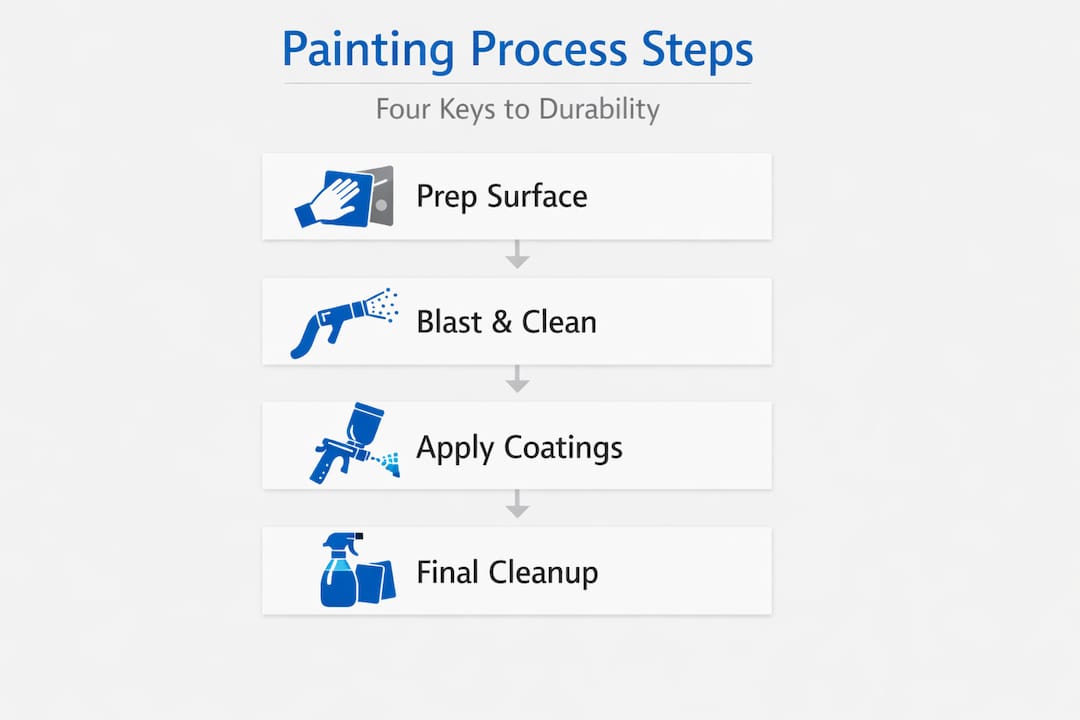
The 4-step process used by leading industrial painting contractors covers every phase from initial assessment to final sign-off:
- Site evaluation and assessment. The crew inspects the substrate, identifies existing coating failures, measures surface profile requirements, and documents environmental conditions. This step determines the correct abrasive media, primer system, and coating specification for the project.
- Abrasive blasting surface preparation. Using equipment matched to the substrate (steel, concrete, masonry), the crew removes all rust, mill scale, old paint, and contaminants to the specified cleanliness standard. This is the most critical step in the entire process.
- Primer and coating application. Industrial-grade primers are applied to the prepared surface within the required window (often within hours of blasting to prevent flash rust). Topcoats are applied in controlled conditions to meet thickness specifications.
- Post-project cleanup. Spent abrasive, containment materials, and waste coatings are collected and disposed of in compliance with local and federal environmental regulations. A clean site is a compliant site.
Here is how a professional approach compares to a shortcut approach on a typical municipal project:
| Factor | Professional approach | Shortcut approach |
|---|---|---|
| Surface prep standard | SSPC-SP 6 or better, documented | Wire brush or power wash only |
| Primer application window | Within 4 hours of blasting | Next day or skipped |
| Coating thickness verification | Wet and dry film gauge readings | Visual inspection only |
| Cleanup documentation | Full waste manifest provided | Debris left on site |
| Warranty coverage | 5 to 10 years with documentation | No formal warranty |
| Rework probability | Low | High within 2 to 3 years |
The surface prep workflow is where most shortcuts happen, and it is where most failures originate. Understanding abrasive blasting techniques and how they apply to your specific substrate gives you the knowledge to hold contractors accountable. A solid coating application guide can help you verify that the specified system is being applied correctly.
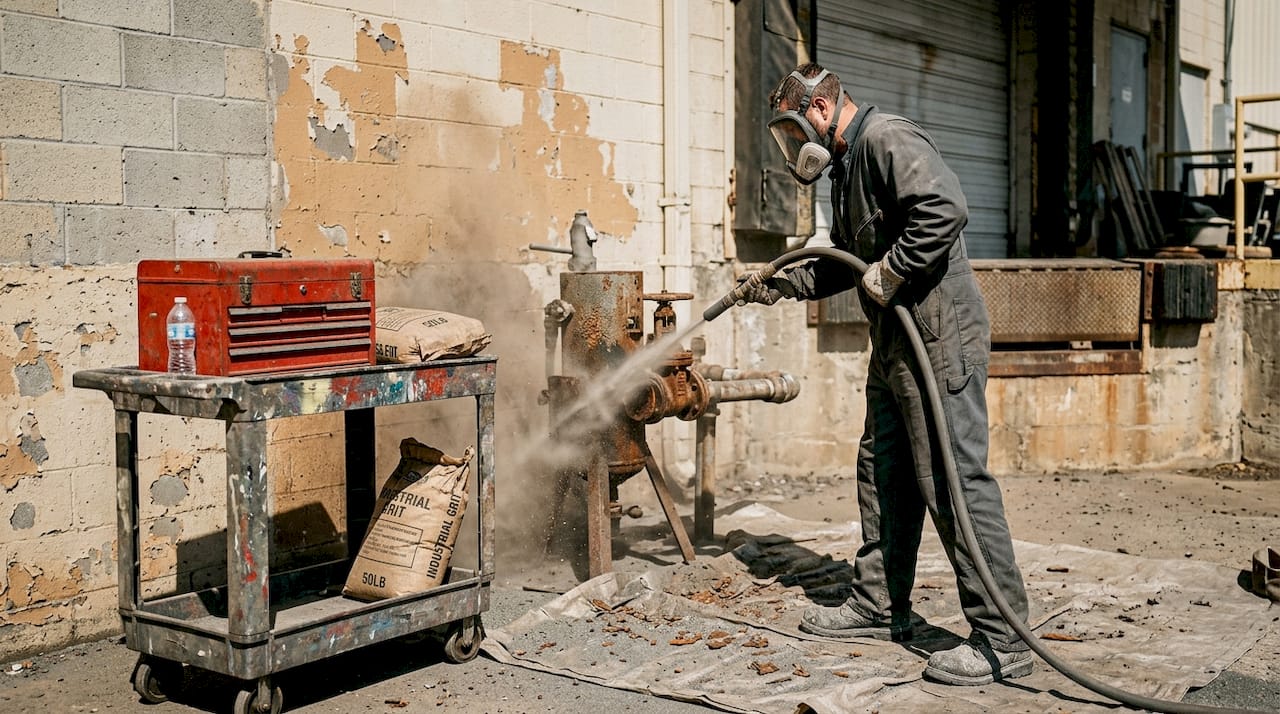
Pro Tip: Always require a written cleanup plan as part of the scope of work before the project starts. Specify the waste disposal method, the containment system, and the documentation you expect at closeout. This single requirement eliminates a significant portion of compliance risk.
Abrasive blasting and surface preparation: critical to project success
Surface preparation is the foundation of every successful coating project. If you get this step wrong, no amount of premium paint will save the job. The data is clear on this point.
| Surface prep quality | Expected coating lifespan | Failure risk within 5 years |
|---|---|---|
| Near-white blast (SSPC-SP 10) | 15 to 25 years | Less than 10% |
| Commercial blast (SSPC-SP 6) | 10 to 15 years | 15 to 20% |
| Power tool cleaning (SSPC-SP 3) | 3 to 7 years | 40 to 60% |
| Hand tool cleaning only | 1 to 3 years | Over 70% |
Surface prep defects drive over 70% of paint failures in commercial and municipal projects. That is not a marginal factor. It is the dominant variable in coating performance. Yet it is also the step most frequently compromised when contractors are under budget or schedule pressure.
The types of abrasive blasting used in infrastructure projects vary by substrate and project requirements:
- Dry abrasive blasting uses materials like steel grit, coal slag, or garnet to achieve a specific surface profile on steel structures, water tanks, and pipelines.
- Wet abrasive blasting reduces airborne dust and is used near occupied facilities or in environmentally sensitive areas.
- Vacuum blasting (also called closed-circuit blasting) contains all spent media and debris, making it ideal for lead paint removal on bridges and older municipal structures.
- Sponge blasting uses a sponge media to minimize dust and is common in theme parks, airports, and facilities where cleanliness during operations is non-negotiable.
Each method produces a different surface profile, measured in mils (thousandths of an inch). The profile must match the primer system specified by the coating manufacturer. A profile that is too smooth means poor adhesion. A profile that is too aggressive means the peaks of the profile can telegraph through the coating and create early corrosion points.
Understanding the surface treatment process and reviewing blasting techniques examples from comparable projects gives you a baseline for evaluating contractor proposals. Requiring contractors to reference surface preparation standards in their scope of work is a straightforward way to filter out underqualified bidders before the project starts.
Pro Tip: Include a specific SSPC or NACE surface preparation standard in every scope of work (SOW) you issue. Requiring SSPC-SP 6 minimum for structural steel, for example, gives you a measurable, enforceable benchmark rather than a vague requirement for “clean surface.” This one specification change can dramatically reduce disputes and rework claims.
Ensuring safety and compliance in commercial painting projects
Surface prep is foundational, but every phase of a commercial painting project must meet safety and regulatory standards. For facility managers in Baldwin Park, this is not just about protecting workers. It is about protecting your organization from regulatory action, project delays, and liability exposure.
OSHA’s role in commercial painting projects is substantial. Painting crews working on elevated structures, in confined spaces, or with hazardous coatings (including those containing lead or chromate primers) must follow specific standards under 29 CFR 1926 for construction and 29 CFR 1910 for general industry. OSHA-certified crews with documented training records reduce the risk of on-site incidents and the associated project shutdowns.
Here is a structured checklist of safety protocols that facility managers should require from any commercial painting contractor:
- Hazard communication plan covering all coatings, solvents, and abrasive media used on site
- Respiratory protection program with fit-tested respirators for all crew members
- Fall protection plan for any work above 6 feet, including scaffolding inspection records
- Confined space entry permit for tanks, vaults, or enclosed structures
- Lead paint assessment and abatement protocol for structures built before 1978
- Containment and waste disposal plan meeting EPA and Florida DEP requirements
Beyond OSHA compliance, facility managers should also require:
- Proof of general liability insurance and workers’ compensation coverage
- A project-specific safety data sheet (SDS) binder on site at all times
- Daily safety briefings documented and signed by crew members
- A designated safety officer for projects exceeding a defined crew size or duration
Understanding painting safety compliance requirements in Florida is particularly important given the state’s environmental regulations around abrasive blasting near waterways and stormwater systems. Connecting your compliance requirements to a solid facility painting compliance framework protects the project from start to finish.
Pro Tip: Schedule a pre-project compliance audit with your contractor at least two weeks before mobilization. Review their certifications, insurance certificates, and safety plans together. Projects that start with documented compliance reviews are far less likely to experience regulatory-driven work stoppages mid-project.
What most managers miss: Protecting assets starts before the paint can
Here is the perspective that most project management guides skip over entirely. The decisions that determine whether a commercial painting project succeeds or fails are almost never made during the painting itself. They are made in the weeks before the contractor ever sets foot on site.
We have seen this pattern repeatedly across 20 years of industrial coating work. A facility manager focuses intensely on the bid price, spends weeks negotiating the cost per square foot, and then hands the contractor a vague scope of work that leaves every critical specification open to interpretation. The contractor, now squeezed on margin, makes up the difference by cutting corners on surface prep. The coating fails in year two. The facility manager spends three times the original contract value on remediation.
The projects that deliver the best long-term value share one common characteristic. The facility manager or project owner invested time in the pre-bid phase to write a tight, specific scope of work. They specified the surface preparation standard by name. They required documentation of coating thickness at every stage. They defined the cleanup standard and the waste disposal process before the first bid came in.
Focusing on specs and documentation in the pre-bid phase can prevent the vast majority of scheduling disputes and warranty claims. This is not an exaggeration. Vague scopes of work are the single biggest driver of contractor disputes and failed warranty claims in the commercial painting industry.
The uncomfortable truth is that most facility managers do not have the technical background to write those specifications without help. That is not a criticism. It is an opportunity. Partnering with a reliable surface prep advisor before you go to bid costs you almost nothing and can save you enormous amounts in rework. The best industrial coating contractors will help you write a scope of work that protects both parties, because they know that clear specifications lead to better project outcomes and fewer disputes.
The lesson is simple but rarely applied. Stop treating commercial painting as a commodity purchase and start treating it as a technical service with measurable performance standards. Your assets will last longer. Your budget will go further. And you will spend a lot less time managing rework.
Partner with certified experts for stress-free, durable results
Ready to avoid costly mistakes and maximize your asset’s lifespan? Partnering with a certified, experienced industrial coating team is the most direct path to coatings that perform for decades rather than years.
Southern Sandblasting & Painting LLC brings 20+ years of specialized experience to commercial and municipal painting projects across Central Florida, including Baldwin Park. From reviewing the right sandblasting equipment guide for your project type to applying coatings that meet the strictest compliance standards, the team handles every phase with documented precision. Explore the full range of sandblasting and painting services available for your facility, and review surface prep best practices to understand what a quality project looks like from the ground up. Contact us today for a consultation and project assessment tailored to your specific infrastructure needs.
Frequently asked questions
What are the main steps in a typical commercial painting project?
A structured 4-step process includes site evaluation, abrasive blasting, primer and coating application, and thorough post-project cleanup. Each step is documented to ensure compliance and coating durability.
How do I know if a painting contractor follows OSHA standards?
Ask for proof of OSHA certification, crew training records, and a written safety plan before signing any contract. OSHA-certified crews with documented compliance histories significantly reduce rework risks and project shutdowns.
Why is surface preparation critical for long-lasting paint?
Proper surface preparation removes contaminants and creates the mechanical profile that coatings need to bond correctly. A structured process including abrasive blasting is the single most important factor in maximizing coating lifespan on infrastructure assets.
What happens if my project skips post-painting cleanup?
Skipping cleanup can trigger environmental compliance violations and leave debris that contaminates the fresh coating. Post-project cleanup is a required step for both regulatory compliance and long-term coating performance.
Recommended
- commercial painting winter park fl – Resources – Southern Sandblasting & Painting LLC
- sandblasting services baldwin park – Resources – Southern Sandblasting & Painting LLC
- Sandblasting & Painting Contractor in Baldwin Park, FL
- industrial painting services winter park fl – Resources – Southern Sandblasting & Painting LLC
- Sandblasting Contractor Baldwin Park FL
- Sandblasting Services Oviedo FL


